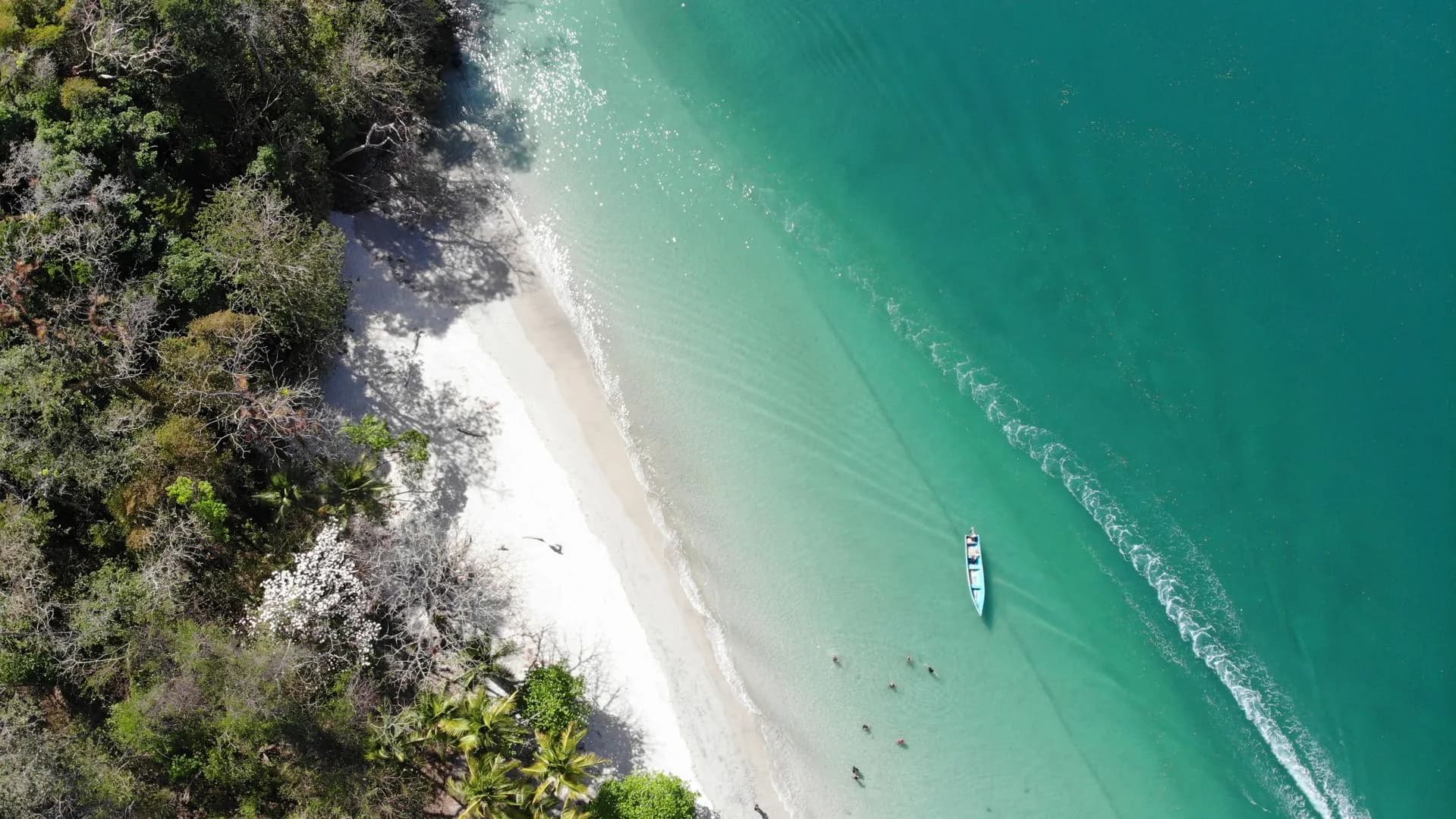
Manuel Antonio's dry season, December through April, delivers the most reliable sunshine and the best beach weather of the year, along with the biggest crowds and the highest prices. Here is what each month gives you and where the value windows sit.
What You Should Know
- The dry season runs December to April. Rain days fall from about 9 in December to 5 in January, 3 in February, 3 in March, then climb back to about 6 in April as the season starts to break. Highs sit between 31 and 33°C (88 to 91°F) with lows of 22 to 23°C (72 to 73°F).
- Unlike the mountain destinations inland, Manuel Antonio's dry season is genuinely dry. Three rain days in a month is a rounding error, not a caveat. Beach days, national park mornings and boat tours all run without weather planning, and the sea sits at 28 to 29°C (82 to 84°F) in every month of the year anyway.
- It is also the most crowded and most expensive stretch of the year. Demand peaks twice: from about December 20 through the first week of January, and again during Semana Santa in April, the biggest domestic travel week in Costa Rica. Easter 2026 falls on April 5.
- March and April are the hottest months of the entire year at 33°C (91°F), which matters more here than inland. This is an exposed Pacific coast with high UV and little shade on the sand, so midday on Playa Espadilla in March is a different experience from a shaded rainforest trail.
Manuel Antonio in the Dry Season: Overview
⭐ Best value windows: December 1 to 19, and the last two weeks of April. Both sit inside the dry season but outside its two demand spikes. You get the same sunshine and the same warm sea without paying holiday or Semana Santa rates.
| Factor | Dry Season Rating |
|---|---|
| Weather | 10/10: the most reliable sunshine of the year, 3 to 9 rain days a month |
| Beaches | 10/10: calm bright mornings, 28 to 29°C water, minimal washed-up debris |
| National Park | 9/10: clear trails and easy footing, but the daily visitor cap bites hardest now |
| Crowds | 3/10: the busiest stretch of the year, peaking twice |
| Prices | 3/10: yearly high, with the sharpest spikes at Christmas and Semana Santa |
| Wildlife | 8/10: capuchins, sloths and coatis are reliable year-round; forest is drier and less lush |
| Heat | 6/10: March and April are the hottest months of the year at 33°C on open sand |
| Boat & Water Tours | 10/10: flat mornings and clear visibility, very few weather cancellations |
| Families | 9/10: dependable weather and a warm calm sea suit all ages |
| Couples | 8/10: superb conditions, though busier and pricier than any other season |
The dry season is, in our view, the straightforward answer for anyone whose Manuel Antonio trip is built around beaches and the national park. Five straight months of sunshine is not a marketing line here: February and March average roughly three wet days each, which means a week-long trip in that window will very likely see no rain at all. Mornings are bright and the sea is glassy, the park trails are firm and dust-dry rather than slick, and boat tours out of Quepos almost never cancel.
The tradeoff is company and money, and it is a real one. This is when the town fills and charges the most, when the national park hits its daily visitor cap most days, and when the popular beaches are busy from mid-morning. What we consistently see is that the season is far less uniform than the label suggests: December still collects around nine rain days, March collects three, and prices swing enormously depending on which week you land in. Our things to do guide covers the full range of what this weather unlocks, and our rainy versus dry season comparison sets the two halves of the year side by side.
Dry Season at a Glance
✅ Genuinely dry, as few as 3 rain days a month ✅ Best beach and boat conditions of the year ✅ Sea at 28 to 29°C
⚠️ Highest prices of the year ⚠️ Two big crowd peaks and a park visitor cap ⚠️ March and April are the hottest months
The Five Dry-Season Months Compared
Calling December through April one season hides how differently each month behaves. Here is the honest breakdown.
| Month | Rain Days | Avg High | Avg Low | Crowds | Character |
|---|---|---|---|---|---|
| December | ~9, decreasing | 31°C (88°F) | 22°C (72°F) | Low early, peak from ~Dec 20 | Season arriving; best value window early |
| January | ~5 | 31°C (88°F) | 23°C (73°F) | Peak through ~Jan 7, then high | Settled and bright, still comfortable |
| February | ~3 | 32°C (90°F) | 23°C (73°F) | High, calmer than January | Often the driest month of the year |
| March | ~3 | 33°C (91°F) | 23°C (73°F) | High throughout | Driest stretch, and the hottest |
| April | ~6, rising late | 33°C (91°F) | 23°C (74°F) | Semana Santa peak, then a sharp drop | Hot, transitional, two very different halves |
December: the season arriving
December is the transition month, and its two halves barely resemble each other. At around nine rain days it is the wettest of the five, carrying the tail of the green season through the first fortnight, but those showers are already brief and mostly late in the day. What early December offers is the thing the rest of the season cannot: quiet beaches and the season's lowest rates alongside weather that is already very good. After about the 20th, Christmas and New Year turn Manuel Antonio into the most expensive and most crowded place it will be all year.
January and February: the settled core
January drops to about five rain days and February to three, and this is the season behaving exactly as advertised. Clear mornings are routine, humidity is moderate rather than heavy, and the heat has not yet reached its March peak at 31 to 32°C (88 to 90°F). We'd lean toward February for most travellers: near-identical conditions to January, marginally fewer people, and none of the holiday premium hanging over the first week of the year.
March and April: driest and hottest
March holds at about three rain days and is, alongside February, the driest month of the year. It is also 33°C (91°F), the joint hottest, and that combination is the season's one genuine catch. March is the answer if maximum sunshine is the goal. April is two months in one: hot and dry early, dominated by Semana Santa in the first half, then noticeably wetter late as rain days climb toward the May figure of about 17. Once Holy Week passes, late April becomes one of the best-value stretches of the entire dry season.
Manuel Antonio Weather in the Dry Season
| Metric | Dry Season (Dec to Apr) |
|---|---|
| Avg High | 31 to 33°C (88 to 91°F) |
| Avg Low | 22 to 23°C (72 to 74°F) |
| Rain Days | 3 to 9 per month |
| Driest Months | February and March (~3 rain days each) |
| Wettest Dry-Season Month | December (~9 rain days) |
| Hottest Months | March and April (33°C / 91°F) |
| Sea Temperature | 28 to 29°C (82 to 84°F) |
| Humidity | Moderate, the lowest of the year |
| UV Index | Very high |
Temperature and Humidity
Temperature does very little across the dry season, and very little across the whole year for that matter. Days run 31°C (88°F) in December and January, 32°C (90°F) in February, and 33°C (91°F) in March and April. Nights hold at 22 to 23°C (72 to 74°F) in every month. The real difference from the green season is humidity: it is moderate through these months rather than heavy, so 32°C in February feels considerably more pleasant than 31°C in September.
March and April deserve a specific warning, though. They are the hottest months of the Manuel Antonio year, and this is an exposed Pacific coast rather than a shaded mountain town. On open sand at midday, with very high UV and a sea breeze that hides how much sun you are taking, that heat is genuinely tiring. Our take: treat 11am to 2pm as shade or pool time in those two months and you will enjoy the rest of the day far more.
Rain Pattern
This is where Manuel Antonio differs sharply from Costa Rica's Caribbean-slope destinations, which stay damp even at their driest. Here the dry season is actually dry. Three rain days in February or March means most weeks see none, and even December's nine wet days are concentrated in the first half of the month. When rain does arrive in these months it is typically a short late-afternoon shower that clears within the hour rather than anything that costs you a day.
The practical upshot is that you can plan a dry-season trip without building weather contingency into it. Tours run, boats sail, and the park trails stay firm. That certainty is the main thing you are paying the season's premium for.
Sea Conditions
The water is the constant. At 28 to 29°C (82 to 84°F) in every month of the year, the sea is never the variable in a Manuel Antonio trip. What the dry season adds is calmer, clearer mornings and much less debris on the sand, which improves swimming, snorkeling visibility, and every boat-based tour out of Quepos. Surf is smaller than in the green season, which is a gain for beginners taking surf lessons at Playa Espadilla and a loss for anyone chasing size.
Beaches and the National Park in the Dry Season
These are the two reasons most people come, and the dry season serves them differently. The beaches get an unambiguous upgrade. The park gets better conditions and worse access, at the same time.
The beaches
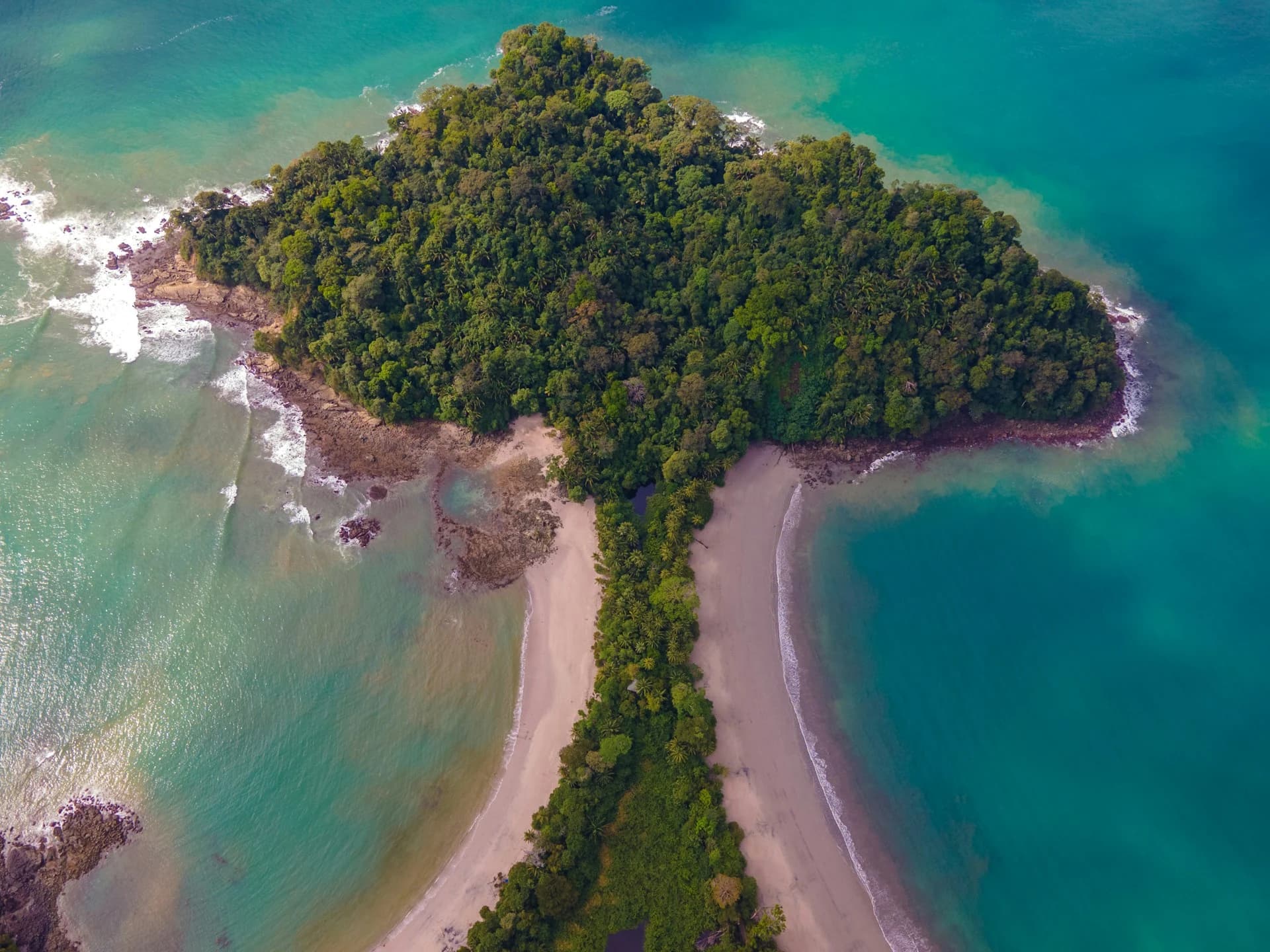
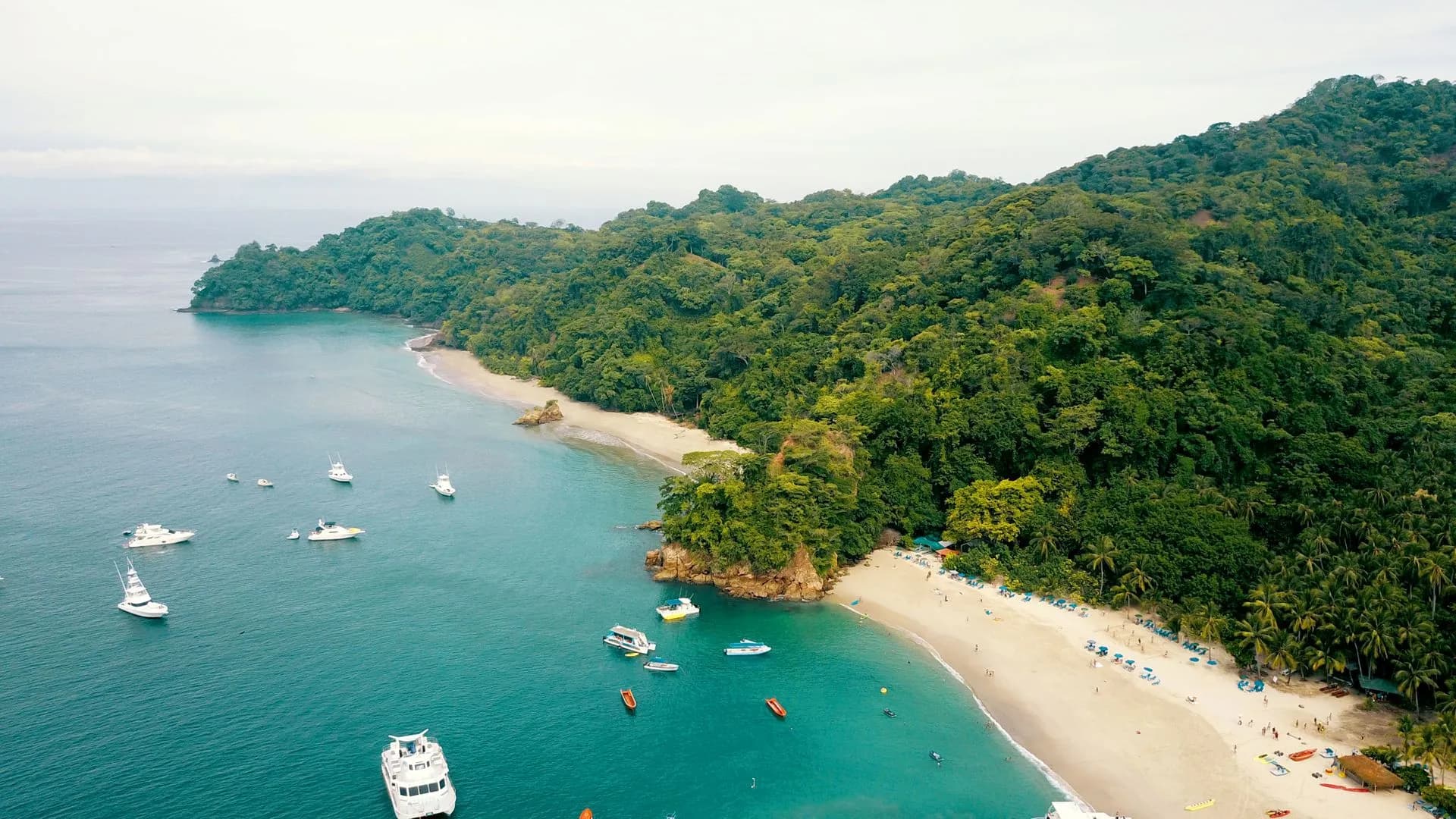
Playa Espadilla and the sheltered crescent of Playa Manuel Antonio inside the park are swimmable all year, but December through April is when they look like the photographs. Mornings are bright and the water is flat, the sand carries far less washed-down debris than it does after green-season rain, and the 28 to 29°C sea needs no acclimatising. Playa Manuel Antonio, tucked between two headlands, is the calmest and the best choice for families and weaker swimmers. Espadilla is longer, more exposed, and where the surf schools operate.
Two practical notes. Shade on Espadilla is limited and the dry-season sun is relentless, so plan around the middle of the day rather than through it. And the mornings that are best for swimming are also the mornings everyone else has chosen, so an early start buys you real space.
The national park
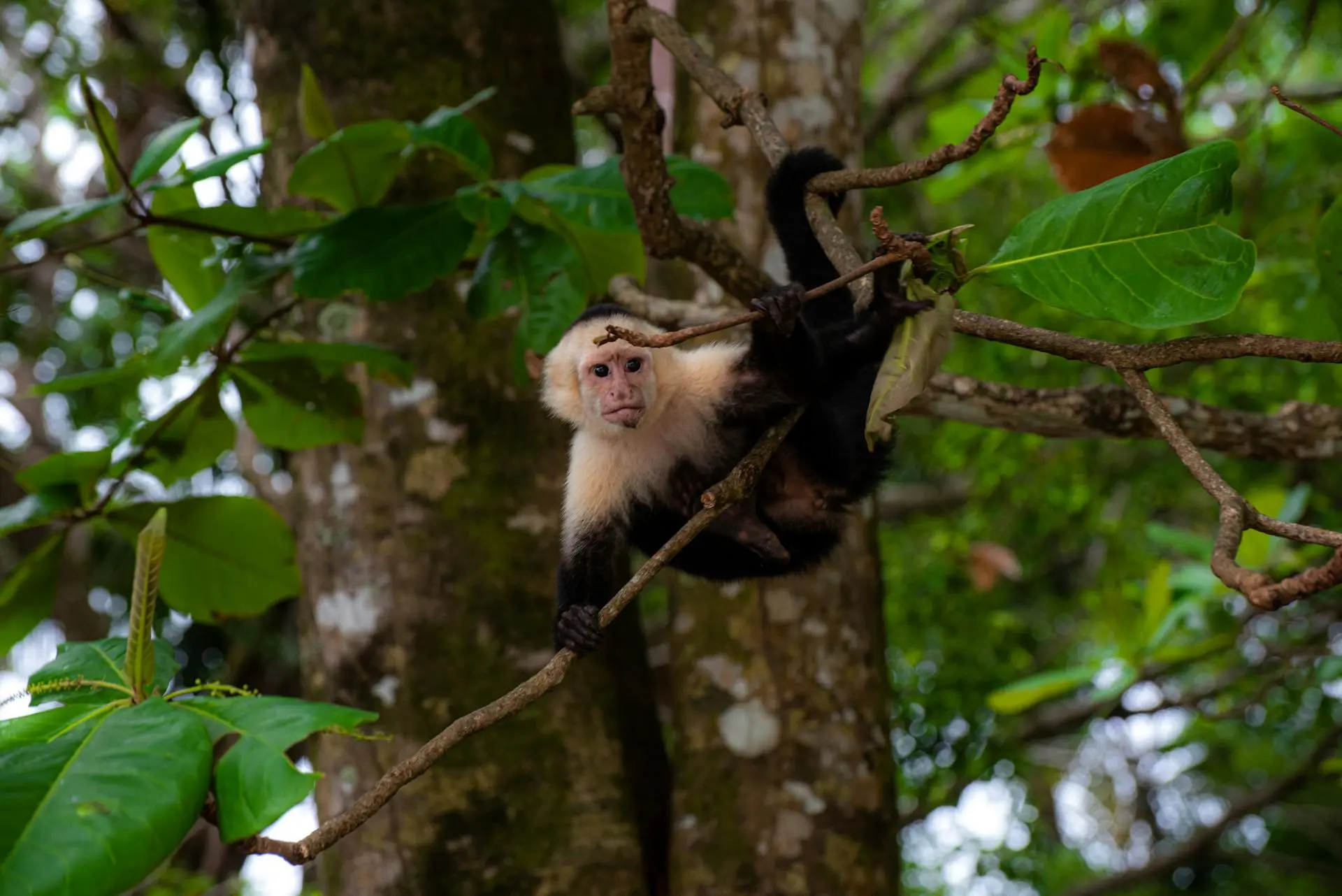
Manuel Antonio National Park is at its most walkable now. The trails are firm and dust-dry rather than slippery, the boardwalk sections are easy, and the beach stops inside the park are at their best. Capuchins, sloths, coatis and the park's 180-plus bird species are present year-round, so wildlife is not really a seasonal decision, though the forest is visibly drier and less lush than it is in green season.
The complication is access. The park operates a daily visitor cap, and in the dry season, especially between Christmas and Semana Santa, it is reached regularly. Entrance tickets need to be secured in advance rather than bought at the gate on the morning. We'd book this if your dates fall anywhere in the December to April window, and do it as soon as your dates are fixed, because arriving to find the day sold out is the single most common way a Manuel Antonio trip goes wrong. A guided tour typically handles the entrance for you, which is one reason we tend to recommend that route in high season, alongside the fact that a guide's telescope finds wildlife you will otherwise walk straight past.
The park also closes one day a week, and hours are fixed, so build your beach and birdwatching plans around a confirmed entrance date rather than the other way round.
Manuel Antonio Rain Days and Temperature by Month
The most useful thing to understand about Manuel Antonio's climate is that temperature barely moves all year, while the number of wet days swings sevenfold. Daytime highs sit between 30 and 33°C every month, nights hold around 23°C, and the sea stays at 28 to 29°C. What actually changes your trip is how many days see rain, and when.
Average rain days per month
Full Month-by-Month Figures
| Month | Rain Days | Avg High | Avg Low | Season |
|---|---|---|---|---|
| Jan | ~5 days | 31°C | 23°C | Dry season |
| Feb | ~3 days | 32°C | 23°C | Dry season |
| Mar | ~3 days | 33°C | 23°C | Dry season |
| Apr | ~6 days | 33°C | 23°C | Dry season |
| May | ~17 days | 32°C | 23°C | Green season |
| Jun | ~19 days | 31°C | 23°C | Green season |
| Jul | ~15 days | 31°C | 23°C | Green season |
| Aug | ~18 days | 31°C | 23°C | Green season |
| Sep | ~21 days | 30°C | 23°C | Green season |
| Oct | ~22 days | 30°C | 23°C | Green season |
| Nov | ~15 days | 31°C | 23°C | Green season |
| Dec | ~9 days | 31°C | 22°C | Dry season |
What the Numbers Actually Mean
Three things stand out. First, February and March are the driest months by a wide margin at roughly three rain days each, which is why the dry season peaks then rather than in December. Second, October is the wettest at around 22 rain days, with September just behind. Third, the transition is abrupt rather than gradual: April jumps from about 6 rain days to 17 in May, so the season flips within weeks rather than easing in.
The temperature column is almost a flat line, and that is the point. What matters more than the forecast here is the calendar: choosing when to visit Manuel Antonio is a decision about rain, humidity and crowds, not about heat. The sea is swimmable at 28 to 29°C every month of the year.
ℹ️ Figures are typical monthly averages drawn from our month-by-month Manuel Antonio guides and are indicative rather than exact. Conditions vary year to year, so treat these as the shape of the year rather than a forecast.
Crowds and Prices in the Dry Season
The dry season is not one long block of high demand. It has two sharp spikes and two quiet windows, and knowing where they fall is worth more than any other decision on this page, because the same stretch of sunshine can cost dramatically more or less depending on which week you land in.
- December 1 to 19 (the overlooked window): the rain is already easing toward its dry-season floor, the beaches are calm, and rates sit at the season's lowest. The only cost is that December still averages about nine rain days, most of them early in the month.
- December 20 to January 7 (peak one): Christmas and New Year, the most expensive and busiest window of the entire year. Hotels, the best restaurants and park entrance slots book out weeks ahead.
- January 8 to March (steady high season): the weather is at its most reliable, February and March being the driest months of the year, and the town is comfortably busy rather than overwhelmed. Park entrances still need booking ahead.
- Semana Santa, April (peak two): Holy Week is the biggest domestic travel week in Costa Rica, and Manuel Antonio is one of the destinations Costa Ricans themselves head to. Hotels fill nationwide, many businesses close Thursday and Friday, and the coastal road is heavy. Easter 2026 falls on April 5, but the date shifts each year, so check before you commit.
- Late April (the second value window): once Semana Santa passes, demand drops away sharply while the weather is still good. Rain days climb toward the May figure late in the month, which is the honest tradeoff, but the first ten days after Holy Week are, in our experience, the best-value stretch of the dry season.
What typically happens is that visitors book the middle of the season by default and pay a premium for weather that early December and late April deliver almost as well. We'd lean toward one of those two windows if the budget matters at all, and toward early starts every day regardless. Our hotels guide covers where to stay across the hill, the beach and Quepos, all of which price very differently in high season.
| Season | Better For |
|---|---|
| Dry season (Dec to Apr) | Reliable sunshine, best beach days, calm boat conditions |
| Green season (May to Nov) | Lush forest, far fewer people, easier park access, lower rates |
| Late April and November | Shoulder value: good weather, thinner crowds, lower prices |
| September and October | Cheapest and quietest months, but 21 to 22 rain days each |
If your dates are flexible and the budget is tight, our rainy season guide covers the very different but genuinely rewarding version of Manuel Antonio you get for considerably less, and our best time to visit guide weighs the whole calendar.
Manuel Antonio Park Nature Guided Tour with a Nature Specialist
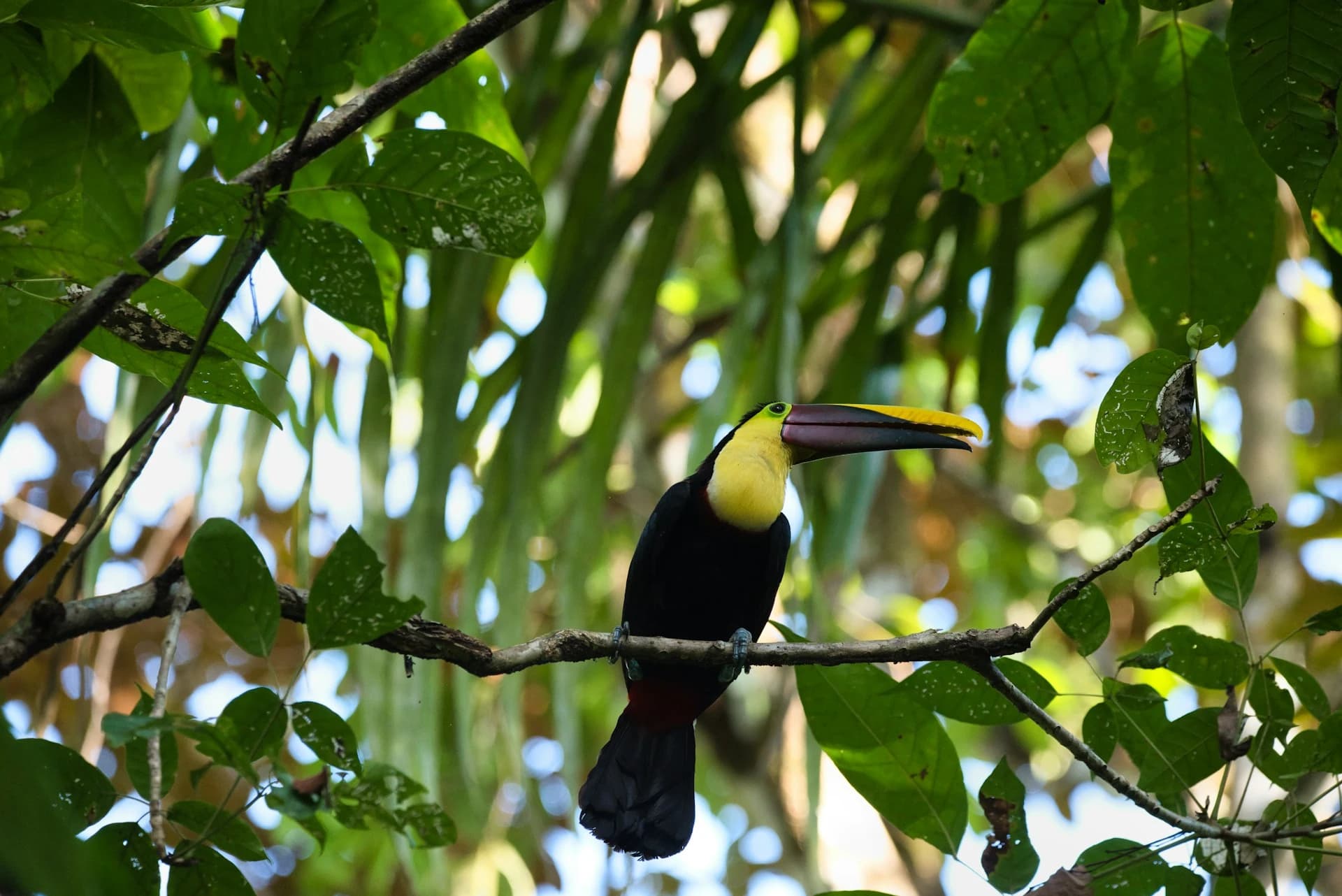
The activity we would book first in the dry season, and the one worth securing ahead. A certified naturalist leads a small group along the park's flat, mostly paved main trail and finds the wildlife you would walk straight past on your own, from both species of sloth to capuchins, toucans and snakes, then sets up a spotting scope so everyone gets a clear look and a photo. At 4.8 stars across more than 4,300 reviews it is the highest-volume tour in the area, it suits every age and fitness level, and it ends at the park beaches where you can stay on afterward.
Book NowBest Things to Do in Manuel Antonio in the Dry Season
| Activity | Dry Season Rating | Best Time of Day | Notes |
|---|---|---|---|
| National park tour | 10/10 | Early morning | Dry firm trails and best wildlife activity; book entrance ahead |
| Beach days | 10/10 | Morning and late afternoon | Calm clear water, little debris; avoid midday sun in Mar and Apr |
| Catamaran sailing | 10/10 | Afternoon or sunset | Flattest seas of the year and very few cancellations |
| Mangrove boat tour | 8/10 | Morning | Excellent wildlife spotting; channels lower than in green season |
| Snorkeling | 9/10 | Morning | Best visibility of the year with less river runoff |
| Zipline and canopy | 10/10 | Morning | Dry lines and clear coastal views over the forest |
| ATV tour | 9/10 | Morning | Firm trails and far less mud, though noticeably dustier |
| Waterfall trips | 7/10 | Morning | Safer approaches and clearer pools, but reduced flow |
| White water rafting | 7/10 | Morning | Runs year-round; lower dry-season flow is gentler |
| Surf lessons | 9/10 | Morning | Smaller cleaner waves suit beginners; experts want green season |
| Night tour | 8/10 | Evening | Reliable and comfortable; frogs are more active in wet months |
| Horseback riding | 9/10 | Morning or late afternoon | Dry trails; go early or late to dodge the heat |
What to prioritize this season
The dry season is a park and water season first. Our top pick is a guided Manuel Antonio National Park tour taken as early in the day as you can manage, both because wildlife is most active then and because the heat and the crowds arrive together by mid-morning. A guide's telescope is the difference between walking past a sloth and watching one, and a booked tour usually resolves the entrance-cap problem for you.
After that, this is exactly when the water tours shine. A catamaran day out of Quepos gets the flattest seas of the year, and snorkeling visibility is at its best with almost no river runoff. The Damas Island mangrove tour is a strong morning wildlife option, and ziplining, ATV tours and horseback riding all benefit from firm ground, with the caveat that the ATV routes are dusty rather than muddy now. We'd give this the edge for anyone travelling with children: dry footing and calm water remove most of the friction.
Two things the dry season does not do best, and it is worth being straight about them. Waterfall trips and river runs on the Savegre or Naranjo are gentler now, which suits families and disappoints thrill-seekers, and the night tour is still very good but frogs are noticeably more active in the wet months. Rain-proof options like a chocolate tour or a cooking class matter less in a season this dry, but they make excellent use of a hot afternoon.
Who Should Visit in the Dry Season (and Who Should Not)
The dry season is the default recommendation for Manuel Antonio, and for most visitors it is the right one. It is not universally the better choice, though, and the honest version of that answer is worth spelling out.
Come in the dry season if
- Beaches are the point of the trip. Nothing else about the season is as decisive. Calm bright mornings and clean sand are exactly what December to April delivers.
- Your trip is short. With three or four days you cannot afford to lose one to weather, and three rain days a month means you almost certainly will not.
- You want boat tours, sailing or snorkeling. Flat seas and the year's best visibility make these a different experience from their green-season versions.
- You are travelling with young children or older relatives. Firm park trails, a calm warm sea, and no rain planning remove most of the difficulty.
Consider the green season instead if
- Budget is the deciding factor. September and October are the cheapest months of the year by a wide margin, and even May and November save real money.
- Crowds bother you more than rain does. The quietest dry-season week is still busier than most of the green season, and park entrance is far easier to secure.
- Heat is a problem for you. We wouldn't choose this for anyone who struggles in strong sun, particularly March and April at 33°C on exposed sand.
- You want the forest at its lushest, or big surf. Both peak in the wet months, when green-season mornings are usually clear anyway and rain arrives in the afternoon.
Our side-by-side seasonal comparison works through the tradeoffs in more detail if you are genuinely torn.
From Our Experience
The detail that catches people out is that the national park's daily visitor cap, not the weather, is what actually shapes a dry-season itinerary. Between Christmas and Semana Santa the cap is reached regularly, and there is no way around it on the day. Fix your park date first, secure the entrance or a guided tour that includes it, and then build beaches, boats and rest days around that one fixed point. Travellers who do it the other way round are the ones who end up with a sunny week and no park visit, which is the one thing this destination is genuinely famous for.
Tips for Visiting Manuel Antonio in the Dry Season
- Book park entrance as soon as your dates are fixed. The daily visitor cap is reached regularly from December through April, and tickets are not reliably available at the gate.
- Start early, every day. Wildlife is most active in the first hours, the beaches are calmest, and both the heat and the crowds build from mid-morning.
- Target early December or late April. Both sit inside the dry season, outside its demand spikes, and deliver most of the same conditions for far less money.
- Check the Semana Santa dates before booking April. Holy Week moves each year, fills hotels nationwide, and closes many businesses on the Thursday and Friday.
- Plan around midday in March and April. These are the hottest months of the year at 33°C (91°F), and shade on the open beaches is limited. Use 11am to 2pm for lunch, shade or a pool.
- Take sun protection more seriously than you think you need to. UV is very high, the sea breeze masks it, and a first-day burn costs you the rest of the trip.
- Pick February or March for maximum dryness. At roughly three rain days each they are the driest months of the year, without April's Holy Week complication.
- Do not leave food or bags unattended on the beach. Capuchins and coatis in and around the park are practised at this, and it is more of an issue when the beaches are busy.
- Expect lower river flow. Rafting and the waterfalls run gentler than in the wet months, which is better for families and less exciting for everyone else.
- Book hotels and headline tours well ahead. This is the busiest stretch of the year and the best properties fill weeks out, especially around Christmas, New Year and Holy Week.
How We Put This Guide Together
We based this dry-season guide on Manuel Antonio's December-to-April weather patterns, the rain-day figures from our own month-by-month Manuel Antonio guides, and the local high-season rhythm of crowds, holidays and national park access. Ratings reflect how each factor and activity actually performs across these five months: reliable sunshine, calm seas, firm park trails, the highest prices and crowds of the year, real heat in March and April, and river flows that run lower than in green season. Activity ratings draw on the same operators and tours we cover in our individual Manuel Antonio guides, so the tours highlighted here are the top-rated option from each of those pages rather than a separate list. The month-by-month breakdown mirrors our individual monthly guides for December through April, which go into more detail on any single month. Temperatures, rain days and crowd patterns are typical values and vary year to year. National park capacity rules, opening hours and Semana Santa dates change, so confirm current conditions, park availability and rates before you book.
Frequently Asked Questions
When is the dry season in Manuel Antonio?+
December through April. Rain days fall from about 9 in December to 5 in January and roughly 3 in both February and March, then rise back to about 6 in April as the season begins to break. February and March are the driest months of the year, which is why the season peaks then rather than at its start.
Is the dry season the best time to visit Manuel Antonio?+
For most visitors, yes. It gives the most reliable sunshine of the year, the calmest seas for boat tours and snorkeling, and firm dry trails in the national park, with highs of 31 to 33°C (88 to 91°F) and a sea at 28 to 29°C (82 to 84°F). The tradeoffs are the highest prices and biggest crowds of the year, harder national park access, and real heat in March and April.
Does it actually rain in Manuel Antonio during the dry season?+
Very little. February and March average about three rain days each, so most weeks in those months see none at all. December is the exception within the season at around nine rain days, concentrated in the first half of the month, and April climbs back to about six as the transition to the green season begins. When rain does fall it is typically a short late-afternoon shower.
What is Semana Santa and how does it affect a Manuel Antonio trip?+
Semana Santa, Holy Week, is the biggest domestic travel week in Costa Rica, and Manuel Antonio is one of the destinations Costa Ricans themselves travel to. Hotels fill nationwide, rates spike, the coastal road is heavy, and many businesses close on the Thursday and Friday. Easter 2026 falls on April 5, but the date moves each year, so confirm it before booking April dates. The week immediately after is one of the best-value stretches of the whole dry season.
Do I need to book Manuel Antonio National Park entrance in advance?+
Yes, especially between December and April. The park operates a daily visitor cap that is reached regularly through the dry season, and turning up at the gate on the morning is not a reliable plan. Secure your entrance as soon as your dates are fixed, or book a guided tour that includes it. The park also closes one day a week, so check that before you build your itinerary.
Which dry-season month is best for Manuel Antonio?+
February and March are the driest at roughly three rain days each. February is the more comfortable of the two, at 32°C (90°F) rather than March's 33°C (91°F), with slightly fewer people than January and no holiday premium. March is the choice if maximum sunshine outweighs the extra heat. Early December and late April are the best value.
How hot does Manuel Antonio get in the dry season?+
Highs run 31°C (88°F) in December and January, 32°C (90°F) in February, and 33°C (91°F) in March and April, which are the hottest months of the entire year. Nights hold at 22 to 23°C (72 to 74°F). Humidity is moderate rather than heavy in these months, but this is an exposed Pacific coast with very high UV and limited shade on the sand, so plan around the middle of the day in March and April.
What should I pack for the dry season in Manuel Antonio?+
Light warm-weather clothing for days of 31 to 33°C (88 to 91°F), strong reef-safe sunscreen and a hat for the very high UV, swimwear you will live in given the 28 to 29°C sea, closed shoes with grip for the park trails, insect repellent, and a dry bag for boat tours. A rain jacket is genuinely optional in February and March, though worth packing for December and late April.
Affiliate note: Some links on this page are affiliate links. If you book through them, we may earn a small commission at no additional cost to you.