Dry season gives you reliable beach days and the busiest park of the year. Green season gives you an empty coastline, the greenest rainforest and far lower prices. Here is the honest head-to-head, factor by factor, with a clear recommendation for each kind of traveller.
What You Should Know
- This is a tradeoff decision, not a weather decision. Dry season (December to April) buys you three to nine rain days a month, dependable beach afternoons and the driest park trails of the year, at the highest prices and heaviest crowds. Green season (May to November) buys you an emptier coastline, the lushest rainforest, bigger surf and the lowest rates of the year, at the cost of 15 to 22 rain days a month.
- Temperature is not a differentiator and you should ignore it entirely. Highs run 30 to 33°C every month, nights hold at 22 to 23°C, and the sea sits at 28 to 29°C in January and in October alike. You pack the same clothes and the same swimsuit either way.
- The park operates a daily visitor cap, so entrance tickets are a booking problem rather than a weather problem. In dry season, and especially between December 20 and Semana Santa, buy your entrance ahead. In September and October the cap almost never binds.
- Green season rain has a shape. Mornings are usually clear and the showers build through the afternoon, which means a green-season day in Manuel Antonio is not a washout, it is a morning trip with a wet back half.
Rainy Season vs Dry Season in Manuel Antonio: The Short Answer
⭐ Short answer: if this is a beach holiday and you want guaranteed sun, book December to April and accept the prices and the queues. If you want quiet trails, the greenest forest, the best surf and rates at their lowest, book May to November and run your days in the morning. If you want both, aim for late April, May, or late November into early December.
Manuel Antonio runs on two clear calendars. The dry season covers December through April and peaks in February and March, when rain falls on roughly three days a month and the beach is effectively a certainty. The green season runs May through November and peaks in September and October, when rain falls on 21 to 22 days a month and some smaller businesses close for the quietest weeks of the year.
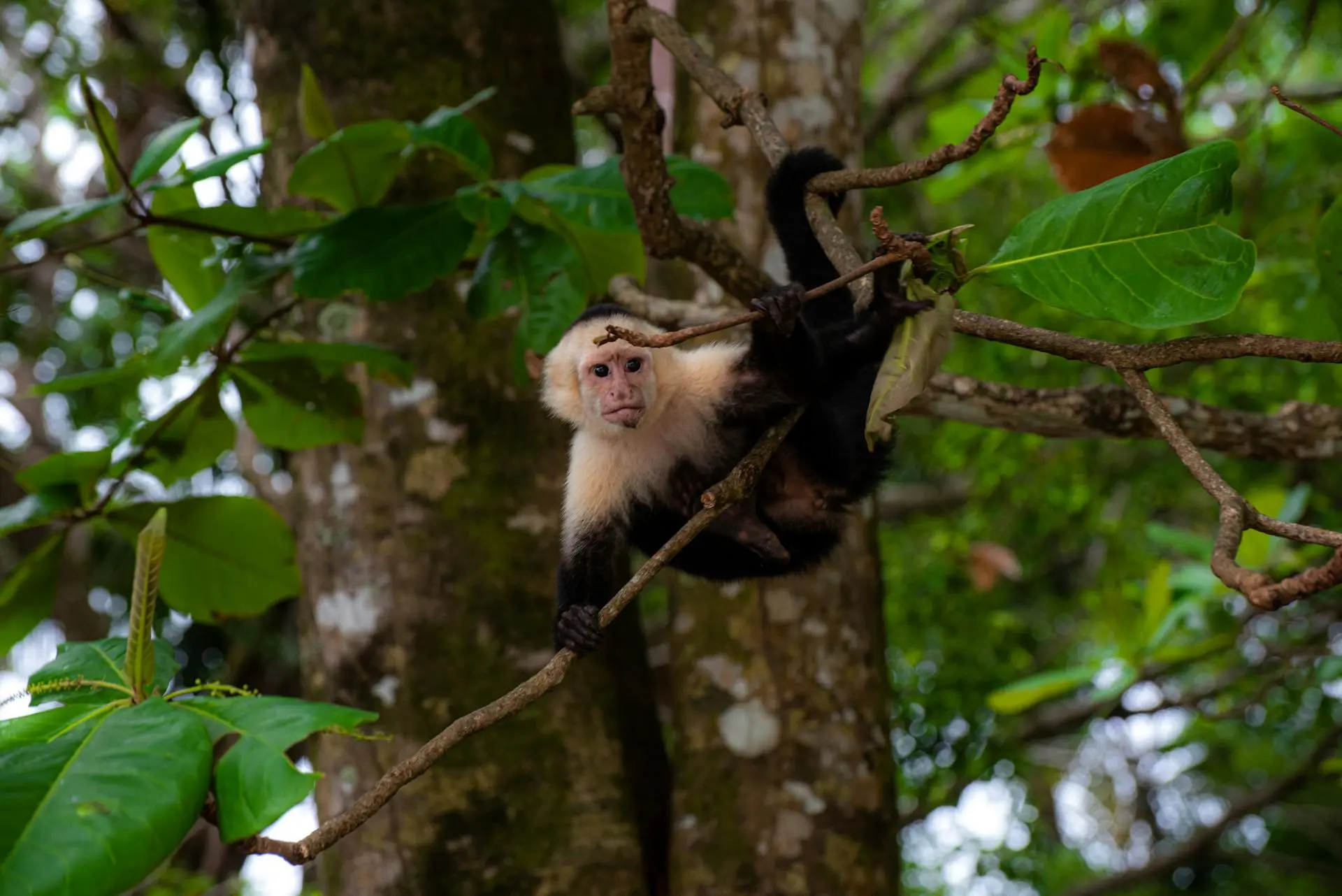
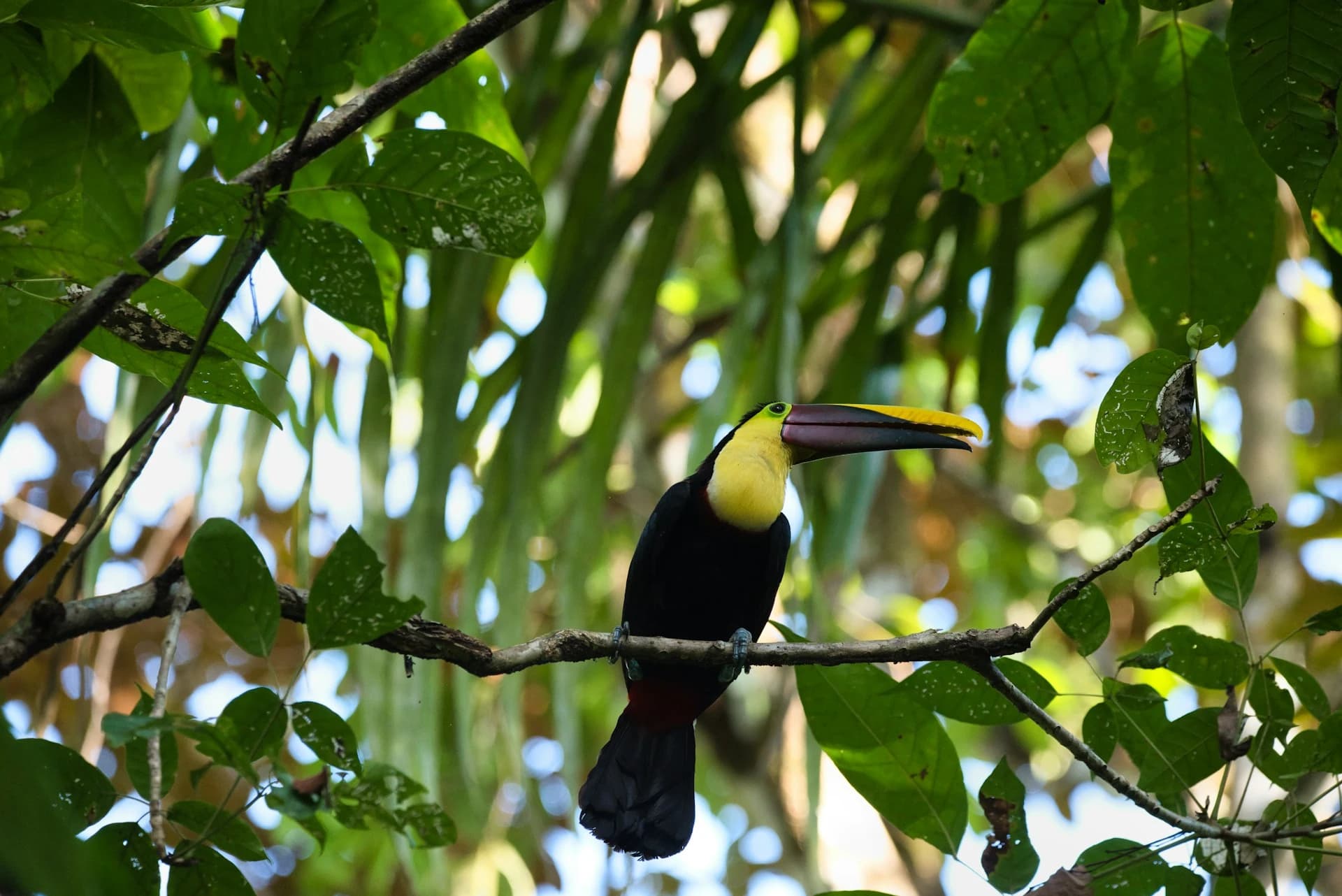
The biggest difference is the number of wet days, not the heat, the sea or even the wildlife. Capuchins, sloths, coatis and the park's 180-plus bird species are here in every month. What green season really takes from you is the reliability of an afternoon plan, and what it gives back is a national park you can walk without a crowd, a rainforest at full saturation, larger swell for surfing, and hotel rates that fall to their annual floor.
We have written this as a genuine head-to-head rather than a hedge. Each section below picks a winner, and the decision table further down gives a straight recommendation for ten kinds of traveller. For the deep dives, our Manuel Antonio dry season guide and Manuel Antonio rainy season guide cover each half of the year in full, and best time to visit sets out the whole calendar.
Which Season Wins?
✅ Dry season wins on: beach reliability, dry park trails, boat tours, family logistics, photography
✅ Green season wins on: price, quiet, forest greenery, surf size, waterfalls, night walks
⚠️ Neither wins on temperature or the sea. Highs are 30 to 33°C and the water is 28 to 29°C every month, so warmth should not enter your decision at all.
Dry Season vs Green Season: Side by Side
Here is the full comparison in one place. Every rain-day figure below comes from our own month-by-month Manuel Antonio guides, and the crowd and price notes follow the local high and low season rhythm.
| Factor | Dry Season (Dec to Apr) | Green Season (May to Nov) |
|---|---|---|
| Months | December, January, February, March, April | May, June, July, August, September, October, November |
| Temperature | 31 to 33°C highs, 22 to 23°C lows | 30 to 32°C highs, 23°C lows: effectively identical |
| Rain days | ~3 (Feb and Mar) to ~9 (Dec) | ~15 (Jul and Nov) to ~22 (Oct) |
| Driest / wettest | February and March at about 3 rain days | October at about 22 rain days, September at about 21 |
| Rain pattern | Rare showers; whole weeks can pass dry | Clear mornings, showers building through the afternoon |
| Sea temperature | 28 to 29°C, swimmable every day | 28 to 29°C, swimmable every day: no difference at all |
| Beaches | Excellent: reliable sun on Espadilla and Playa Manuel Antonio | Good mornings, wet afternoons; far emptier sand |
| National park | Dry, firm trails; daily cap regularly sold out | Muddy and slick underfoot; tickets easy to get |
| Wildlife | Very good: animals concentrate near water sources | Very good and lusher backdrop; amphibians at their peak |
| Surf | Smaller, cleaner beginner waves at Playa Espadilla | Bigger, more consistent swell; better for improvers |
| Whale watching | Humpbacks roughly December to March (northern group) | Humpbacks roughly July to October (southern group) |
| Scenery | Bright and sunny; some vegetation dries off by April | Deepest green of the year; rainforest fully saturated |
| Crowds | Highest of the year, peaking Dec 20 through Semana Santa | Lowest of the year; September and October are quietest |
| Prices | Peak rates, with the annual maximum over Christmas and New Year | Lowest rates of the year, bottoming out in September and October |
| Availability | Book park entry, hotels and tours weeks ahead | Usually bookable a day or two out; some venues close Sep and Oct |
| Best for | First-timers, beach holidays, families, photographers | Budget travellers, surfers, wildlife fans, repeat visitors |
Read down that table and the pattern is clear: dry season wins everything that depends on a reliable afternoon, and green season wins everything that depends on price, quiet and water. Our view is that there is no wrong answer here, only a mismatch between what a traveller wants and which season they book.
Manuel Antonio Rain Days and Temperature by Month
The most useful thing to understand about Manuel Antonio's climate is that temperature barely moves all year, while the number of wet days swings sevenfold. Daytime highs sit between 30 and 33°C every month, nights hold around 23°C, and the sea stays at 28 to 29°C. What actually changes your trip is how many days see rain, and when.
Average rain days per month
Full Month-by-Month Figures
| Month | Rain Days | Avg High | Avg Low | Season |
|---|---|---|---|---|
| Jan | ~5 days | 31°C | 23°C | Dry season |
| Feb | ~3 days | 32°C | 23°C | Dry season |
| Mar | ~3 days | 33°C | 23°C | Dry season |
| Apr | ~6 days | 33°C | 23°C | Dry season |
| May | ~17 days | 32°C | 23°C | Green season |
| Jun | ~19 days | 31°C | 23°C | Green season |
| Jul | ~15 days | 31°C | 23°C | Green season |
| Aug | ~18 days | 31°C | 23°C | Green season |
| Sep | ~21 days | 30°C | 23°C | Green season |
| Oct | ~22 days | 30°C | 23°C | Green season |
| Nov | ~15 days | 31°C | 23°C | Green season |
| Dec | ~9 days | 31°C | 22°C | Dry season |
What the Numbers Actually Mean
Three things stand out. First, February and March are the driest months by a wide margin at roughly three rain days each, which is why the dry season peaks then rather than in December. Second, October is the wettest at around 22 rain days, with September just behind. Third, the transition is abrupt rather than gradual: April jumps from about 6 rain days to 17 in May, so the season flips within weeks rather than easing in.
The temperature column is almost a flat line, and that is the point. This is the crux of the whole comparison: choosing when to visit Manuel Antonio is a decision about rain, humidity and crowds, not about heat. The sea is swimmable at 28 to 29°C every month of the year.
ℹ️ Figures are typical monthly averages drawn from our month-by-month Manuel Antonio guides and are indicative rather than exact. Conditions vary year to year, so treat these as the shape of the year rather than a forecast.
Which Season Should You Book? A Straight Answer
Rather than list pros and cons and leave you to weigh them, here is what we'd book if we were you, matched to the kind of trip you are planning, with the reasoning attached.
| You want... | Best season | Why |
|---|---|---|
| Guaranteed beach weather | Dry season (Feb or Mar ideally) | About 3 rain days a month means whole weeks can pass without a shower |
| The lowest possible price | Green season (Sep or Oct) | Rates hit their annual floor exactly when the rain peaks at 21 to 22 days |
| The national park without a crowd | Green season | The daily visitor cap rarely binds, and the trails feel genuinely quiet |
| Easy days with young kids | Dry season | Firm park trails, dependable afternoons, and no reshuffling plans around storms |
| Bigger surf and real progression | Green season | Larger, more consistent swell than the small clean dry-season beginner waves |
| Frogs, insects and night walks | Green season | Amphibian activity climbs with the rain, and night tours are noticeably richer |
| Boat trips, sailing and mangroves | Dry season | Calmer, more predictable afternoons and far fewer weather reschedules |
| Photography of coast and canopy | Dry season | Clean light and open skies; green season shoots into flat cloud after noon |
| Humpback whales | Either (Jul to Oct or Dec to Mar) | Two separate migrations, so both seasons contain a genuine whale window |
| A balance of both, one trip | Shoulder (late Apr, May, late Nov) | Mostly dry mornings, the forest already green, low-season rates and thin crowds |
If you are still torn, apply this test. Ask what would ruin the trip: a wet afternoon, or paying peak rates and queuing for a park ticket. Answer honestly and the season chooses itself. In our experience the travellers who regret their timing are almost always the ones who booked September expecting a pure beach holiday, not the ones who paid more in February.
The National Park and Wildlife: Closer Than You Think
This is the comparison most visitors get wrong. Manuel Antonio National Park is a year-round destination, and the animals do not migrate out for the wet months. Capuchins, three-toed sloths, coatis, agoutis and more than 180 bird species are present in every month of the calendar. What changes between the seasons is the ground under your feet, the crowd around you, and how easy the entrance ticket is to get.
| Park factor | Dry season | Green season |
|---|---|---|
| Trail conditions | Firm and dry; easy for all abilities | Muddy and slick, especially on the steeper viewpoint spurs |
| Entrance tickets | The daily cap regularly sells out; book well ahead | Usually available at short notice, even same week |
| Crowding on trails | Busy, with queues at the main junctions | Genuinely quiet, particularly in September and October |
| Mammal sightings | Very good: animals concentrate around water sources | Very good: dense canopy, but sightings hold up well with a guide |
| Birding | Excellent visibility through thinner foliage | Excellent activity, harder sightlines in full leaf |
| Frogs and reptiles | Present but quieter | At their most active of the year |
| Forest appearance | Bright and open; some leaf drop by April | Deepest green of the year, dripping and photogenic |
| Park beaches | Reliable sun on Playa Manuel Antonio | Excellent in the morning, showery after lunch |
The verdict is a narrow dry-season win, and only on logistics. Firm footing and clean sightlines make a dry-season national park tour the easier experience, but a green-season visit puts you on a near-empty trail in a forest at full saturation, which many repeat visitors prefer outright. In either season, hire a guide with a scope: that single decision changes your sightings far more than the month does. For after dark, our night tour guide covers the walk that green season genuinely improves, and birdwatching works across the whole calendar.
Beaches and Surf: A Split Decision
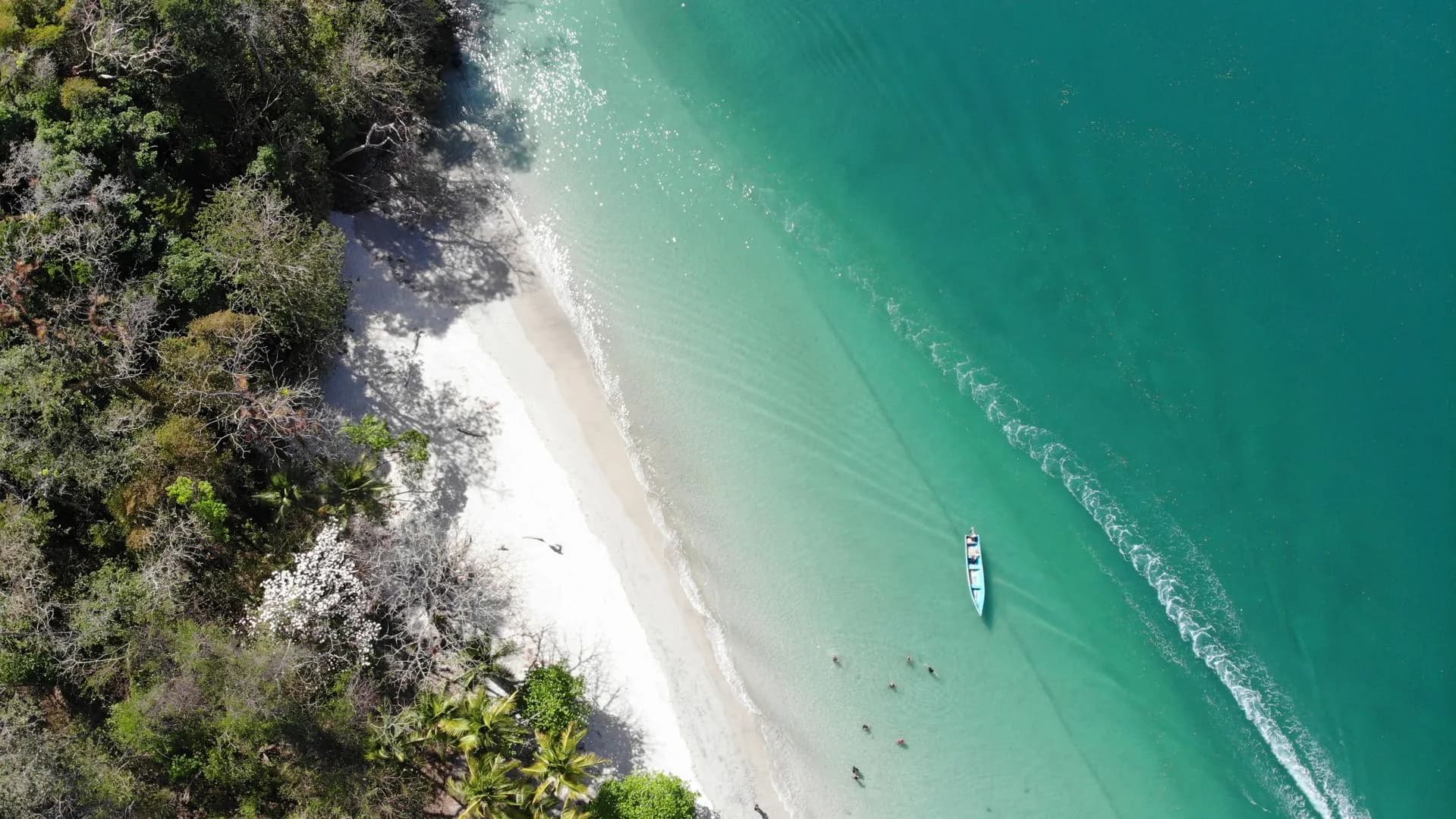
Here the two seasons genuinely divide. The beach itself belongs to the dry months, because a beach day is an afternoon activity and dry season is where reliable afternoons live. The surf belongs to the green months, because the swell is bigger and more consistent. And the water temperature belongs to neither, because it does not change.
| Coastal factor | Dry season | Green season |
|---|---|---|
| Sea temperature | 28 to 29°C | 28 to 29°C: no difference whatsoever |
| Beach reliability | Excellent: full days of sun are the norm | Mornings reliable, afternoons frequently showery |
| Playa Espadilla crowds | Busy, and packed over the Christmas peak | Wide stretches of empty sand |
| Playa Manuel Antonio | Calm, sheltered and at its most postcard-like | Still calm and sheltered, and far quieter |
| Surf size | Smaller and cleaner: ideal first lessons | Bigger and more consistent: better for improvers |
| Water clarity | Generally clearer, better for snorkelling | Runoff after heavy rain can cut visibility |
| Sun exposure | Intense: highs of 33°C in March and April | More cloud cover, still strong UV |
| Boat and sailing tours | Calmer conditions, very few reschedules | More weather-driven changes, especially afternoons |
What we consistently see is that visitors overestimate the sea and underestimate the sky. Nobody has ever found the water cold in Manuel Antonio, in any month, and quoting the sea temperature as a reason to pick a season is simply noise. The real coastal question is whether you need the afternoon to hold. If the answer is yes, book dry season. If you would rather have empty sand and better waves, take the green months and book your surf lessons then. Keep snorkelling for the dry months when clarity is at its best.
Crowds and Prices: Green Season Wins Outright
The gap between the two seasons is wider in your booking confirmation than in the forecast. Manuel Antonio's peak stretches from around December 20 through Semana Santa in April, and across that window hotels, tours and park entry all compete for the same limited supply. September and October sit at the opposite pole: the lowest visitor numbers, the easiest availability and the lowest rates of the year.
| Window | Crowds | Booking reality |
|---|---|---|
| Dec 20 to Jan 7 | Highest of the year | Annual peak rates; book hotels and park entry months ahead |
| Jan 8 to Mar 31 | High and steady | High-season rates; the daily park cap sells out regularly |
| Early April | Very high: Semana Santa domestic travel | The busiest domestic week in Costa Rica; book everything early |
| Late April | Dropping fast | Rates fall while the weather still holds at about 6 rain days |
| May and June | Low | Low-season rates; tours bookable a day or two out |
| July and August | Moderate: northern family holidays | A mild midsummer bump; still well below dry-season levels |
| September and October | Lowest of the year | Annual low rates; some smaller businesses close entirely |
| November | Low, rising late in the month | Good value until the Christmas surge begins |
Two details are worth planning around. First, green season is not uniformly quiet: July and August pick up with northern-hemisphere family holidays, and mid-July brings the veranillo, a short dry spell that makes those weeks better than 15 rain days suggests. Second, the September and October closures are real. A handful of restaurants and smaller operators shut for the quietest weeks, so check that what you are counting on is open before you commit.
Our honest read is that September and October offer the strongest value in the region and the weakest weather in almost exactly equal measure. If budget is the binding constraint, those months genuinely work, provided you accept 21 or 22 wet days and plan your mornings properly. Our October guide and September guide set out what that trip actually looks like, and where to stay covers the areas that hold up best in either season.
Manuel Antonio Park Nature Guided Tour with a Nature Specialist
The activity we would book first in either season, and the one worth securing ahead. A certified naturalist leads a small group along the park's flat, mostly paved main trail and finds the wildlife you would walk straight past on your own, from both species of sloth to capuchins, toucans and snakes, then sets up a spotting scope so everyone gets a clear look and a photo. At 4.8 stars across more than 4,300 reviews it is the highest-volume tour in the area, it suits every age and fitness level, and it ends at the park beaches where you can stay on afterward.
Book NowActivities Compared: Which Tours Work Best in Each Season
Some Manuel Antonio activities barely notice the season. Others change character completely. Here is how each of the headline tours performs on both sides of the calendar.
| Activity | Dry season | Green season | Winner |
|---|---|---|---|
| National park guided tour | 9/10: firm trails, clear sightlines, busy | 8/10: muddy but quiet, forest at its greenest | Dry, narrowly |
| Beach day at Espadilla | 10/10: dependable full days of sun | 6/10: strong mornings, showery afternoons | Dry |
| Zipline and canopy | 9/10: long views and dry lines | 7/10: cloud closes the views; storms can pause runs | Dry |
| Mangrove boat tour | 9/10: calm water, comfortable conditions | 8/10: higher water and denser greenery | Dry, narrowly |
| Catamaran sailing | 10/10: calmest seas and reliable sunsets | 6/10: more weather-driven reschedules | Dry |
| ATV tour | 9/10: firm trails and less mud | 7/10: messy and slippery, which some people love | Dry |
| Night walk | 7/10: good, but frogs are quieter | 10/10: amphibians and insects at peak activity | Green |
| Waterfall trips | 8/10: clearer pools, gentler flow | 10/10: full volume and far more dramatic | Green |
| Whitewater rafting | 7/10: gentler family-friendly flow | 10/10: high water and the best runs of the year | Green |
| Surf lesson | 9/10: small clean waves, ideal first time | 9/10: bigger swell, better for a second week | Tie |
| Snorkelling | 9/10: best water clarity of the year | 6/10: runoff can cut visibility after heavy rain | Dry |
| Chocolate tour and cooking class | 9/10: comfortable in dry weather | 9/10: sheltered, and the ideal wet-afternoon plan | Tie |
| Horseback riding | 9/10: dry ground and open views | 7/10: muddy trails and wetter going | Dry |
How to build each season's itinerary
In dry season you can plan by preference rather than by weather. Put the national park first thing for wildlife activity, then spread ziplining, mangrove boat trips, snorkelling and horseback riding across the afternoons without hedging.
In green season the structure changes: mornings are the reliable window, so book everything outdoors before noon and treat the afternoon as sheltered time by default. Then lean into what the wet months do better. Book the night tour without hesitation, put Savegre rafting and Naranjo rafting in while the rivers are high, and use the waterfalls at full volume. Keep a chocolate tour or cooking class in reserve as the wet-afternoon fallback. Our full things to do and day tours pages list the rest.
The Shoulder Months: Where Both Seasons Overlap
The honest conclusion of every comparison above is that neither season is better, they are better at different things. Which leads to the most useful advice on this page: if your dates are flexible, we'd lean toward the seam between the seasons rather than either extreme, because the shoulder weeks hand you most of the dry season's reliability at close to green season's prices.
| Window | Rain days | What you get | What you give up |
|---|---|---|---|
| Late April | ~6 for the month, rising late | Still-dry beach days, hot 33°C afternoons, and rates falling the moment Semana Santa ends | Showers start creeping back in the final week; vegetation looks driest |
| May | ~17 | The forest greening up fast, clear workable mornings, thin crowds and low-season rates | Afternoon showers return properly; park trails start softening |
| Late Nov to early Dec | ~15 easing to ~9 | Rain easing week by week, rainforest still fully saturated, and good value before the Christmas surge | Some wet afternoons; the window closes hard around Dec 20 |
Late April is the pure-value end of dry season. Rain days sit at about six for the month, the beach still behaves, and the moment Semana Santa passes the crowds and prices fall away while the weather holds. It is very close to the February trip for meaningfully less friction on bookings.
May is our own favourite compromise and the closest thing to having both seasons at once. Rain days jump from about 6 to about 17, which sounds worse than it feels: the showers concentrate in the afternoon, the mornings stay workable, and the forest transforms from dry-season brown edges to full green within a fortnight. Meanwhile the park cap stops binding and rates drop to low-season levels.
Late November into early December runs the same trade in reverse. Rain days fall from October's 22 to about 15 in November and about 9 in December, the rainforest is still carrying all the lushness of the wet months, and the beach days start behaving again. The catch is a hard deadline: from around December 20 the Christmas peak arrives, rates jump to their annual maximum and the park sells out, so this window closes fast.
If you only take one thing from this page, take that. The travellers who get the best Manuel Antonio trips are usually not the ones who booked the perfect month, they are the ones who booked the edges. Our May guide, April guide and November guide go month by month.
From Our Experience
The sharpest thing we can tell you is that in Manuel Antonio the season decides your afternoon, not your day. A green-season morning and a dry-season morning look almost the same: clear sky, warm sea, active wildlife. The difference arrives after lunch. So choose dry season if your trip needs both halves of the day to work, choose green season if you are happy to front-load everything and spend the afternoon under a roof, and in either case put the national park and any boat trip at the earliest slot the operator offers.
Tips for Choosing and Planning Either Season
- Decide on the afternoon first. It is the only factor where the seasons are truly far apart. If you need reliable afternoons, book December to April and stop optimising anything else.
- Ignore temperature and sea temperature completely. Highs run 30 to 33°C and the water sits at 28 to 29°C in every single month. Neither should influence your choice, and you pack identically either way.
- Book park entry ahead in dry season. The daily visitor cap sells out regularly between December and April, and it is the one thing you cannot fix on arrival.
- Book outdoor activities for mornings in both seasons. The pattern is the same year-round, just stricter in the green months: clearest early, wettest from mid-afternoon.
- Do not treat green season as a washout. Even October's 22 rain days mostly mean showers arriving after lunch rather than all-day rain, and the sea is exactly as warm as it is in March.
- Watch two peak windows in dry season. December 20 to January 7 is the most expensive stretch of the year, and Semana Santa in April is the busiest domestic travel week in Costa Rica.
- Check September and October openings. Some restaurants and smaller operators close for the quietest weeks, so confirm anything you are relying on before you book flights.
- Consider mid-July for a green-season trip. The veranillo dry spell makes those weeks noticeably better than July's 15 rain days implies.
- Match the whales to your dates, not the other way round. Humpbacks pass roughly July to October and again roughly December to March, so both seasons have a genuine window.
- Pack a light rain shell in every month. Even February and March average about three wet days, and a shower on the park trail is possible in any season.
- Reading further? Our dry season guide and rainy season guide go deeper on each half of the year, and February and October show the two extremes in detail.
How We Put This Comparison Together
We built this comparison from the rain-day and temperature figures in our own twelve month-by-month Manuel Antonio guides, the year-round consistency of the sea and the wildlife, and the local high and low season rhythm of crowds, park capacity and pricing. Every rating reflects how a factor or activity actually performs in each season rather than a general impression of tropical weather. Activity ratings draw on the same operators and tours we cover in our individual Manuel Antonio guides, so the tours highlighted here are the top pick from each of those pages rather than a separate list. Where an activity runs equally well in both seasons we have said so instead of manufacturing a winner, and where the difference is small we have called it narrow rather than decisive. Rain-day counts and temperatures are typical values and vary year to year. Park entry is subject to a daily visitor cap that changes with park policy, and seasonal opening hours for restaurants and operators shift in September and October, so confirm current conditions, availability and rates before you book.
Frequently Asked Questions
Is it better to visit Manuel Antonio in the rainy or dry season?+
It depends on what you want. Dry season (December to April) is better for a beach holiday, for families, and for anyone who needs reliable afternoons, with only about 3 to 9 rain days a month. Green season (May to November) is better for value, quiet park trails, bigger surf and the greenest rainforest, with 15 to 22 rain days a month and the lowest rates of the year.
When is the dry season in Manuel Antonio?+
December through April, peaking in February and March when rain falls on roughly three days a month. December still sees about nine rain days as the season settles in, and April rises to about six with showers returning late in the month, so the driest stretch is the middle of the season rather than either edge.
When is the rainy or green season in Manuel Antonio?+
May through November. May jumps straight to about 17 rain days, and the count builds to about 21 in September and about 22 in October before easing to about 15 in November. Mid-July brings the veranillo, a short dry spell that makes those weeks better than July's 15 rain days suggests.
Is the sea warmer in Manuel Antonio in the dry season?+
No, and this surprises many visitors. The water sits at 28 to 29°C (82 to 84°F) in every month of the year and is comfortably swimmable in January and in October alike. Air temperature is equally flat at 30 to 33°C highs. Neither temperature should factor into choosing a season: rain days, crowds and prices are what actually differ.
Can you visit Manuel Antonio National Park in the rainy season?+
Yes, and it is one of the best reasons to come in the green months. The park is open year-round, the wildlife does not leave, and the trails are far quieter. The daily visitor cap that regularly sells out between December and April rarely binds in September and October. Expect muddy, slick footing, wear proper shoes, and go early since showers typically build through the afternoon.
Does it still rain in Manuel Antonio during the dry season?+
Occasionally. February and March average about three rain days each, January about five, April about six and December about nine, so a shower is possible in any month. What changes is the character: dry-season rain tends to be a brief passing shower, while green-season rain arrives as a longer afternoon downpour. Pack a light rain shell either way.
Which months are cheapest and quietest in Manuel Antonio?+
September and October, which are also the two wettest months at about 21 and 22 rain days. Visitor numbers are at their annual low, hotel and tour rates bottom out, and park entry is easy to secure. The trade is that some restaurants and smaller operators close for those weeks, so confirm that anything you are counting on is open before booking.
What is the best month to visit Manuel Antonio for a balance of both seasons?+
May is our pick, with late April and late November close behind. May brings about 17 rain days that fall mostly in the afternoons, clear workable mornings, a rainforest greening up fast, easy park entry and low-season rates with very few visitors. Late November into early December works similarly in reverse as rain days ease from about 15 to about 9, but book before roughly December 20 when the Christmas peak begins.
Affiliate note: Some links on this page are affiliate links. If you book through them, we may earn a small commission at no additional cost to you.