La Fortuna and Manuel Antonio are Costa Rica's two most popular bases, but they offer very different trips: volcano, hot springs, and adventure inland versus rainforest meeting the beach on the Pacific coast. Here's how they compare on wildlife, activities, weather, crowds, cost, and access.
What You Should Know
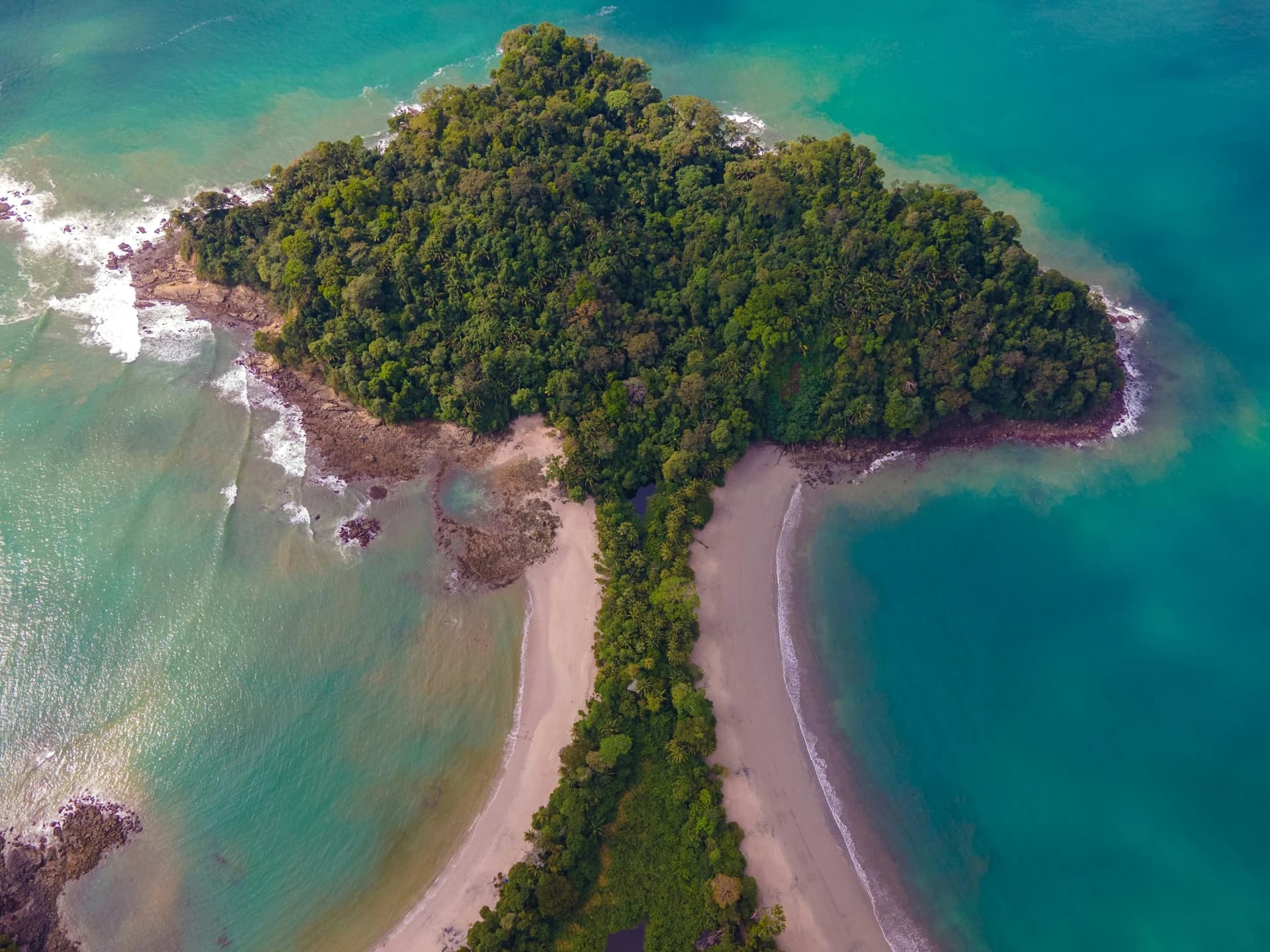
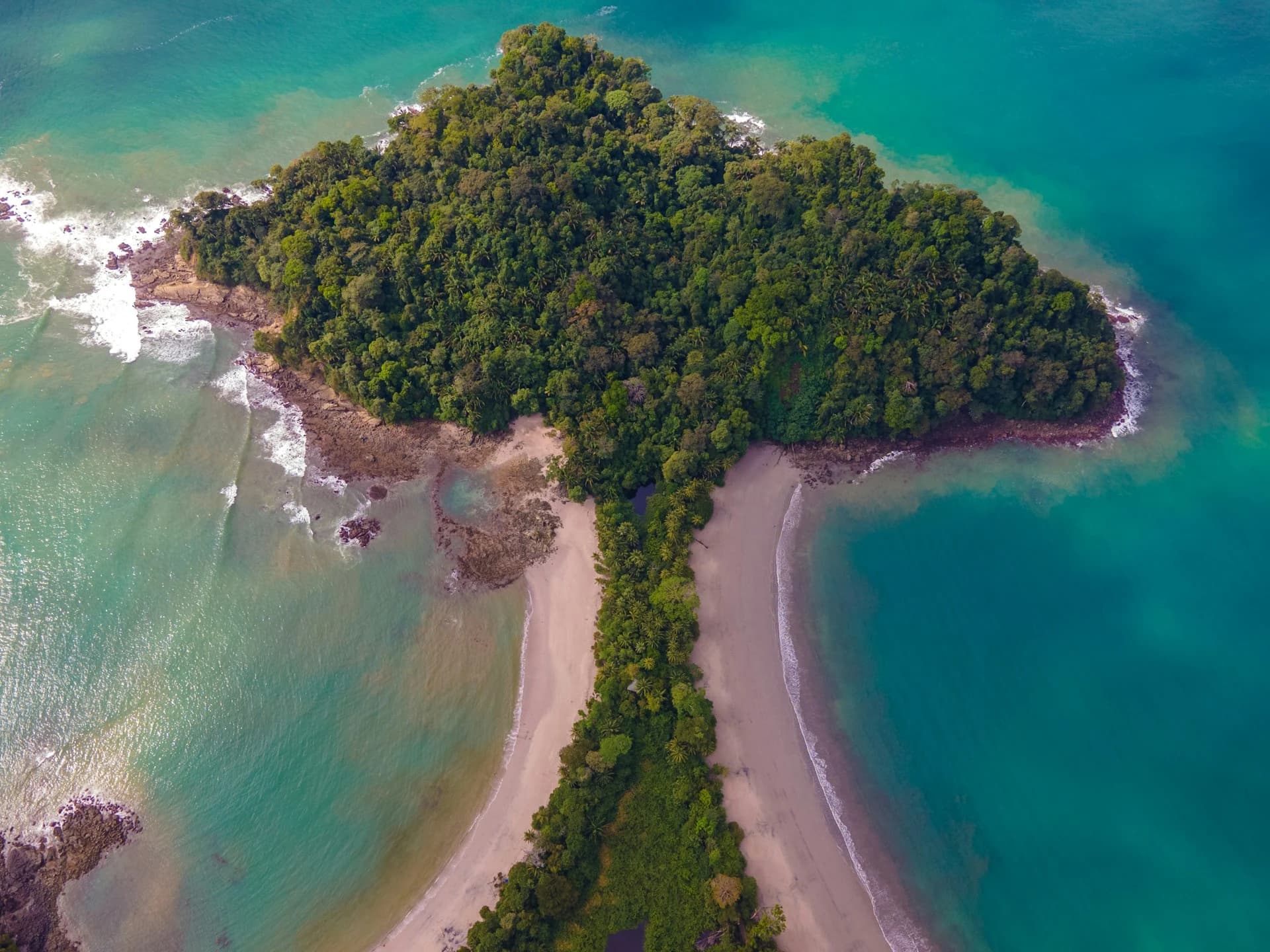
- Two different trips, not two versions of the same one. La Fortuna is an inland adventure hub at the foot of Arenal Volcano, built around hot springs, waterfalls, hanging bridges, and rainforest activity. Manuel Antonio is a coastal town where rainforest runs straight down to white-sand beaches inside a small, very accessible national park.
- Manuel Antonio is the busier of the two. Its national park is the most visited in Costa Rica and operates a daily visitor cap, so entry tickets need booking in advance. Arenal Volcano National Park and the wider La Fortuna area absorb crowds more easily because the attractions are spread across many separate sites.
- La Fortuna packs more distinct activities into a small radius: volcano hikes, the waterfall, hanging bridges, ziplines, rafting, canyoning, horseback riding, and hot springs are all within about 30 minutes of town. Manuel Antonio's draw is narrower but stronger: the park, the beaches, and easy sloth and monkey sightings.
- They are 218 km apart, about 4.5 to 6 hours by road, so combining them is a real travel day rather than a side trip. Most itineraries that do both run 8 days or more; with 4 to 5 days, pick one and go deeper.
La Fortuna vs Manuel Antonio
La Fortuna vs Manuel Antonio is the most common either-or decision in Costa Rica trip planning, and the honest answer is that they are not really competing for the same traveler. La Fortuna sits inland at the base of the Arenal Volcano, and its appeal is volume and variety: hot springs, a 70-meter waterfall, hanging bridges, ziplines, whitewater rafting, canyoning, and night walks, nearly all within a short drive of a walkable town. Manuel Antonio is on the central Pacific coast, and its appeal is the combination you cannot get inland: a compact rainforest national park whose trails end at swimmable white-sand beaches, with sloths and monkeys along the way.
Which Is Better, La Fortuna or Manuel Antonio?
Quick version: choose La Fortuna if you want an activity-dense base, volcano scenery, and hot springs to end the day; choose Manuel Antonio if you want beach time, the easiest reliable wildlife viewing in the country, and a shorter, gentler itinerary. If you are asking Arenal vs Manuel Antonio for a first trip to Costa Rica and only have time for one, most travelers get more variety out of La Fortuna, and more relaxation out of Manuel Antonio.
Winner by Category
If you want the whole comparison in one glance, here is who wins each category. Ties are genuine, not hedging: in those categories the two are close enough that your own preferences should decide.
| Category | Winner | Why |
|---|---|---|
| Adventure | 🟢 La Fortuna | Canyoning, rafting, ziplines, ATV, and volcano hiking in one base |
| Beaches | 🟢 Manuel Antonio | La Fortuna is inland and has none |
| Wildlife | 🟡 Tie | Manuel Antonio is faster and more concentrated; La Fortuna offers more habitats across more tours |
| Families | 🟡 Depends | Young children suit Manuel Antonio's short trails and beach breaks; active teens suit La Fortuna |
| Couples | 🟡 Tie | Thermal pools and volcano views versus sunset beaches and ocean-view rooms |
| Relaxation | 🟢 Manuel Antonio | Beach days need no booking, no transfer, and no schedule |
| Activity variety | 🟢 La Fortuna | More distinct things to do within 30 minutes than anywhere else in Costa Rica |
| Hot springs | 🟢 La Fortuna | Volcanic thermal water; Manuel Antonio has no equivalent |
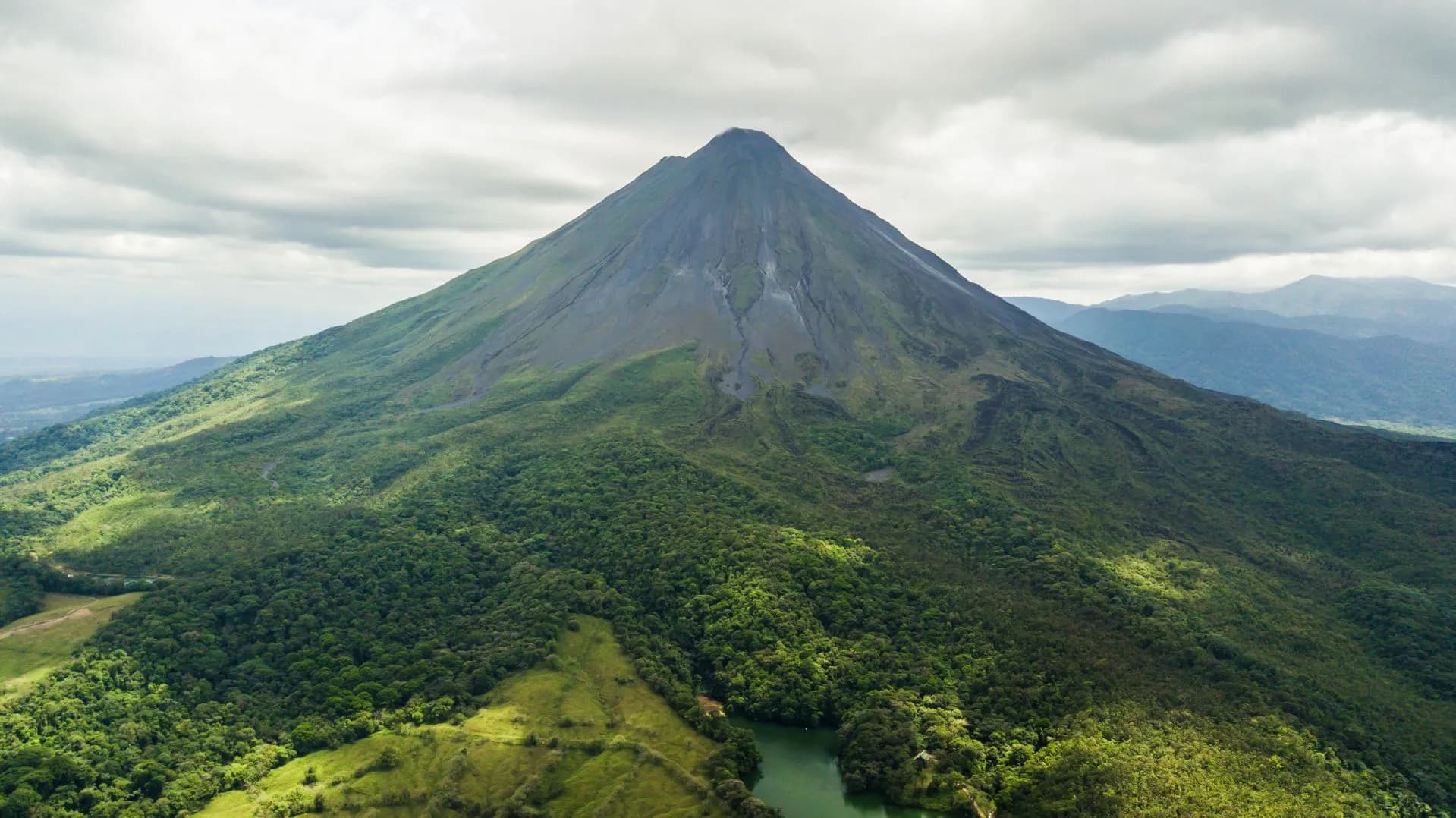
| Volcano scenery | 🟢 La Fortuna | Arenal's cone dominates the area, cloud permitting |
| Short trips | 🟢 Manuel Antonio | Fewer must-do activities, so 2 to 3 nights feels complete rather than rushed |
Overall Ratings
Scored against each other rather than against Costa Rica as a whole:
| Category | La Fortuna | Manuel Antonio |
|---|---|---|
| Adventure | ⭐⭐⭐⭐⭐ | ⭐⭐⭐ |
| Wildlife | ⭐⭐⭐⭐ | ⭐⭐⭐⭐⭐ |
| Beaches | ⭐ | ⭐⭐⭐⭐⭐ |
| Relaxation | ⭐⭐⭐ | ⭐⭐⭐⭐⭐ |
| Scenery | ⭐⭐⭐⭐⭐ | ⭐⭐⭐⭐ |
| Activity variety | ⭐⭐⭐⭐⭐ | ⭐⭐⭐ |
| Ease and low effort | ⭐⭐⭐ | ⭐⭐⭐⭐⭐ |
| Food and nightlife | ⭐⭐⭐⭐ | ⭐⭐⭐⭐ |
Ideal Trip Length
- La Fortuna: 3 to 4 nights. There are enough distinct full-day activities that three nights is the minimum to avoid rushing, and four lets you add a rest day or a hot springs afternoon.
- Manuel Antonio: 2 to 3 nights. The park is a half day and the beaches fill the rest, so two nights covers the essentials and three adds a boat trip or surf lesson.
- Both together: 8 to 10 days. That allows 3 to 4 nights inland, 3 on the coast, a transfer day, and a night near San José at one end for the flight.
La Fortuna vs Manuel Antonio: Side by Side
The clearest way to see the difference is category by category:
| Category | La Fortuna (Arenal) | Manuel Antonio |
|---|---|---|
| Setting | Inland rainforest at the base of a volcano, beside Lake Arenal | Pacific coast, rainforest meeting white-sand beaches |
| Signature draw | Arenal Volcano and natural hot springs | Manuel Antonio National Park and its beaches |
| Wildlife | Sloths, howler monkeys, toucans, frogs, birds across many reserves | Sloths, capuchin and squirrel monkeys, iguanas, coatis, 180+ bird species, concentrated in one park |
| Beaches | None; freshwater lake and rivers instead | Yes, several inside and beside the park |
| Activity variety | Very high: hikes, bridges, ziplines, rafting, canyoning, horseback, tubing, night walks | Moderate: park tours, surfing, catamaran and mangrove trips, ziplines, rafting |
| Crowds | Busy in town, but spread across many separate attractions | Concentrated; the park is Costa Rica's most visited and caps daily entry |
| Getting there from San José | ~3 to 3.5 hours | ~3 to 4 hours |
| Getting there from Liberia (LIR) | ~2.5 to 3 hours | Considerably longer, usually via the coastal highway |
| Walkable town | Yes, a compact downtown with restaurants and shops | Less so; accommodation is strung along the road between Quepos and the park |
| Best for | Adventure, variety, families with active teens, first-timers wanting to do a lot | Beach and wildlife in one place, easier pace, shorter trips, travelers with limited mobility |
Most people do not realize the crowding difference is structural rather than seasonal: Manuel Antonio funnels visitors through one capped park, while La Fortuna spreads the same volume across a dozen separately ticketed sites. Neither is a bad choice, and both are well set up for visitors. The question is whether you would rather end the day in a thermal pool below a volcano or with your feet in the Pacific.
Quick Verdict: Who Should Choose Which
| If you... | Choose | Why |
|---|---|---|
| Want the widest range of activities | La Fortuna | More distinct things to do within 30 minutes than anywhere else in Costa Rica |
| Want beach and rainforest together | Manuel Antonio | The only one of the two where the park trails end at swimmable beaches |
| Are travelling with young children | Manuel Antonio | Short flat trails, quick wildlife payoff, and beach time between activities |
| Are travelling with active teens | La Fortuna | Ziplines, canyoning, rafting, and ATV all in one base |
| Want hot springs | La Fortuna | Manuel Antonio has none; the thermal water is a volcano feature |
| Have limited mobility | Manuel Antonio | The main park trail is short and largely flat, with a paved main path |
| Are flying into Liberia (LIR) | La Fortuna | Roughly 2.5 to 3 hours away, far closer than the Pacific coast |
| Only have 3 to 4 nights total | Either, but only one | The 218 km between them eats most of a day; splitting a short trip is a poor trade |
Things to Do: La Fortuna vs Manuel Antonio
La Fortuna
The strength here is density. Within roughly half an hour of town you can hike the 1968 lava field on an Arenal Volcano hike, walk the canopy on a hanging bridges tour, climb down to the La Fortuna Waterfall, fly a zipline circuit, raft the Balsa or Toro, ride horseback through farmland, and finish in hot springs. That variety is why many itineraries give La Fortuna more nights than anywhere else in the country.
Manuel Antonio
The strength here is the payoff-to-effort ratio. A guided Manuel Antonio National Park tour reliably produces sloths, capuchin and squirrel monkeys, and iguanas on short, mostly flat trails that finish at a beach. Around the park you can add surf lessons at Playa Espadilla, a Damas Island mangrove tour, catamaran and snorkeling trips from Quepos marina, and rafting on the Savegre or Naranjo. Our things to do in Manuel Antonio guide covers the full range.
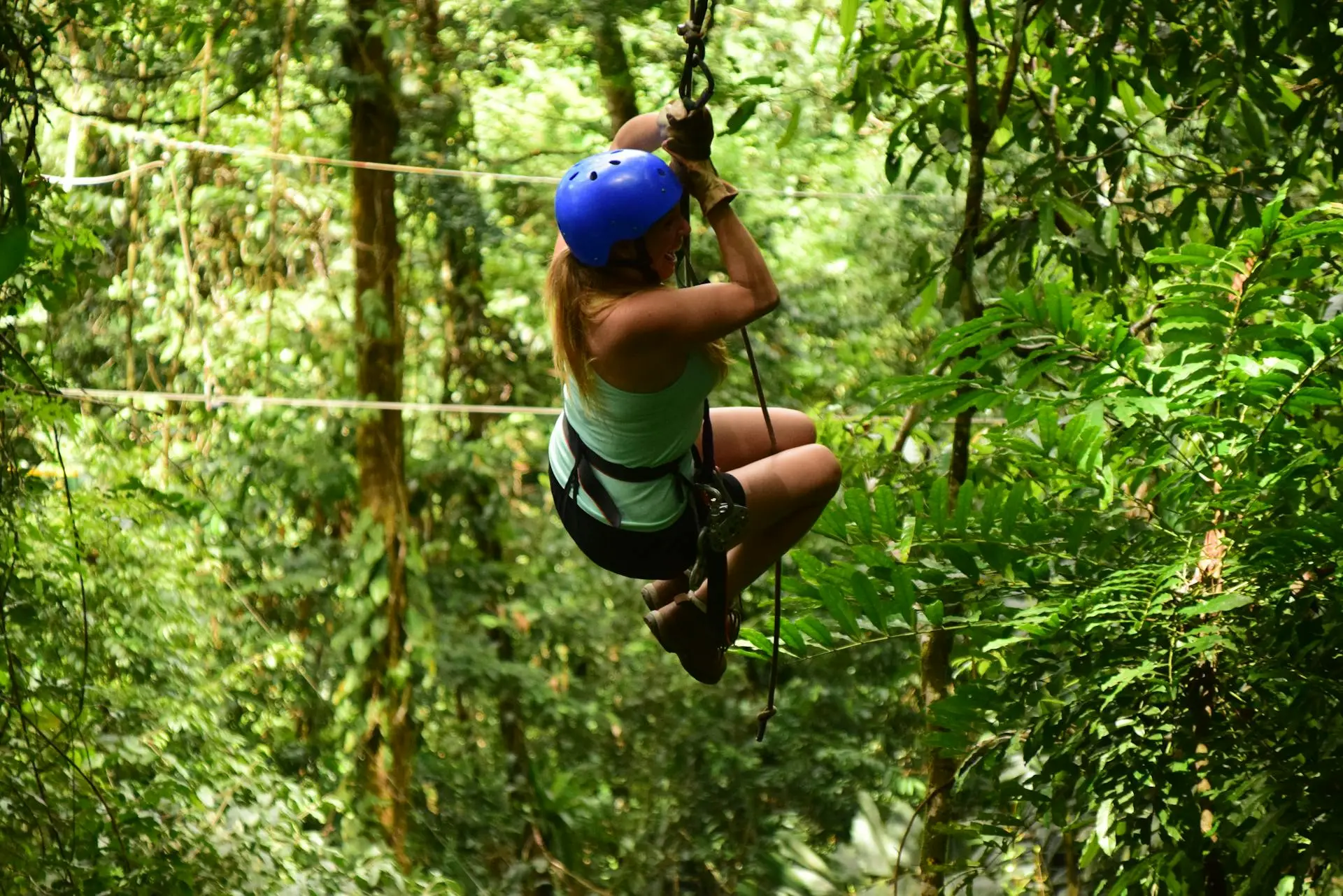
If you are specifically comparing one activity across the two, our La Fortuna vs Manuel Antonio ziplining guide puts the canopy tours head to head.
Wildlife: Where Will You See More?
Both deliver, but the experience differs. Manuel Antonio concentrates its wildlife into one small, heavily protected park, which makes sightings quick and close: sloths in the trees above the main trail, squirrel monkeys crossing overhead, coatis and iguanas along the beach edge, and over 180 recorded bird species. With a guide and a spotting scope, an hour or two produces a lot.
La Fortuna spreads its wildlife across many reserves rather than one park, so you choose the habitat: sloths on a dedicated sloth walk, birds and monkeys from the hanging bridges, caiman and river birds on a wildlife float, and frogs and snakes on a night walk. The totals can be just as high, but you assemble them across several separate tours instead of one.
The practical difference, and the one we would weigh most heavily: if you have one morning and want a near-guaranteed sloth, Manuel Antonio is the safer bet. If you have several days and want variety across habitats, La Fortuna gives you more distinct wildlife outings.
Beaches vs Hot Springs
This is the cleanest dividing line between the two, and for many travelers it decides the whole question.
Manuel Antonio has the beaches. Playa Manuel Antonio and Playa Espadilla Sur sit inside the national park, and Playa Espadilla runs north from the park entrance with no entrance fee. They are calm, swimmable, and genuinely scenic, with forest coming right down to the sand. La Fortuna has no beaches at all; the water options are Lake Arenal, rivers, and waterfall pools.
La Fortuna has the hot springs. The thermal water is heated by the volcano itself, and the resorts along the Tabacón river side of town are a real attraction rather than a hotel amenity, from large landscaped complexes to simple local pools. Manuel Antonio has nothing equivalent. If soaking in thermal water under the rainforest is on your list, that is only available inland.
Getting There and Getting Between Them
Access is close enough that it rarely decides the question on its own, unless you are flying into Liberia.
- From San José (SJO): La Fortuna is roughly 3 to 3.5 hours; Manuel Antonio is roughly 3 to 4 hours. Both work as a first or last stop. See our San José to La Fortuna guide and San José to Manuel Antonio guide.
- From Liberia (LIR): La Fortuna is about 2.5 to 3 hours, which makes it the natural pairing with Guanacaste. Manuel Antonio is considerably further. Our Liberia to La Fortuna guide covers that route.
- Between the two: about 218 km and 4.5 to 6 hours by road via San Ramón and the Costanera Sur. Our La Fortuna to Manuel Antonio guide compares shuttles, private transfers, and driving.
Within each base, La Fortuna is the more walkable of the two: the town has a compact grid of restaurants and shops around the central park. Manuel Antonio's accommodation is spread along the 7 km road between Quepos and the park entrance, so you will use taxis or the public bus more. The main tradeoff is evenings: La Fortuna gives you a walkable dinner scene, while in Manuel Antonio getting to and from restaurants usually means arranging a ride.
Which Is More Expensive?
The biggest difference is what you book, not where you stay. Costs are broadly comparable, and your activity choices matter more than the destination. A few patterns hold:
- Activities: La Fortuna's headline tours (combo days, canyoning, rafting) tend to run higher because they are full-day, multi-stop, and equipment-heavy. Manuel Antonio's signature experience, a guided park tour, is comparatively cheap.
- Hot springs add up: Day passes at the larger thermal resorts are a real line item in a La Fortuna budget, and one that has no Manuel Antonio equivalent.
- Accommodation: Both have a wide range. Manuel Antonio's ocean-view properties command a premium for the view; La Fortuna's premium is for volcano views and on-site thermal pools. See our guides to hotels in La Fortuna and hotels in Manuel Antonio.
- Park entry: Manuel Antonio National Park charges entry and caps daily numbers, so book ahead. Many La Fortuna attractions are privately run reserves with their own separate entry fees, which can quietly add up across several days.
Best Time to Visit Each
Both follow Costa Rica's broad dry season (roughly December to April) and green season (roughly May to November), but they experience it differently.
La Fortuna is genuinely rainy country. The Arenal side receives heavy annual rainfall, with the wettest stretch around June through October and the driest window around February to April. Cloud frequently hides the volcano cone regardless of season, so clear volcano views are never guaranteed; mornings give the best odds. Rain rarely cancels activities here, it just makes trails muddier.
Manuel Antonio has a more pronounced dry season and is at its sunniest from around December to April, which is also its busiest and priciest window. September and October are the wettest months on this coast. Our best time to visit Manuel Antonio guide breaks it down month by month.
If your dates are fixed in the wettest months, we would lean toward La Fortuna, which copes slightly better, because so many of its activities (hot springs, canyoning, rafting, night walks) are unaffected by or even improved by rain.
Month by Month: Which One Wins
If your travel dates are already set, the month itself can tip the decision:
| When you are going | Leans toward | Why |
|---|---|---|
| December to April | Either, slight edge to Manuel Antonio | Peak dry season on the coast means the most reliable beach weather of the year. Both are busy and priced accordingly. See Manuel Antonio in January and La Fortuna in January. |
| May and June | La Fortuna | Green season begins and the rainforest is at its best, with mornings usually clear. La Fortuna in May covers the shift. |
| July and August | Either | A drier spell interrupts the green season, and both work well. It is peak northern-hemisphere holiday travel, so book earlier. See La Fortuna in July and Manuel Antonio in July. |
| September and October | La Fortuna | The wettest stretch on the Pacific coast, when beach days get unreliable. Inland activities are far less weather-dependent. Compare Manuel Antonio in October with La Fortuna in October. |
| November | Either | Rain eases through the month ahead of the dry season, with lower prices and thinner crowds than December. See La Fortuna in November. |
For the full month-by-month picture, our best time to visit La Fortuna guide and best time to visit Manuel Antonio guide break down weather, crowds, and prices for each.
Can You Do Both in One Trip?
Yes, and plenty of itineraries do, but what typically happens is that people underestimate the transfer. At 218 km and 4.5 to 6 hours, moving between them is a travel day, not a morning drive.
- 8 days or more: Comfortable. A common split is 3 to 4 nights in La Fortuna and 3 nights in Manuel Antonio, with the transfer day in between and San José at one end.
- 6 to 7 days: Doable but tight. You will spend a meaningful share of it in transit, and each base gets only two full days.
- 5 days or fewer: We would pick one. Adding a 5-hour transfer to a short trip costs you more than the second destination gives back.
Order matters less than people expect. Doing La Fortuna first and finishing on the coast gives the trip a natural wind-down, and if you are flying out of San José the drive from Manuel Antonio is slightly shorter than from La Fortuna. Our La Fortuna to Manuel Antonio transport guide covers the connection in detail.
From Our Experience
We have found the decision usually settles itself once you write down your three must-do activities: hot springs and a waterfall point inland, a beach morning and a sloth walk point to the coast. The destination falls out of that list far more reliably than it falls out of comparing the two places in the abstract.
Tips for Choosing Between Them
- Let your arrival airport decide close calls: If you are flying into Liberia, La Fortuna is 2.5 to 3 hours away and Manuel Antonio is a long haul. Flying into San José, the two are near enough in drive time that it should not sway you.
- Book Manuel Antonio park entry in advance: The daily visitor cap is real and it sells out in high season and on public holidays. This is the single most common planning mistake on that side.
- Do not choose Manuel Antonio purely for wildlife: It is excellent and easy, but La Fortuna's spread of reserves produces just as much across several outings. Choose Manuel Antonio for wildlife plus beach in one place.
- Do not expect a guaranteed volcano view: Arenal's cone is often in cloud, in any season. Treat a clear view as a bonus rather than the reason for the trip, and plan around the activities instead.
- Count your must-do activities first: If your list is hot springs, waterfall, and canopy, that is La Fortuna. If it is beach mornings and a sloth walk, that is Manuel Antonio. The destination usually falls out of the list rather than the other way round.
- Give the winner an extra night: With limited time, an extra night in one base beats a rushed transfer to the other. Both reward a slower pace.
How We Compared Them
The Costa Rica Day Trip team built this comparison from published road distances and drive times between San José, Liberia, La Fortuna, and Manuel Antonio, the activity mix actually bookable in each base, national park access rules including Manuel Antonio's daily visitor cap, and the seasonal rainfall patterns that shape each area's dry and green seasons. We focused on the factors that genuinely change a trip: what you can do within 30 minutes of your hotel, how reliably you see wildlife, whether beaches or hot springs are on the table, how far each base sits from the airport you are flying into, and how much of a short itinerary a transfer between them would consume. Prices and conditions vary by season and operator, so treat cost comparisons as directional and confirm current rates when you book.
Frequently Asked Questions
Is La Fortuna or Manuel Antonio better?+
Neither is objectively better; they suit different trips. La Fortuna is the stronger choice for activity variety, volcano scenery, and hot springs, with more distinct things to do within a short drive than almost anywhere in Costa Rica. Manuel Antonio is better if you want beaches and easy, reliable wildlife viewing in one compact place, or a gentler pace.
Should I choose Arenal or Manuel Antonio for a first trip to Costa Rica?+
If you only have time for one and want to see a lot, most first-timers get more out of La Fortuna (Arenal) because the volcano, waterfall, hanging bridges, ziplines, and hot springs are all close together. Choose Manuel Antonio instead if beach time is a priority or you want a shorter, easier itinerary with guaranteed sloth and monkey sightings.
How far is La Fortuna from Manuel Antonio?+
About 218 km by road, which takes roughly 4.5 to 6 hours depending on traffic and stops. The route runs via San Ramón and then south on the Costanera Sur through Jacó and Parrita to Quepos. Shared shuttles, private transfers, and self-driving are all practical options.
Can you visit both La Fortuna and Manuel Antonio in one trip?+
Yes, and many itineraries do, but allow at least 8 days to do it comfortably, typically 3 to 4 nights in La Fortuna and 3 in Manuel Antonio plus a transfer day. With 5 days or fewer we would pick one destination, since a 4.5 to 6 hour transfer takes a large bite out of a short trip.
Which has better wildlife, La Fortuna or Manuel Antonio?+
Manuel Antonio gives faster, more concentrated sightings: sloths, capuchin and squirrel monkeys, iguanas, and coatis on short flat trails inside one small park with over 180 bird species. La Fortuna spreads its wildlife across many reserves, so across several tours (sloth walks, hanging bridges, river floats, night walks) the totals can match, but it takes more separate outings.
Does Manuel Antonio have hot springs?+
No. Natural hot springs are a volcanic feature, so they are found around La Fortuna and the Arenal Volcano, not on the central Pacific coast. If soaking in thermal pools is on your list, that has to happen in La Fortuna.
Does La Fortuna have beaches?+
No. La Fortuna is inland at the base of Arenal Volcano, so the water is lakes, rivers, and waterfall pools rather than ocean. Lake Arenal is scenic and good for kayaking and windsurfing, but if you want beach days you need the coast, which is where Manuel Antonio comes in.
Which is more crowded, La Fortuna or Manuel Antonio?+
Manuel Antonio feels busier where it counts. Its national park is the most visited in Costa Rica and enforces a daily visitor cap, so entry tickets should be booked in advance. La Fortuna's town centre is busy too, but its attractions are spread across many separate sites, which disperses the crowds.
Affiliate note: Some links on this page are affiliate links. If you book through them, we may earn a small commission at no additional cost to you.