July is the odd month in La Fortuna's green season: high rainfall at around 345mm, yet home to the veranillo, a mid-month dry spell that can hand you a run of bright days. Here is the full picture on weather, crowds, prices and what to do.
What You Should Know
- July is green season in full swing, with around 345mm of rain, the second-wettest month of the La Fortuna year. Days stay warm at about 30°C (86°F) and nights sit near 21°C (71°F), so the heat is not the issue; the cloud and the afternoon rain are.
- The month's quirk is the veranillo, or "little summer": a mid-July dry spell of roughly one to two weeks that often brings brighter mornings and lighter rain. It is a tendency rather than a promise, and its exact timing shifts year to year, so treat it as a bonus rather than a plan.
- July is busier and pricier than June even though it is wetter, because North American and European family travel returns for the school holidays. Mid-range hotels run roughly $110 to $160 a night, and the headline tours fill faster than they do in May or June.
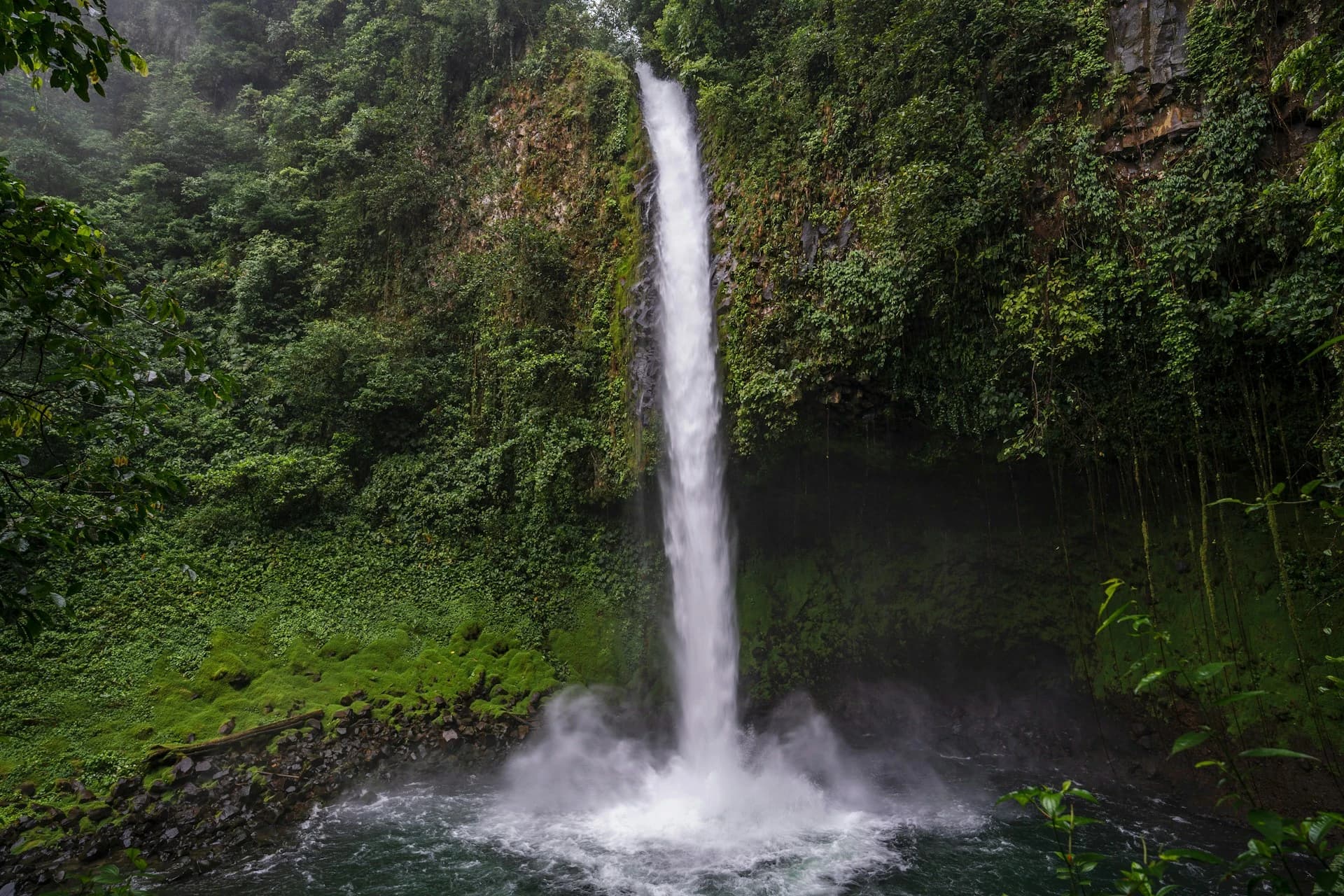
- Most people don't realize that the rain is what makes July's best sights work. The waterfall runs at full power, the rivers are up for rafting, and the rainforest is at its greenest, so the trade is volcano views for drama on the ground.
La Fortuna in July: Overview
⭐ Best July window: roughly July 10 to 24. This is when the veranillo most often lands, and it usually falls just before the Guanacaste Day weekend of July 25 adds domestic travellers to the mix. Book flexible activities so you can chase a clear morning if one arrives.
| Factor | July Rating |
|---|---|
| Weather | 5/10: warm and green, but 345mm of rain |
| Crowds | 6/10: moderate; family travel returns |
| Prices | 6/10: mid-range; above June, well below January |
| Volcano Views | 6/10: fair; better than September, well short of dry season |
| Hiking & Trails | 6/10: muddy underfoot, but very walkable with the right shoes |
| Waterfall & Rivers | 10/10: full volume; the falls at their most powerful |
| Wildlife | 9/10: frogs, insects and birdlife all active in the wet |
| Rain | 4/10: frequent afternoon rain, with a possible mid-month reprieve |
| Families | 8/10: school holidays align; plan around the afternoons |
| Couples | 7/10: lush and atmospheric, if you accept the cloud |
💰 Average July hotel prices (La Fortuna town, mid-range):
~$110–160/night across the month, firming slightly around the Guanacaste Day weekend (July 25)
Rough mid-range estimates; rates vary by property and booking lead time.
July is the month that refuses to sit neatly in either season. On paper it is deep green season: 345mm of rain, the second-wettest month of the year, with Arenal spending much of its time under a cloud cap. In practice it also hosts the veranillo, the "little summer," a mid-month interruption to the rains that can deliver a week or two of brighter, drier days. In our view that combination makes July more of a gamble than either the dry season or the reliably soaked months of September and October.
The other thing that sets July apart is who is here. June is quiet and cheap; July is neither, because northern-hemisphere school holidays bring families back. So you pay more than June and get more rain, which sounds like a poor deal until you see what the rain does: the La Fortuna Waterfall at full roar, rivers high enough to make rafting genuinely exciting, and rainforest so saturated with green it barely photographs. We'd book July if the waterfall, wildlife and adventure side of La Fortuna matters more to you than a clean postcard of the cone. Our La Fortuna Waterfall guide and rafting guide cover the two experiences July serves best.
July at a Glance
✅ Possible veranillo dry spell mid-month ✅ Waterfall and rivers at full power ✅ Lush rainforest and active wildlife
⚠️ 345mm of rain, second-wettest month ⚠️ Busier and pricier than June ⚠️ Volcano often under cloud
La Fortuna Weather in July
| Metric | July |
|---|---|
| Avg High | 30°C (86°F) |
| Avg Low | 21°C (71°F) |
| Rainfall | 345 mm (second-wettest month) |
| Humidity | High |
| Wind | Moderate (Caribbean trade winds) |
| Special Feature | Veranillo, mid-month dry spell |
| UV Index | Very high, even under cloud |
| Volcano Visibility | Fair (6/10) |
Temperature and Humidity
Temperature is the least interesting part of a La Fortuna July, and that is genuinely good news. Days sit around 30°C (86°F) and nights near 21°C (71°F), essentially the same as January, so you pack the same clothes whatever month you come. What changes is humidity, which is high through the green season and makes 30°C feel warmer and stickier than the identical number in February. Quick-dry fabrics matter more than warm ones. The UV index stays very high even on grey days, so sunscreen is not optional just because the sky is overcast.
Rain Pattern
July averages around 345mm of rain, more than double January and second only to October. The pattern is the classic green-season shape: mornings that begin dry or lightly clouded, building heat through late morning, and rain arriving from early to mid-afternoon, sometimes as a heavy hour-long burst and sometimes as a long steady soak into the evening. Most guests find that the mornings are the usable half of the day almost regardless of how wet the month feels overall. Build your itinerary around that and July works far better than the rainfall total suggests.
The Veranillo
The veranillo, literally "little summer," is a well-known break in the Costa Rican rainy season that typically falls somewhere in mid-July. During it, the trade wind pattern shifts enough to suppress the usual afternoon convection, and you can get several consecutive days of bright mornings, lighter or absent afternoon rain, and better volcano visibility than the month's average would imply. Be clear-eyed about it: the veranillo is a tendency, not a scheduled event. Some years it is pronounced and lasts two weeks; some years it barely registers or arrives early or late. The biggest difference between a great July trip and an average one is often just whether your dates happened to intersect it.
Volcano Visibility and Trail Conditions
Arenal sits under cloud far more often in July than in the dry months, and we would call visibility fair rather than good. The reliable window is still sunrise to mid-morning, before daytime heating builds the cloud cap, with an occasional second clearing near sunset. Trails are a different story: the lava field, waterfall staircase and hanging-bridge circuits are all wetter and more slippery than in dry season. None of them become impassable, but proper footwear with grip stops being a nicety and starts being the difference between a good day and a nervous one.
Crowds and Prices in July
Here is July's genuine oddity: it is wetter than June and also busier and more expensive. That combination catches a lot of travellers out.
- July 1 to 9: the northern-hemisphere school holidays are ramping up and family bookings start to fill the popular tours. Rates have already stepped above June levels, but availability is still comfortable a few days out.
- July 10 to 24: the busiest stretch of the month, and also the window where the veranillo most often lands. Book hotels and headline tours ahead rather than on arrival.
- July 25 to 31 (Guanacaste Day onward): the July 25 holiday adds Costa Rican domestic travellers to the international mix for the long weekend, then the month tails off.
Mid-range hotels in La Fortuna town run roughly $110 to $160 a night through July. That is meaningfully above the $95 to $140 of June and well under the $130 to $200 of a settled January, so July sits squarely in the middle of the year for value while sitting near the top for rainfall. Our take: if your dates are flexible and the school calendar does not bind you, June gives you nearly the same rainforest experience for less money and with fewer people. If you are travelling with school-age children, July is your window and it is a perfectly good one, provided you plan mornings hard.
| Month | Better For |
|---|---|
| July | Family travel dates, full-power waterfall, and a shot at the veranillo |
| June | Slightly less rain, lower prices, and noticeably fewer people |
| August | Similar weather and crowds; a little less rain than July |
| January to March | Clear volcano views and firm dry trails, at double the price |
Our June guide and August guide lay out the two months either side if you have room to move your dates.
Arenal Volcano Views in July: Managing Expectations
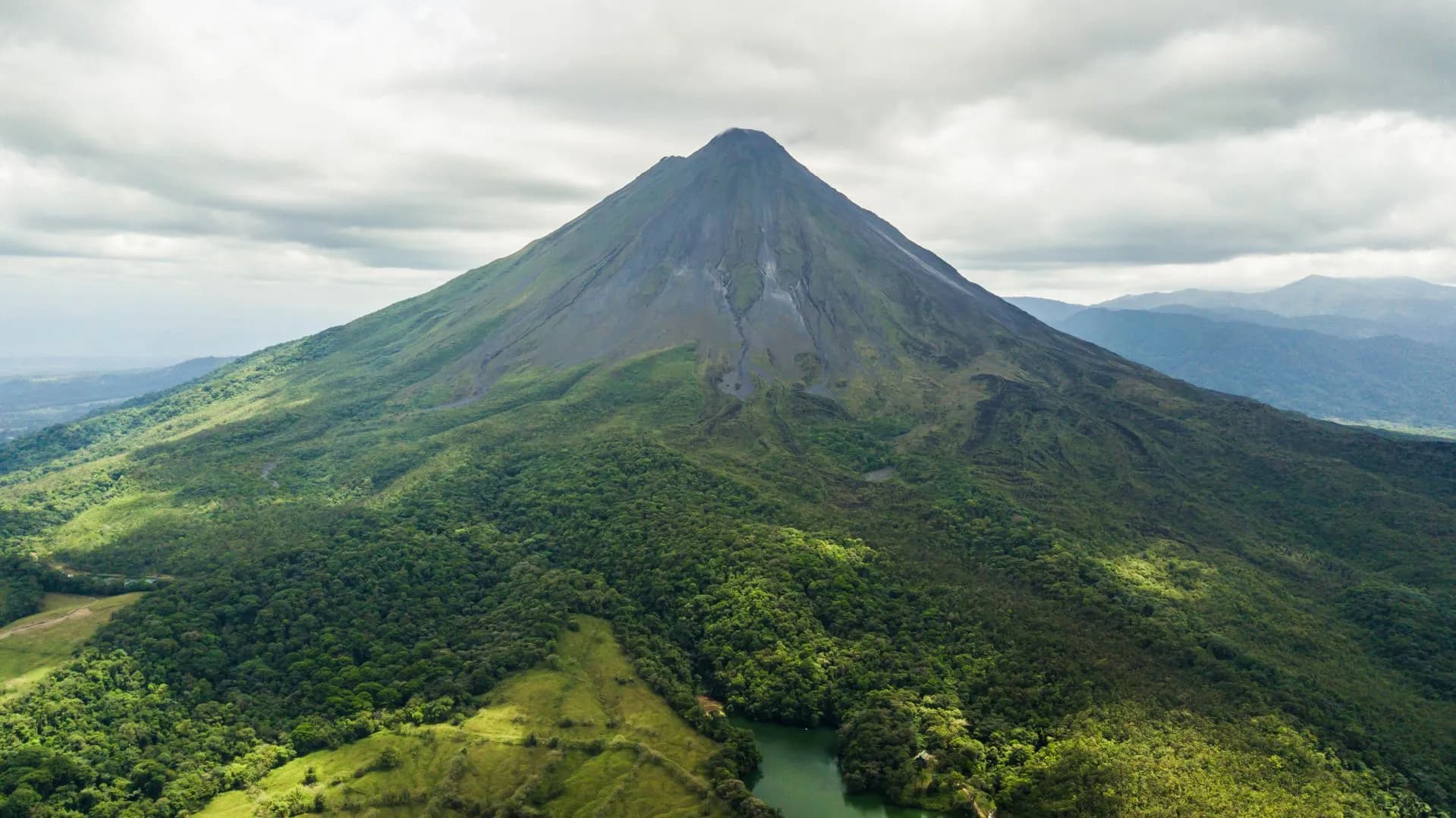
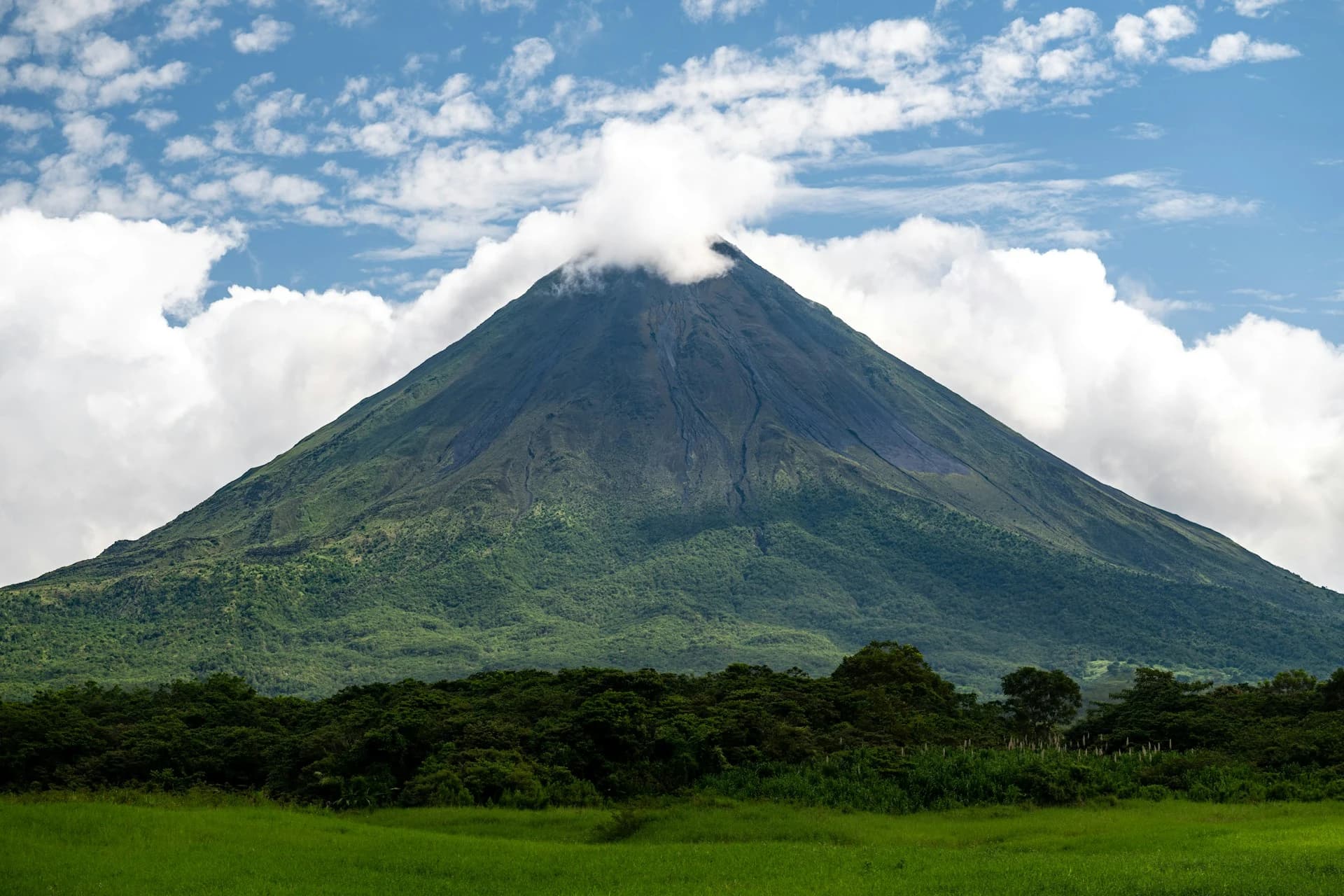
Arenal is the reason most people come to La Fortuna, and July is not the month it performs best. We rate visibility fair, around 6 out of 10: better than the September and October low point, considerably short of the near-guaranteed clear mornings of January through March. The volcano generates its own weather, and in a month with 345mm of rain the summit spends a lot of its time wrapped in cloud.
The pattern is still worth planning around. Sunrise to mid-morning is your best window, before the day's heating drives cloud up around the cone. There is often a second, briefer clearing near sunset. What typically happens in July is a partial reveal rather than a clean postcard: the base and mid-slopes visible with the summit in cloud, which is atmospheric in its own right but not what the brochures show. We'd lean toward giving the volcano three separate early mornings across a July stay rather than the two we would suggest in dry season, simply because the odds per attempt are lower.
If the veranillo lands during your trip, this is where you feel it most: a run of clear mornings in mid-July can look a lot like February. Chase it if it arrives, and keep at least one flexible morning in the itinerary so you can move the volcano hike to a clear day. Note that Arenal has been in a resting phase since 2010, so there is no visible lava at night in any month. Our Arenal Volcano hike guide compares the trails and viewpoints, and the hanging bridges offer the other main open vantage point.
How Much Does It Actually Rain in July?
A lot, and it is worth being direct about that. July averages roughly 345mm, more than double January's 150mm and behind only October's 375mm across the whole year. La Fortuna sits on the Caribbean-facing slope, where trade winds push moisture against the mountains year-round, and in green season that mechanism runs at full tilt. Anyone telling you July is a dry month has confused it with the Pacific coast a few hours away.
What that number does not tell you is the shape of the day. July rain concentrates in the afternoon and evening. Mornings are frequently dry or only lightly clouded, and that is when nearly every outdoor activity in La Fortuna should happen. Add the veranillo, which can flatten the afternoon rain for a week or two mid-month, and the practical experience of July is much better than 345mm sounds. We think the tradeoff is straightforward: you accept losing most afternoons to rain, and in return you get the waterfall at full volume, high rivers, and a rainforest that is genuinely spectacular rather than merely green.
Three practical consequences. First, pack seriously for wet: a proper rain jacket, quick-dry clothing, a dry bag for camera and phone, and shoes with real grip for the waterfall stairs and muddy trails. Second, front-load everything outdoor into the morning and reserve afternoons for hot springs, coffee tours and cooking classes, all of which are unaffected by rain. Third, build one buffer day into your stay if you can, so a washed-out afternoon does not cost you the activity you cared about most.
La Fortuna Rainfall and Temperature by Month
The single most useful thing to understand about La Fortuna's climate is that temperature barely moves all year, while rainfall swings roughly fivefold. Daytime highs sit between 29 and 32°C every month and nights hover around 21°C, so you pack the same clothes in January as in July. What actually changes your trip is how much rain falls, and when.
Average monthly rainfall (mm)
Full Month-by-Month Figures
| Month | Rainfall | Avg High | Avg Low | Season |
|---|---|---|---|---|
| Jan | 150 mm | 29°C | 21°C | Dry season |
| Feb | 120 mm | 30°C | 21°C | Dry season |
| Mar | 75 mm | 31°C | 21°C | Dry season |
| Apr | 70 mm | 31°C | 21°C | Dry season |
| May | 180 mm | 30°C | 21°C | Green season |
| Jun | 300 mm | 30°C | 21°C | Green season |
| Jul | 345 mm | 30°C | 21°C | Green season |
| Aug | 300 mm | 30°C | 21°C | Green season |
| Sep | 330 mm | 30°C | 21°C | Green season |
| Oct | 375 mm | 29°C | 21°C | Green season |
| Nov | 250 mm | 29°C | 21°C | Green season |
| Dec | 220 mm | 29°C | 21°C | Dry season |
What the Numbers Actually Mean
Three things stand out. First, March and April are the driest months by a wide margin, at roughly 70 to 75mm, which is why the dry season peaks then rather than in December. Second, October is the wettest at around 375mm, five times March, with September close behind. Third, the shoulder months do most of the work for value travelers: May and November sit between the extremes, offering greener rainforest and lower prices without the full weight of the wet season.
The temperature column is almost a flat line, and that is the point. Most people don't realize that choosing when to visit La Fortuna is a decision about rain and cloud, not about heat. If you want the volcano visible and the trails firm, come in the dry season. If you want thundering waterfalls, fuller rivers, and lower rates, the green season delivers, and you accept afternoon rain as the price.
ℹ️ Figures are rounded monthly averages from a single climate dataset and are indicative rather than exact. Published figures for La Fortuna vary noticeably between sources and weather stations, particularly for rainfall totals and rain-day counts, because the town sits on the Caribbean slope where conditions shift over short distances. Treat these as the shape of the year rather than a forecast.
Best Things to Do in La Fortuna in July
| Activity | July Rating | Best Time of Day | Notes |
|---|---|---|---|
| La Fortuna Waterfall | 10/10 | Early morning | Full green-season power; stairs are slick, wear grip |
| White water rafting | 10/10 | Morning | High rivers make this the best month range for rafting |
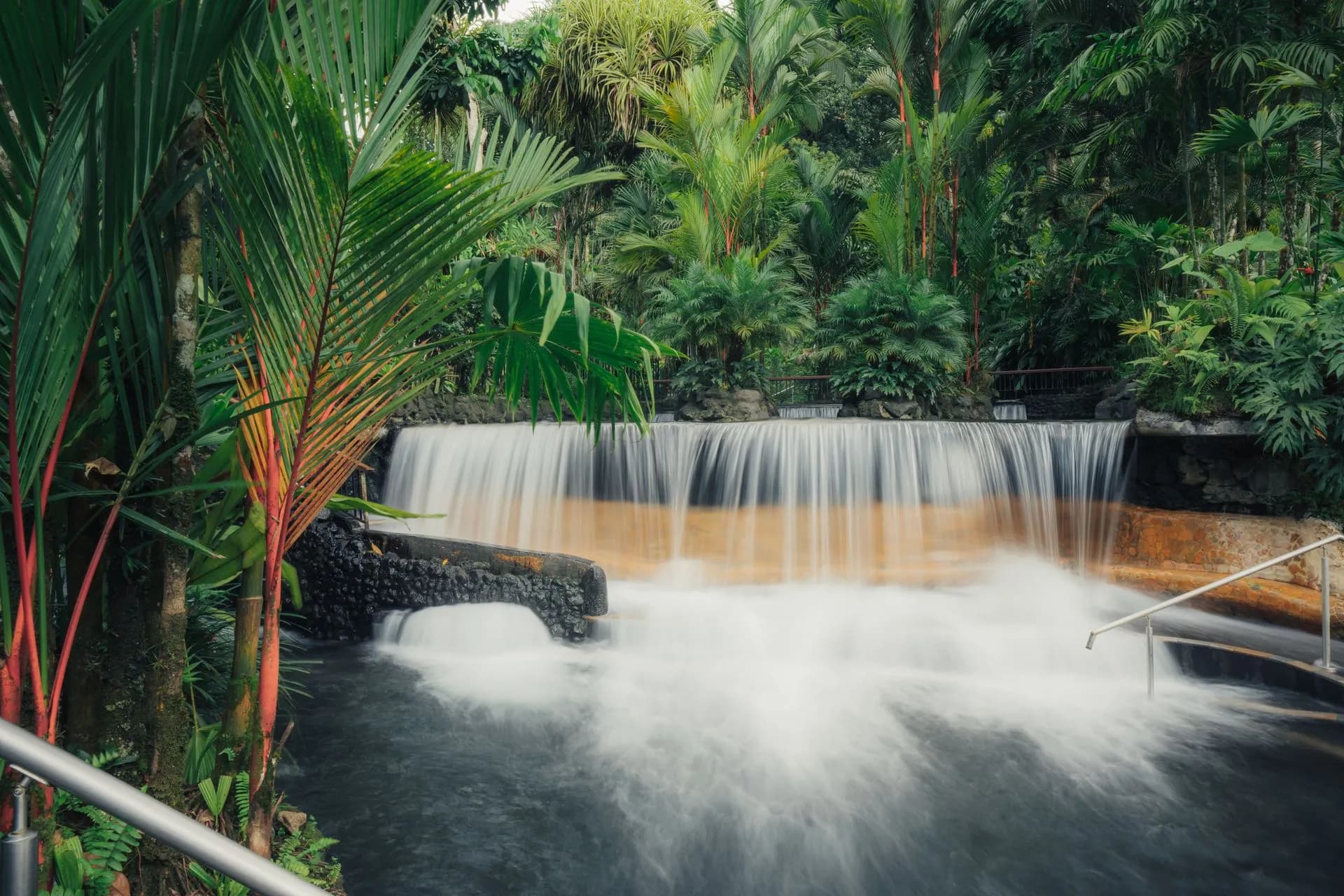
| Hot springs | 10/10 | Afternoon | Rain-proof and perfect when the afternoon storm arrives |
| Night walk | 9/10 | Evening | Frogs and insects far more active in the wet months |
| Sloth tour | 9/10 | Early morning | Reliable year-round; go before the rain builds |
| Coffee tour | 9/10 | Any | Largely sheltered, so a fine wet-afternoon option |
| Cooking class | 9/10 | Afternoon | Completely rain-proof; the classic washout backup |
| Hanging bridges | 7/10 | Early morning | Lush canopy, but cloud often hides the volcano |
| Canyoning | 7/10 | Morning | Dramatic water volume; wetter rock and occasional weather holds |
| Arenal Volcano hike | 6/10 | Sunrise | Muddy trails and a frequently clouded summit |
| Zipline | 6/10 | Morning | Runs fine, but views are cloudier and rain can pause lines |
| ATV tour | 6/10 | Morning | Very muddy; fun if you expect it, miserable if you don't |
| Rio Celeste tubing | 5/10 | Morning | Heavy rain can cloud the river's famous blue colour |
What to prioritize this month
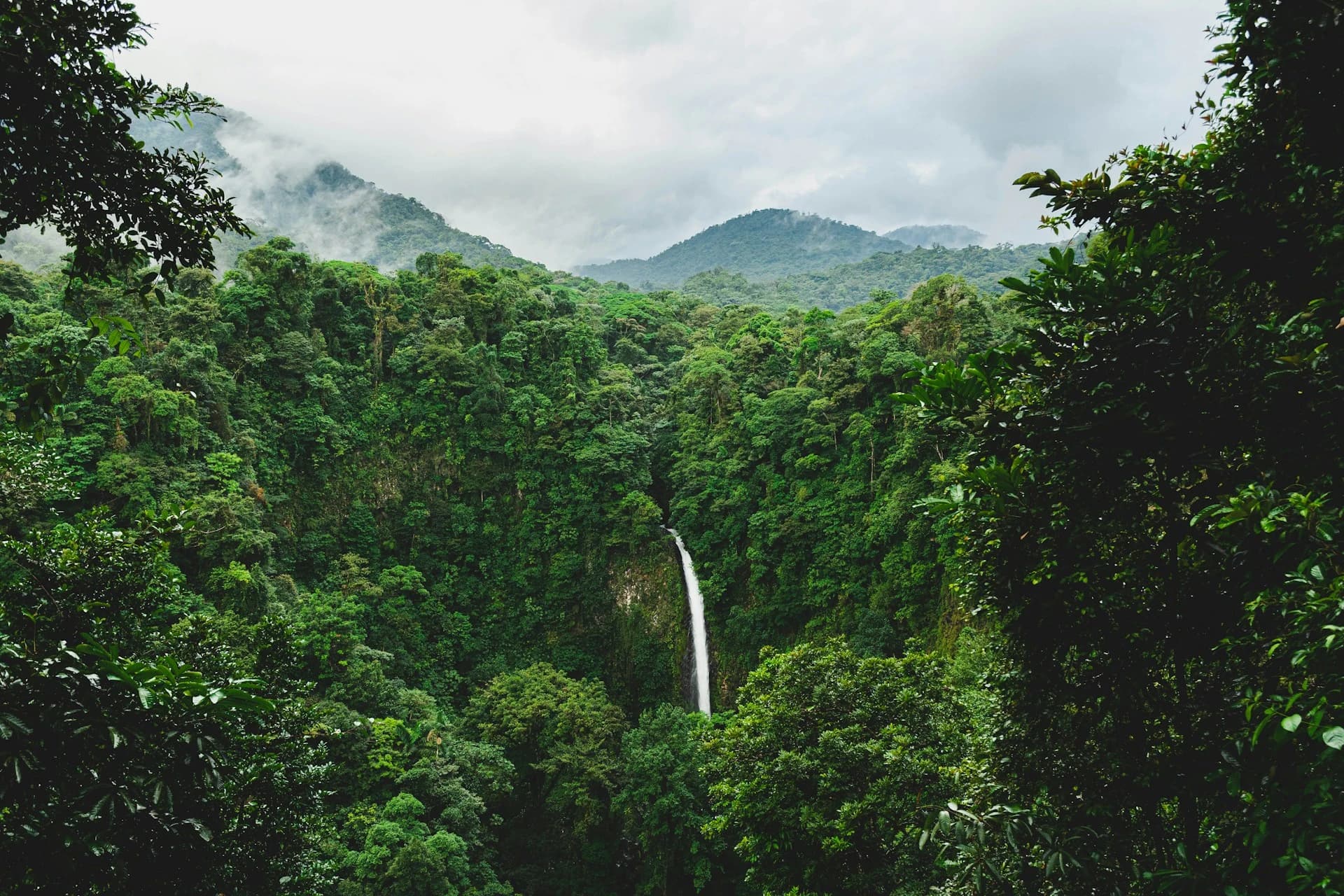
July is a water month. The single best thing you can do is see the La Fortuna Waterfall when it is running at full green-season volume, which is a genuinely different sight from the tidy dry-season version. We'd give this the edge for July over anything volcano-focused. The most efficient way to combine it is the full-day tour that stacks the waterfall, a guided Arenal Volcano hike to Mirador El Silencio, and a hot springs soak at the end. It is around 11 hours, and the hot springs finish lands exactly when the afternoon rain usually does.
Rafting is the other July standout: the rivers are high, the runs are livelier than in dry season, and getting soaked stops mattering. The night walk is also better now than at any point in the dry season, because frogs and insects are far more active in wet conditions. For the afternoons, the coffee tour and cooking class are effectively weatherproof, and a sloth tour works well as an early-morning start.
Three things July does less well. ATV tours turn into genuine mud sessions, which some people love and others regret. Ziplines and the hanging bridges both depend on visibility, and July often takes that away. And Rio Celeste can lose its signature blue after heavy rain stirs sediment into the river, so check recent conditions before committing to the long drive. We'd book this if you can keep the date flexible and go on the back of a drier run of days.
More July Activities Around La Fortuna
Beyond the headline tours, July's wet, green conditions favour a particular set of smaller outings:
- Free hot springs at the Tabacón river bridge, thermal water running under the road, and a soak that only improves when it is raining on you.
- Frog and butterfly gardens, small sheltered wildlife stops that are at their liveliest in the wet season and make ideal afternoon fillers.
- Birdwatching around the Peñas Blancas river valley, quieter than in dry season but rewarding in the early morning before the rain.
- Lake Arenal viewpoints and the dam road, a self-drive that still works under cloud, with dramatic moody skies over the water.
- El Salto rope swing, the local river swimming hole, running high and fast in July; check conditions and skip it after heavy rain.
- La Fortuna central park and church, an easy evening stroll between showers, with cafés and sodas to duck into.
- Chocolate and cacao workshops, indoor, hands-on and completely immune to the forecast.
July Events and Holidays in La Fortuna
July has one fixed national date and one weather event that behaves like an event.
- Guanacaste Day (July 25): a national public holiday marking the 1824 annexation of the Guanacaste province, celebrated most vividly in Guanacaste itself with parades, folk dancing and rodeos. In La Fortuna the effect is indirect but real: Costa Rican families travel over the long weekend, so roads, hotels and popular tours are busier than the surrounding weeks.
- The veranillo (roughly mid-July): not a holiday, but the month's defining feature. This short dry spell can hand you several consecutive bright mornings in the middle of green season. Its timing and strength vary considerably from year to year, so plan for rain and treat clear days as a bonus.
- Northern-hemisphere school holidays: also not an event, but the reason July feels busier and costs more than June despite the extra rain.
None of this needs to change your itinerary, but if your dates straddle July 25, book accommodation and any headline tour earlier than you otherwise would.
From Our Experience
The thing that surprises most July visitors is that they have paid more than a June traveller for a wetter month, purely because the school holidays moved the market rather than the weather. If your dates are genuinely flexible, shifting a week earlier into late June usually buys you lower rates, fewer people and marginally less rain for an almost identical rainforest experience.
Tips for Visiting La Fortuna in July
- Do everything outdoors in the morning. July rain concentrates in the afternoon and evening, so a 7 AM start is not about beating crowds here, it is about beating the weather.
- Do not build your trip around the veranillo. The mid-July dry spell is a tendency, not a guarantee, and its dates shift every year. Plan for a wet month and enjoy the clear run if it arrives.
- Keep one flexible morning for the volcano. Visibility is only fair in July, so give Arenal three separate early attempts across your stay rather than pinning it to a single booked day.
- Pack real rain gear. A proper jacket, quick-dry layers, a dry bag for electronics, and shoes with genuine grip. The waterfall staircase is about 500 steps each way and slick in green season.
- Book ahead around July 25. Guanacaste Day brings domestic travellers, and combined with school-holiday visitors it makes the last week the tightest of the month for availability.
- Lean into the water. The waterfall, rafting and canyoning are all better now than in dry season. If you are going to get wet regardless, choose the activities that reward it.
- Save hot springs, coffee tours and cooking classes for afternoons. They are effectively rain-proof and pair perfectly with a morning outdoors.
- Check Rio Celeste conditions before you drive. Heavy rain can dull the river's famous blue, and it is a long round trip from town.
- Add a buffer day. One extra day in La Fortuna gives you a second shot at anything a storm ruins, which matters more in July than in February.
- Visiting at a different time of year? See our La Fortuna in June guide for a quieter, cheaper green-season month, and our La Fortuna in August guide for the month that follows with similar crowds and slightly less rain.
How We Put This Guide Together
We based this July guide on La Fortuna's green-season rainfall pattern, the veranillo dry spell that distinguishes July from the months either side of it, and the northern-hemisphere school-holiday rhythm that drives crowds and prices in this part of the calendar. Ratings reflect how each factor and activity actually performs in July: heavy afternoon rain, a fair rather than good chance of clear volcano views, muddy trails, and rivers and waterfalls at close to their annual peak. Activity ratings draw on the same operators and tours we cover in our individual La Fortuna guides, so the tours highlighted here are the top-rated option from each of those pages rather than a separate list. Temperatures, rainfall, and price ranges are typical values for the month and vary year to year. The veranillo in particular is a recurring tendency rather than a scheduled event, and its timing and strength differ noticeably between years, so treat all of this as a reliable guide rather than a forecast and confirm current conditions and rates before you book.
Frequently Asked Questions
Is La Fortuna good in July?+
Yes, with clear expectations. July is green season, with around 345mm of rain and warm days near 30°C (86°F), so afternoons are frequently wet and the volcano is often under cloud. In exchange you get the La Fortuna Waterfall at full power, high rivers for rafting, very active wildlife, and mid-range hotel rates of roughly $110 to $160 a night. Plan outdoor activities for the mornings and July works well.
What is the veranillo in Costa Rica?+
The veranillo, or "little summer," is a short break in the rainy season that typically falls around the middle of July. For roughly one to two weeks the usual afternoon rain eases, and you can get a run of brighter mornings and better volcano visibility than the month's rainfall total would suggest. It is important to understand that the veranillo is a recurring tendency rather than a guaranteed event: its timing and strength vary noticeably from year to year, and in some years it barely appears. Plan for a wet July and treat any dry spell as a bonus.
What is the weather like in La Fortuna in July?+
Warm, humid and wet. Days average around 30°C (86°F) and nights around 21°C (71°F), essentially the same as every other month, while rainfall reaches about 345mm, the second-highest of the year. Rain concentrates in the afternoon and evening, so mornings are usually the workable part of the day. UV is very high even under cloud.
Can you see the Arenal Volcano in July?+
Sometimes, but the odds are only fair, around 6 out of 10. The summit is frequently under cloud in green season. Your best window is sunrise to mid-morning before daytime heating builds the cloud cap, with an occasional second clearing near sunset. Plan three separate early mornings across your stay rather than one. Note that Arenal has been in a resting phase since 2010, so there is no visible lava at night in any month.
Is July or June better in La Fortuna?+
June is the better value month. It has less rain at around 300mm versus July's 345mm, lower crowds, and cheaper hotels at roughly $95 to $140 against July's $110 to $160. July's advantages are that it aligns with northern-hemisphere school holidays and that it carries the chance of the veranillo dry spell. If your dates are flexible and you are not tied to school terms, late June usually gives you more for less.
How expensive is La Fortuna in July?+
Mid-range for the year. Mid-range hotels in La Fortuna town run roughly $110 to $160 a night, above the June low and well below the $130 to $200 of a settled January or the higher Christmas and New Year peak. Rates firm slightly around the Guanacaste Day long weekend of July 25.
What are the best things to do in La Fortuna in July?+
Anything that benefits from water. The La Fortuna Waterfall is at its most powerful, white water rafting is livelier on high rivers, and night walks are better than in dry season because frogs and insects are far more active. Hot springs, coffee tours and cooking classes are effectively rain-proof and make ideal afternoon plans. ATV tours become very muddy, and ziplines and hanging bridges lose some of their appeal when cloud hides the views.
Is the La Fortuna Waterfall worth visiting in July?+
It is arguably at its best. Green-season rain drives the falls at full volume, which is a far more dramatic sight than the tidier dry-season flow. The tradeoffs are that the water is siltier and less clear, and the staircase of roughly 500 steps each way is slippery, so shoes with real grip matter. Go early in the morning before the afternoon rain and the busiest hours.
Affiliate note: Some links on this page are affiliate links. If you book through them, we may earn a small commission at no additional cost to you.