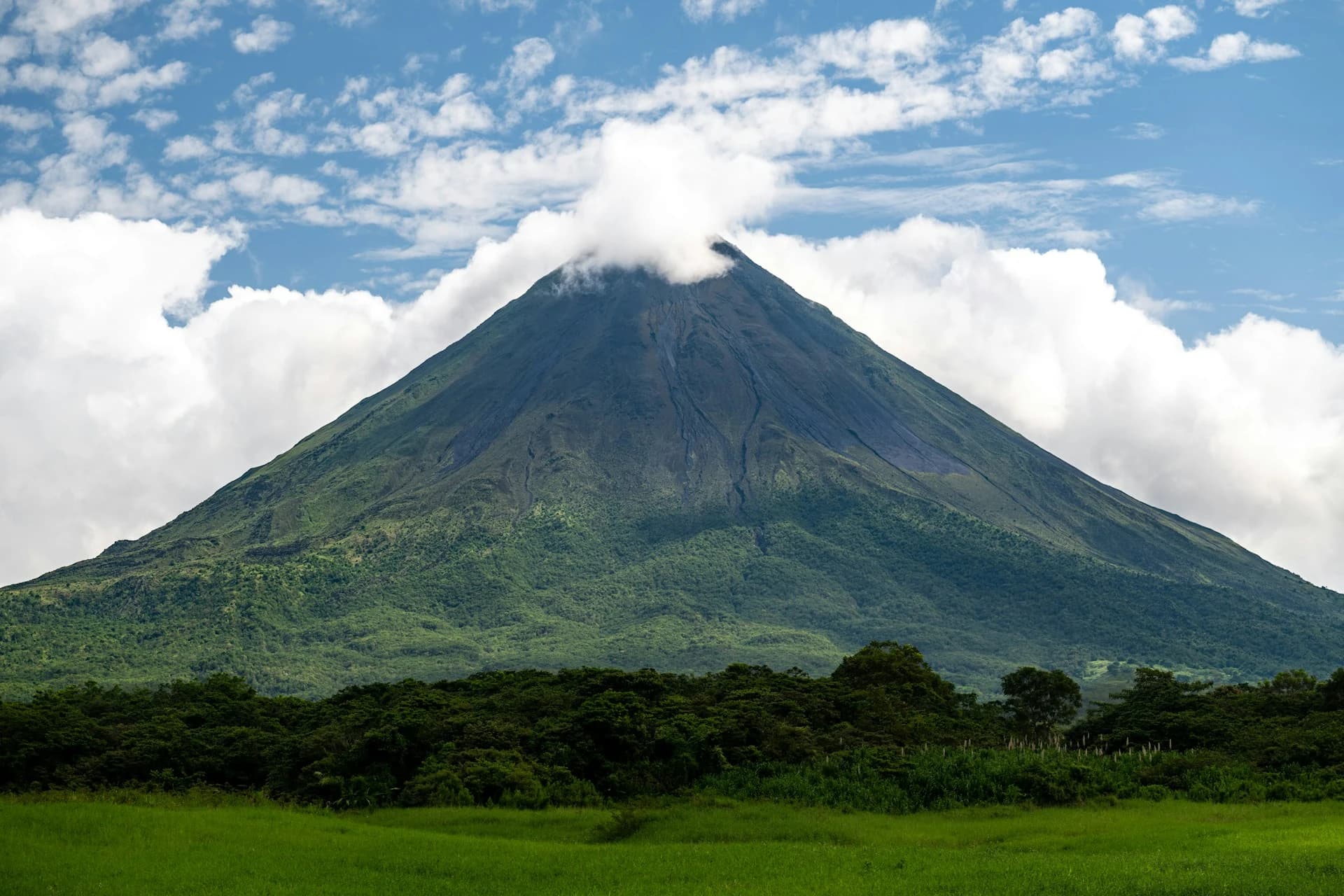
Dry season gives you the volcano. Green season gives you the waterfalls, the wildlife, and half the price. Here is the honest head-to-head, factor by factor, with a clear recommendation for each kind of traveller.
What You Should Know
- This is not a weather decision, it is a tradeoff decision. Dry season (December to April) buys you clear Arenal Volcano views, firm trails and reliable mornings, at the highest prices and biggest crowds of the year. Green season (May to November) buys you thundering waterfalls, the greenest rainforest, the most active wildlife and roughly half the room rate, at the cost of cloud over the volcano and afternoon rain.
- Temperature is not a differentiator and you should ignore it entirely. Highs run 29 to 31°C (85 to 88°F) every single month and nights sit at 21°C (71°F) year-round. You pack the same clothes in February as in September.
- Dry season is drier, not dry. La Fortuna sits on the Caribbean slope of the mountains and catches moisture all year, so even the driest months of March and April still see rain at roughly 70 to 75mm. What changes is how long it rains and whether the cone is visible afterwards.
- Most people don't realize the rainfall swing is roughly fivefold while the temperature swing is two degrees. October averages around 375mm against April's 70mm, and that single number explains almost every difference between the two seasons.
Rainy Season vs Dry Season in La Fortuna: The Short Answer
⭐ Short answer: if seeing Arenal Volcano is the point of the trip, book the dry season and accept the prices. If waterfalls, wildlife, green rainforest and value matter more than a clear cone, book the green season and plan your days around the mornings. If you want both, aim for late April, May, or late November.
La Fortuna runs on two distinct calendars. The dry season covers December through April and peaks in March and April, when rainfall drops to around 70 to 75mm a month and the volcano is visible for days at a stretch. The green season runs May through November and peaks in September and October, when monthly rainfall climbs to 330 and 375mm and Arenal spends much of its time inside its own cloud cap.
The biggest difference is not the rain itself, it is the cloud. Rain in La Fortuna is survivable in any month and rarely cancels a tour. What green season really takes from you is the view of the mountain, and what it gives back is a waterfall running at full volume, a forest at its greenest, frogs and insects at their loudest, and hotel rates that can fall to half of what January charges.
We have written this page as a genuine head-to-head rather than a hedge. Each section below picks a winner, and the decision table further down gives a straight recommendation for ten different types of traveller. If you want the deep dives, our La Fortuna dry season guide and La Fortuna rainy season guide cover each half of the year in full.
Which Season Wins?
✅ Dry season wins on: volcano views, firm trails, hiking with kids, ziplines and bridges, photography
✅ Green season wins on: waterfall power, price, quiet, wildlife and frogs, rafting, green scenery
⚠️ Neither wins on temperature. It is 29 to 31°C every month, so heat should not enter your decision at all.
Dry Season vs Green Season: Side by Side
Here is the full comparison in one place. Every figure below comes from La Fortuna's monthly climate averages and the local high and low season pricing rhythm.
| Factor | Dry Season (Dec to Apr) | Green Season (May to Nov) |
|---|---|---|
| Months | December, January, February, March, April | May, June, July, August, September, October, November |
| Temperature | 29 to 31°C highs, 21°C lows | 29 to 31°C highs, 21°C lows: effectively identical |
| Rainfall range | 70mm (Apr) to 220mm (Dec) | 180mm (May) to 375mm (Oct) |
| Driest / wettest | April is the driest month at 70mm | October is the wettest month at 375mm |
| Rain pattern | Brief showers, overnight spells, clears fast | Long afternoon downpours; mornings usually workable |
| Volcano views | Excellent: clear cone on most mornings Jan to Mar | Fair to poor: often hidden, worst in September and October |
| Waterfalls | Lower flow, clearer water, better photographs | Maximum power; the falls at their most dramatic |
| Rivers and rafting | Lower and gentler; good for families | Higher and wilder; the better whitewater |
| Trails | Firm and dry underfoot; the 500-step waterfall staircase is far safer | Muddy and slick; ATV and horseback trails churned up |
| Wildlife | Good sloth and bird activity; frogs quieter | Most active of the year; frogs and insects at their peak |
| Scenery | Green but drier; some grass browns off by April | Deepest green of the year; rainforest at full saturation |
| Crowds | Highest of the year, peaking Dec 20 to Jan 7 | Lowest of the year; September and October are quietest |
| Prices (mid-range hotel) | $130 to $200, rising to $200 to $280 over Christmas | $90 to $160, cheapest in September and October |
| Tour availability | Book weeks ahead in peak weeks | Usually bookable a day or two out |
| Best for | First-timers, families, photographers, hikers | Budget travellers, wildlife fans, waterfall chasers, repeat visitors |
Read down that table and a pattern emerges: dry season wins everything that depends on visibility and footing, green season wins everything that depends on water, wildlife and value. Our view is that there is no wrong answer here, only a mismatch between what a traveller wants and which season they book.
La Fortuna Rainfall and Temperature by Month
The single most useful thing to understand about La Fortuna's climate is that temperature barely moves all year, while rainfall swings roughly fivefold. Daytime highs sit between 29 and 32°C every month and nights hover around 21°C, so you pack the same clothes in January as in July. What actually changes your trip is how much rain falls, and when.
Average monthly rainfall (mm)
Full Month-by-Month Figures
| Month | Rainfall | Avg High | Avg Low | Season |
|---|---|---|---|---|
| Jan | 150 mm | 29°C | 21°C | Dry season |
| Feb | 120 mm | 30°C | 21°C | Dry season |
| Mar | 75 mm | 31°C | 21°C | Dry season |
| Apr | 70 mm | 31°C | 21°C | Dry season |
| May | 180 mm | 30°C | 21°C | Green season |
| Jun | 300 mm | 30°C | 21°C | Green season |
| Jul | 345 mm | 30°C | 21°C | Green season |
| Aug | 300 mm | 30°C | 21°C | Green season |
| Sep | 330 mm | 30°C | 21°C | Green season |
| Oct | 375 mm | 29°C | 21°C | Green season |
| Nov | 250 mm | 29°C | 21°C | Green season |
| Dec | 220 mm | 29°C | 21°C | Dry season |
What the Numbers Actually Mean
Three things stand out. First, March and April are the driest months by a wide margin, at roughly 70 to 75mm, which is why the dry season peaks then rather than in December. Second, October is the wettest at around 375mm, five times March, with September close behind. Third, the shoulder months do most of the work for value travelers: May and November sit between the extremes, offering greener rainforest and lower prices without the full weight of the wet season.
The temperature column is almost a flat line, and that is the point. Most people don't realize that choosing when to visit La Fortuna is a decision about rain and cloud, not about heat. If you want the volcano visible and the trails firm, come in the dry season. If you want thundering waterfalls, fuller rivers, and lower rates, the green season delivers, and you accept afternoon rain as the price.
ℹ️ Figures are rounded monthly averages from a single climate dataset and are indicative rather than exact. Published figures for La Fortuna vary noticeably between sources and weather stations, particularly for rainfall totals and rain-day counts, because the town sits on the Caribbean slope where conditions shift over short distances. Treat these as the shape of the year rather than a forecast.
Which Season Should You Book? A Straight Answer
Rather than list pros and cons and leave you to weigh them, here is what we'd book if we were you, matched to the kind of trip you are planning, with the reasoning attached.
| You want... | Best season | Why |
|---|---|---|
| To actually see Arenal Volcano | Dry season (Jan to Mar ideally) | The cone is clear on most mornings; in September and October it can stay hidden for days |
| The lowest possible price | Green season (Sep or Oct) | Mid-range rooms run $90 to $130 against $130 to $200 in dry season |
| The waterfall at full power | Green season | Peak flow makes the falls genuinely thunderous; dry season is clearer but tamer |
| Easy hiking with kids or older parents | Dry season | Firm footing on the 500-step waterfall staircase and the lava-field trails |
| Maximum wildlife and frogs | Green season | Rain drives amphibian and insect activity; night walks are noticeably better |
| Serious whitewater rafting | Green season | Higher, faster rivers; dry-season flow is gentle enough to disappoint thrill-seekers |
| Quiet trails and no queues | Green season (Sep and Oct) | The lowest visitor numbers of the year across every major site |
| Photography of the volcano and canopy | Dry season | Clear sunrise light and unfogged hanging bridges; green season shoots into cloud |
| Ziplines, bridges and ATV at their best | Dry season | All three depend on visibility or dry ground, and green season degrades both |
| A balance of both, one trip | Shoulder (late Apr, May, late Nov) | Decent volcano odds, strong waterfall flow, low-season prices and thin crowds |
If you are still torn, apply this test. Ask what would ruin the trip: not seeing the volcano, or spending double for the same hotel room. Answer honestly and the season chooses itself. In our experience the travellers who regret their timing are almost always the ones who booked green season expecting the postcard cone, not the ones who booked dry season and paid more.
Volcano Views: Dry Season Wins, Decisively
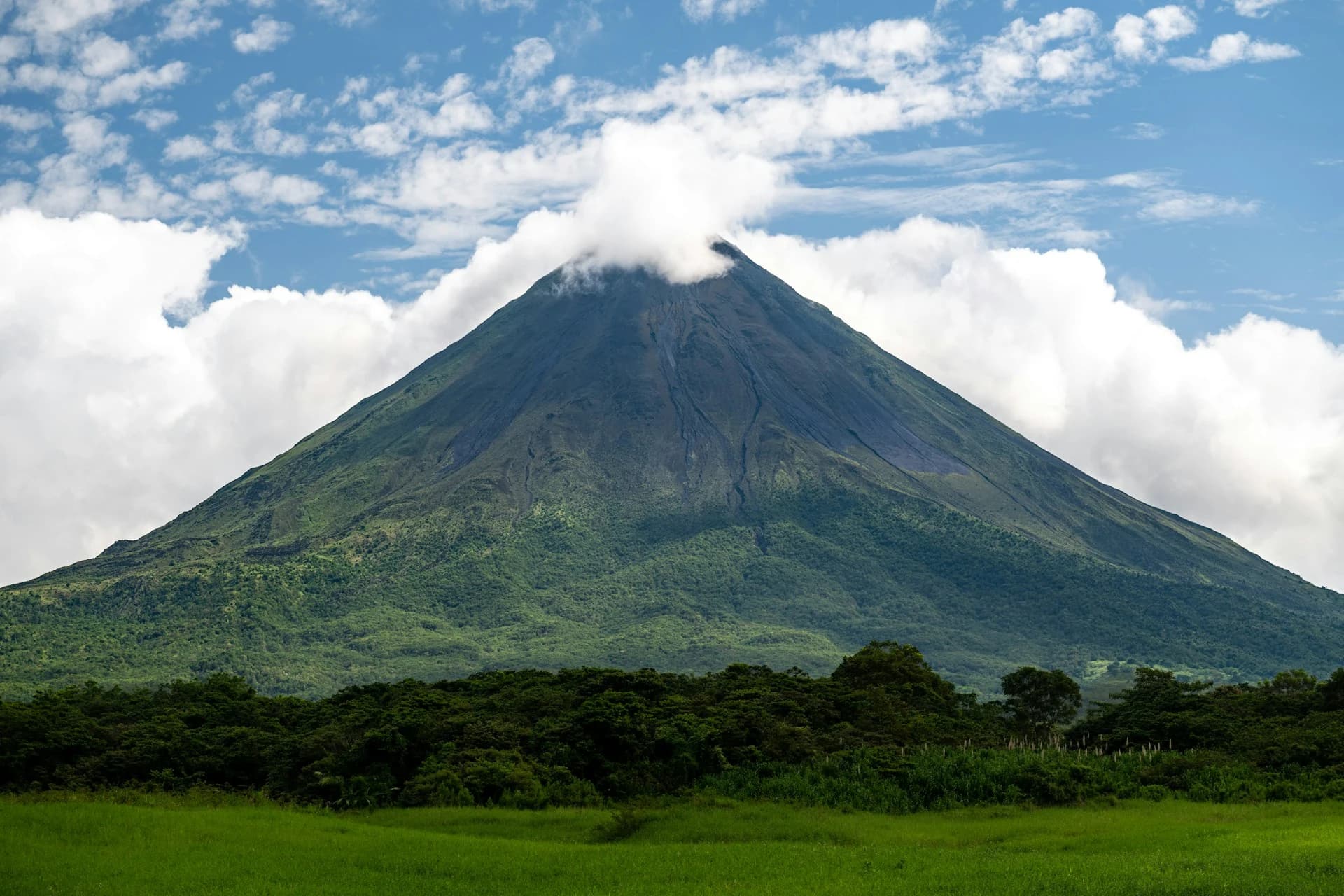
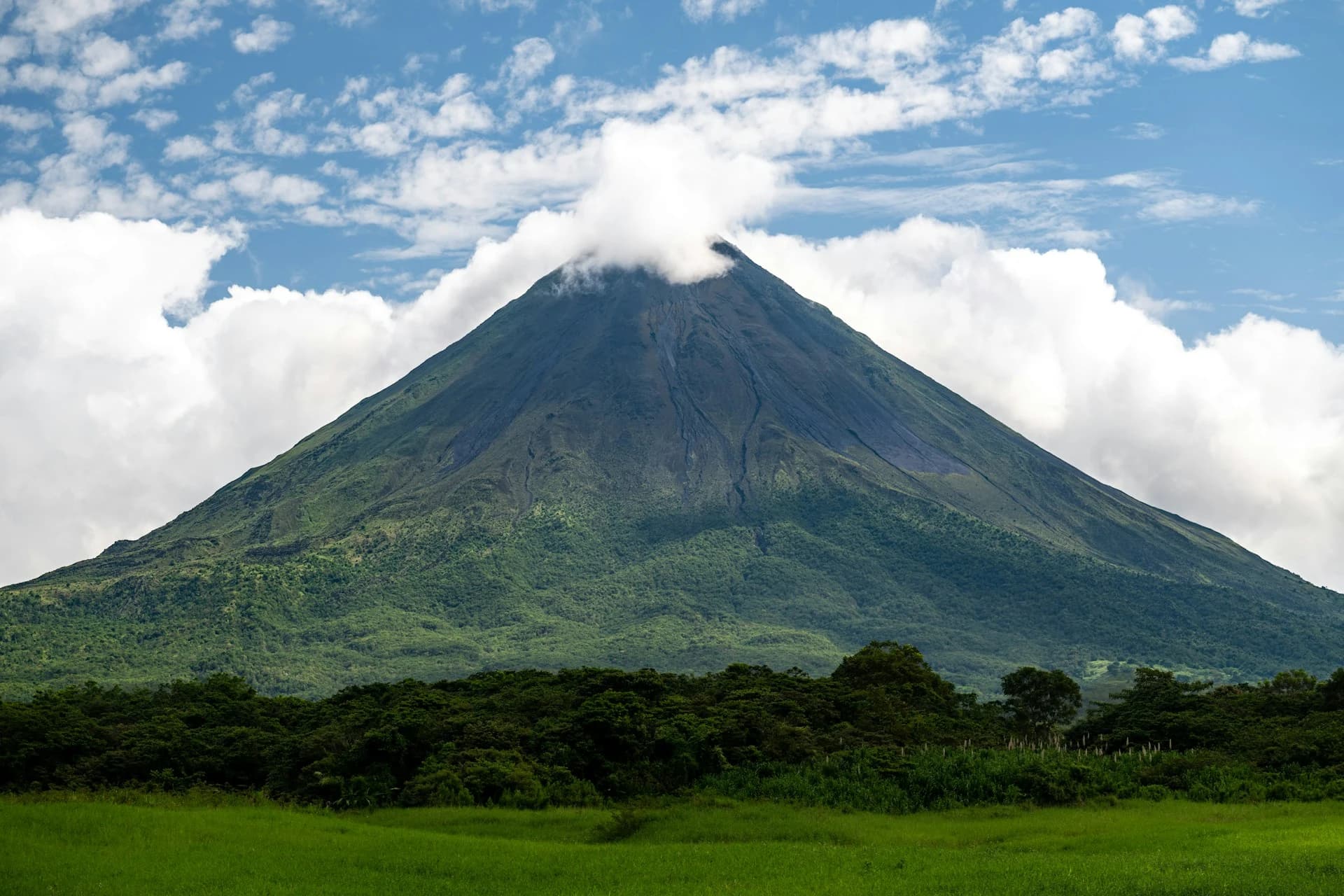
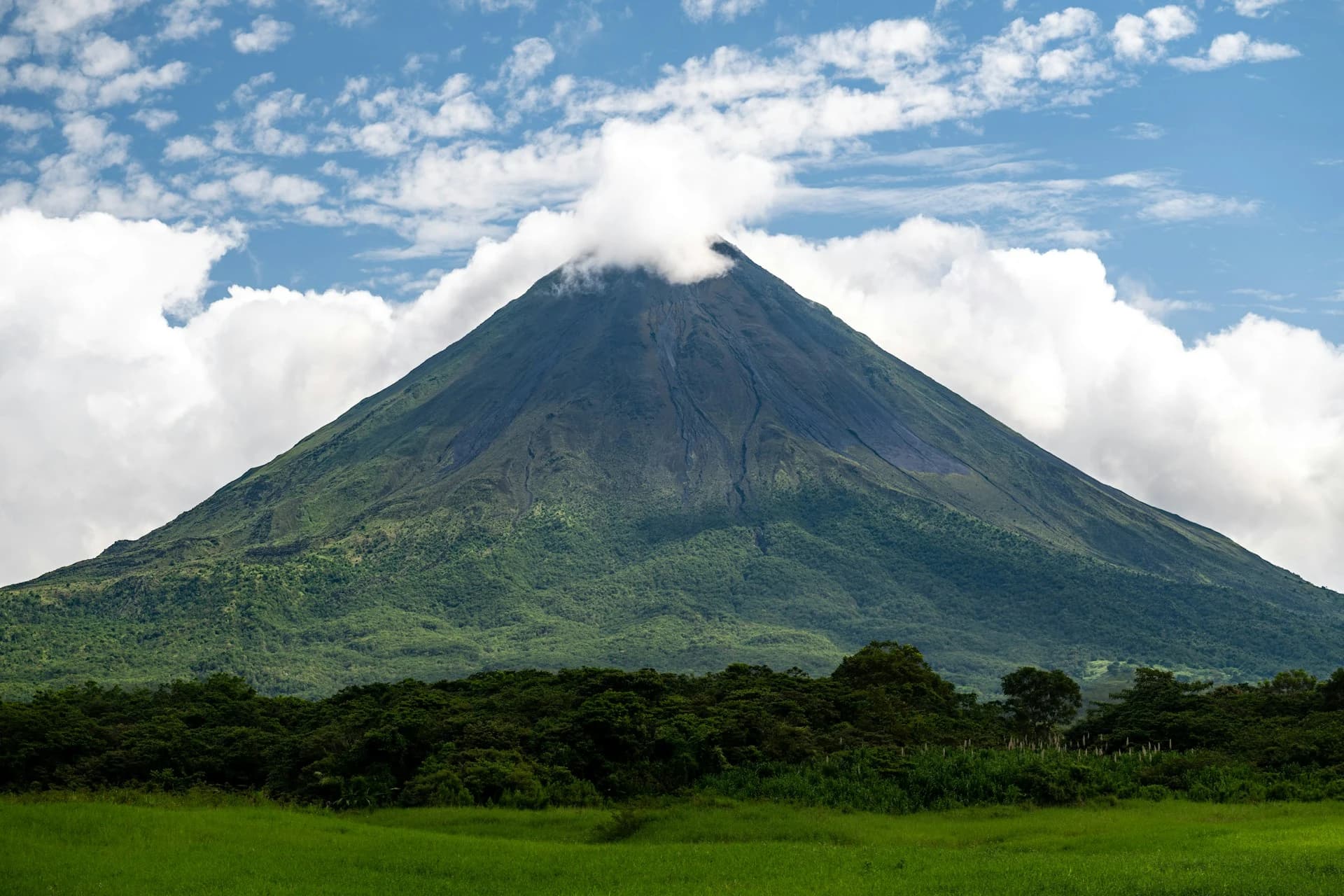
This is the least ambiguous comparison on the page. Arenal's near-perfect cone is the reason most people come to La Fortuna, and it is also the single most weather-dependent sight in the region. The mountain makes its own weather: it forces moist air upward, that air condenses, and a cloud cap forms over the summit. The wetter the air, the more of the year that cap sits in place.
| Period | Volcano visibility | What to expect |
|---|---|---|
| January to March | Excellent | Clear cone on most mornings; the postcard view is close to reliable |
| December and April | Very good | Strong odds, with occasional cloudier spells at the season edges |
| May and November | Good to improving | Clear mornings are common; afternoons usually cloud over |
| June to August | Fair | Partial views more often than full ones; early starts matter most |
| September and October | Poor | The cone can stay hidden for several days running |
The timing rule holds in every month: the volcano is clearest between sunrise and mid-morning, before daytime heating builds the cloud cap, and it often clears again near sunset. What this means practically is that even in green season an early start gives you a real chance, while an 11 AM volcano tour in October is largely a walk in cloud.
Our take is simple: if the volcano is why you are coming, book dry season and give it at least two early mornings. If your dates land in green season, still book the hike, still start early, and treat a clear cone as a bonus rather than the plan. Note that Arenal has been in a resting phase since 2010, so there is no visible lava at night in any season. What you are here for is the shape of the mountain against the sky. Our Arenal Volcano hike guide compares the viewpoints and trails in detail, and March is the single strongest month for visibility.
Waterfalls and Rivers: Green Season Wins
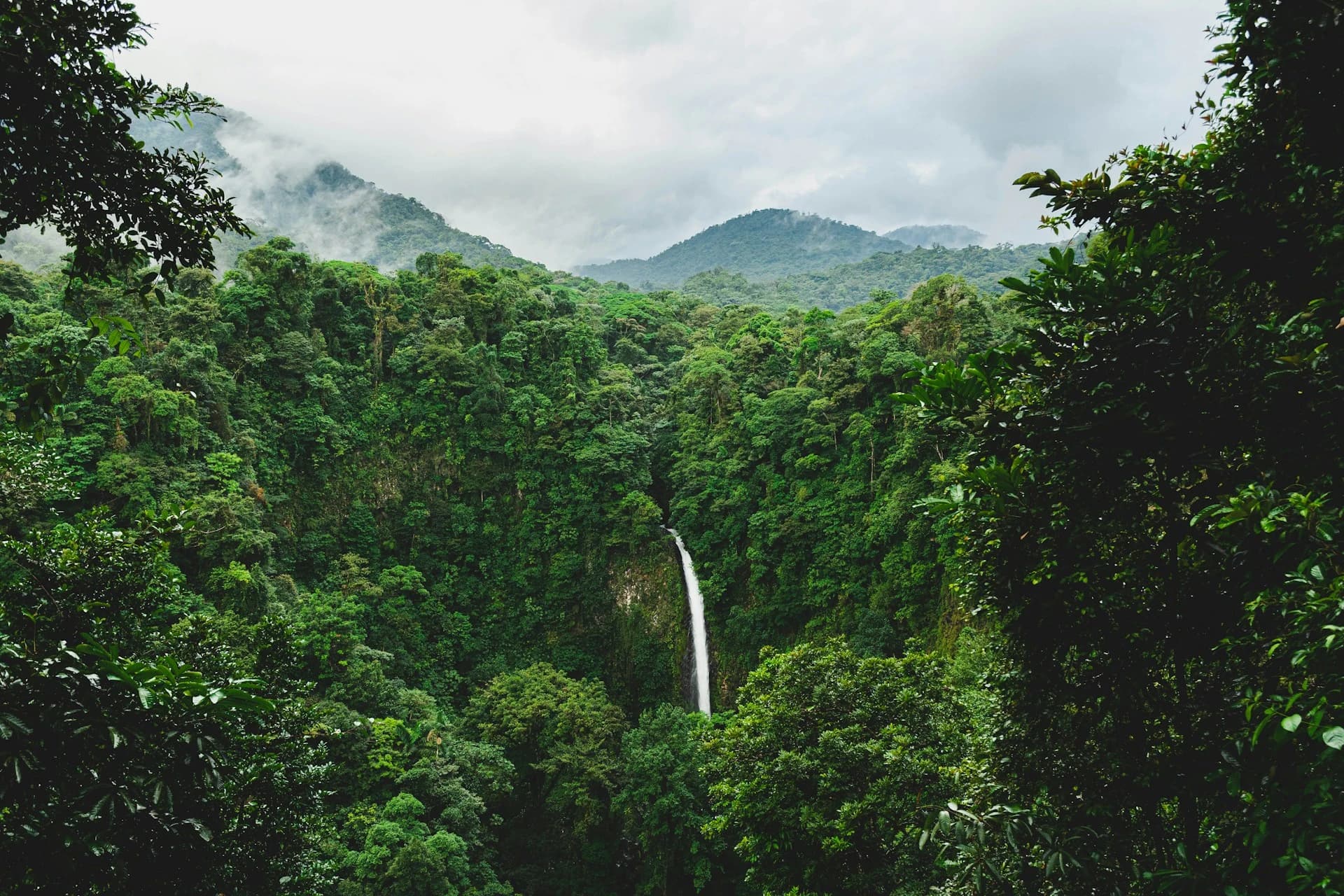
Flip the comparison and green season takes the honours. The La Fortuna Waterfall is fed by the same rain that hides the volcano, and by September and October it is running at its most powerful of the year: louder, wider, and throwing spray far enough that you feel it well before the base. In March and April the same falls are elegant rather than overwhelming, with clearer water and a calmer plunge pool that is much better for swimming and photographs.
| Water feature | Dry season | Green season |
|---|---|---|
| La Fortuna Waterfall flow | Moderate: elegant, clear, photogenic | Maximum: thunderous and dramatic |
| Plunge-pool swimming | Better: calmer water, clearer visibility | Often too strong or murky to swim comfortably |
| The 500-step staircase | Firm and far safer underfoot | Wet, slick, and slow going both directions |
| Whitewater rafting | Gentler runs; good for families and first-timers | Higher and faster; the better rafting by some margin |
| Canyoning and rappelling | Drier rock, more controlled descents | Bigger water on the rappels; wetter and wilder |
| Rio Celeste colour | Usually at its bluest with clear water | Heavy rain can turn the river cloudy for days |
One warning worth flagging. Rio Celeste is the exception that breaks the green-season pattern: its famous turquoise colour depends on a fine mineral suspension that heavy rainfall can wash out entirely, so a visit after several days of downpour can be a genuine disappointment. If Rio Celeste is on your list, dry season is the safer bet. Our Rio Celeste guide and waterfall guide both cover the seasonal differences, and rafting is one of the few activities we would actively schedule for the wet months.
Crowds and Prices: Green Season Wins Outright
The financial gap between the two seasons is larger than most visitors expect. A mid-range La Fortuna hotel room that costs $90 to $130 a night in September or October can run $200 to $280 over the Christmas and New Year peak. That is not a modest premium, it is close to a doubling, and it applies to tours, transfers and restaurants to a lesser degree as well.
| Window | Crowds | Mid-range hotel |
|---|---|---|
| Dec 20 to Jan 7 | Highest of the year | $200 to $280 |
| Jan 8 to Mar 31 | High and steady | $130 to $200 |
| Early April | High, plus Semana Santa domestic travel | $130 to $180 |
| Late April | Dropping fast | $110 to $150 |
| May and June | Low | $95 to $150 |
| July and August | Moderate: northern family holidays | $110 to $160 |
| September and October | Lowest of the year | $90 to $130 |
| November | Low, rising late in the month | $110 to $160 |
Two details are worth planning around. First, the green season is not uniformly quiet: July and August pick up noticeably because of northern-hemisphere family holidays, and mid-July also brings the veranillo, a short dry spell that makes those weeks better than their rainfall totals suggest. Second, Semana Santa in April is the biggest domestic travel week in Costa Rica and can make an otherwise excellent dry-season week feel as busy as Christmas.
What we consistently see is that September and October offer the strongest value in the region and the weakest weather, in almost exactly equal measure. If the budget is the binding constraint, those months genuinely work, provided you go in knowing you may never see the summit. Our October guide and September guide set out what that trip actually looks like.
Activities Compared: Which Tours Work Best in Each Season
Some La Fortuna activities barely notice the season. Others change character completely. Here is how each of the headline tours performs on both sides of the calendar.
| Activity | Dry season | Green season | Winner |
|---|---|---|---|
| Arenal Volcano hike | 10/10: clear cone, firm lava trails | 6/10: often walks into cloud | Dry |
| La Fortuna Waterfall | 9/10: safe staircase, clear water | 8/10: far more powerful, slick steps | Dry, narrowly |
| Hanging bridges | 10/10: rarely fogged in | 6/10: cloud and mud both bite | Dry |
| Hot springs | 9/10: excellent after a hike | 9/10: rain-proof and arguably nicer in a downpour | Tie |
| Zipline | 10/10: dry lines and long views | 6/10: views close in; runs can pause in storms | Dry |
| ATV tour | 9/10: firm trails, less mud | 7/10: muddy and messy, which some people love | Dry |
| Sloth tour | 9/10: dry trails, easy spotting | 8/10: reliable year-round, wetter underfoot | Dry, narrowly |
| Night walk | 7/10: good, but frogs are quieter | 10/10: frogs and insects at peak activity | Green |
| White water rafting | 7/10: gentle, family-friendly flow | 10/10: high water and the best runs | Green |
| Canyoning | 9/10: drier rock, controlled rappels | 8/10: bigger water, wetter and wilder | Dry, narrowly |
| Coffee tour | 9/10: comfortable in dry weather | 9/10: largely sheltered and rain-proof | Tie |
| Cooking class | 9/10: unaffected by weather | 9/10: the ideal wet-afternoon activity | Tie |
| Rio Celeste tubing | 9/10: bluest water, clearest river | 6/10: heavy rain can wash out the colour | Dry |
How to build each season's itinerary
In dry season, front-load everything that depends on visibility. The Arenal Volcano hike, hanging bridges and ziplines all pay off best in the morning, with ATV tours and canyoning benefiting from firm ground. Save the hot springs, coffee tour and cooking class for the afternoon.
In green season the structure is the same but the reasoning shifts: mornings are the reliably dry window, so book anything outdoors before noon and treat the afternoon as rain-proof time by default. Then lean into what the wet months do better. Book the night walk without hesitation, because frog activity is genuinely at its peak, and book rafting for the higher water. We would also add a sloth tour to any green-season trip as insurance: it delivers regardless of cloud cover.
The Shoulder Months: Where Both Seasons Overlap
The honest conclusion of every comparison above is that neither season is better, they are better at different things. Which leads to the most useful advice on this page: if your dates are flexible, we'd lean toward the seam between them rather than either extreme, because the shoulder weeks hand you most of the dry season's visibility at close to green season's prices.
| Window | Rainfall | What you get | What you give up |
|---|---|---|---|
| Late April | 70mm month average | The driest month of the year, still-good volcano odds, and prices falling to $110 to $150 as the season ends | Rivers and falls at their lowest; grass can look dry |
| May | 180mm | Green returning fast, waterfalls picking up, good volcano odds, low-season rates from $100 to $150, and thin crowds | Afternoon rain returns; trails start softening |
| Late Nov to early Dec | 250mm falling to 220mm | Rain easing, volcano visibility improving to very good, rainforest still saturated, and rates at $110 to $180 before the Christmas surge | Some wet afternoons; book before roughly Dec 20 |
Late April is the pure-value end of dry season. Rainfall bottoms out at around 70mm, the volcano is still showing itself on most mornings, and the moment Semana Santa passes the crowds and prices drop away while the weather stays intact. It is the same trip January delivers for meaningfully less money.
May is our own favourite compromise and the closest thing to having both. Rainfall roughly doubles from April to 180mm, which sounds worse than it is: the rain concentrates in afternoons, mornings stay largely workable, and volcano views remain good rather than fair. Meanwhile the rainforest greens up dramatically, the waterfall recovers real power, and rates sit at green-season levels of $100 to $150 with almost nobody around.
Late November into early December runs the same trade in reverse. Rainfall falls from October's 375mm peak to 250mm in November and 220mm in December, visibility climbs back to very good, and the forest is still carrying all the lushness of the wet months. The catch is a hard deadline: from around December 20 the Christmas peak arrives and prices jump to $200 or more, so this window closes fast.
If you only take one thing from this page, take that. The travellers who get the best La Fortuna trips are usually not the ones who booked the perfect month, they are the ones who booked the edges. Our May guide, April guide and November guide go month by month.
From Our Experience
What we consistently see is that the season matters far less than the hour. An 11 AM volcano tour in February can be just as clouded as one in October, while a 6:30 AM start in September regularly delivers a clear cone that the same visitor would have missed by sleeping in. Pick your season for the waterfall, the price and the crowds, then win the volcano with early starts, and give it two mornings in dry season and three in green.
Tips for Choosing and Planning Either Season
- Decide on the volcano first. It is the only factor where the two seasons are genuinely far apart. If a clear cone is essential, book December to April and stop optimising anything else.
- Ignore temperature completely. Highs sit at 29 to 31°C and lows at 21°C in every month of the year, so heat is not a reason to choose one season over the other. Pack identically either way.
- Do not treat dry season as rainless. Even March and April average around 70 to 75mm, and La Fortuna's Caribbean-slope position means showers are possible any day. A light rain shell belongs in every suitcase.
- Book outdoor activities for mornings in both seasons. The pattern is the same year-round: clearest early, cloudiest and wettest from mid-afternoon. Green season just makes the rule stricter.
- Use afternoons for rain-proof plans. Hot springs, coffee tours and cooking classes are unaffected by weather and are the natural back half of any day in either season.
- Watch two peak windows in dry season. December 20 to January 7 is the most expensive stretch of the year, and Semana Santa in April is the busiest domestic travel week. Avoid both if you can.
- If you book green season, build in a buffer day. With three or four days you can move a volcano hike to whichever morning looks clearest. With one day you are gambling.
- Consider mid-July for a green-season trip. The veranillo dry spell makes those weeks noticeably better than July's 345mm total implies.
- Skip Rio Celeste after heavy rain. It is the one attraction where green season is clearly worse, since downpours can wash out the turquoise colour for days.
- Never plan around lava. Arenal has been resting since 2010 and there is no night-time glow in any season, whatever older photographs suggest.
- Reading further? Our dry season guide and rainy season guide go deeper on each half of the year, and January and October show the two extremes in detail.
How We Put This Comparison Together
We built this comparison from La Fortuna's monthly rainfall and temperature averages, the Arenal Volcano visibility cycle that drives most of the seasonal difference, and the local high and low season rhythm of crowds and hotel pricing. Every rating reflects how a factor or activity actually performs in each season rather than a general impression of tropical weather. Activity ratings draw on the same operators and tours we cover in our individual La Fortuna guides, so the tours highlighted here are the top-rated option from each of those pages rather than a separate list. Where a tour runs equally well in both seasons we have said so instead of manufacturing a winner. Rainfall, temperature and price ranges are typical values and vary year to year. Rainfall figures for La Fortuna differ noticeably between sources because the town sits on the Caribbean slope where conditions change over short distances, so treat these as the reliable shape of the year rather than a forecast, and confirm current conditions and rates before you book.
Frequently Asked Questions
Is it better to visit La Fortuna in the rainy or dry season?+
It depends entirely on what you want. Dry season (December to April) is better if seeing Arenal Volcano matters, if you are hiking with children or older travellers, or if you want reliable mornings. Green season (May to November) is better if you want the waterfall at full power, the most active wildlife, quiet trails, and hotel rates that can be close to half of dry-season prices.
When is the dry season in La Fortuna?+
December through April, peaking in March and April when rainfall drops to around 70 to 75mm a month. December is the wettest of the dry months at around 220mm, so the season strengthens as it goes on rather than starting at its best.
When is the rainy or green season in La Fortuna?+
May through November. May is the mildest at around 180mm, and rainfall builds to a peak in September (330mm) and October (375mm) before easing to 250mm in November. Mid-July also brings the veranillo, a short dry spell that makes those weeks better than July's totals suggest.
Is it hotter in La Fortuna in the dry season?+
No, and this surprises many visitors. Average highs range only from 29 to 31°C (85 to 88°F) across the entire year and lows sit at 21°C (71°F) every month. Temperature is not a meaningful factor in choosing between the seasons: rain, cloud, crowds and price are.
Can you see Arenal Volcano in the rainy season?+
Sometimes, but the odds are much worse. The cone can stay hidden for several days at a stretch in September and October, which are the worst months for visibility. Your best chance in any month is between sunrise and mid-morning before the cloud cap builds, and it often clears again near sunset. Plan three early mornings in green season rather than one. Note that Arenal has been resting since 2010, so there is no visible lava at night in either season.
Does it still rain in La Fortuna during the dry season?+
Yes. La Fortuna sits on the Caribbean slope of the mountains and catches moisture year-round, so even March and April, the driest months at roughly 75mm and 70mm, see rain. What changes is the character: dry-season rain tends to be brief showers or overnight spells rather than the long afternoon downpours of the wet months. Pack a rain jacket in every season.
How much cheaper is La Fortuna in the rainy season?+
Substantially. A mid-range hotel room runs roughly $90 to $130 a night in September and October against $130 to $200 through most of the dry season, and $200 to $280 over the Christmas and New Year peak. That is close to a doubling between the cheapest and most expensive weeks of the year.
What is the best month to visit La Fortuna for a balance of both seasons?+
May is our pick, with late April and late November close behind. May brings 180mm of rain that falls mostly in the afternoons, still-good volcano odds, a rainforest greening up fast, a waterfall recovering real power, and low-season rates around $100 to $150 with very few visitors. Late November into early December works similarly in reverse, but book before roughly December 20 when the Christmas peak begins.
Affiliate note: Some links on this page are affiliate links. If you book through them, we may earn a small commission at no additional cost to you.