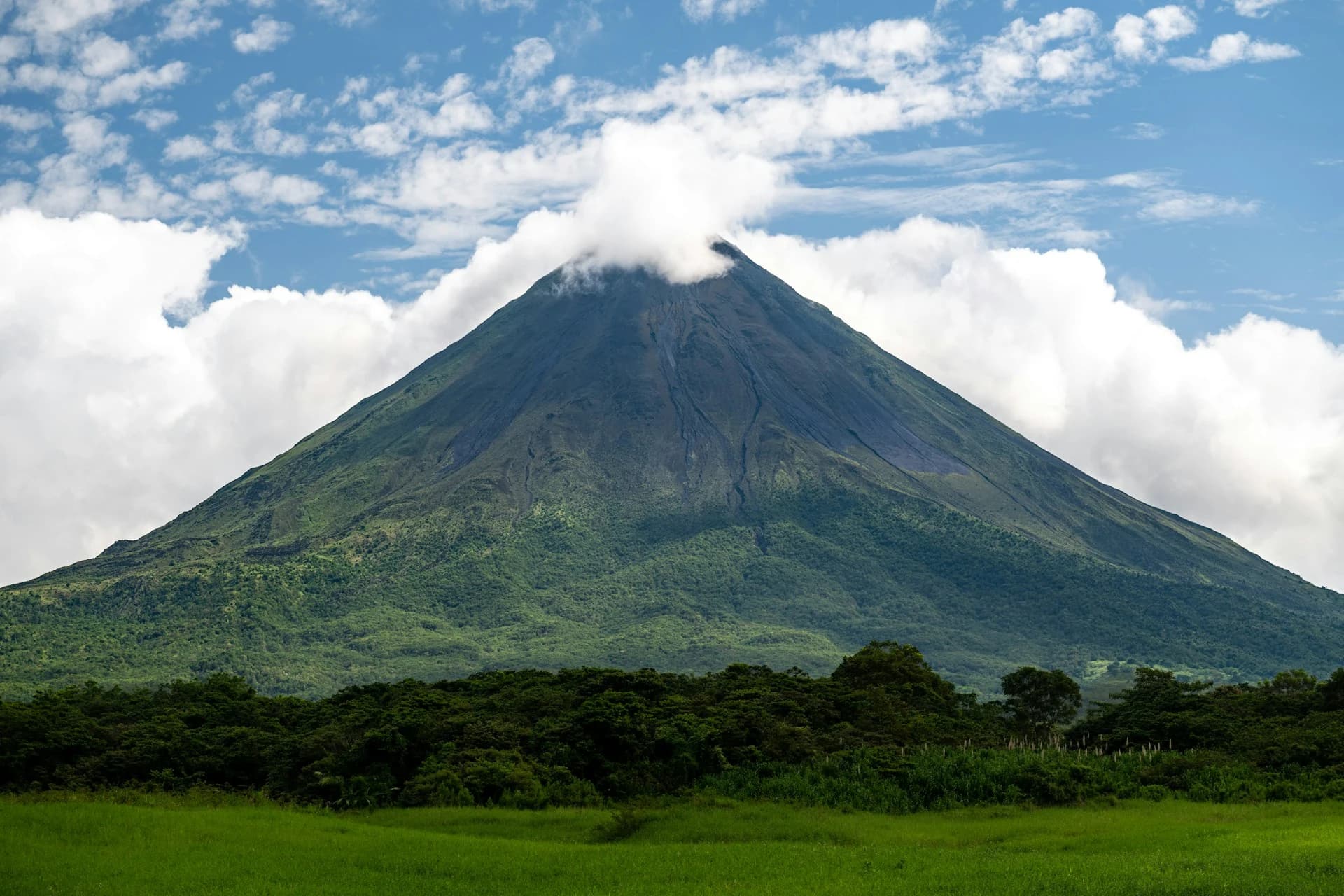
The green season in La Fortuna runs May to November: thundering waterfalls, the most vivid rainforest of the year, empty trails and hotel rates near half of January's. Here is the honest case for it, and the real costs.
What You Should Know
- The green season runs May to November. Rainfall climbs from 180mm in May to a peak of 375mm in October, then eases to 250mm in November. Temperature barely moves: highs of 29 to 30°C (85 to 86°F) and lows around 21°C (71°F) all season, so you pack the same clothes as in January.
- What you gain is genuine: waterfalls at maximum power, the most vivid rainforest of the year, rivers running high for rafting, frogs and wildlife at their most active, empty trails in September and October, and mid-range hotels around $90 to $160 instead of double that in peak season.
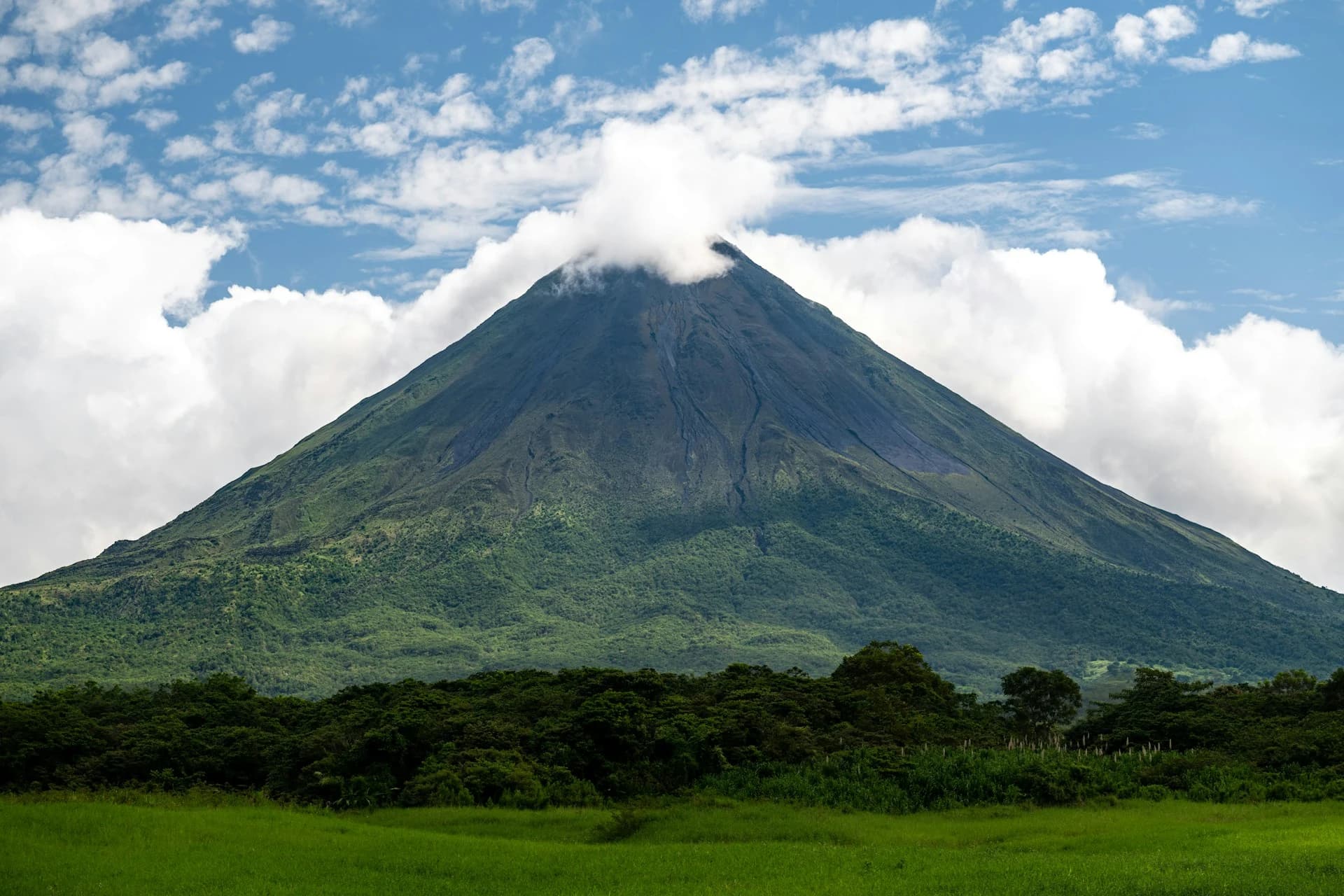
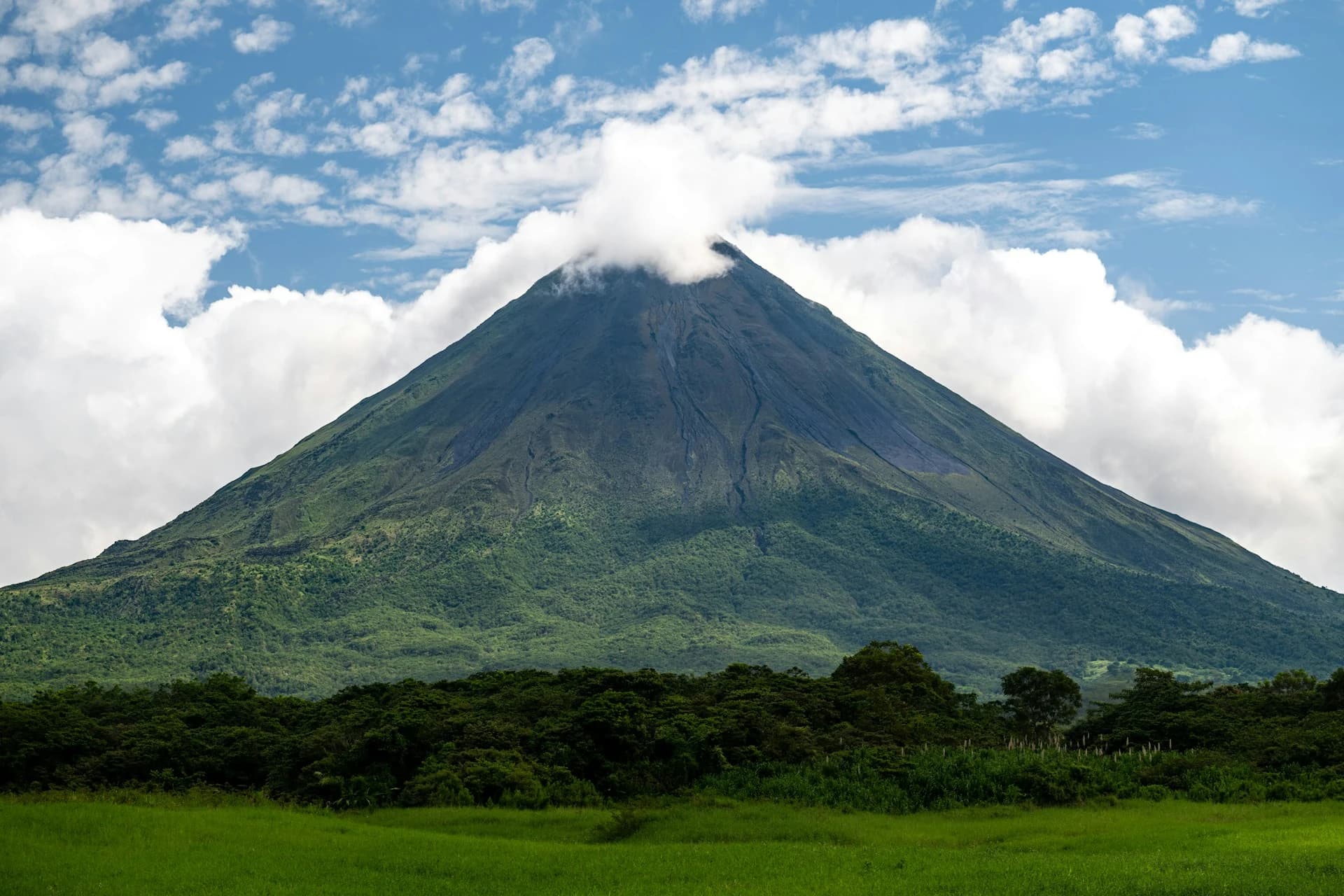
- What you give up is the volcano. Arenal makes its own cloud, and in the wet months the cone is fair to poor for viewing, with September and October the worst of the year. If seeing the mountain is your main reason for coming, this is the wrong season.
- Most people don't realize that green-season rain in La Fortuna is usually an afternoon event rather than an all-day one. Mornings are often workable, which is why front-loading your itinerary matters far more here than it does in the dry months.
La Fortuna in the Rainy Season: Overview
⭐ Best green-season windows: May and November. Both sit between the extremes, at 180mm and 250mm respectively, with volcano views rated good to improving, low crowds, and rates well below dry-season levels. You get most of the green-season upside without the full weight of the September and October downpours.
| Factor | Green Season Rating |
|---|---|
| Weather | 5/10: warm and humid, with real and regular rain |
| Crowds | 9/10: lowest of the year in September and October |
| Prices | 9/10: roughly half of January at the wettest point |
| Volcano Views | 4/10: fair to poor, worst in September and October |
| Hiking & Trails | 5/10: muddiest footing of the year, slick in places |
| Waterfall & Rivers | 10/10: maximum flow and the loudest the falls get |
| Wildlife | 10/10: frogs and rainforest life at their most active |
| Rain | 3/10: 180 to 375mm a month, mostly afternoons |
| Families | 6/10: fine with flexible plans; mud tests small children |
| Couples | 8/10: quiet, atmospheric, and far better value |
💰 Average green-season hotel prices (La Fortuna town, mid-range):
May and June: ~$95–150/night · July and August: ~$110–160/night · September and October: ~$90–130/night · November: ~$110–160/night
Rough mid-range estimates; rates vary by property and booking lead time.
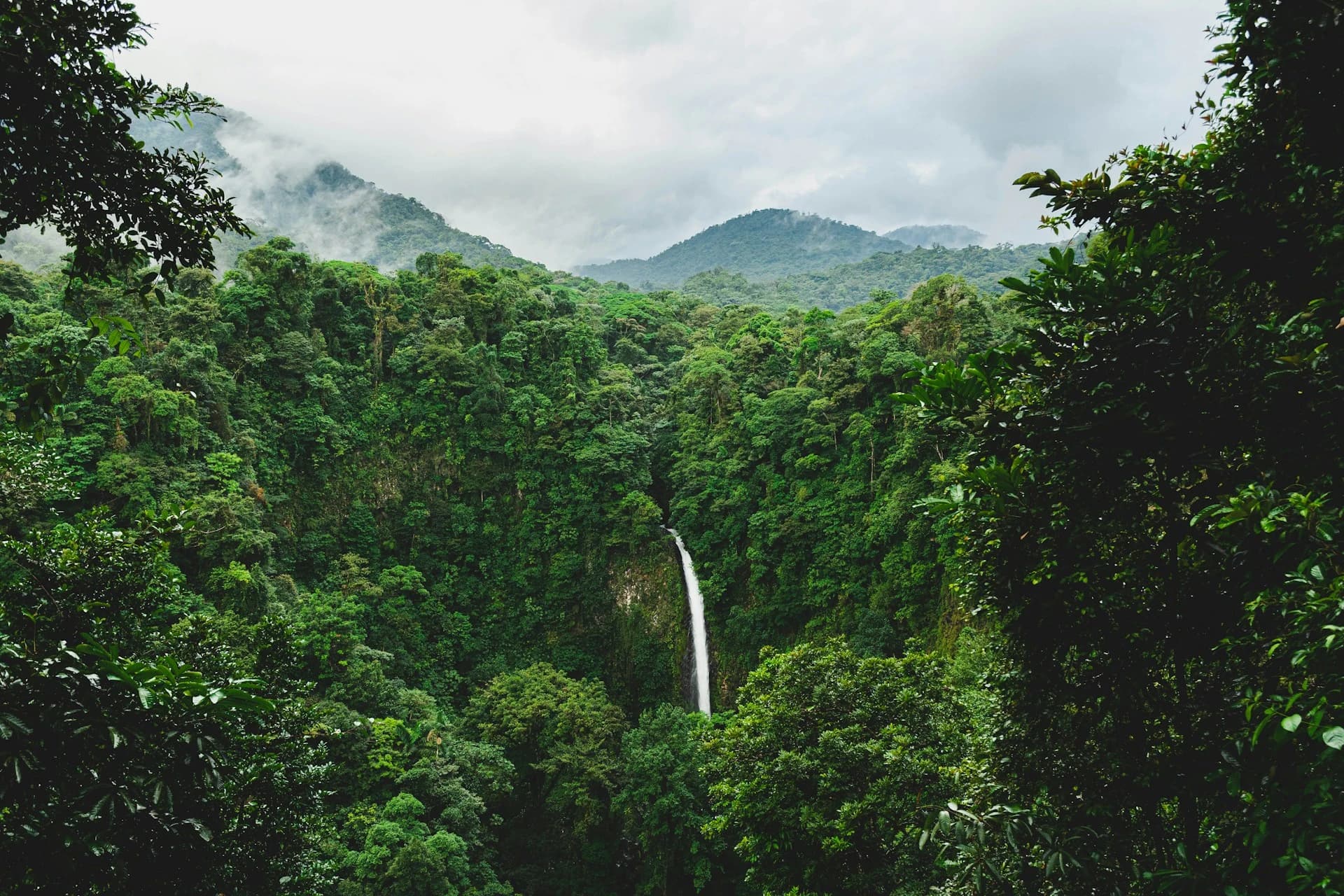
The green season is the version of La Fortuna most travel planning quietly steers you away from, and in our view that is a mistake for a large group of visitors. This is when the rainforest actually looks like a rainforest: saturated green, water running everywhere, the La Fortuna Waterfall thundering rather than trickling, and rivers high enough that rafting turns from a scenic float into a proper ride. It is also when the town belongs to a handful of people instead of a queue.
We'd book the green season if value, waterfalls, wildlife, or photography drive your trip, and if you can accept losing afternoons to rain. The tradeoff is not subtle. Trails are muddy, the waterfall staircase is slick, and Arenal spends much of the season inside its own cloud. Bear in mind that the volcano has been in a resting phase since 2010, so even a perfectly clear night shows you a silhouette rather than lava. Our La Fortuna Waterfall guide and white water rafting guide cover the two experiences the wet months genuinely improve, and our rainy vs dry season comparison puts the two halves of the year side by side.
Green Season at a Glance
✅ Waterfalls at maximum power ✅ Lowest prices and emptiest trails ✅ Most active wildlife
⚠️ Volcano frequently hidden ⚠️ Muddy, slippery trails ⚠️ 180–375mm of rain a month
The Green Season Month by Month
Calling May to November one season flattens some very real differences. The wet half of the year has a shape: a gentle start, a build through June, a mid-July pause, a September and October peak, and a clear improvement in November.
| Month | Rainfall | Volcano Views | Crowds | Character |
|---|---|---|---|---|
| May | 180 mm | Good | Low | Green season opens; the gentlest wet month |
| June | 300 mm | Fair | Low | Rain settles into a daily afternoon pattern |
| July | 345 mm | Fair | Moderate | Wet overall, but the mid-month veranillo breaks it up |
| August | 300 mm | Fair | Moderate | Similar to June, with family travel filling hotels |
| September | 330 mm | Poor | Lowest of year | Wettest stretch begins; cheapest and quietest |
| October | 375 mm | Poor | Lowest of year | The wettest month of the whole calendar |
| November | 250 mm | Improving | Low, rising late | The turn; drying out and views coming back |
The mid-July veranillo
One quirk is worth planning around. Mid-July brings the veranillo, the "little summer", a short drier spell that interrupts the wet-season pattern. It is not a guarantee and it does not stop July averaging 345mm, but it does mean July often delivers more usable days than its rainfall total suggests. Our July guide goes into how that plays out in practice.
The September and October floor
These are the wettest and cloudiest months in La Fortuna, and also the cheapest and emptiest. Hotels sit around $90 to $130, some smaller businesses take their annual closure, and the volcano is genuinely poor for viewing. What we consistently see is that travellers who go in with the right expectations enjoy these months a great deal, and travellers who expect a postcard cone do not. Our October guide covers the wettest month in detail.
La Fortuna Weather in the Rainy Season
| Metric | Green Season (May–Nov) |
|---|---|
| Avg High | 29–30°C (85–86°F) |
| Avg Low | 21°C (71°F) |
| Monthly Rainfall | 180 mm (May) to 375 mm (October) |
| Wettest Month | October, ~375 mm |
| Driest Green Month | May, ~180 mm |
| Humidity | High |
| UV Index | Very high, even under cloud |
| Volcano Visibility | Fair to poor; worst September and October |
Temperature and Humidity
Nothing much happens to the thermometer. Green-season highs run 29 to 30°C (85 to 86°F) and nights sit at about 21°C (71°F), which is within a degree of January. What changes is how it feels: humidity is high, the air is heavy after rain, and clothes take longer to dry. Pack quick-dry fabrics rather than cotton and you remove most of the discomfort. The UV stays very high under cloud, so sunscreen is not optional just because the sky is grey.
Rain Pattern
The typical green-season day is not a washout. Mornings frequently start bright or lightly overcast, cloud builds through late morning, and the rain arrives in the afternoon, sometimes as a heavy multi-hour downpour. September and October break this pattern more often, with rain that starts earlier and lasts longer. Our take: treat mornings as your working hours and plan anything weather-dependent before noon, every single day.
Volcano Visibility and Trail Conditions
This is where the green season charges you. Arenal generates its own cloud cap, and in the wet months the summit is hidden far more often than it is visible, with September and October the poorest of the year. Early mornings still offer the best odds, and clear windows do happen, but they are the exception rather than the rule. Underfoot, expect the muddiest conditions of the year: the waterfall staircase is slick, the 1968 lava trails hold water, and ATV and horseback routes churn up badly. None of it is dangerous with proper footwear, but it is slower and messier than the dry-season version.
What the Rainy Season Actually Means Day to Day
Rainfall totals are abstract. What typically happens is far more useful to plan around, so here is what those numbers translate to on a real itinerary.
- You lose afternoons, not days. The standard pattern is a workable morning followed by rain from early afternoon. A trip built around 7 AM starts loses very little; a trip built around lazy 11 AM departures loses a lot.
- The waterfall is a different experience. At 300mm-plus months the La Fortuna Waterfall runs at full volume, loud and spray-heavy. It photographs dramatically and the pool is often too churned for comfortable swimming.
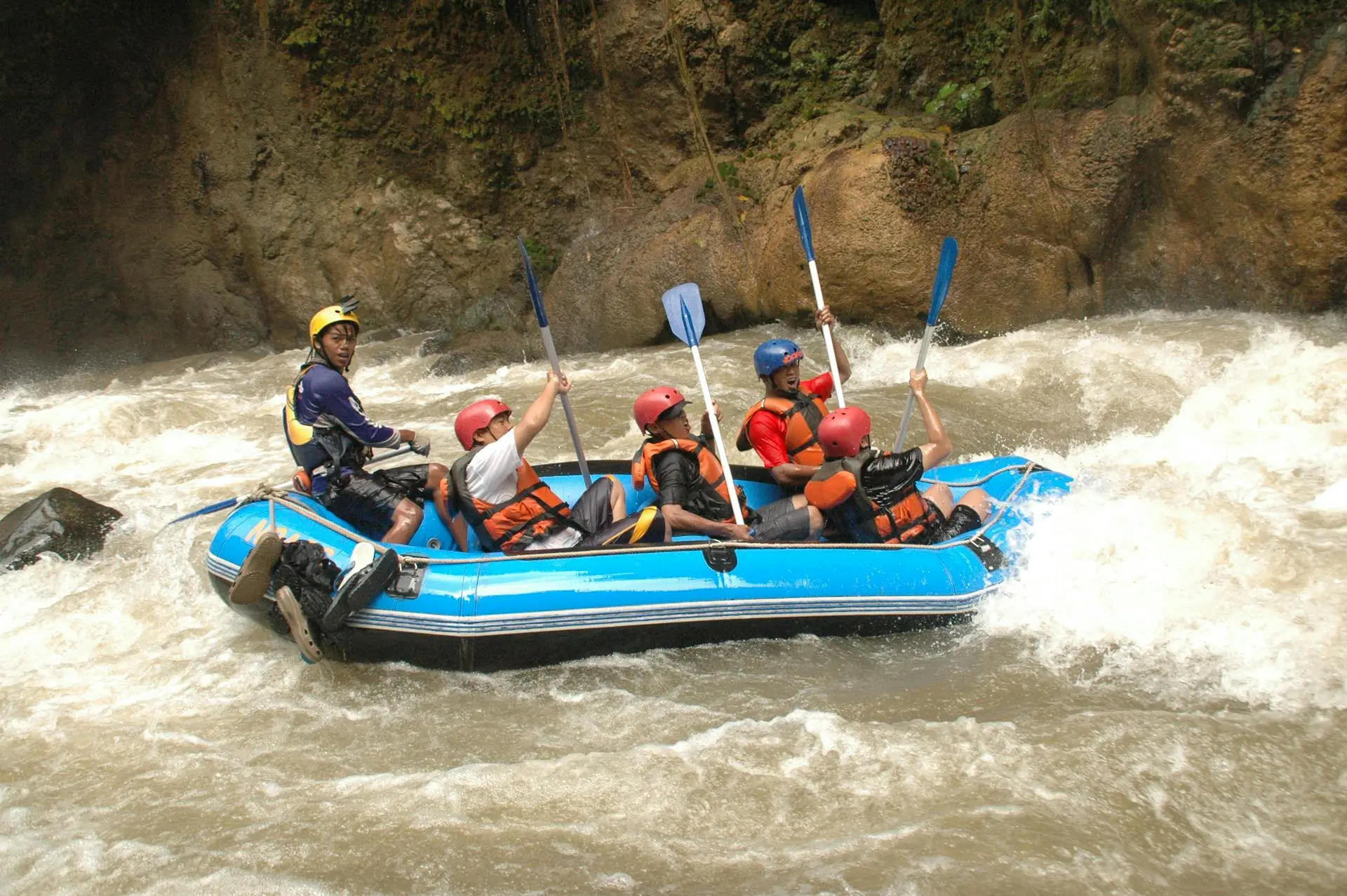
- Rivers rise. Rafting is at its most exciting of the year, and operators occasionally adjust or cancel runs when levels get too high after sustained rain.
- Mud is constant. Closed shoes with real grip are the difference between an enjoyable hike and a miserable one. Sandals are for town.
- Wildlife gets easier. Frogs are dramatically more active, and the rainforest is at its most alive, which makes night walks noticeably better than in the dry months.
- Roads and drives take longer. Heavy rain slows the routes to Rio Celeste and Lake Arenal, so build slack into any long-distance day.
- Cancellations are rare but possible. Most tours run in rain. Canyoning and rafting are the two most likely to be adjusted for safety after a heavy spell.
In our experience the travellers who struggle in green season are the ones running a fixed, back-to-back schedule. Leave one flexible day and the season stops feeling like a gamble.
La Fortuna Rainfall and Temperature by Month
The single most useful thing to understand about La Fortuna's climate is that temperature barely moves all year, while rainfall swings roughly fivefold. Daytime highs sit between 29 and 32°C every month and nights hover around 21°C, so you pack the same clothes in January as in July. What actually changes your trip is how much rain falls, and when.
Average monthly rainfall (mm)
Full Month-by-Month Figures
| Month | Rainfall | Avg High | Avg Low | Season |
|---|---|---|---|---|
| Jan | 150 mm | 29°C | 21°C | Dry season |
| Feb | 120 mm | 30°C | 21°C | Dry season |
| Mar | 75 mm | 31°C | 21°C | Dry season |
| Apr | 70 mm | 31°C | 21°C | Dry season |
| May | 180 mm | 30°C | 21°C | Green season |
| Jun | 300 mm | 30°C | 21°C | Green season |
| Jul | 345 mm | 30°C | 21°C | Green season |
| Aug | 300 mm | 30°C | 21°C | Green season |
| Sep | 330 mm | 30°C | 21°C | Green season |
| Oct | 375 mm | 29°C | 21°C | Green season |
| Nov | 250 mm | 29°C | 21°C | Green season |
| Dec | 220 mm | 29°C | 21°C | Dry season |
What the Numbers Actually Mean
Three things stand out. First, March and April are the driest months by a wide margin, at roughly 70 to 75mm, which is why the dry season peaks then rather than in December. Second, October is the wettest at around 375mm, five times March, with September close behind. Third, the shoulder months do most of the work for value travelers: May and November sit between the extremes, offering greener rainforest and lower prices without the full weight of the wet season.
The temperature column is almost a flat line, and that is the point. Most people don't realize that choosing when to visit La Fortuna is a decision about rain and cloud, not about heat. If you want the volcano visible and the trails firm, come in the dry season. If you want thundering waterfalls, fuller rivers, and lower rates, the green season delivers, and you accept afternoon rain as the price.
ℹ️ Figures are rounded monthly averages from a single climate dataset and are indicative rather than exact. Published figures for La Fortuna vary noticeably between sources and weather stations, particularly for rainfall totals and rain-day counts, because the town sits on the Caribbean slope where conditions shift over short distances. Treat these as the shape of the year rather than a forecast.
Best Things to Do in La Fortuna in the Rainy Season
| Activity | Green Season Rating | Best Time of Day | Notes |
|---|---|---|---|
| La Fortuna Waterfall | 10/10 | Early morning | Maximum flow and the loudest it gets; staircase is slick |
| White water rafting | 10/10 | Morning | Highest rivers of the year; the best months to raft |
| Night walk | 10/10 | Evening | Frogs and rainforest life at their most active |
| Hot springs | 10/10 | Afternoon | Completely rain-proof; ideal when the sky opens |
| Coffee tour | 9/10 | Any | Largely sheltered and unaffected by weather |
| Sloth tour | 8/10 | Early morning | Reliable year-round; expect wet, muddy trails |
| Hanging bridges | 6/10 | Early morning | Atmospheric in mist, but views are often closed in |
| Rio Celeste tubing | 6/10 | Morning | Heavy rain can cloud the famous blue water |
| Zipline | 6/10 | Morning | Runs in rain, but fast wet cable is less comfortable |
| Canyoning | 6/10 | Morning | Dramatic water volume; occasionally paused after downpours |
| Arenal Volcano hike | 5/10 | Early morning | Trails hold water and the cone is often hidden |
| ATV tour | 5/10 | Morning | Genuinely muddy; fun if you want that, grim if you don't |
What to prioritize this season
The green season is a water and wildlife season. Our top pick is still the full-day combination that stacks the headline sights into one organised day: the La Fortuna Waterfall, a guided Arenal Volcano hike to Mirador El Silencio, and a hot springs soak to finish. The waterfall is at its most impressive of the year right now, and the hot springs ending means a wet afternoon costs you nothing. It is a long day at around 11 hours, and it is by far the most-reviewed tour in La Fortuna.
After that, follow the water. White water rafting is the single activity the wet months improve most, with rivers running high and lively rather than gentle. The night walk is likewise at its yearly best because frogs are far more active in the rain. Canyoning is spectacular for water volume, though it is the tour most likely to be adjusted after a heavy spell. We'd add a coffee tour or a cooking class as your designated wet-afternoon backup.
Be realistic about what the season takes away. The hanging bridges and ziplines both trade on visibility, and cloud closes in on both regularly. ATV tours become a mud experience rather than a scenic one. And the volcano hike is still a good walk through lava-field forest, but you should book it expecting cloud and treat a clear cone as a bonus. If you want the reverse of all this, our dry season guide lays it out.
Who Should Visit in the Green Season (and Who Shouldn't)
We'd shortlist this season for budget travellers, photographers, and anyone who rates empty trails and full waterfalls above a guaranteed volcano view, because those are the things it delivers better than any other time of year. It is genuinely excellent for some travellers and genuinely wrong for others. Being honest about which group you fall into is the most useful thing this guide can do for you.
Come in the green season if you are
- Budget-conscious. Mid-range hotels sit around $90 to $160 rather than double that, and September and October are close to half of January.
- A photographer. Saturated green, mist through the canopy, dramatic skies and a waterfall at full power beat flat sunshine for most subjects.
- A waterfall or river person. The falls and the rafting are objectively better now than at any other time of year.
- Wildlife-focused. Frogs, insects and rainforest activity peak in the wet months, which makes night tours far better.
- Someone who hates crowds. September and October are the emptiest months in La Fortuna by a clear margin.
- Flexible. If you can move an activity by a day when the forecast turns, the season stops costing you anything meaningful.
Choose the dry season instead if you are
- Here mainly to see the volcano. This is the decisive one. Views are fair to poor across the season and poorest in September and October. If a clear cone is the point of the trip, come between December and April.
- Travelling with small children or anyone unsteady. Roughly 500 slick steps at the waterfall and constant mud make the dry months considerably easier.
- On a short, fixed itinerary. Two or three days with no slack and a full plan is where wet-season rain actually hurts.
- Chasing canopy views. Bridges and ziplines are visibility-dependent and lose the most.
Our rainy vs dry season comparison works through the tradeoff in more detail if you are still deciding, and the best time to visit La Fortuna guide puts every month side by side on rainfall, crowds and hotel rates.
What to Pack for La Fortuna in the Rainy Season
Green-season packing is not about staying dry, which is unrealistic. It is about drying out fast and keeping your footing.
- A proper rain jacket, not an umbrella. A light waterproof shell with a hood handles the downpours; umbrellas are useless on trails and bridges.
- Closed shoes with real grip. The single highest-impact item. Trail runners or light hiking shoes beat anything smooth-soled on the waterfall staircase.
- A second pair of shoes. Nothing dries overnight in this humidity, so you want dry footwear for the next morning.
- Quick-dry clothing only. Synthetic or merino layers. Cotton stays wet for days.
- Dry bags or zip-lock bags. For phone, camera, passport and anything electronic; day packs are rarely as waterproof as they claim.
- A poncho for waterfalls and canyoning. Cheap, packable, and the difference between soaked and damp.
- Insect repellent. Mosquito activity is higher in the wet months than the dry ones.
- Sunscreen anyway. UV stays very high through cloud this close to the equator.
- A light layer for evenings. Nights sit at about 21°C (71°F) and feel cooler when you are already wet.
From Our Experience
The thing that separates a good green-season trip from a frustrating one is booking your headline tours for the first two mornings of your stay rather than spreading them across the week. Rain here builds through the day and also tends to build through a multi-day system, so the earliest slots in a trip are statistically your driest, and holding a spare afternoon at the end gives you a free retry if a system parks over the volcano.
Tips for Visiting La Fortuna in the Rainy Season
- Treat mornings as your only reliable hours. Cloud builds through late morning and rain usually arrives after lunch. Anything weather-dependent goes before noon.
- Keep one flexible day. A single unplanned day converts a washed-out afternoon from a lost activity into a rescheduled one.
- Pick May or November if you can choose. At 180mm and 250mm they carry the green-season upside with meaningfully less rain than the June to October block.
- Consider mid-July for the veranillo. The little summer often delivers a run of drier days in the middle of an otherwise wet month.
- Do not build the trip around the volcano. Views are fair to poor and worst in September and October. Enjoy a clear cone as luck rather than a plan.
- Book the rain-proof activities as backups, not fillers. Hot springs, coffee tours and cooking classes are the ones that work whatever the sky does.
- Prioritise the waterfall and rafting. These are the two things the season does better than the dry months, so give them your best slots.
- Grip matters more than waterproofing. The waterfall staircase is around 500 steps down and back, and it is slick all season.
- Book less far ahead, and negotiate. Availability is wide open in September and October, which is why rates fall to around $90 to $130.
- Check the calendar for closures. Some smaller La Fortuna businesses take their annual closure in October, the quietest month of all.
- Planning around a specific month? Our September and October guides cover the wettest end, and May and November cover the gentler shoulders.
How We Put This Guide Together
We based this green-season guide on La Fortuna's wet-season rainfall pattern from May through November, the Arenal Volcano cloud cycle that governs visibility in these months, and the low-season rhythm of crowds and prices that follows the rain. Ratings reflect how each factor and activity actually performs in the wet months: waterfalls and rivers at their strongest, wildlife at its most active, trails at their muddiest, volcano views at their weakest, and prices at their lowest. Activity ratings draw on the same operators and tours we cover in our individual La Fortuna guides, so the tours highlighted here are the top-rated option from each of those pages rather than a separate list. Temperatures, rainfall, and price ranges are typical values and vary year to year. Rainfall figures for La Fortuna differ noticeably between sources and weather stations, which reflects genuine variation on the Caribbean slope, so treat these as a reliable guide rather than a forecast and confirm current conditions and rates before you book.
Frequently Asked Questions
When is the rainy season in La Fortuna?+
The green season runs from May through November. Rainfall builds from about 180mm in May to a peak of 375mm in October, then eases to 250mm in November. December through April is the dry season, with March and April the driest months of all at roughly 70 to 75mm.
Is it worth visiting La Fortuna in the rainy season?+
For many travellers, yes. You get waterfalls at maximum power, the most vivid rainforest of the year, high rivers for rafting, the most active wildlife, near-empty trails in September and October, and mid-range hotels around $90 to $160 instead of double that. The catch is that it rains most afternoons and the Arenal Volcano is often hidden, so it is the wrong season if a clear volcano view is your main goal.
How much does it rain in La Fortuna during the green season?+
A lot, and it varies by month. May averages about 180mm, June and August around 300mm, July 345mm, September 330mm, October 375mm and November 250mm. October is the wettest month of the whole year, at roughly five times the March total. Rain typically arrives in the afternoon rather than lasting all day.
Can you see the Arenal Volcano in the rainy season?+
Sometimes, but the odds are poor. Volcano views are rated fair through most of the green season and poor in September and October, because Arenal generates its own cloud cap that sits over the summit far more often in wet months. Early mornings give you the best chance. Note also that the volcano has been in a resting phase since 2010, so there is no visible lava at any time of year.
Which is the best month of the rainy season to visit La Fortuna?+
May or November. May, at about 180mm, is the gentlest wet month and still has good volcano visibility, while November at 250mm marks the turn back toward the dry season with views already improving. Mid-July is also worth considering because the veranillo, a short dry spell, often breaks up the middle of that month.
Is the La Fortuna Waterfall better in the rainy season?+
It is at its most powerful. The green season pushes the falls to maximum flow, which is dramatic to see and photograph, though the pool is often too churned for comfortable swimming and the staircase of roughly 500 steps is slick. The dry season gives you clearer water and safer footing but far less volume.
How much cheaper is La Fortuna in the green season?+
Substantially. Mid-range hotels run about $90 to $160 a night across the season, dropping to roughly $90 to $130 in September and October, which is close to half of January's rates. Tour availability is also wide open, so you can book a day or two ahead rather than weeks.
What should I do in La Fortuna when it rains?+
The hot springs are completely rain-proof and arguably better in wet weather, and coffee tours and cooking classes are largely sheltered. Night walks are at their yearly best because frogs are far more active in the rain. Save these for afternoons and evenings, and keep mornings for the waterfall, rafting, and anything that depends on visibility.
Affiliate note: Some links on this page are affiliate links. If you book through them, we may earn a small commission at no additional cost to you.