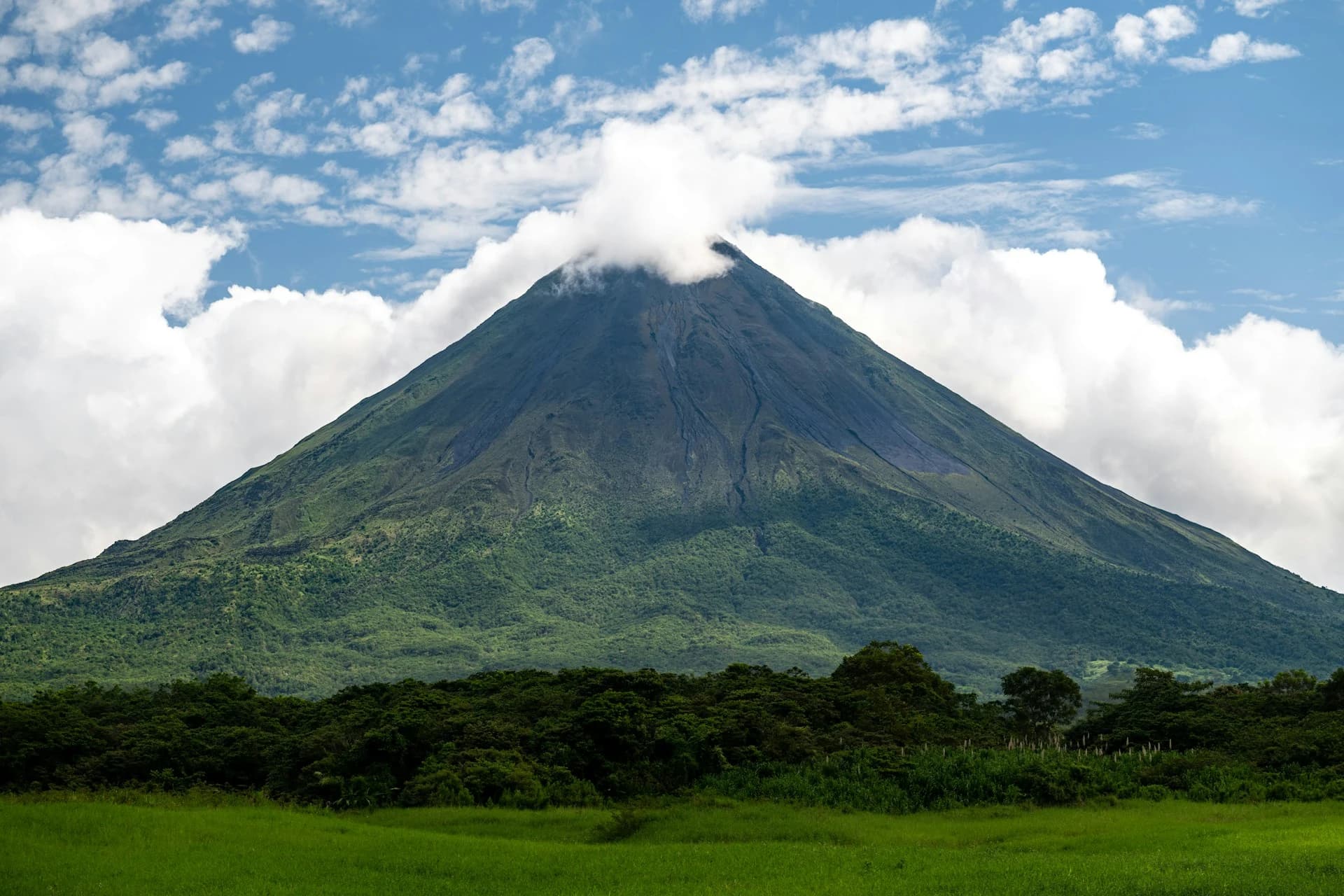
La Fortuna's dry season, December through April, gives you the clearest Arenal Volcano views and the firmest trails of the year, at the highest prices. Here is what each month delivers and where the value windows sit.
What You Should Know
- The dry season runs December to April. Rainfall falls from 220mm in December to 150mm in January, 120mm in February, 75mm in March and 70mm in April, so the season gets progressively drier rather than starting dry. Highs sit between 29 and 31°C (85 to 88°F) with lows around 21°C (71°F) throughout.
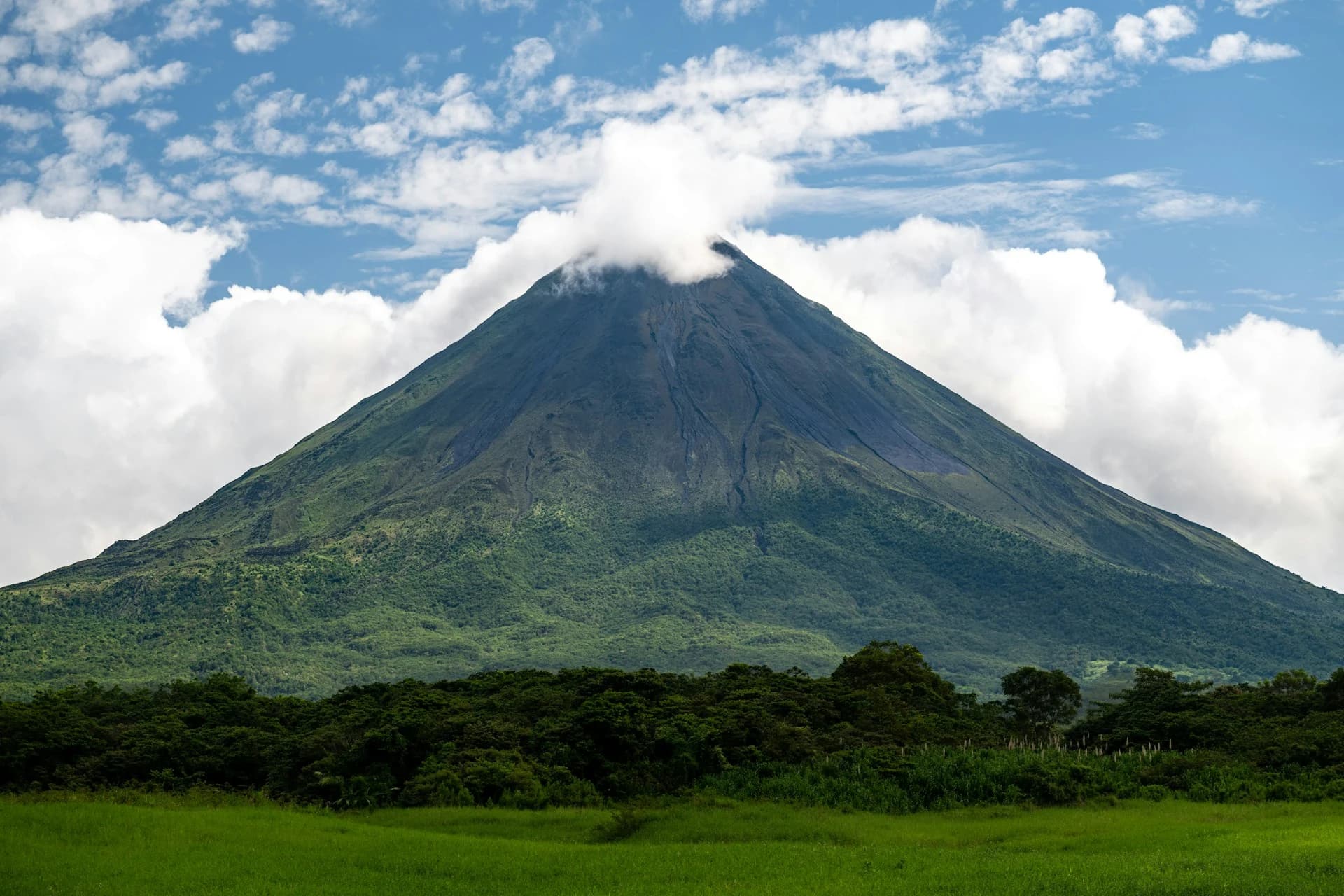
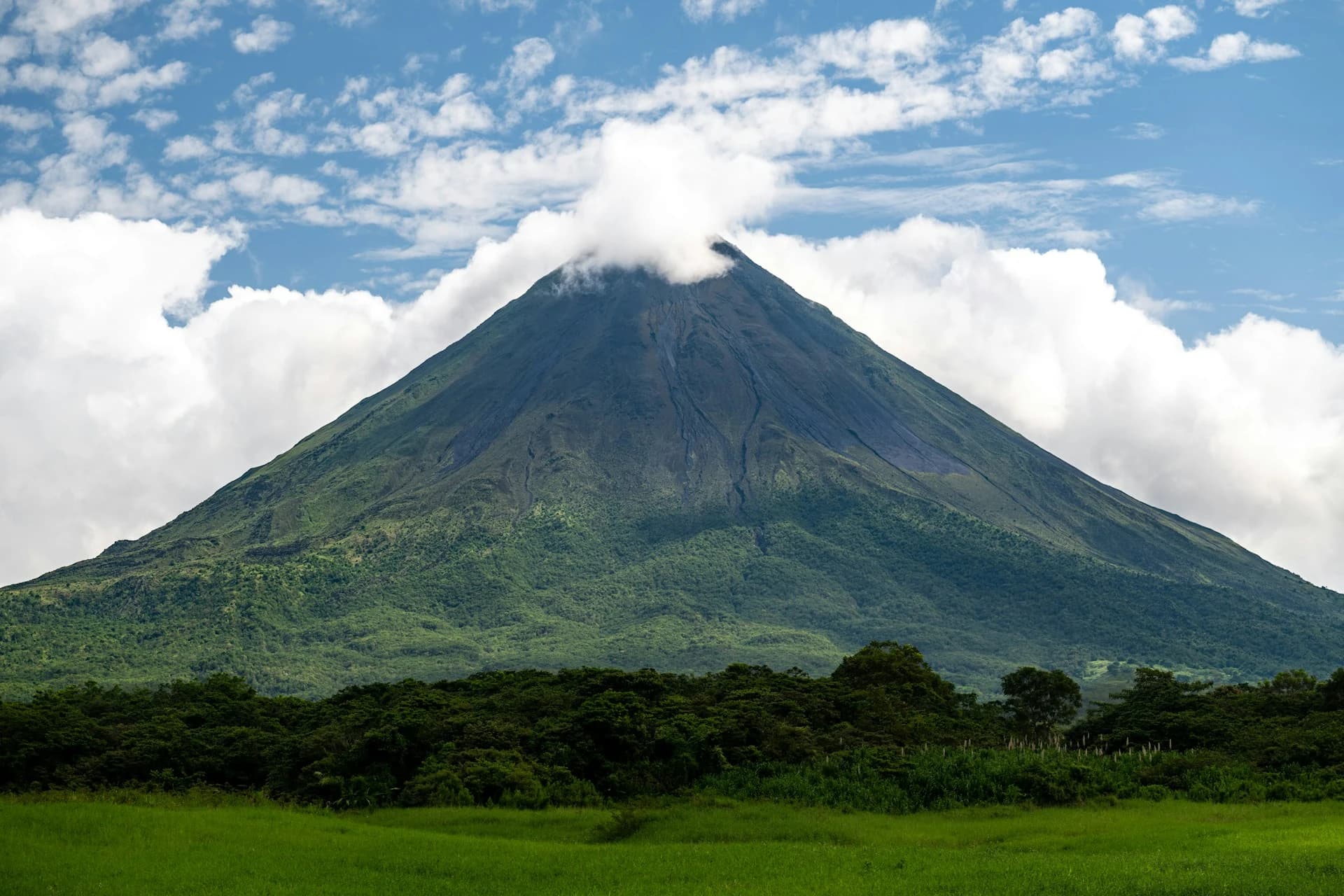
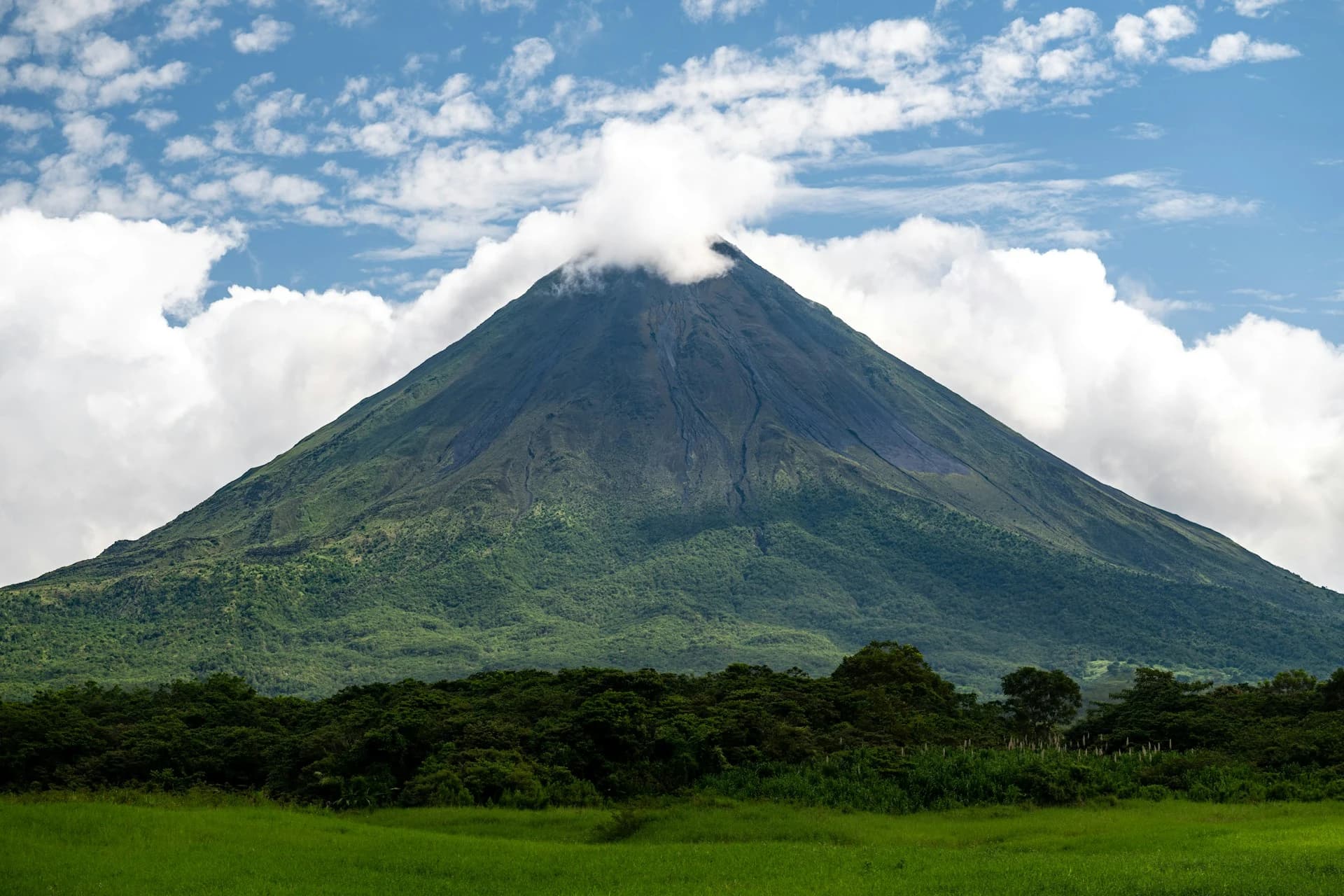
- This is the best stretch of the year to actually see Arenal. The cone spends much of the green season under its own cloud cap, and in these five months clear mornings become the norm. Firm trails also make hiking, the waterfall staircase, and the hanging bridges far easier than in the wet months.
- It is also the most expensive and most crowded time to visit. Mid-range hotels run roughly $130 to $280 a night, with the peak from about December 20 through January, high demand continuing through April, and Semana Santa in April drawing the biggest domestic travel week of the Costa Rican year.
- Most people don't realize that dry season in La Fortuna is not actually dry. The town sits on the Caribbean slope, so even the driest month still collects around 70mm of rain. Pack a rain jacket for every month of this season.
La Fortuna in the Dry Season: Overview
⭐ Best value windows: December 1 to 19, and the last week of April. Both sit inside the dry season but outside its two demand spikes. You get the same settled weather and clear cone views without paying holiday or Semana Santa rates.
| Factor | Dry Season Rating |
|---|---|
| Weather | 9/10: warm, settled, and progressively drier from December to April |
| Crowds | 3/10: the busiest stretch of the year, peaking twice |
| Prices | 3/10: yearly high at roughly $130 to $280 a night |
| Volcano Views | 10/10: the clearest Arenal views you will get all year |
| Hiking & Trails | 10/10: firm footing on lava trails, bridges and waterfall steps |
| Waterfall & Rivers | 7/10: clear water and safe steps, but lower flow |
| Wildlife | 8/10: strong sloth and bird activity; frogs quieter than wet months |
| Rain | 8/10: light and brief, but never absent |
| Families | 9/10: dependable weather and dry trails suit all ages |
| Couples | 8/10: superb conditions, though busier and pricier |
💰 Average dry-season hotel prices (La Fortuna town, mid-range):
Early December (Dec 1–19): ~$130–180/night · Christmas and New Year peak (Dec 20–Jan 7): ~$200–280/night · February and March: ~$130–190/night · April before Semana Santa: ~$130–180/night · Late April: ~$110–150/night
Rough mid-range estimates; rates vary by property and booking lead time.
The dry season is, in our view, the season to book if seeing the volcano is the reason you are going. Arenal makes its own weather, and for much of the year the summit sits wrapped in cloud. Between December and April the cone shows itself far more often, sometimes for days at a stretch. The dry weather changes everything on the ground too: the waterfall staircase is not slick, the hanging bridges are not fogged in, and the ATV and horseback trails are firm rather than churned to mud.
The tradeoff is money and company, and it is a real one. This is when La Fortuna charges the most and fills the most, and the popular sights are busy by mid-morning. What we consistently see is that the season is far less uniform than the label suggests: March and April are drier than December by a factor of three, and prices swing by more than a hundred dollars a night depending on which week you land in. Our Arenal Volcano hike guide and La Fortuna Waterfall guide cover the two headline experiences this season serves best, and our rainy versus dry season comparison sets the two halves of the year side by side.
Dry Season at a Glance
✅ Clearest volcano views of the year ✅ Firm, dry hiking trails ✅ Settled, dependable weather
⚠️ Highest prices of the year ⚠️ Two big crowd peaks ⚠️ Still 70–220mm of rain a month
The Five Dry-Season Months Compared
Calling December through April one season hides how differently each month behaves. Here is the honest breakdown.
| Month | Rainfall | Avg High | Volcano Views | Crowds | Mid-Range Hotel |
|---|---|---|---|---|---|
| December | 220 mm | 29°C (85°F) | Very good | Low early, peak from ~Dec 20 | $130–180 → $200–280 |
| January | 150 mm | 29°C (85°F) | Excellent | Peak through ~Jan 7, then high | $180–260 → $130–200 |
| February | 120 mm | 30°C (86°F) | Excellent | High, slightly calmer than January | $130–190 |
| March | 75 mm | 31°C (88°F) | Excellent | High; Semana Santa if it falls late | $130–190 |
| April | 70 mm | 31°C (88°F) | Very good | High early, drops after Semana Santa | $130–180 → $110–150 |
December: the transition month
December is dry season on paper more than in practice. At 220mm it is the wettest month of the five, roughly three times March, and the first fortnight still carries the tail of the green season. What it offers instead is value: before about December 20 the town is quiet and rates sit at their dry-season floor, with volcano views already improving markedly on November. After the 20th, Christmas and New Year turn La Fortuna into the most expensive place it will be all year.
January and February: the settled core
January drops to 150mm and February to 120mm, and this is where the season starts behaving the way visitors expect. Clear mornings become routine, the trails are reliably firm, and the weather stops being something you plan around. February is quietly the better of the two for most travelers: nearly identical conditions, marginally fewer people, and none of the holiday premium that hangs over the first week of January.
March and April: driest and hottest
March at 75mm and April at 70mm are the driest months by a wide margin, and both run about two degrees warmer at 31°C (88°F). If maximum dryness is the goal, March is the answer. April carries one complication: Semana Santa, Holy Week, which is the biggest domestic travel week in Costa Rica and fills hotels nationwide. Once it passes, late April becomes one of the best-value weeks of the entire dry season.
La Fortuna Weather in the Dry Season
| Metric | Dry Season (Dec–Apr) |
|---|---|
| Avg High | 29–31°C (85–88°F) |
| Avg Low | 21°C (71°F) |
| Monthly Rainfall | 70–220 mm, falling through the season |
| Driest Month | April (70 mm), with March close behind (75 mm) |
| Wettest Dry-Season Month | December (220 mm) |
| Humidity | Moderate for the tropics |
| Wind | Moderate (Caribbean trade winds) |
| UV Index | Very high |
| Volcano Visibility | Best of the year |
Temperature and Humidity
Temperature does very little across the dry season, and very little across the whole year for that matter. Days run 29°C (85°F) in December and January, edging to 30°C (86°F) in February and 31°C (88°F) in March and April. Nights sit at 21°C (71°F) in every single month. Humidity is moderate by tropical standards during these months, so the heat rarely feels oppressive the way it can in the wet season. The UV is very high year-round this close to the equator, so sunscreen matters even on a cloudy morning.
Rain Pattern
Here is the point most guides skip: the dry season in La Fortuna is drier, not dry. The town sits on the Caribbean-facing slope of the mountains, where trade winds push moisture inland year-round, while the Pacific coast a few hours away goes genuinely bone dry. Even April, the driest month on the calendar, still collects around 70mm. December collects 220mm, which is more than green-season May.
What changes is the character of the rain rather than its complete absence. Instead of the long afternoon downpours of September and October, dry-season rain tends to arrive as a brief shower or an overnight spell that has cleared by breakfast. Trails drain quickly and tours very rarely cancel. Plan outdoor activities for the morning and you will seldom lose one to weather.
Trail Conditions
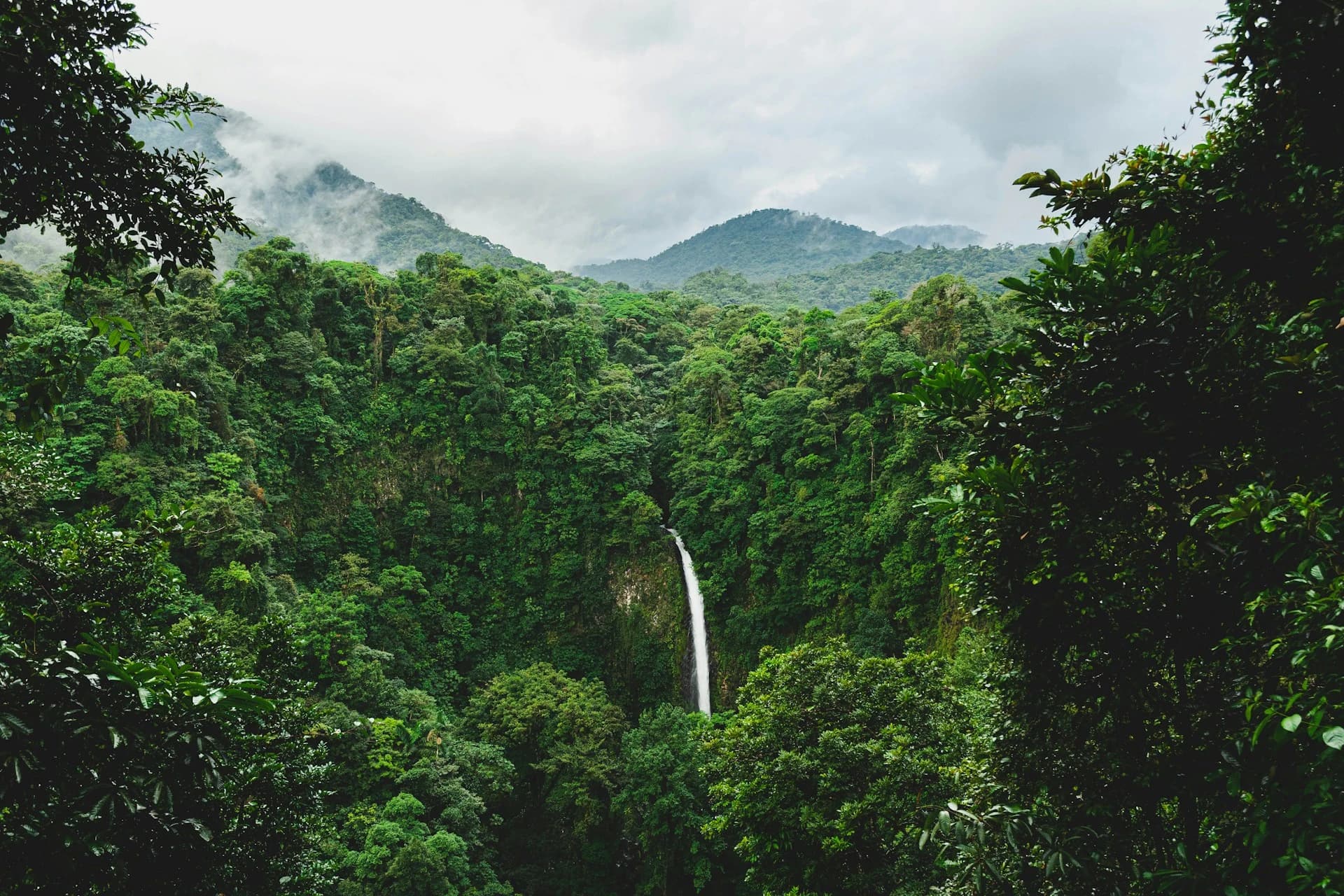
This is the underrated half of what the dry season buys you. Trails across the 1968 lava field, the roughly 500 steps down to the waterfall, and the hanging bridges circuits are all firm and far less slippery than in green season. Our take is that this matters most for anyone hiking with children or anyone unsure on wet footing, and it also quietly improves the adventure tours: ATV routes and canyoning rappels are meaningfully better on dry ground.
Arenal Volcano Views in the Dry Season
If there is one thing the dry season does better than the rest of the year, it is showing you the volcano. Arenal's near-perfect cone is the reason most people come to La Fortuna, and it is also the single most weather-dependent sight in the region. Through the wet months the summit is frequently hidden behind its own cloud cap for days on end. From December through April, clear mornings become the norm rather than the exception.
Most guests find that the daily pattern is consistent enough to plan around, and it holds in every month of the season. Skies are clearest between roughly sunrise and mid-morning, before the day's heating pushes cloud up around the peak. By mid-afternoon the summit is often veiled again, and it frequently clears once more near sunset. We'd plan on at least two early starts if the volcano is why you came: one clear morning is likely in any dry-season week, and two attempts make it close to certain.
Views strengthen as the season settles. December is very good but still catches residual green-season cloud, January through March are the peak, and April remains very good while the first hints of the coming green season appear late in the month. The best vantage points are the Mirador El Silencio and the 1968 lava-flow trails on the volcano's western flank, both of which look straight up at the cone, plus the open stretches of the hanging bridges circuits.
One thing to set expectations on: Arenal has been in a resting phase since 2010, so there is no visible lava at night, in any season. What the dry months give you is the shape of the mountain against a clear sky, which is the actual photograph everyone is after. Our Arenal Volcano hike guide compares the trails and viewpoints in detail.
La Fortuna Rainfall and Temperature by Month
The single most useful thing to understand about La Fortuna's climate is that temperature barely moves all year, while rainfall swings roughly fivefold. Daytime highs sit between 29 and 32°C every month and nights hover around 21°C, so you pack the same clothes in January as in July. What actually changes your trip is how much rain falls, and when.
Average monthly rainfall (mm)
Full Month-by-Month Figures
| Month | Rainfall | Avg High | Avg Low | Season |
|---|---|---|---|---|
| Jan | 150 mm | 29°C | 21°C | Dry season |
| Feb | 120 mm | 30°C | 21°C | Dry season |
| Mar | 75 mm | 31°C | 21°C | Dry season |
| Apr | 70 mm | 31°C | 21°C | Dry season |
| May | 180 mm | 30°C | 21°C | Green season |
| Jun | 300 mm | 30°C | 21°C | Green season |
| Jul | 345 mm | 30°C | 21°C | Green season |
| Aug | 300 mm | 30°C | 21°C | Green season |
| Sep | 330 mm | 30°C | 21°C | Green season |
| Oct | 375 mm | 29°C | 21°C | Green season |
| Nov | 250 mm | 29°C | 21°C | Green season |
| Dec | 220 mm | 29°C | 21°C | Dry season |
What the Numbers Actually Mean
Three things stand out. First, March and April are the driest months by a wide margin, at roughly 70 to 75mm, which is why the dry season peaks then rather than in December. Second, October is the wettest at around 375mm, five times March, with September close behind. Third, the shoulder months do most of the work for value travelers: May and November sit between the extremes, offering greener rainforest and lower prices without the full weight of the wet season.
The temperature column is almost a flat line, and that is the point. Most people don't realize that choosing when to visit La Fortuna is a decision about rain and cloud, not about heat. If you want the volcano visible and the trails firm, come in the dry season. If you want thundering waterfalls, fuller rivers, and lower rates, the green season delivers, and you accept afternoon rain as the price.
ℹ️ Figures are rounded monthly averages from a single climate dataset and are indicative rather than exact. Published figures for La Fortuna vary noticeably between sources and weather stations, particularly for rainfall totals and rain-day counts, because the town sits on the Caribbean slope where conditions shift over short distances. Treat these as the shape of the year rather than a forecast.
Crowds and Prices in the Dry Season
The dry season is not one long block of high demand. It has two sharp spikes and two quiet windows, and we'd give this the edge over any other booking decision on this page, because the same stretch of dry weather can cost hundreds of dollars more or less depending on which week you land in. Knowing where they fall is worth more money than any other decision on this page.
- December 1 to 19 (the overlooked window): volcano views are already very good, the town is calm, and rates sit at their dry-season floor of roughly $130 to $180 a night. The only cost is 220mm of rain, the wettest of the five months.
- December 20 to January 7 (peak one): Christmas and New Year, the most expensive window of the entire year at roughly $200 to $280 a night. Hotels and headline tours book out weeks ahead.
- January 8 to March (steady high season): rates settle to about $130 to $200, the weather is at its most reliable, and the town is comfortably busy rather than crushed. Tour availability is generally fine a day or two ahead.
- Semana Santa, April (peak two): Holy Week is the biggest domestic travel week in Costa Rica. Hotels fill nationwide, many businesses close Thursday and Friday, and roads are heavy. Easter 2026 falls on April 5, but the date shifts each year, so check before you commit.
- Late April (the second value window): once Semana Santa passes, demand drops away while the weather stays excellent at 70mm and 31°C (88°F). Rates fall to roughly $110 to $150. This is, in our experience, the single best-value week of the dry season.
La Fortuna is Costa Rica's most visited inland destination, and the dry season is when that shows. Top hotels can run roughly double their October rates, and the waterfall car park is full by mid-morning through most of the season. We'd aim for one of the two quiet windows if the budget matters at all, and start every day early regardless.
| Season | Better For |
|---|---|
| Dry season (Dec–Apr) | Clear volcano views, firm trails, dependable weather |
| Green season (May–Nov) | Thundering waterfalls, greener forest, rates that can halve |
| May and November | Shoulder value: moderate rain, low crowds, improving or fading views |
| September and October | Cheapest months of the year, but the wettest and cloudiest |
If your dates are flexible and the budget is tight, our rainy season guide covers the very different but genuinely rewarding version of La Fortuna you get for half the price.
Best Things to Do in La Fortuna in the Dry Season
| Activity | Dry Season Rating | Best Time of Day | Notes |
|---|---|---|---|
| Arenal Volcano hike | 10/10 | Early morning | Clearest cone views of the year; firm lava trails |
| La Fortuna Waterfall | 9/10 | Early morning | Dry, safer staircase; arrive before the mid-morning rush |
| Hanging bridges | 10/10 | Morning | Rarely fogged in; best canopy and volcano views |
| Hot springs | 9/10 | Late afternoon | Perfect after a hike; cool 21°C evenings suit a soak |
| Zipline | 10/10 | Morning | Dry lines and clear views over the canopy |
| ATV tour | 9/10 | Morning | Firm trails, far less mud than green season |
| Sloth tour | 9/10 | Early or late | Reliable year-round; dry trails make spotting easier |
| Night walk | 7/10 | Evening | Good, but frogs are more active in the wet months |
| White water rafting | 7/10 | Morning | Runs year-round; lower dry-season flow is gentler |
| Canyoning | 9/10 | Morning | Drier rock and safer rappels than green season |
| Coffee tour | 9/10 | Any | Comfortable in dry weather; largely rain-proof |
| Rio Celeste tubing | 8/10 | Morning | Clearer water than green season; long drive from town |
What to prioritize this season
The dry season is a volcano and trails season first. Our top pick is the full-day combination that stacks the three headline sights into one well-organised day: the La Fortuna Waterfall, a guided Arenal Volcano hike to Mirador El Silencio, and a hot springs soak to finish. It is a long day at around 11 hours, but it is also the most efficient way to spend one of these clear mornings, and it is by far the most-reviewed tour in La Fortuna.
Beyond that, this is exactly when the canopy and adventure tours shine. Hanging bridges and ziplines both trade on visibility, and December through April gives them the best of it. ATV tours and canyoning are meaningfully better on dry ground than in the mud of the wet months, and the wider network of La Fortuna hiking tours is at its most walkable now. Front-load all of these into mornings and save the coffee tour, cooking class, and hot springs for the afternoon, when a passing shower costs you nothing.
Two things the dry season does not do best. Rafting runs all year but the rivers are lower and gentler now, which suits families and disappoints thrill-seekers, and the night walk is still good but frogs are noticeably more active in the wet season. Rio Celeste runs clearer now, which is a genuine dry-season gain. All are worth doing; just know what you are getting.
Who Should Visit in the Dry Season (and Who Should Not)
The dry season is the default recommendation for La Fortuna, and for most visitors it is the right one. But we wouldn't choose this for travellers whose priority is price or empty trails, and it is not universally the better choice, and the honest version of that answer is worth spelling out.
Come in the dry season if
- Seeing Arenal matters to you. This is the whole case. Nothing else about the season is as decisive as the odds of a clear cone.
- You are hiking, or travelling with children or older relatives. Firm trails and a dry 500-step waterfall staircase remove most of the difficulty that green season adds.
- Your trip is short. With three or four days, you cannot afford to lose two to cloud. Dependable weather buys certainty.
- You want the canopy tours at their best. Bridges, ziplines and volcano viewpoints all depend on visibility.
Consider the green season instead if
- Budget is the deciding factor. September and October run at roughly half dry-season rates, and even May and November save you real money.
- You want the waterfall at full power. Dry-season flow is clearer but considerably gentler.
- Crowds bother you more than rain does. The quietest dry-season week is still busier than most of the green season.
- You are here for frogs, rivers, and big rafting water. All three peak in the wet months.
Our side-by-side seasonal comparison works through the tradeoffs in more detail if you are genuinely torn, and our best time to visit La Fortuna guide ranks every month against volcano visibility, rainfall and price.
From Our Experience
The detail that catches people out is that the dry season's cheapest and most expensive nights sit two days apart. A room booked for December 18 and 19 can cost around $150 a night, and the same room on December 21 can cost close to $280, for identical weather and identical volcano odds. The same cliff exists in reverse at the end of Semana Santa in April. If your dates have even 72 hours of flex, moving them across one of those two boundaries is the largest single saving available in this season, and it costs you nothing in experience.
Tips for Visiting La Fortuna in the Dry Season
- Start early, every day. Clear volcano views concentrate between sunrise and mid-morning, and the waterfall, bridges and hot springs all get busiest from mid-morning onward.
- Target early December or late April. Both sit inside the dry season, outside its demand spikes, and deliver most of the same conditions for far less money.
- Check the Semana Santa dates before booking April. Holy Week moves each year, fills hotels nationwide, and closes many businesses on the Thursday and Friday.
- Still pack a rain jacket. Even April collects around 70mm and December collects 220mm. A light shell and quick-dry layers cover a passing shower on the bridges or at the waterfall.
- Book hotels and headline tours well ahead. This is the busiest stretch of the year, and the best properties and most-reviewed tours fill weeks out, especially around Christmas, New Year and Holy Week.
- Give the volcano two mornings. One clear morning is likely in any dry-season week; planning two attempts makes a good view close to certain.
- Bring a light layer for evenings. Nights sit at 21°C (71°F) in every dry-season month and feel cooler on the bridges or an early volcano start.
- Pick March if maximum dryness is the goal. At 75mm it is the driest reliable month, without April's Holy Week complication.
- Save hot springs and indoor tours for the afternoon. They are unaffected by a shower and pair perfectly with a morning hike.
- Expect lower river flow. Rafting and the waterfall itself run gentler than in the wet months. If big water is what you want, our rainy season guide serves you better.
How We Put This Guide Together
We based this dry-season guide on La Fortuna's December-to-April weather patterns, the Arenal Volcano visibility cycle that defines the season, and the local high-season rhythm of crowds, holidays and prices. Ratings reflect how each factor and activity actually performs across these five months: peak volcano visibility, firm and dry trails, comfortable warm weather, the highest prices and crowds of the year, and river flows that run lower than in green season. Activity ratings draw on the same operators and tours we cover in our individual La Fortuna guides, so the tours highlighted here are the top-rated option from each of those pages rather than a separate list. The month-by-month breakdown mirrors our individual monthly guides for December through April, which go into more detail on any single month. Temperatures, rainfall, and price ranges are typical values and vary year to year. Rainfall estimates for La Fortuna differ noticeably between sources, which reflects genuine variation on this side of the mountains, so treat these as a reliable guide rather than a forecast and confirm current conditions, Semana Santa dates and rates before you book.
Frequently Asked Questions
When is the dry season in La Fortuna?+
December through April. Rainfall falls steadily across the season, from 220mm in December to 150mm in January, 120mm in February, 75mm in March and 70mm in April. March and April are the driest months by a wide margin, which is why the season peaks then rather than at its start.
Is the dry season the best time to visit La Fortuna?+
For most visitors, yes. It gives you the clearest Arenal Volcano views of the year, firm hiking trails, and settled warm weather with highs of 29 to 31°C (85 to 88°F). The tradeoffs are the highest prices of the year at roughly $130 to $280 a night for mid-range hotels, the biggest crowds, and rivers running lower than in green season.
Does it still rain in La Fortuna during the dry season?+
Yes. La Fortuna sits on the Caribbean slope of the mountains and catches moisture year-round, so dry season here means drier, not dry. Even April, the driest month, averages around 70mm, and December averages 220mm. The difference is that the rain comes as brief showers or overnight spells rather than the long afternoon downpours of the wet season, so tours rarely cancel.
Which dry-season month is best for volcano views?+
January through March are the peak, with December very good and April very good as the season begins to fade. The daily pattern matters as much as the month: the cone is clearest between sunrise and mid-morning, before daytime heating builds cloud around the summit, and it often clears again near sunset. Note that Arenal has been resting since 2010, so there is no visible lava at night.
What is the cheapest time to visit La Fortuna in the dry season?+
Two windows. Early December, before about the 20th, when rates sit at roughly $130 to $180 a night before the Christmas peak. And late April, after Semana Santa, when demand falls away while the weather is still excellent, with rates around $110 to $150. Both are far better value than January or Holy Week.
How busy is La Fortuna in the dry season?+
Busy throughout, with two sharp peaks. The first runs from about December 20 through the first week of January, when hotels reach roughly $200 to $280 a night. The second is Semana Santa in April, the biggest domestic travel week in Costa Rica, when hotels fill nationwide and many businesses close on the Thursday and Friday. February and March are steadily high but more manageable.
What should I pack for the dry season in La Fortuna?+
Light warm-weather clothing for days of 29 to 31°C (85 to 88°F), a light layer for 21°C (71°F) evenings, strong sunscreen for the very high UV, proper footwear for the roughly 500 waterfall steps, and a light rain jacket. That last one is not optional: every dry-season month still gets between 70 and 220mm of rain.
Is the La Fortuna Waterfall better in the dry season or the rainy season?+
It depends what you want. The dry season gives you clearer water, a safer and less slippery staircase, and better photographs, but the falls run at lower volume. The green season, roughly May to November, delivers a far more powerful, thundering waterfall along with muddier trails, more rain, and a slicker descent. For most visitors the dry-season version is the easier and more reliable experience.
Affiliate note: Some links on this page are affiliate links. If you book through them, we may earn a small commission at no additional cost to you.