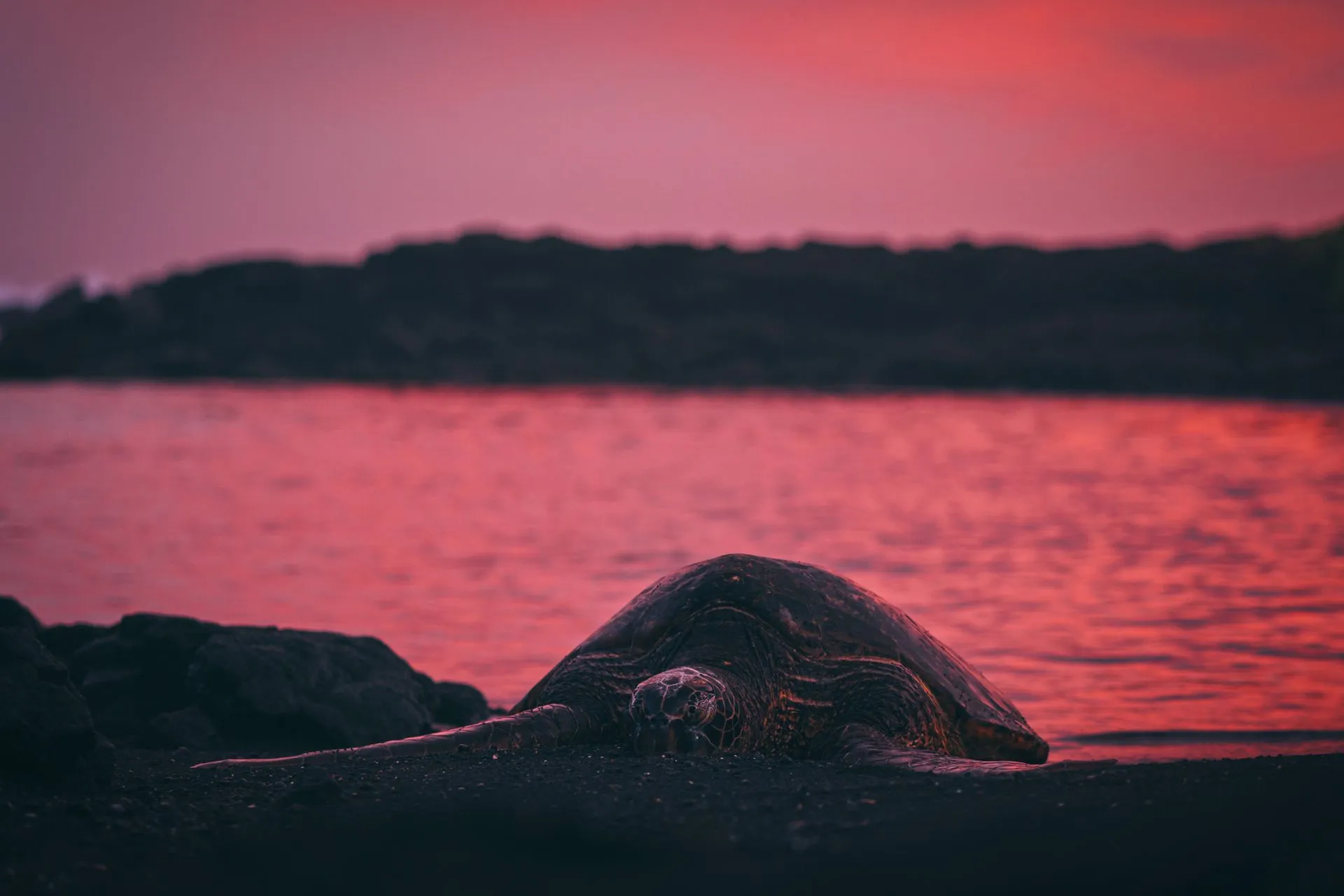
Turtle tours from Tamarindo run after dark from roughly October to April, cost $46.16 to $75, and are guided-only by law. Here is which beach each tour uses, which species you realistically see, and why leatherbacks are the rarest sighting of all.
What You Should Know
- A night activity, not a beach walk. Tours leave after sunset, run about four hours, and are guided-only: the nesting beaches sit inside Las Baulas National Marine Park and cannot be walked alone after dark.
- Season decides everything. Nesting peaks from roughly October to April. Outside it tours still run and sightings drop sharply, so booking in July is not the same product as booking in January.
- Prices run $46.16 to $75, and do not track rating. The cheapest tour is the lowest rated at 4.2; both 4.6-rated options cost more. Group size and bundled park admission explain the gap.
- A turtle coming ashore is not a turtle laying. Females regularly test the sand, reject the spot and return to the water. One group watched four mothers do exactly that and saw no eggs at all.
Turtle Tours from Tamarindo
A Tamarindo turtle tour is an after-dark, guided walk on a protected nesting beach, looking for females hauling out to lay. Tours run about four hours and cost $46.16 to $75 per person, and every one of them is guided-only: you cannot walk these beaches at night on your own, because the nesting sites sit inside Las Baulas National Marine Park with restricted night access.
Two things decide whether this is worth your evening: the month you are visiting, and which tour you pick. Sea turtles near Tamarindo nest mainly from October to April, and the three tours here split between Playa Grande, about 30 minutes away, and quieter beaches roughly 40 minutes north. This guide compares them on price, rating, group size and what happens when no turtle turns up.
Is it worth it?
Worth it if you are in Tamarindo between October and April and you understand you are buying a guided search, not a guaranteed sighting.
Skip it if you are visiting in the low months, you need an early night, or you are hoping to photograph a leatherback: flash is never permitted and leatherbacks are the rarest turtle on this coast.
Nesting season at a glance
Tours still operate outside peak season, but operators are upfront that sightings drop. If turtles are the reason you are in Tamarindo, time the trip rather than hoping.
Who should book this
Perfect for
Not ideal for
Discover Tamarindo: Turtle Watching Night Tours with Expert Naturalist
The best-rated turtle tour out of Tamarindo with the deepest review base, 4.6 across 205 reviews. Four hours, capped at 15 travelers, meeting your naturalist guide at 5:45 PM at a designated point or your hotel before a 40 minute drive north to the beach. Admission to Las Baulas National Marine Park is inside the price, along with an air-conditioned vehicle, bottled water and the flashlights the guides use. It is the most expensive of the three at $75, and the group size is most of the reason. Guests consistently describe being held back and called forward only once a female has begun laying, so the number of people sharing that window is what decides how much you actually see. One caveat worth knowing before you pay for that cap: a guest who counted heads reported 24 people on their departure against the stated 15, so treat it as the intended size rather than a guarantee. What the guides consistently do earn credit for is staying out longest. Several accounts describe other groups packing up before a female started laying, and this one waiting.
Book NowBest Tamarindo Turtle Tours: Side-by-Side Comparison
Price does not track quality here. The two best-rated tours both sit at 4.6 and cost $75 and $65, while the cheapest at $46.16 rates 4.2 across the largest review base. Group size and whether park admission is bundled explain the gap better than price does. Worth knowing before you read the capacity column: guests have counted more people on the beach than the listings promise, so treat those numbers as the intended size rather than a cap you can hold anyone to.
| Tour Operator | Price (USD) | Online Rating | Ages | Capacity | Duration | Beach & Departure | Transportation Included | Food & Drinks | Extras |
|---|---|---|---|---|---|---|---|---|---|
| Top Rated Discover Tamarindo Turtle Watching Night Tours with Expert Naturalist Book Now |
From $75 | 4.6 ⭐ (205 reviews) Read Reviews |
Family-friendly; not recommended for very young children, infant seats available | Max 15 | 4 hours | Meet 5:45 PM at a designated point or your hotel; about 40 minutes north | Yes; air-conditioned vehicle | Bottled water | Las Baulas National Marine Park admission included, expert naturalist guide, flashlights provided |
| Turtle Nesting Tour Playa Minas area Book Now |
From $65 | 4.6 ⭐ (156 reviews) Read Reviews |
No published age minimum; listed as suitable for all fitness levels | Minimum 2 travelers to run; no published maximum | About 3 hours total, roughly 1 hour on the beach | A quieter beach near Playa Minas, about 25 km north | Yes; pickup in Tamarindo included | Bottled water and snacks | Flashlight provided, minimum 2 travelers for the tour to run |
| Native's Way Costa Rica Night Turtle Nesting Tour Book Now |
From $46.16 | 4.2 ⭐ (218 reviews) Read Reviews |
Ages 5+ | Not published by the operator | About 4 hours | Playa Grande, about 30 minutes; meet at the Tamarindo office around 5:30 PM | Yes to the beach; hotel pickup $20 extra unless booked private | Bottled water | National park fees and local taxes included, naturalist guide, red-light observation equipment; guides commonly work three beaches in a night |
ℹ️ All tours and information were personally reviewed by our team on September 18, 2026. Prices and availability may change, so always confirm with the operator before booking.
What to Expect on a Tamarindo Turtle Tour
Every turtle tour here follows the same shape. What typically happens is that the road and the walk do the damage rather than the standing around, and almost nobody arrives expecting either.
- 015:30–5:45 PM
Meet around sunset
Our top pick meets its naturalist at 5:45 PM at a designated point or your hotel. The Native's Way trip gathers at their office in downtown Tamarindo around 5:30 PM rather than collecting you, with hotel pickup as a $20 add-on, and the Playa Minas tour includes pickup in town.
- 0230 to 40 minutes
The drive to the beach
Playa Grande is roughly 30 minutes away, and the beaches further north are about 40 minutes and 25 km. Vehicles are air-conditioned, and guides usually use the drive to cover the biology and the rules before anyone reaches the sand.
- 03
The briefing and the rules
Before you walk, the guide sets the terms: no camera flash, voices down, and stay behind the guide at all times. Guides carry the only lights used on the beach, red or infrared on the Native's Way tour, and cover the three species that nest here before you set off.
- 04The bulk of the tour
The search
This is where the time goes. Spotters and guides work the beach looking for tracks or a female already hauled out, and groups wait to be called forward rather than wandering. This is where accounts vary most: groups whose first beach stays empty are frequently moved on to a second, and sometimes a third, rather than left waiting in one place. Nothing is guaranteed, and on a quiet night you may walk a long stretch of dark sand without a sighting.
- 05
Watching a nesting turtle
If a turtle is found and is far enough into laying, guests describe being called forward and kept behind her. This is where a small group earns its money. Guides explain what you are watching, from digging to covering the nest. Photos are allowed on some tours but never with flash, so expect very dark images.
- 06
Back to Tamarindo
Tours run about four hours door to door, which puts most groups back in town late in the evening. There is no fixed finish time: the night ends when the guides call it, either after a sighting or once the beach has been worked.
- 01
Meet around sunset
Our top pick meets its naturalist at 5:45 PM at a designated point or your hotel. The Native's Way trip gathers at their office in downtown Tamarindo around 5:30 PM rather than collecting you, with hotel pickup as a $20 add-on, and the Playa Minas tour includes pickup in town.
5:30–5:45 PM - 30 to 40 minutes02
The drive to the beach
Playa Grande is roughly 30 minutes away, and the beaches further north are about 40 minutes and 25 km. Vehicles are air-conditioned, and guides usually use the drive to cover the biology and the rules before anyone reaches the sand.
- 03
The briefing and the rules
Before you walk, the guide sets the terms: no camera flash, voices down, and stay behind the guide at all times. Guides carry the only lights used on the beach, red or infrared on the Native's Way tour, and cover the three species that nest here before you set off.
- The bulk of the tour04
The search
This is where the time goes. Spotters and guides work the beach looking for tracks or a female already hauled out, and groups wait to be called forward rather than wandering. This is where accounts vary most: groups whose first beach stays empty are frequently moved on to a second, and sometimes a third, rather than left waiting in one place. Nothing is guaranteed, and on a quiet night you may walk a long stretch of dark sand without a sighting.
- 05
Watching a nesting turtle
If a turtle is found and is far enough into laying, guests describe being called forward and kept behind her. This is where a small group earns its money. Guides explain what you are watching, from digging to covering the nest. Photos are allowed on some tours but never with flash, so expect very dark images.
- 06
Back to Tamarindo
Tours run about four hours door to door, which puts most groups back in town late in the evening. There is no fixed finish time: the night ends when the guides call it, either after a sighting or once the beach has been worked.
This is more physical than the listings suggest, and it is the single thing guests most often say they were not warned about. Two stretches do the damage: the road, which is unpaved and rough enough that people bring up motion sickness unprompted, and the walk in, commonly described as 10 to 20 minutes over rocks, roots and soft sand in the dark. Accounts differ by beach, and some guests found the walk easy, but the ones travelling with limited mobility or poor night vision consistently did not. Our top pick also notes it is unsuitable for pregnant travelers and anyone with spinal or cardiovascular problems. There are no bathrooms once you leave the vehicle, and nowhere to sit.
Our take, a turtle coming ashore is not the same as a turtle laying: This is the gap nobody warns you about, and it comes up far more often in guest accounts than a blank night does. Females regularly haul out, spend twenty minutes testing the sand, reject the spot because of tree roots or temperature or their own readiness, and go straight back into the water. One group watched four mothers do exactly that and saw no eggs at all. So there are three outcomes, not two: no turtle, a turtle that aborts, and a turtle that lays. Only the third is the evening people booked.
The leatherback expectation: Las Baulas National Marine Park is named for the baula, the leatherback, and that name does a lot of work in people's heads before they arrive. The listings do not help: at least one guest arrived having booked off a leatherback photograph and was told on the night that they would not be seeing that species, and the operator's own reply confirmed the picture dates from years when leatherbacks did still turn up. Three species use these beaches, but what these tours actually find is olive ridley or green Pacific. Book expecting those and the evening delivers.
The groups that stay latest see the most: The clearest pattern across hundreds of guest accounts has nothing to do with which company you book. Turtles arrive when they arrive, and the groups that come home with the full sequence are repeatedly the ones whose guide kept them on the beach after other tours had packed up. Guests describe standing there as three of five groups left, then watching a female start laying ten minutes later. If your guide offers to wait, wait.
Who this is not right for
- Anyone visiting outside October to April. Tours run, but the odds fall away, and no guide can change that.
- Photographers. Flash is not permitted at any point, and the only light on the beach comes from the guide. Bring your eyes, not your camera.
- Very young children. One tour sets a minimum of 5 and our top pick advises against very young children outright. Parents who took 6 and 8 year olds said afterwards that 10 and up would have handled the night better. The practical bar is whether they can stay quiet and awake past 9:00 PM.
- Pregnant travelers and anyone with spinal or cardiovascular problems. Our top pick names all three as unsuitable.
- Anyone with limited mobility or poor night vision. This is the most consistent complaint in guest accounts. The trail to the beach is uneven, unlit and walked in the dark with no torch of your own, and guests who described low vision or mild mobility problems were genuinely uncomfortable. Guides do help, but the terrain does not change.
- Anyone prone to motion sickness. The access roads are unpaved and rough, and 30 to 60 minutes of it each way comes up unprompted in review after review.
- Anyone uneasy about close wildlife viewing. A real minority of guests came away troubled rather than delighted, describing several groups around one nesting female. If that would bother you, it is better to know now.
- Anyone who needs a guaranteed outcome. If a blank night would spoil the trip, spend the evening elsewhere.
Best Turtle Tours from Tamarindo
All three are guided night searches in nesting season. What separates them is the group size, the beach, and how honestly each one handles the possibility of seeing nothing. The beach matters less than the listings imply, for a reason none of them mention: guests on all three tours describe being moved during the evening, walked back to the vehicle and driven to a second beach once a sighting came in from elsewhere. The beach in the listing is where the night starts, not necessarily where it is spent.
Discover Tamarindo: Turtle Watching Night Tours with Expert Naturalist
4.6 stars across 205 reviews, the best combination of rating and volume among the three. Four hours, capped at 15 travelers, meeting an expert naturalist at 5:45 PM at a designated point or your hotel, then driving about 40 minutes north. Admission to Las Baulas National Marine Park is included along with an air-conditioned vehicle, bottled water and the flashlights the guides carry. Three species use these beaches, leatherback, green and olive ridley, and the guide covers all of them before you reach the sand. At $75 it is the most expensive of the three; the 15-person cap is what you are paying for, and on a beach where groups are walked forward one at a time that is worth more than it sounds.
Turtle Nesting Tour: the Playa Minas option
The same 4.6 rating across 156 reviews, at $65. This is the one that goes north to a quieter beach near Playa Minas rather than Playa Grande, about 25 km and 40 minutes each way, and that is the appeal: fewer groups working the same sand on the same night. Pickup in Tamarindo, bottled water and snacks are included, and a flashlight is provided. Budget about an hour actually on the beach searching, with the drive either side. It needs a minimum of two travelers to run, so solo visitors should confirm it is going before planning the evening around it. Two things recur in guest accounts that the listing does not mention: the earlier start means you are often on the beach for sunset before the search begins, and when a night comes up empty the operator has repeatedly offered a free return trip. The other recurring theme is the road, which is rough enough that guests with their own rental cars were told to take the pickup instead.
Native's Way: Night Turtle Nesting Tour
The cheapest at $46.16 and the most reviewed at 218, though also the lowest rated of the three at 4.2, which is worth weighing rather than ignoring. About four hours to Playa Grande, roughly 30 minutes away, with national park fees, bottled water and local taxes inside the price. It is the only tour with a published age minimum, accepting children from 5, though guests travelling with 6 and 8 year olds came back saying 10 and up would have suited the night better. Guides here commonly work two or three beaches in an evening rather than committing to one. You meet at their office in downtown Tamarindo around 5:30 PM rather than being collected, and hotel pickup adds $20 unless you book private. Guides carry red-light observation equipment. This is also the tour where the sharpest criticism clusters: a minority of guests describe crowded beaches with several groups working the same nesting female, and come away uneasy about it rather than delighted.
When to See Turtles in Tamarindo
Season matters more on this tour than on anything else sold in Tamarindo. A catamaran cruise in June is the same product as one in January; a turtle tour is not.
| Period | What is actually documented | What to expect |
|---|---|---|
| October to April | The nesting window every operator on this coast publishes | The only period where a sighting is a reasonable expectation. Olive ridley and green Pacific are the common visitors |
| October to March | The leatherback window at Las Baulas National Marine Park | Leatherbacks nest at Playa Grande in these months, but numbers have fallen and a sighting is rare even inside the window |
| Late April | Guest accounts of single-turtle nights; one operator stated the 2025 season tailed off earlier than usual | The soft edge of the season. Tours run, odds are noticeably thinner than midwinter |
| May to September | Outside the published nesting window | Tours still operate and operators are upfront that sightings drop. Treat it as a guided night walk with a chance of a turtle |
We do not publish a month-by-month ranking of nesting activity, because nothing in the operators' own material or in guest reports supports that level of precision. October to April, and the leatherback window inside it, is as fine-grained as the evidence goes.
Tours do run outside the peak, and operators are generally upfront that sightings drop off. If your dates are fixed and they fall outside October to April, treat the tour as a guided night walk with a chance of a turtle, and set expectations in your group accordingly before you book.
One qualifier on the April end of that window: guests booking in the last two weeks of April have come back having seen a single turtle across a whole night, and one operator has said publicly that turtles showed up less frequently than usual towards the end of the 2025 season. That is a single season and a single operator rather than a trend anyone has established, but if your dates are flexible inside the window, the middle months carry less of that risk than either edge.
The months every operator points to, and the only window where a sighting is a reasonable expectation rather than a hope. Olive ridley and green Pacific turtles are the common visitors. If turtles are a priority for your trip, this is the range to build travel dates around.
Playa Grande, next door to Tamarindo, is protected as Las Baulas National Marine Park precisely because leatherbacks nest there, and night access is restricted during the season for that reason. Be realistic though: leatherback numbers on this coast have fallen, and they are described as a rare sighting rather than the expected one.
Eggs incubate for roughly two months, so the hatching window follows the nesting one rather than overlapping the start of it. Hatchling emergences are not something any operator can schedule, and they are not what these nesting tours are built around, so treat one as a bonus rather than a booking reason.
Which Beach Your Tour Uses, and Why It Matters
The three tours do not all go to the same sand, and the beach is one of the two real differences between them.
Playa Grande and Las Baulas National Marine Park
The famous one, directly north across the estuary and about 30 minutes by road. The park exists to protect leatherback nesting, and that protection is why you cannot simply walk the beach at night by yourself: access after dark is guided and regulated. The Native's Way tour goes here, and our top pick includes park admission in its price.
The beaches near Playa Minas
About 25 km and 40 minutes north, and noticeably quieter. The $65 nesting tour heads here instead, and the trade is straightforward: a longer drive in exchange for a beach with fewer groups working it on the same night.
In practice the split matters less than it looks on paper. Guests on all three tours describe visiting two or, in some accounts, three beaches in one evening, moved on once word came in of a female elsewhere. Treat the beach named in the listing as where the night begins rather than where it will be spent.
Why you cannot do this alone
Nesting beaches near Tamarindo are protected, and night access is restricted to guided groups. That is not an upsell: lights, noise and foot traffic disturb nesting females and disorient hatchlings, which is also the reason for the no-flash rule your guide will enforce. Guides carry their own lights, so bringing a torch of your own is neither necessary nor welcome.
If your dates fall outside nesting season or you want a second wildlife outing that runs in daylight, our Tamarindo estuary boat safari guide covers crocodiles, howler monkeys and raccoons two hours from town, and our Tamarindo sloth tour guide explains why sloths mean a long drive inland.
Tamarindo vs Playa Grande Turtle Tours
They are largely the same tour. Playa Grande is the nesting beach; Tamarindo is the town almost everyone books from. The two sit on opposite sides of the Tamarindo estuary, close enough to see across and about 30 minutes apart by road, and the tours that advertise from Tamarindo are the tours that walk Playa Grande.
The distinction that actually matters is not which town appears in the tour name. It is whether the beach is inside Las Baulas National Marine Park, because that is what makes the night guided, permitted and limited.
| Booking from Tamarindo | Staying at Playa Grande | |
|---|---|---|
| Beach used | Playa Grande, or a quieter beach roughly 25 km north near Playa Minas | Playa Grande, on your doorstep |
| Getting there | About 30 minutes by road around the estuary, or 40 minutes to the northern beaches. Unpaved for the last stretch | You are already there. A small boat also crosses the estuary from Tamarindo in daylight |
| Can you walk the beach alone at night? | No | No. Staying in Playa Grande changes nothing: night access to the nesting beach is guided and regulated regardless of where you slept |
| Tour choice | All three compared above depart from Tamarindo | The same operators. Confirm pickup, since most meeting points are on the Tamarindo side |
| Reason to prefer it | Every tour, restaurant and transfer is in one place, and one option reaches beaches that see fewer groups | You lose the drive at both ends of a late night, which is the most complained-about part of the evening |
So a search for a Playa Grande turtle nesting tour and a search for a Tamarindo turtle tour lead to the same handful of products. The only genuine choice is the one in the comparison above: which beach the operator works, how many people are in your group, and what is bundled into the price.
Tamarindo Turtle Tour Reviews: What Travelers Actually Report
We read roughly 175 published guest reviews across the three tours compared above. Below is what recurs, including the parts that do not flatter the product. Operator responses were excluded, and guide names are left out because a single guide is not something you can book.
Sightings
Good nights are very good, and they are common. Accounts of five, six and even a dozen adult females in one evening appear across all three tours, often alongside hatchlings emerging from an earlier nest. Blank nights also happen and are reported without much bitterness by most of the people they happened to. The outcome that catches people off guard is neither: a female hauls out, spends twenty minutes testing the sand, rejects the spot and returns to the water. One group watched four mothers do exactly that and saw no eggs laid at all.
Crowding
The most consistent negative theme, and it is worth taking seriously. One guest counted 24 people on a tour advertising a maximum of 15. Others describe several companies converging on one nesting female, in one account a crowd of around 50. A real minority of reviewers, including people who saw everything they hoped to, came home uneasy about the animals rather than delighted. This clusters on the cheapest option but is not exclusive to it, and no operator controls how many other groups are on the beach that night.
Guides
The clearest predictor of a good night in the reviews is a guide willing to wait. Repeatedly, guests describe other tours packing up, their own group staying, and a female starting to lay minutes later. The praise is overwhelmingly for patience and for enforcing the rules rather than for charm. The complaints, where they appear, are about guides who stayed at the back of the group, did not explain what was happening, or drifted between languages for part of the party.
Transportation
The road is the single most complained-about part of the evening. Every beach here is reached on unpaved track, and guests put the drive at 30 to 60 minutes each way, more than some listings imply. Motion sickness comes up unprompted. Vehicles are air-conditioned on the larger tours. On at least one occasion a vehicle failed and guests were asked to drive themselves, and guests with rental cars have been told to take the operator's pickup rather than attempt the track.
Walking conditions
Harder than the listings suggest. The approach is commonly described as a 10 to 20 minute walk over rocks, roots and soft sand in the dark, and on some beaches a shallow channel to wade. Accounts genuinely differ by beach and a few guests found it easy. The ones travelling with mobility limits or poor night vision did not, and one couple dropped their rating to three stars on that basis alone. There are no bathrooms once the vehicle is parked, and nowhere to sit during a wait that regularly passes an hour.
Empty nights
They happen, and how the operator handles them varies. The Playa Minas operator has repeatedly offered guests a free return trip after a blank night, which is the most useful signal in the whole review set: it is an admission that the outcome is not sellable. At the other end, one guest was told on the bus that sightings were 100% guaranteed, a claim nobody can honour on a wild nesting beach. Weather cancellations also occur, so check the email address you booked with on the afternoon of the tour.
Children
Families report good nights, with a caveat about age. Parents who brought 6 and 8 year olds said afterwards that 10 and up would have handled it better, and that matches the shape of the evening: a late start, a rough drive, a dark walk and a long quiet wait. Children who can manage those four things do well, and several reviews describe kids who arrived reluctant and left thrilled.
Expectations
Almost every disappointed review traces back to an expectation the listing set. The leatherback is the clearest case: at least one guest booked from a leatherback photograph and was told on the night they would not see that species, with the operator confirming the image dates from years when leatherbacks still appeared. Others expected a fixed finish time, a short walk, or a guaranteed turtle. Guests who arrived understanding they had bought a guided search on a protected beach are, with very few exceptions, the ones who rated it highly.
How Much Does a Tamarindo Turtle Tour Cost?
Turtle tours from Tamarindo cost $46.16 to $75 per person. The unusual thing about this category is that the cheapest option is also the lowest rated, and the two tours sharing the top 4.6 rating sit at the other end of the range. Most people do not realise what the extra money actually buys: queue position at the turtle, not a better chance of finding one. Every operator here works the same stretch of coast on the same nights. The main tradeoff is whether you would rather be near the front of a group of 15 or somewhere inside a larger one.
Discover Tamarindo's expert naturalist tour: 4.6 across 205 reviews, four hours, capped at 15 travelers, with Las Baulas National Marine Park admission, an air-conditioned vehicle, bottled water and flashlights included. The cap is the reason to pay it: guests describe being called forward only once a female has started laying, so group size decides how much of that window is yours. Read the 15 as the intention rather than a promise: one guest counted 24 on their departure, and the number of other companies on the same sand that night is outside anyone's control.
The Playa Minas nesting tour, with the same 4.6 rating across 156 reviews. Pickup in Tamarindo, bottled water and snacks are included, and you are paying for a longer drive to a beach with fewer groups on it. About an hour of the evening is spent actually searching.
The Native's Way night tour, and the only one with park fees and local taxes visibly inside the price. It carries the most reviews at 218 but the lowest rating at 4.2. It is also the only tour that accepts children from 5. Add $20 for hotel pickup instead of meeting at their office. It is the tour where guest criticism concentrates, mostly around crowding on the beach rather than the guiding itself.
The $29 spread across these three is small enough that rating and group size should decide it rather than price. The $75 buys the smallest stated group and a bundled park ticket, the $65 buys a quieter beach and an operator that has offered free return trips after blank nights, and the $46.16 is the only one with a published age minimum.
Pairing a Turtle Tour With the Rest of Your Trip
A turtle tour takes the evening and leaves the day completely free, which makes it the easiest thing in Tamarindo to pair with anything else. It is also the only activity here that runs after dark, so it competes with dinner rather than with the beach.
It makes a poor cap to an already full day, though. Between the rough access road, the walk in and a wait that regularly passes an hour, groups get back late and tired, and the guests who enjoy it least are consistently the ones who did something demanding that morning.
The natural daytime companions are our catamaran cruises from Tamarindo, which check in from 12:30 PM and are back by about 6:00 PM, and our Tamarindo surf lessons guide, which covers the morning slots on the main beach. For a second wildlife outing that runs in daylight, our estuary boat safari guide is the reliable one, since crocodiles and howler monkeys do not depend on a season the way nesting turtles do.
Our Take
Across these three the operators that read as most trustworthy are the ones that say what happens when nothing is found, and at least one has repeatedly offered guests a free return trip after an empty night. The opposite is the warning sign: one guest was told on the bus that sightings were 100% guaranteed, which on a wild nesting beach is not a promise anyone can make.
Tips for Your Tamarindo Turtle Tour
- Book inside October to April if you can: Every operator points to the same window, and outside it the tours still run with noticeably lower odds. This is the rare activity where the month decides the experience.
- Do not bring your own light: Guides carry the lights, including red-light equipment on the Native's Way tour, and a torch of your own is neither needed nor welcome. White light disturbs nesting females and disorients hatchlings, which is the whole reason for the rule.
- Do not plan around photographs: Photos are permitted on some tours but never with flash, so what you get is very dark. Treat it as an evening to watch rather than to document.
- Group size is worth more than it looks: Guests describe being held back and called forward only once a female has begun laying, so a 15-person cap genuinely changes how much of that window you get. That is the clearest thing the $75 tour is selling over the cheaper options. What matters more than your own group's cap, though, is how many other companies are working the same sand that night, and nobody can sell you that.
- Check whether park admission is included: Our top pick bundles Las Baulas National Marine Park admission and the Native's Way tour bundles national park fees and local taxes. Compare the totals rather than the headline prices.
- Check whether pickup is included or extra: The Native's Way tour meets at its office in downtown Tamarindo and charges $20 for hotel pickup unless you book private. The other two include collection.
- Ask what happens if no turtle is found: One operator offers a reschedule. The others do not publish a policy, and it is a fair question to ask before you pay rather than after a blank night.
- Wear dark, quiet clothing and long sleeves, and bring repellent: Bug spray is the single most repeated piece of hindsight advice on these tours. The beach itself stays warm well after dark, so bring water too.
- Wear shoes you can lose to sand and water: The approach is 10 to 20 minutes over rocks, roots and soft sand, and on some beaches you wade a shallow channel to reach it. Closed-toe shoes fill with sand; flip flops do not survive the trail.
- Stay to the end if your guide offers: The groups that see the full sequence are repeatedly the ones that outlast the other tours on the beach. Guests describe watching several groups leave and a female starting to lay minutes later.
- Expect no bathroom and nowhere to sit: Once the vehicle is parked there is neither, and the wait for a turtle to settle regularly runs past an hour. Plan the evening around that rather than discovering it.
- Count on a rough road: Every beach here is reached on unpaved track, 30 to 60 minutes each way, and motion sickness is a recurring complaint. If you are sensitive to it, take something before you leave.
- Treat late April as the soft edge of the season: Guests booking in the last two weeks of April have come home having seen a single turtle across the whole night, and one operator has said the 2025 season tailed off earlier than usual.
- Solo travelers should confirm the tour is running: The Playa Minas tour needs a minimum of two bookings, so a solo booking can be cancelled for numbers. Check before you build the evening around it.
- Visiting in January? Our Tamarindo in January guide covers where January sits in the nesting season, alongside the weather, crowds and prices for the month.
- Visiting in April? Our Tamarindo in April guide covers the final weeks of the nesting season, and why April bookings work best for people who want the guided night walk rather than the odds.
- Visiting in September? Our Tamarindo in September guide covers the Ostional arribada, a completely different species and season from the Playa Grande leatherbacks, when thousands of olive ridleys nest over three to four days.
- Visiting in October? Our Tamarindo in October guide covers the opening of leatherback season at Playa Grande, when there is effectively no competition for spots, and the one month it overlaps the Ostional arribada.
- Visiting in December? Our Tamarindo in December guide covers the leatherback season mid-run, when the first half of the month stays quiet before holiday demand arrives.
- Set expectations with your group first: The most disappointed reviews on tours like this come from people who understood they were buying a turtle. You are buying a guided search on a protected beach, in the dark, with a naturalist who knows where to look.
How We Selected These Tours
The Costa Rica Day Trip team judged Tamarindo turtle tours on the things that decide a night on a protected beach: how large the group is when a turtle is finally found, whether park admission and transport sit inside the price, and whether the listing is honest about sightings never being guaranteed. Every tour here is a verified listing with a published inclusion list and a real review record. We weighted transparency heavily, because a nesting beach is the one setting where an operator's willingness to say "you may see nothing" tells you more than a star rating does. We flag rather than guess where an age policy or group cap is not published. The three picks cover the ways this is done from Tamarindo: the best-rated small-group tour with park admission included, the longer drive to a quieter beach near Playa Minas, and the cheapest option, which is also the only one publishing an age minimum.
Frequently Asked Questions
When can you see turtles in Tamarindo?+
Nesting peaks from roughly October to April, which is the window every operator points to. Leatherbacks nest at Playa Grande from about October to March, though they are now a rare sighting. Tours still run outside the peak, but operators are clear that sightings drop off, so time your trip rather than hoping if turtles are a priority.
How much is a turtle tour in Tamarindo?+
From $46.16 to $75 per person. The Native's Way night tour is $46.16 with national park fees and local taxes included, plus $20 if you want hotel pickup. The Playa Minas nesting tour is $65 with pickup, water and snacks. The best-rated option, Discover Tamarindo's expert naturalist tour, is $75 with Las Baulas park admission included and a 15-person cap.
What is the best turtle tour in Tamarindo?+
Discover Tamarindo's Turtle Watching Night Tours with Expert Naturalist, on the evidence: 4.6 across 205 reviews, the deepest review base at the top rating. It caps at 15 travelers and includes Las Baulas National Marine Park admission, which matters on a beach where groups are walked forward one at a time. The $65 Playa Minas tour shares the same 4.6 rating across 156 reviews if you would rather pay less.
What turtles will you see in Tamarindo?+
Three species use these beaches: leatherback, green Pacific and olive ridley. Realistically you are seeing olive ridley or green turtles. Leatherbacks are the species Las Baulas National Marine Park was created to protect, but numbers on this coast have fallen and guests have been told outright on the night that leatherbacks are not what they will be seeing, including one who had booked from a leatherback photo on the listing. Treat green and olive ridley as the realistic outcome.
Can you see turtles in Tamarindo without a tour?+
Not at night on the nesting beaches. Access to the protected beaches after dark is restricted to guided groups, which is why every option here is a guided tour. The rules exist because light, noise and foot traffic disturb nesting females and disorient hatchlings, and your guide will enforce a no-flash policy throughout. Guides carry the only lights used.
Are turtle sightings guaranteed on a Tamarindo tour?+
No, and any operator suggesting otherwise is overselling a wild animal on a wild beach. There are really three outcomes: no turtle at all, a female who comes ashore, tests the sand and returns to the water without laying, and a female who lays. That middle outcome is common and catches people out. Blank nights happen too, and at least one operator has repeatedly offered guests a free return trip afterwards, which is worth asking about before you book with anyone.
Are turtle tours in Tamarindo suitable for kids?+
The Native's Way tour accepts children from age 5, the only published age minimum of the three, while our top pick describes itself as family-friendly but advises against very young children and offers infant seats. The practical question is temperament and terrain: tours start after sunset, run about four hours, involve a 10 to 20 minute walk over rough ground in the dark, and depend on the group staying quiet through waits that regularly pass an hour. Parents who brought 6 and 8 year olds said afterwards that 10 and up would have coped better.
What is the difference between turtle nesting and hatching tours?+
Nesting tours look for adult females coming ashore to lay, which is what all three tours here are built around. Hatching is a separate event: eggs incubate for roughly two months, so emergences trail the nesting season and cannot be scheduled. Treat a hatchling sighting as a bonus rather than something you can book.
Affiliate note: Some links on this page are affiliate links. If you book through them, we may earn a small commission at no additional cost to you.