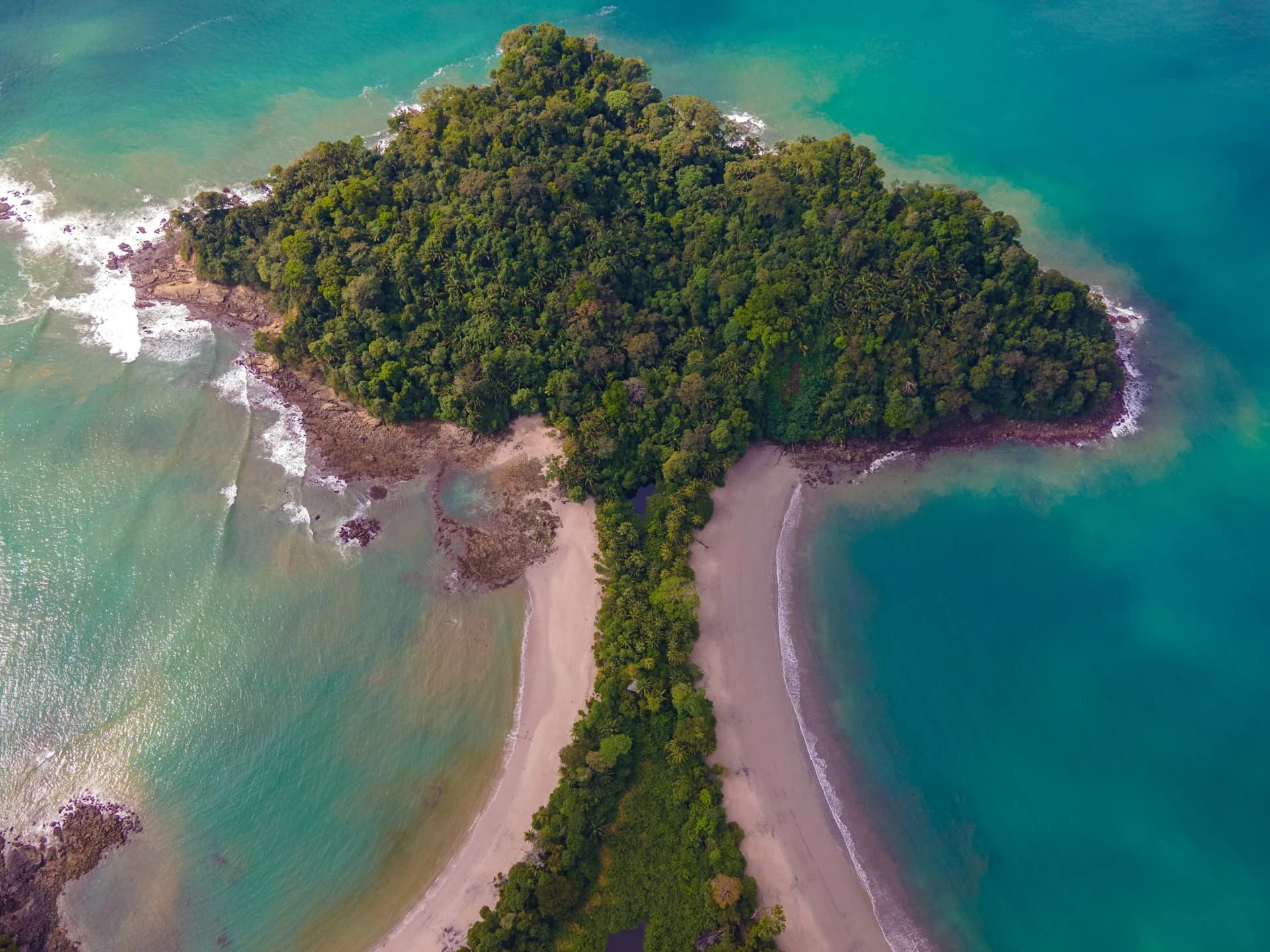
Corcovado and Manuel Antonio are Costa Rica's two most famous national parks, but they sit at opposite ends of the wild-versus-accessible spectrum. This guide compares access, wildlife, crowds, beaches, difficulty, and cost to help you choose.
What You Should Know
- Two very different parks. Corcovado is a vast, remote rainforest on the Osa Peninsula, famously described by National Geographic as the most biologically intense place on Earth. Manuel Antonio is a small, easy-to-reach coastal park near Quepos with rainforest trails that end at white-sand beaches.
- Access is the biggest divide. Manuel Antonio is a 2.5 to 3.5 hour drive from San José and works as a day trip or overnight. Corcovado has no road access to its interior: you reach it by boat from Drake Bay or Sierpe, or on foot from Carate, and every visit requires a certified guide and an advance reservation.
- Both deliver wildlife, but at different odds. Manuel Antonio almost guarantees sloths, capuchin and squirrel monkeys, and iguanas on short, flat trails. Corcovado offers the country's best shot at tapirs, all four monkey species, scarlet macaws, peccaries, and, rarely, big cats, in exchange for long, hot hikes.
- Effort and cost differ sharply. Manuel Antonio is a half-day, family-friendly visit with guided park tours from around $27 to $60. Corcovado is a strenuous full-day or multi-day adventure reached by boat, with guided trips typically running from about $110 to $365 or more.
Corcovado vs Manuel Antonio: The Honest Comparison
Corcovado vs Manuel Antonio in short: if you want easy access, beaches, and a near-guaranteed wildlife day that fits a wider Costa Rica trip, choose Manuel Antonio. If you want the wildest, most biodiverse rainforest in the country and you are willing to travel far and hike hard for it, choose Corcovado.
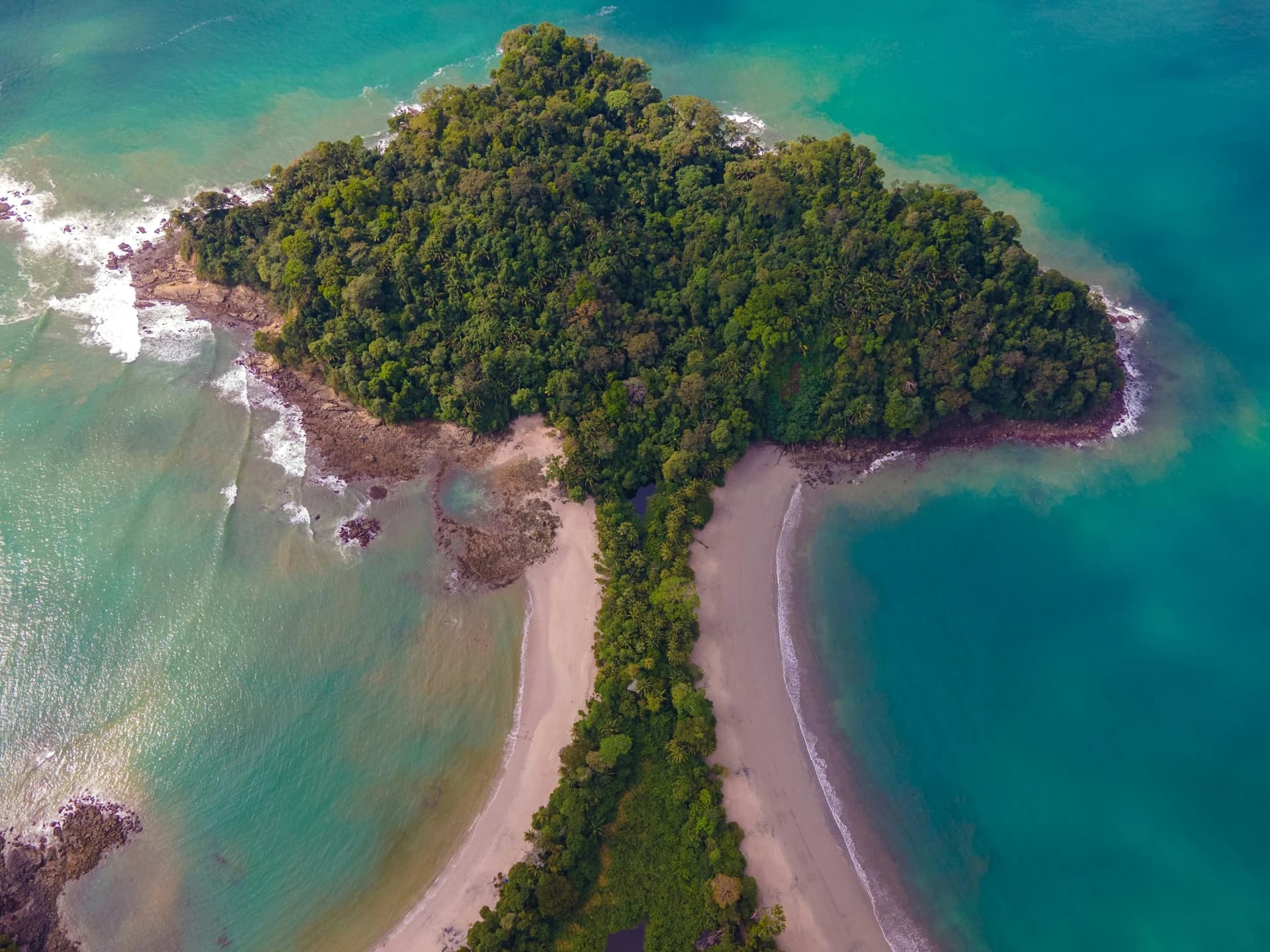
Choosing between Corcovado and Manuel Antonio is really a choice between accessible and wild. Manuel Antonio National Park sits on the central Pacific coast next to the town of Quepos, an easy drive from San José, and packs abundant, easy-to-spot wildlife and famous swimming beaches into a compact, well-trodden park. Corcovado National Park covers a huge, roadless stretch of the remote Osa Peninsula in the far southwest, and it is one of the most pristine and biologically rich rainforests on the planet. Both are world-class, but they deliver almost opposite trips.
For most travelers, especially first-timers and families, Manuel Antonio is the easier and more flexible pick: it is reachable in an afternoon, the trails are short and flat, the wildlife is reliable, and you can combine rainforest and beach in a single morning. Corcovado is the destination for serious wildlife enthusiasts, photographers, and adventurers who want the real, untamed rainforest and will organize a trip around reaching it.
The deciding factors usually come down to four things: how far you are willing to travel, how much you want to hike, the wildlife odds you are chasing, and your budget. The sections below break down each one, with links to plan whichever park you choose.
Corcovado vs Manuel Antonio: Side-by-Side Comparison
| Factor | Corcovado | Manuel Antonio |
|---|---|---|
| Location | Osa Peninsula, remote southwest Pacific | Central Pacific coast, next to Quepos |
| Access | No road to the interior; boat from Drake Bay or Sierpe, or hike from Carate | 2.5 to 3.5 hour drive from San José; day trip or overnight |
| Size | Around 424 km², Costa Rica's largest park | Around 16 km², one of the smallest |
| Crowds | Very few visitors; remote and wild | One of the country's most visited parks; busy trails |
| Wildlife | Highest biodiversity: tapirs, all four monkey species, scarlet macaws, peccaries, rare big cats | Abundant and easy: sloths, capuchin and squirrel monkeys, iguanas, coatis |
| Guide | Certified guide mandatory; advance reservation required | Guide highly recommended; park reservation required |
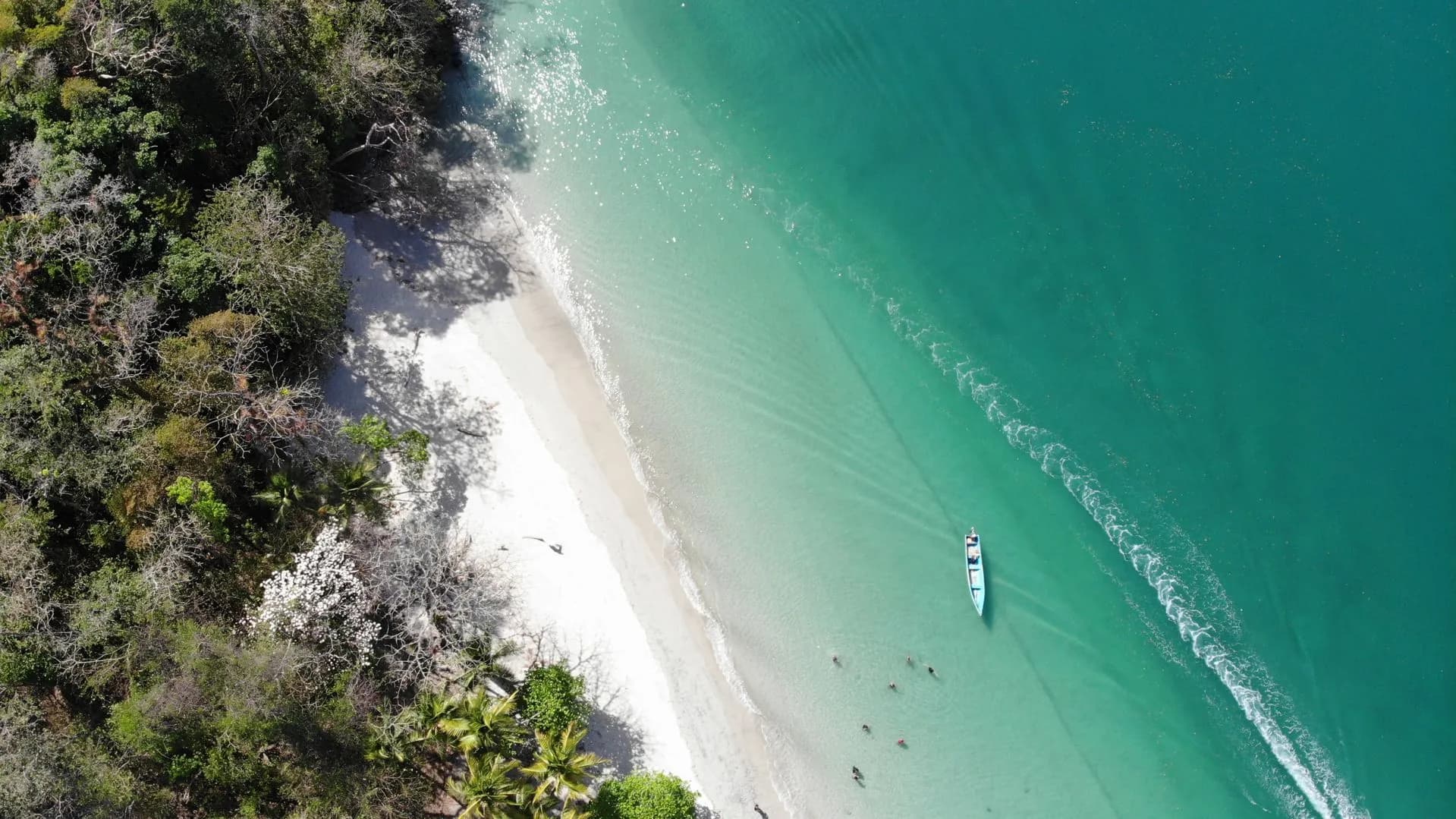
| Beaches | Wild, remote beaches; not a swimming draw | Famous white-sand swimming beaches inside the park |
| Difficulty | Strenuous; long, hot hikes | Easy; short, mostly flat trails |
| Trip length | Full-day to multi-day; a fly-in or boat-in destination | Half-day to a day; fits a wider itinerary |
| Cost (guided) | Higher: around $110 to $365+ | Lower: around $27 to $60 |
| Best for | Serious wildlife, photographers, adventurers, off-grid | First-timers, families, limited time, beach-and-wildlife combo |
The pattern is clear: Corcovado is the wild, biodiverse, harder-to-reach adventure for travelers chasing the real rainforest, while Manuel Antonio is the accessible, beach-backed, reliably rewarding park that fits almost any Costa Rica trip.
Quick Verdict: Corcovado vs Manuel Antonio
If you only read one thing, use this. Match what you want most to the park that does it best, then read on for the details.
| If you want… | Choose |
|---|---|
| Easy access from San José | Manuel Antonio |
| The wildest, most biodiverse rainforest | Corcovado |
| Beaches inside the park | Manuel Antonio |
| The best odds of tapirs and scarlet macaws | Corcovado |
| A family-friendly half-day | Manuel Antonio |
| A serious multi-day adventure | Corcovado |
| A day trip you can fit into a wider trip | Manuel Antonio |
| The fewest crowds | Corcovado |
| Lower cost and easy logistics | Manuel Antonio |
| Serious birding and wildlife photography | Corcovado |
| To combine rainforest and beach in one morning | Manuel Antonio |
The short version: Manuel Antonio is the easy, accessible, beach-backed park that suits most trips, and Corcovado is the remote, wild, bucket-list rainforest you build a trip around. The rest of this guide explains why.
Corcovado or Manuel Antonio: Which Should You Choose?
The fastest way to decide is to match the park to your trip.
- Choose Manuel Antonio if you are short on time, traveling with family or visiting Costa Rica for the first time, you want reliable wildlife on easy trails, you want beaches inside the park, or you are basing yourself near San José and want a day trip or overnight.
- Choose Corcovado if the rainforest itself is the point, you want the country's best wildlife odds and the fewest people, you are a keen birder or photographer, and you are willing to travel to the Osa Peninsula and hike hard. Our Corcovado tours guide covers the Drake Bay departure points and trip options.
- For families: Manuel Antonio is the easier choice, with short trails, near-certain sloths and monkeys, and beaches to cool off in. Corcovado's long hikes and heat suit older kids and teens at most.
- For first-timers to Costa Rica: Manuel Antonio is the simpler, lower-cost, more flexible introduction. Save Corcovado for a trip where the wild rainforest is the main event.
- Why not both: many travelers pair them, using Manuel Antonio as an accessible coastal stop and Corcovado as the wild centerpiece of a longer Costa Rica route.
Our take: if you want the easiest, most reliable wildlife day that fits a broader trip, choose Manuel Antonio. If you want the real, untamed rainforest and will organize a trip around it, Corcovado is unmatched. What matters more than the name is how far you want to travel and how hard you want to hike.
Corcovado vs Manuel Antonio Pros and Cons
A quick balance sheet for each park, so you can weigh the trade-offs at a glance.
Corcovado Pros and Cons
| Pros | Cons |
|---|---|
| The highest biodiversity and best wildlife odds in Costa Rica | Hard to reach: boat or long hike, no road to the interior |
| Tapirs, scarlet macaws, all four monkey species, peccaries | Strenuous, hot, long hikes; not for small children |
| Remote, pristine, and uncrowded | Higher cost and multi-day logistics |
| A genuine wilderness adventure | Certified guide and advance reservation mandatory |
| Outstanding birding and photography | Few amenities; weather and boat transfers can disrupt plans |
Manuel Antonio Pros and Cons
| Pros | Cons |
|---|---|
| Easy to reach from San José; day-trippable | One of the busiest parks; trails can feel crowded |
| Reliable sloths, monkeys, and iguanas on short trails | Smaller and more developed than Corcovado |
| White-sand swimming beaches inside the park | Less chance of rare species like tapirs or macaws |
| Family-friendly and low effort | Daily entry is capped and sells out in peak season |
| Affordable guided tours and easy logistics | Wildlife is easiest only in the early morning |
Reading the two side by side, Manuel Antonio's cons are mostly about crowds and scale, while Corcovado's are about access and effort. That is why Manuel Antonio wins for convenience and Corcovado wins for wilderness.
Wildlife: Corcovado vs Manuel Antonio
Both parks are excellent for wildlife, but they reward different expectations.
What you reliably see in Manuel Antonio
Manuel Antonio is one of the best places in Costa Rica to see wildlife easily. Two- and three-toed sloths, white-faced capuchin monkeys, the endangered Central American squirrel monkey, green iguanas, coatis, and a long list of birds are common along the short main trail, especially in the early morning. A certified guide with a spotting scope is the difference between walking past a sleeping sloth and watching it through the lens. See our things to do in Manuel Antonio guide for the wildlife and beach options.
What makes Corcovado special
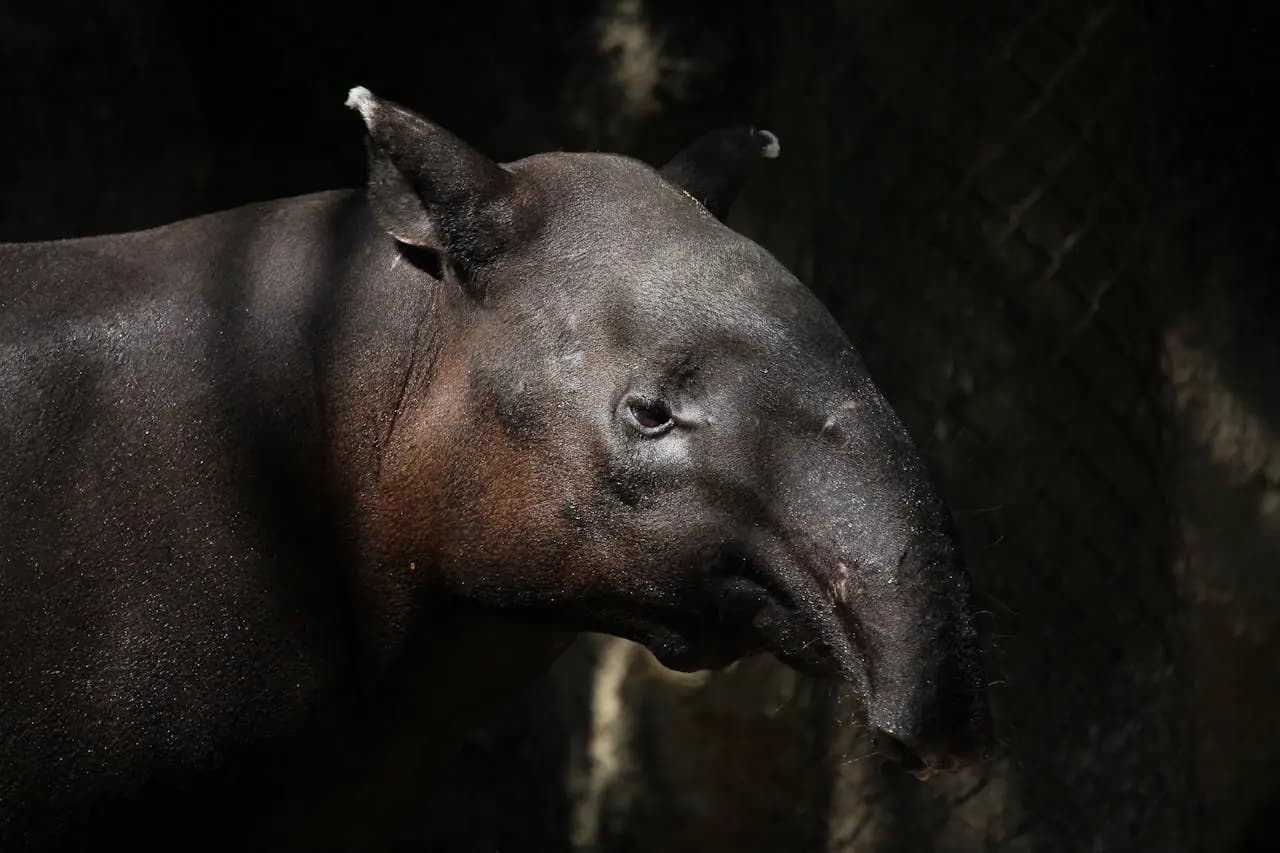
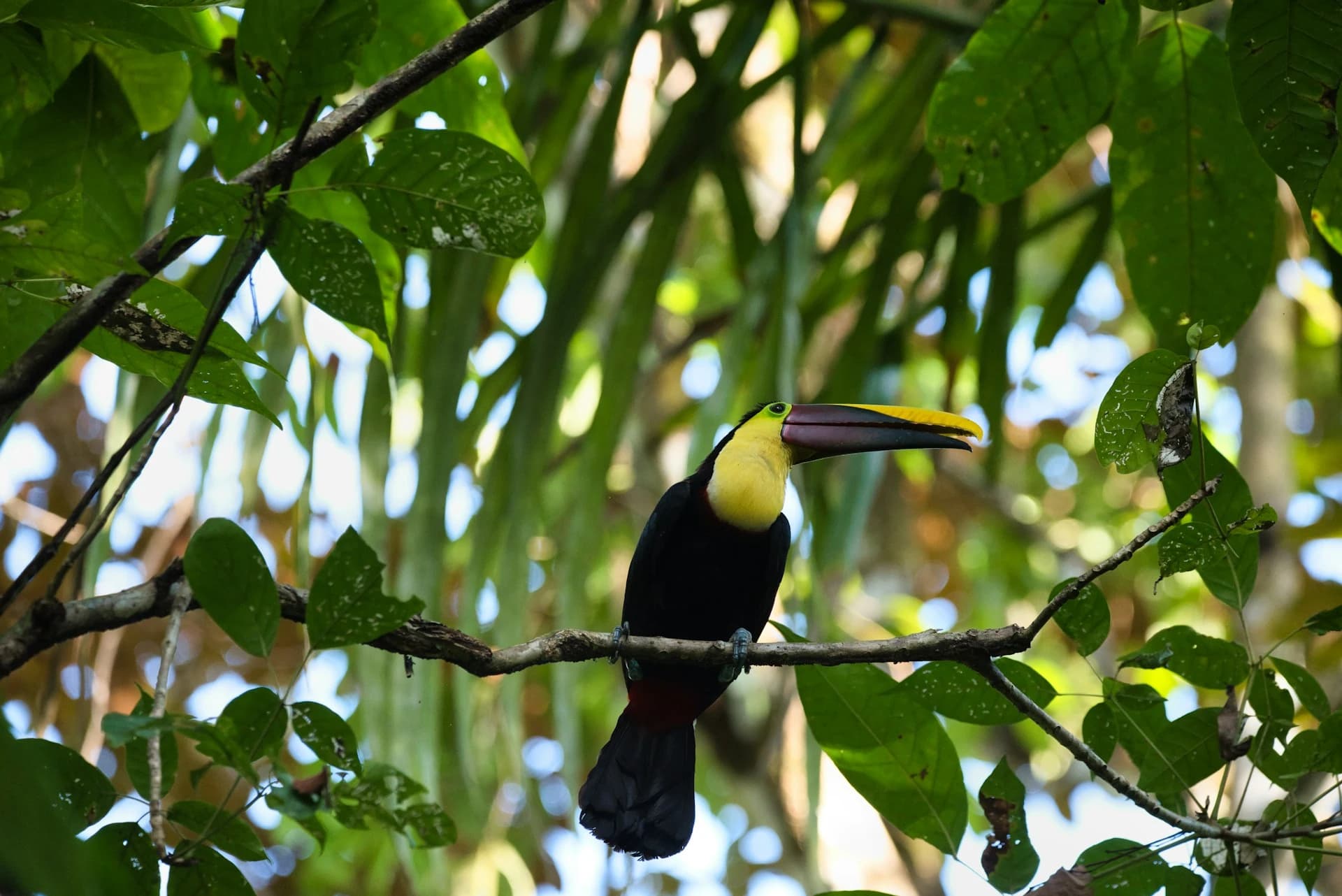
Corcovado is on another level for biodiversity. It protects the largest stretch of lowland tropical rainforest on the Pacific coast of Central America and shelters species that are hard or impossible to find elsewhere: Baird's tapir, all four of Costa Rica's monkey species, scarlet macaws in large flocks, white-lipped peccaries, anteaters, and, for the very lucky, pumas and even jaguars. The trade-off is effort: the famous Sirena ranger station hikes are long and hot, and sightings reward patience and a good guide.
Our experience (wildlife odds): What we consistently see is that Manuel Antonio delivers more sightings per hour of easy walking, while Corcovado delivers rarer species and a wilder feeling for the hours you put in. If a sloth and monkeys make your trip, Manuel Antonio is enough; if a tapir or a macaw flock is the dream, that is Corcovado.
Best Wildlife Park in Costa Rica: Corcovado or Manuel Antonio?
If wildlife is the whole reason for your trip, this is the section that matters most. Both parks are superb, but they win at different things: Manuel Antonio for easy, near-guaranteed sightings, and Corcovado for sheer biodiversity and rare species. Here is what you can realistically expect to see in each.
| Species | Manuel Antonio | Corcovado |
|---|---|---|
| Sloths (two- and three-toed) | Very likely | Possible |
| White-faced capuchin monkeys | Very likely | Likely |
| Squirrel monkeys (endangered mono tití) | Likely | Likely |
| Howler and spider monkeys | Rare or absent | Likely (all four species present) |
| Scarlet macaws | Occasional | Common, often in large flocks |
| Baird's tapir | No | Best odds in Costa Rica (especially Sirena) |
| White-lipped peccaries | No | Likely |
| Big cats (puma, jaguar) | No | Rare, but possible |
| Iguanas and coatis | Very likely | Likely |
| Birds | Abundant and easy | Exceptional diversity |
Where to see sloths in Costa Rica: Manuel Antonio is one of the easiest places in the country to find both two- and three-toed sloths, often within the first hour on the short main trail with a guide's spotting scope. Corcovado has sloths too, but they are harder to spot in its taller, wilder canopy.
Where to see tapirs in Costa Rica: Corcovado is the answer, with the country's best chance of seeing a wild Baird's tapir, most reliably around the Sirena ranger station. They are not found in Manuel Antonio.
The best wildlife park in Costa Rica overall: for raw biodiversity and rare species, Corcovado is unmatched. For the most wildlife seen per hour with the least effort, Manuel Antonio wins. Pick Corcovado if a tapir or a macaw flock is the dream, and Manuel Antonio if reliable sloths and monkeys on an easy trail are enough.
Access and Logistics: Getting to Each Park
Access is where these two parks differ most, and it shapes the whole trip.
| Route / Logistics | Manuel Antonio | Corcovado |
|---|---|---|
| From San José | ~2.5 to 3.5 hrs by road | ~6 to 8 hrs by road, or a short domestic flight |
| Day trip possible | Yes | No |
| Requires a boat | No | Usually (from Drake Bay or Sierpe) |
| Road to the park | Yes, paved highway to the entrance | No road into the interior |
| Certified guide required | Recommended | Mandatory |
| Typical visit length | Half-day | Full-day to multi-day |
Getting to Manuel Antonio
Manuel Antonio is a 2.5 to 3.5 hour drive from San José along a paved highway, reachable by private transfer, shared shuttle, public bus, or a short domestic flight to Quepos. You can visit on a long day trip, though staying overnight in Quepos or Manuel Antonio makes for a far better trip, especially in the green season when the early morning is the prime wildlife window. Our San José to Manuel Antonio guide covers the route and transfer options.
Getting to Corcovado
Corcovado has no road into its interior. Most visitors base themselves in Drake Bay, reached by a domestic flight or a boat from Sierpe, and then take a boat to the San Pedrillo or Sirena ranger stations for guided day or overnight hikes. Others enter on foot from Carate near Puerto Jiménez. Every visit requires a certified guide and a park reservation booked well in advance, and boat transfers depend on weather and tides. Our Corcovado tours guide breaks down the Drake Bay departure points, the Sirena and San Pedrillo options, and what each costs.
Our experience (the logistics gap): The single biggest practical difference is planning. Manuel Antonio can be booked a few days out and slotted into a flexible itinerary, while Corcovado realistically needs to be organized weeks ahead around flights, boats, guides, and reservations.
Cost: Corcovado vs Manuel Antonio
The two parks sit at different price points, mostly because of access and trip length.
Manuel Antonio is the cheaper and simpler option. A guided park tour typically runs from around $27 to $60 per person, plus the park entry fee, and you can reach the park on an inexpensive shuttle or drive. Because it is a half-day visit, it adds little to the cost of a wider trip.
Corcovado costs more because reaching it costs more. Guided day trips from Drake Bay generally start around $110 and rise with the ranger station and trip length, while two-day, one-night Sirena trips run into the several hundreds, around $365 or more, including boat transfers, guide, meals, and a stay. Add the domestic flight or boat to Drake Bay and the multi-day base, and Corcovado is a meaningfully bigger budget line. For exact current pricing, see our Corcovado tours guide.
The takeaway: Manuel Antonio is the value pick and an easy add-on, while Corcovado is a bigger investment that buys a rare wilderness experience.
Best Time to Visit Each Park
Both parks share Costa Rica's central and south Pacific seasons, but timing matters more for Corcovado.
The dry season (mid-December through April) brings the most reliable weather to both parks, the easiest trail conditions, and the calmest boat transfers to Corcovado. It is also the busiest and priciest window, and Manuel Antonio's daily entry sells out furthest ahead in these months.
The green season (May through mid-December) brings lush forest, active wildlife, lower prices, and afternoon rain. Manuel Antonio handles the rain well with short morning trails, while Corcovado's long hikes and boat transfers are more weather-dependent, and some Corcovado access can be limited in the wettest months of September and October. For the full month-by-month picture on the accessible park, see our best time to visit Manuel Antonio guide.
In short: for Manuel Antonio, any month works with a morning-first plan; for Corcovado, the dry season is the safer, more reliable window, especially for multi-day Sirena trips.
From Our Experience
What we consistently see is that travelers happiest with their choice match the park to their trip honestly: Manuel Antonio for an easy, reliable wildlife-and-beach day on a flexible schedule, and Corcovado for a planned, effortful wilderness adventure. Trying to do Corcovado on a tight, last-minute schedule is where most disappointment comes from.
Tips for Choosing and Planning
- Match the park to your time and effort: if you have a day and want easy wildlife and a beach, choose Manuel Antonio; if you have several days and want the wildest rainforest, choose Corcovado.
- Book a certified guide for both: a guide with a spotting scope transforms either park, and in Corcovado a guide is mandatory. Reserve Corcovado guides and park permits weeks ahead.
- Go early, especially in Manuel Antonio: wildlife is most active in the first hours after opening, around 7am, and the trails are coolest and least crowded then.
- Plan Corcovado around the weather: the dry season gives the most reliable boat transfers and trail conditions; build a buffer day for green-season trips in case of rough seas.
- Consider doing both: they complement each other, with Manuel Antonio as the accessible coastal stop and Corcovado as the wild centerpiece of a longer route. Our Manuel Antonio day tours guide helps slot the easier park into a wider Costa Rica trip.
- Reserve park entry ahead: Manuel Antonio's daily entry is capped and sells out in peak season, and Corcovado requires an advance reservation year-round.
How We Compared These Parks
The Costa Rica Day Trip team compared Corcovado and Manuel Antonio using national park access and reservation rules, biodiversity and wildlife data, trail difficulty, and the seasonal pricing and availability we track across guided tours to both parks. Our goal was to match each park to the kind of traveler it actually suits, rather than crown a single winner. This guide was reviewed and updated in June 2026. Park rules, boat schedules, and tour pricing change seasonally; we recommend confirming reservations, guide requirements, and current costs before you book. Both parks have their own dedicated guides on this site with detailed tour options.
Frequently Asked Questions
Is Corcovado or Manuel Antonio better?+
It depends on your trip. Manuel Antonio is better for easy access, reliable wildlife on short trails, beaches inside the park, and travelers with limited time or families. Corcovado is better for the wildest, most biodiverse rainforest and the best odds of rare species like tapirs and scarlet macaws, if you are willing to travel far and hike hard. Many travelers do both.
Should I visit Corcovado or Manuel Antonio as a first-timer to Costa Rica?+
Manuel Antonio is the easier first-timer choice: it is a 2.5 to 3.5 hour drive from San José, the trails are short and flat, the wildlife is reliable, and it has beaches inside the park. Corcovado is a remote, strenuous, multi-day adventure better suited to a return trip or travelers whose main goal is the wild rainforest.
How do you get to Corcovado National Park?+
Corcovado has no road into its interior. Most visitors base in Drake Bay, reached by a domestic flight or a boat from Sierpe, then take a boat to the Sirena or San Pedrillo ranger stations for guided hikes. Others enter on foot from Carate near Puerto Jiménez. A certified guide and an advance park reservation are mandatory for every visit.
Can you see more wildlife in Corcovado or Manuel Antonio?+
Manuel Antonio offers more sightings per hour of easy walking, with near-certain sloths, monkeys, and iguanas. Corcovado offers higher biodiversity and the best odds of rare species such as tapirs, scarlet macaws, peccaries, and, rarely, big cats, in exchange for long, demanding hikes. The right answer depends on whether you want easy sightings or rare ones.
Is Manuel Antonio worth it if I have already booked Corcovado?+
Yes. The two parks complement each other rather than compete. Corcovado delivers the wild, remote rainforest, while Manuel Antonio adds easy wildlife, beaches, and a relaxed coastal stop that fits neatly into a wider Costa Rica itinerary. Many travelers pair them for the best of both.
Do you need a guide for Manuel Antonio and Corcovado?+
A certified guide is mandatory in Corcovado and cannot be skipped. In Manuel Antonio a guide is not strictly required, but it is highly recommended, since a guide with a spotting scope finds far more wildlife than most visitors spot on their own. Both parks require an advance park reservation.
Which Costa Rica national park is easier to visit?+
Manuel Antonio is much easier. It is a short drive from San José, works as a day trip, has flat trails and beaches, and can be booked a few days out. Corcovado requires flights or boats to the remote Osa Peninsula, a certified guide, advance reservations, and strenuous hiking, so it needs to be planned weeks ahead.
Is Corcovado worth it?+
For wildlife enthusiasts, photographers, and adventurous travelers, Corcovado is absolutely worth it: it is the wildest, most biodiverse park in Costa Rica, with the country's best odds of tapirs, scarlet macaws, and all four monkey species, and a genuine sense of remote wilderness. It is worth it if you have the time, budget, and fitness for the boats and long hikes. If you only have a day or want an easy visit, it may not be.
Is Manuel Antonio worth it?+
Yes, especially for first-timers, families, and anyone short on time. Manuel Antonio packs reliable sloths, monkeys, and iguanas onto short, easy trails that end at white-sand beaches, all within a few hours of San José. The main downside is crowds, which an early-morning visit with a guide largely solves. For an accessible, high-reward half-day, it is well worth it.
Is Corcovado worth the extra cost?+
It depends on your priorities. Corcovado costs more because of the flights, boats, certified guides, and multi-day logistics, but that buys access to a rainforest and wildlife you simply cannot see in more accessible parks. If rare species and untouched wilderness are the goal, the extra cost is justified. If your main wish is sloths and monkeys on an easy trail, Manuel Antonio delivers that for far less.
Is Corcovado too difficult?+
Corcovado is strenuous but not technical. The Sirena hikes are long, hot, and humid, often several hours on uneven trails, which suits reasonably fit adults, older kids, and teens more than small children or anyone with mobility limits. Shorter San Pedrillo day trips are more manageable. Manuel Antonio is the better choice if easy, flat walking is a priority.
Affiliate note: Some links on this page are affiliate links. If you book through them, we may earn a small commission at no additional cost to you.