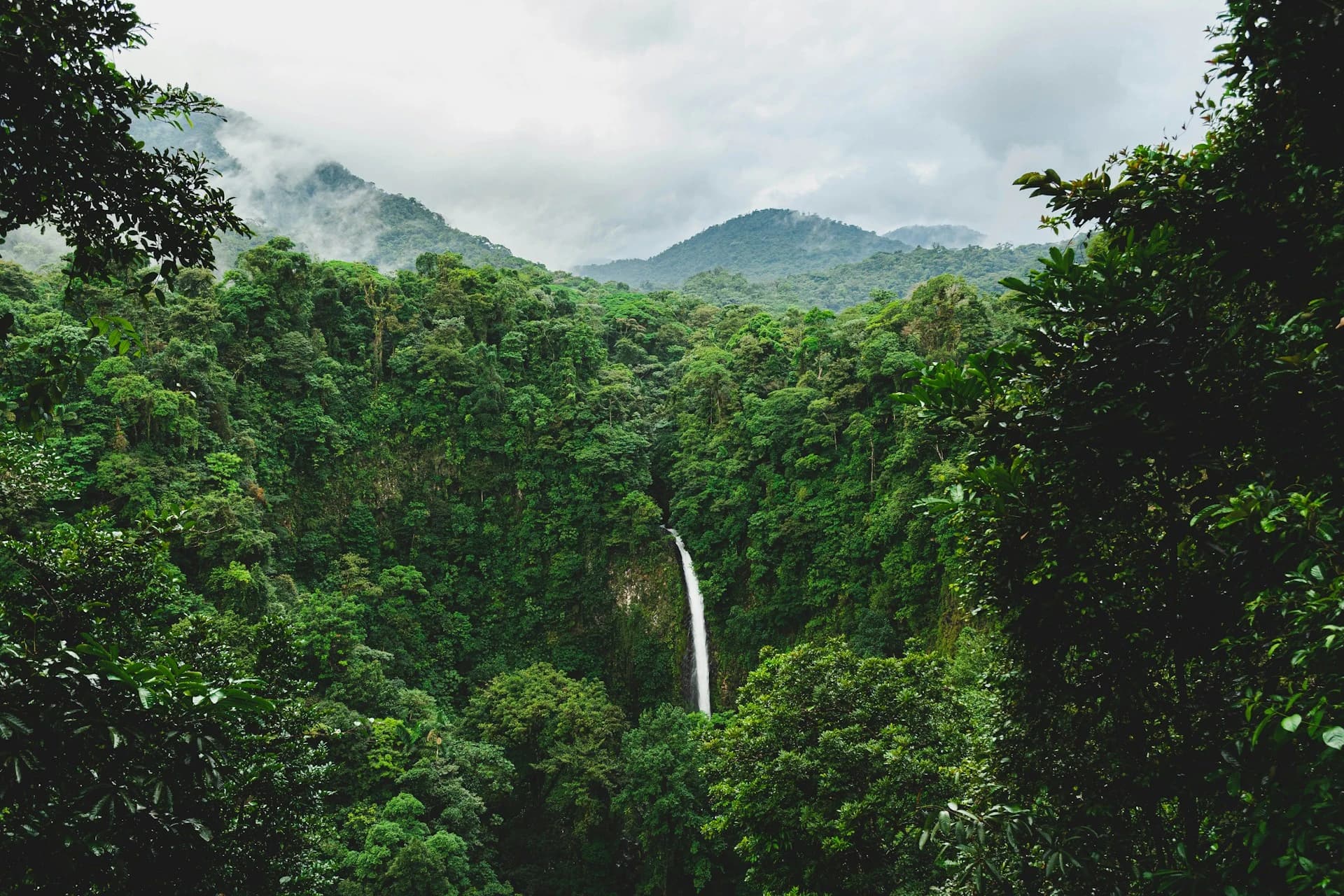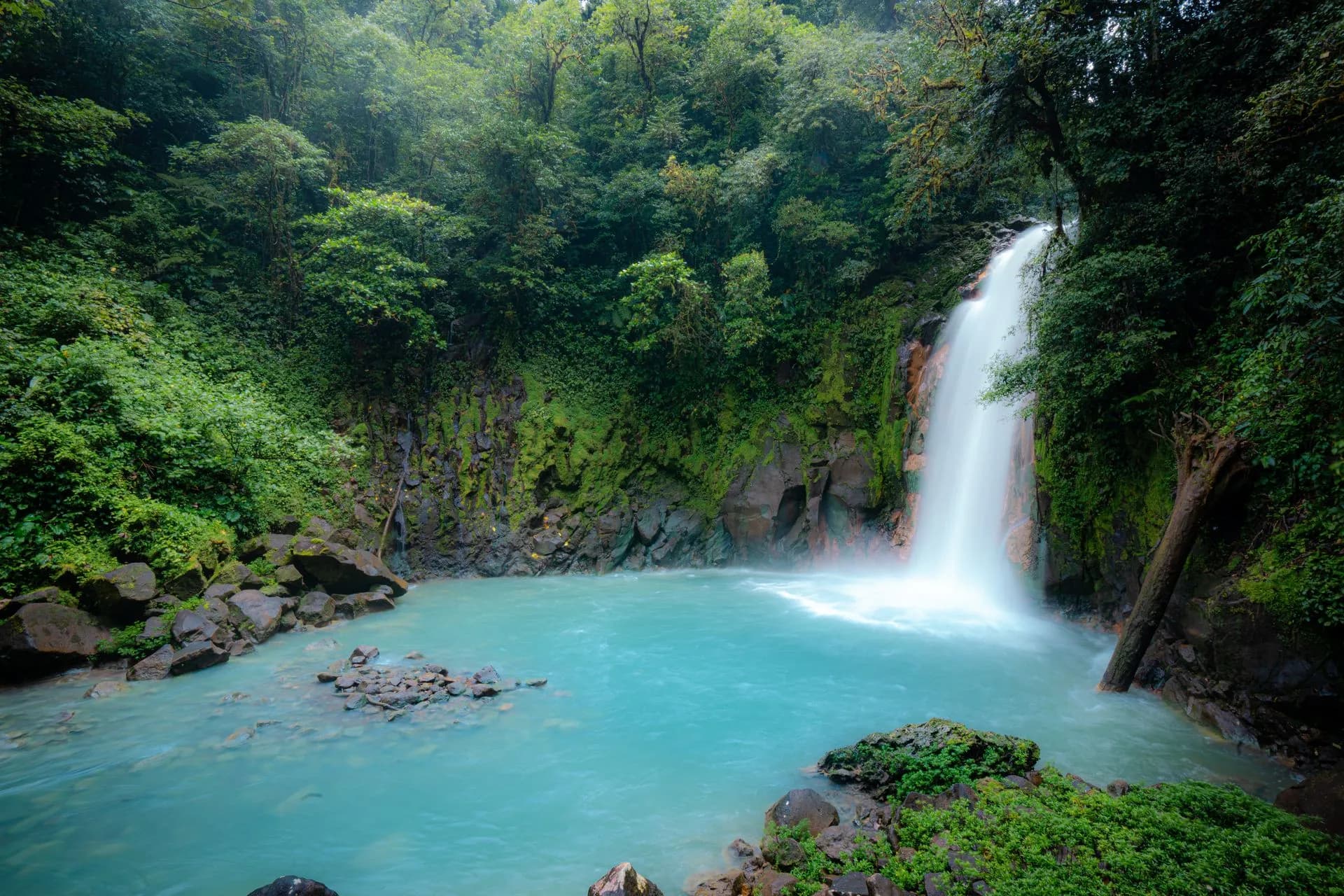
No, you cannot swim in Rio Celeste inside Tenorio Volcano National Park: SINAC does not allow anyone into the river. Here is where you can swim legally outside the park, every park rule on drones, pets, plastics and food, how many stairs lead to the waterfall, what to wear, and why the river is sometimes not blue.
What You Should Know
- SINAC's own rules for Tenorio Volcano National Park say "No se permite ingresar al río": nobody enters the river anywhere inside the park, including the waterfall pool, the Laguna Azul and the Teñideros.
- You can swim in the same turquoise river outside the park: at a free public spot by a road bridge about 1 km past the entrance, on private land belonging to farms, restaurants and lodges, and on tubing trips through the Bijagua area.
- The staircase down to the waterfall (about 250 steps) has only been open halfway since a June 2025 risk assessment, so you see the fall from partway down, and on busy days you queue for the photo spot.
- Drones, pets, alcohol, smoking and single-use plastics are all banned inside the park, and tickets are sold online only. Rangers check bags at the entrance.
Can You Swim in Rio Celeste? The Short Answer
⭐ The short answer: Not inside the park. SINAC, which runs Tenorio Volcano National Park, does not let visitors enter the river at the waterfall, the Laguna Azul, the Teñideros or anywhere along the trail. You can swim in the Rio Celeste outside the park boundary, at a public spot by a road bridge, on private riverside land, or on a tubing trip.
So can you swim in Rio Celeste? Yes, just not where the photos of the waterfall are taken. The famous 3 km Misterios del Tenorio trail stays on the bank the whole way, and the rule is posted by SINAC in four words on its official page for the park: "No se permite ingresar al río" (entering the river is not allowed). It covers the plunge pool under the waterfall, the small, intensely blue Laguna Azul, the bubbling Borbollones and the Teñideros, the spot where two clear streams meet and the colour begins.
Downstream of the park, the river runs through farms, villages and lodges around Bijagua and Río Celeste, and the water stays turquoise for kilometres. That stretch is where every swimming photo you have seen from a La Fortuna day trip was taken. If you are still deciding whether to go at all, our Rio Celeste hike guide covers the trail, the drive and the guided tours. This page covers the rules once you are there, and where you can legally get in the water.
Why Swimming Is Banned Inside Tenorio Volcano National Park
SINAC does not publish a single paragraph explaining the ban, but the reasons are easy to see on the trail, and they are the same ones rangers and recent guides give.
The water is volcanic, and in places hot
The Borbollones are, in SINAC's words, fissures where volcanic gases escape "a alta temperatura". One of the two streams that meet at the Teñideros is acidic, which is part of why the colour forms at all. A guide updated in October 2026 notes that the Borbollones section runs dangerously hot. This is not a place to wade in barefoot.
Sunscreen, repellent and 1,200 people a day
SINAC caps the park at 1,200 visitors a day, with up to 500 on the trail at once. The same October 2026 guide cites sunscreen and lotions as a threat to the river's mineral balance. Multiply one swimmer's sunscreen by a few hundred a day and the logic of a blanket ban is obvious.
Floods, falling branches and a damaged staircase
Tenorio gets about 3,500 mm of rain a year, according to SINAC, and the park has closed several times recently for weather: from May 30, 2025 after heavy rain brought down branches, and again on July 18, 2025 for rain, wind and flooding. A river that rises fast after a storm is not one the park wants people standing in.
Older blogs and maps that show people in the water at the waterfall pre-date the current rules. The trail is a single path with ranger checks at the entrance, so plan on staying on the bank.
Where You Can Swim in the Rio Celeste (Outside the Park)
The Rio Celeste keeps its colour for kilometres downstream of the park, so there are four legal ways to get in it. All of them are outside the park boundary, all depend on the water level that day, and none involve the waterfall.
The free public spot is the one to know if you are driving yourself. A guide updated in October 2026 places it about 1 km past the park entrance and suggests searching for "Rio Celeste Danta Free Pool" on a map app. Guests on tour days describe it plainly: the swim is "outside the park, under a bridge", in a river that is clear blue but cold. It is a river, not a pool, so watch your footing on the rocks and stay out after heavy rain.
On tours, the swim is where expectations go wrong. Two guests this year said they expected the turquoise pool from the advertising photos and got a road bridge instead, and one wrote the stop lasted "about 20 minutes". Tours that use a private stretch get better reviews for it: a guest on Arenal Jungle Tours' hike in November 2025 said they swam "on private property which was so great because we were the only ones there". On wet days, guides cancel the swim; two guests in late 2025 had theirs called off for rain, one citing the risk of flash flooding.
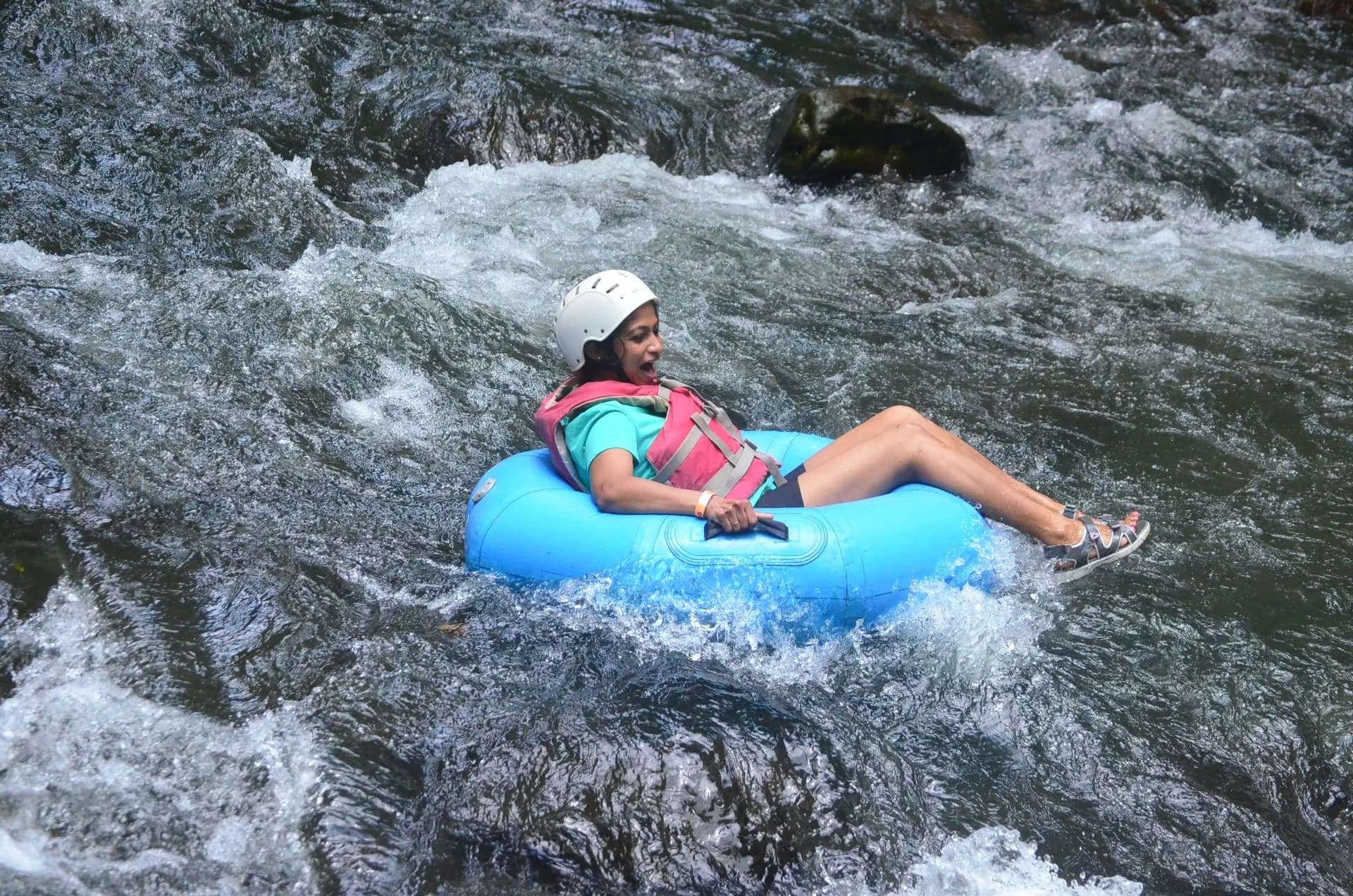
Our take: If getting into the blue water matters more to you than the waterfall, book tubing, not a hike. A float spends one to three hours in the river, while a hike tour gives you half an hour at most. Our Rio Celeste tubing guide compares the operators. And if you just want a waterfall you can swim under, our Rio Celeste vs La Fortuna Waterfall comparison explains why the La Fortuna fall is the better pick.
The public spot by the bridge
About 1 km past the park entrance, by a road bridge. Entry is free, and locals charge roughly 1,000 colones to park. It is a natural river spot with no lifeguard or facilities.
A river stop after the trail
Most full-day tours from La Fortuna add a swim after lunch. Some use the public spot under the bridge, others a private stretch at a restaurant or farm. Expect 20 to 30 minutes in the water.
Floating the river on a tube
Tubing operators run 1 to 3 hour floats through the rapids and pools outside the park, with a helmet and life jacket. This is the most time you will spend in the water.
Lodges with river access
Several lodges and farms around Bijagua advertise private trails down to the river. Ask before you book, since access, safety rules and water levels vary by property.
Most Popular Tours
Rio Celeste Rules: What's Allowed and What's Banned
These are the Tenorio National Park rules as SINAC lists them on its official page for the park, checked on October 27, 2026, with the gaps filled from 2025 and 2026 government notices and visitor guides where SINAC says nothing.
| Item | Allowed? | What to know |
|---|---|---|
| Swimming or wading | No | SINAC: "No se permite ingresar al río." Applies to the waterfall, Laguna Azul, Borbollones and Teñideros. |
| Leaving the trail | No | SINAC asks visitors to stay on the trail at all times. The Borbollones vent gas at high temperature. |
| Drones | No | Listed by SINAC: "No se permite el ingreso de drones." |
| Pets | No | Listed by SINAC: no pets may enter. |
| Single-use plastics | No | Banned in national parks since February 2021 under directive SINAC-DE-944-2020, reconfirmed by MINAE and SINAC in March 2025. That includes disposable water bottles, cups, cutlery, straws and plastic bags. |
| Alcohol and smoking | No | Both are banned on SINAC's list. |
| Food | Not normally | A guide updated in February 2026 says food is not allowed inside, with exceptions for babies and young children, and that bags are checked. There are restaurants by the ranger station. |
| Water | Yes, reusable | Bring a refillable bottle. SINAC lists drinking water among the park's services. |
| Buying a ticket at the gate | No | Tickets are sold only through SINAC's online system (serviciosenlinea.sinac.go.cr). Keep a copy of your passport handy for the ranger check. |
| Phones and cameras | Yes | We found no restriction on personal photos. Guests report that only a handful of people are allowed on the waterfall platform at once. |
ℹ️ Rules checked against SINAC's page for Parque Nacional Volcán Tenorio on October 27, 2026. SINAC closes trails at short notice in bad weather, so check the park's official channels the day before.
Can you fly a drone at Rio Celeste?
No. Drones are on SINAC's banned list for Tenorio, and the ban covers the whole park, including the waterfall and the Teñideros. Outside the park, Costa Rica's civil aviation rules (set by the DGAC) still apply. If you want aerial shots of the river, ask a lodge or tubing operator outside the park whether flying over their land is allowed.
Rio Celeste Waterfall Stairs: How Many, and How Far You Can Go
The staircase down to the Rio Celeste waterfall has about 250 steps. Recent guides put it at 250 to 253, and one tour guest in December 2025 estimated "approx 300 steps down to waterfall viewing area", which is what it feels like on the way back up.
The bigger news is that you cannot currently walk all the way down. Storm damage in 2025 took out the lower stairs and the viewing deck at the bottom. The park closed on May 30, 2025, and on June 13, 2025 MINAE and SINAC, through the Arenal Tempisque Conservation Area (ACAT), reopened the staircase only halfway, after a risk assessment by Costa Rica's national emergency commission (CNE). ACAT's regional director said access would be restricted and evacuated immediately in heavy rain.
We found no announcement of a full reopening since. Guests in 2026 still describe stopping partway down: one in August 2026 wrote that the stairs "now only go about halfway down, and only a handful of people are allowed on the platform at a time", and another in March 2026 said you "wait in a very long line just to take pictures". The view from the midway platform is still good, but it is a side view of the fall, not the face-on shot from the old deck.
How hard is it?
The steps are the hardest part of a 6 km round trip that SINAC says takes about three hours. They are steep, irregular and wet for much of the year. Guests consistently call the rest of the trail manageable for anyone who walks regularly, then single out "the steep steps after the waterfall" and the climb back from the Teñideros as the parts that hurt. Take them slowly, use the handrail, and let faster walkers pass.
What to Wear to Rio Celeste
For what to wear to Rio Celeste, dress for mud and rain first: shoes with real grip or rented rubber boots, quick-dry clothing and a rain jacket. SINAC recommends comfortable clothes and footwear and sets no dress code. Wear a swimsuit underneath only if your day includes a river stop outside the park.
The mud is the thing people underestimate. Tenorio sits on the Caribbean side of the Guanacaste volcanic range, so it rains here almost all year, even in the months when Guanacaste's beaches are bone dry. One guest wrote that a walking stick "can be of good use" on the slippery sections, and another recommended "keeping hiking shoes on until you get to the water" because the path down to the swimming spot is rocky.
Shoes with real grip
Trail shoes or sneakers with a deep tread. The trail is mud for much of the year and the stairs are slick. Leave sandals and flip-flops in the car.
Rubber boots by the entrance
Visitor guides report rain boots rented near the park entrance for about $4 to $5. We could not confirm a 2026 price, so bring small bills in colones in case.
Quick-dry layers and a rain jacket
SINAC records about 3,500 mm of rain a year here, spread over almost every month. Wear quick-dry fabric and carry a light rain jacket or poncho.
Swimsuit for after the park
If your day includes a swim outside the park, wear your swimsuit under your clothes. You cannot use it on the trail, but changing rooms at river stops are basic.
Towel, water shoes, dry clothes
Leave them in the vehicle. You only need them after the hike, and the path down to most river spots is rocky, so water shoes help.
Repellent and a refillable bottle
Insect repellent for the forest, and a reusable bottle since single-use plastic is banned. Put repellent on well before any swim.
Why Is Rio Celeste Sometimes Not Blue?
Because the colour is a trick of light that rain can switch off. A 2013 study in the journal PLOS ONE by Castellón and colleagues found no copper, iron or other coloured minerals in the water. Instead, at the Teñideros, a clear stream carrying tiny aluminosilicate particles meets a clear, acidic stream. The drop in pH makes the particles clump to around 566 nanometres, a size that scatters blue light back at you, much as the sky does.
That effect needs the particles to stay evenly suspended in clean water. Heavy rain washes mud and sediment into the river and the colour turns milky grey or brown until it clears. After seismic activity in 2018 caused landslides upstream, the river ran brown until the sediment settled and the colour came back.
When is Rio Celeste blue?
Most reliably in the drier months, roughly February to April, and on mornings after a dry night. How fast it recovers after rain is disputed: one October 2026 guide says the colour usually returns within a few hours after rain stops, while guests on tours keep reporting grey water the day after a storm ("the water was not blue when we went due to the heavy rain the day before", one wrote in July 2026). Ordinary light rain rarely spoils it, and plenty of green-season visitors still see vivid blue. Our best time to visit La Fortuna guide and our La Fortuna rainy season guide cover the rainfall month by month.
Most Popular Tours
Can Kids Do the Rio Celeste Trail?
Yes, most school-age children can, and the park charges a reduced child fee for ages 2 to 12 (under 2s are free). The issue is not distance but the steps and the length of the day. The trail is 6 km round trip, and the about-250-step staircase and the climbs near the Teñideros are where small legs give out.
What families in guest reviews report:
- It works for active kids: one family did a guided hike "with 3 kids 7, 8 and 10 and loved it"; another parent said their "5 y/o was able to manage".
- It is hard on reluctant walkers: one guest warned the hike is "NOT easy on small kids, or kids that are not active", and another did not recommend bringing young children at all.
- Lunch comes late: on some tours lunch is not served until around 3 PM. A February 2026 guide says rangers make an exception to the no-food rule for young children, so pack snacks.
Tour age rules differ. Arenal Jungle Tours prices children from 3 but recommends its hike from age 12; Red Lava TSC has a child rate from 5. A baby carrier is more practical than a stroller on the stairs. For gentler ideas, see our guide to the best things to do in La Fortuna with kids.
Rio Celeste Entrance Fee and Hours, Briefly
As of October 27, 2026, SINAC lists Tenorio Volcano National Park as open every day, with entry from 8:00 AM to 2:00 PM and visitors allowed to stay until 4:00 PM. There is no weekly closing day, but the park closes at short notice for storms. Entry for non-residents is $13.56 per adult and $5.65 per child, tax included (often quoted as $12 and $5 before tax). Tickets are sold online only, in timed entry windows, and dry-season slots sell out. Parking is private and paid separately.
Our Rio Celeste hike guide covers booking the ticket, driving there and the guided tours in full. If you are staying on the Pacific coast, see our Rio Celeste tours from Tamarindo instead.
Hike the Park, Then Swim Outside It: Compare and Book
If you want the waterfall and a legal swim in one day, book a guided day that ends at the river. Arenal Jungle Tours' Rio Celeste day from La Fortuna is rated 4.9 across 346 reviews, from $92.31 per person with lunch and all fees and taxes included, and caps bookings at 10 travelers. Guests repeatedly mention the swim on a private stretch of river after lunch, which avoids the crowded public spot. The tradeoff: it is an 8-hour day for a 3-hour walk, the swim is short and weather-dependent, and the operator recommends it from age 12. For the full comparison of every hike tour, see our Rio Celeste hike guide.
Popular Ways to See and Swim in the Rio Celeste
Nine options, all rated 4.5 or higher with at least 50 reviews and guest reviews from the last six months. The first three are full-day hikes from La Fortuna that visit the park and stop for food (two of them include a river swim; Sloth Land CR's day adds a sloth sanctuary and a coffee and chocolate farm). The other six are tubing floats outside the park, the longest time you can legally spend in the blue water. Most tubing trips meet at the river, about 1.5 hours from La Fortuna, so you need your own car or a transfer.
For the rest of your stay, see our guide to the best things to do in La Fortuna.
Most Popular Tours
Where to Stay in La Fortuna
Staying in La Fortuna or planning a trip? Here are three well-reviewed hotels, with live prices from our booking system. Rooms at the best-rated hotels are usually the first to go, especially in peak season and over holidays, so it's worth locking in your stay before availability fills up.
Compare Live La Fortuna Hotel Prices
Live rates for a three-night stay for two adults, checking in about a month from now. Change the dates at checkout and book with instant email confirmation.
- Instant confirmation by email
- Live rates, not brochure prices
- Free cancellation on selected rates
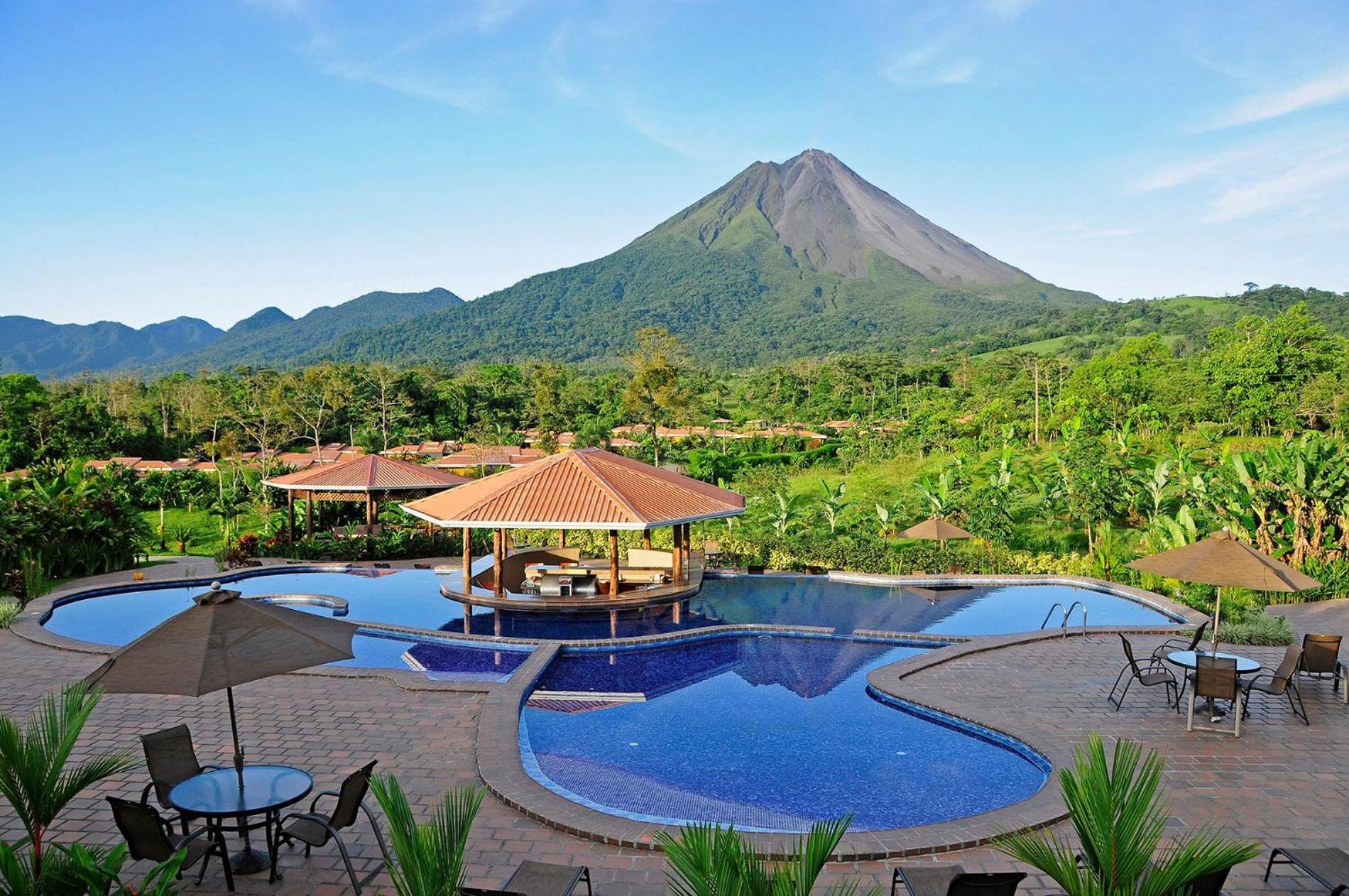
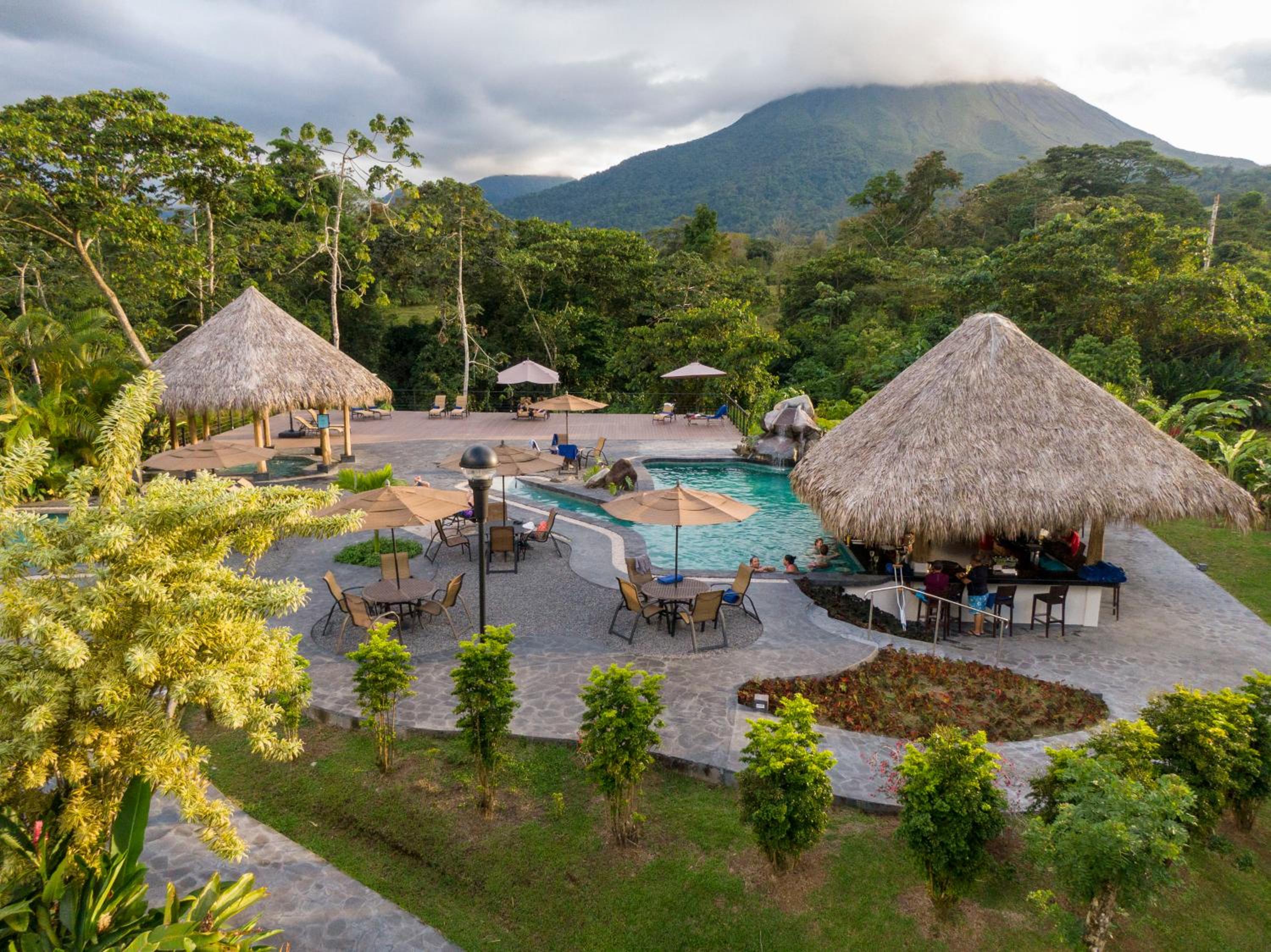
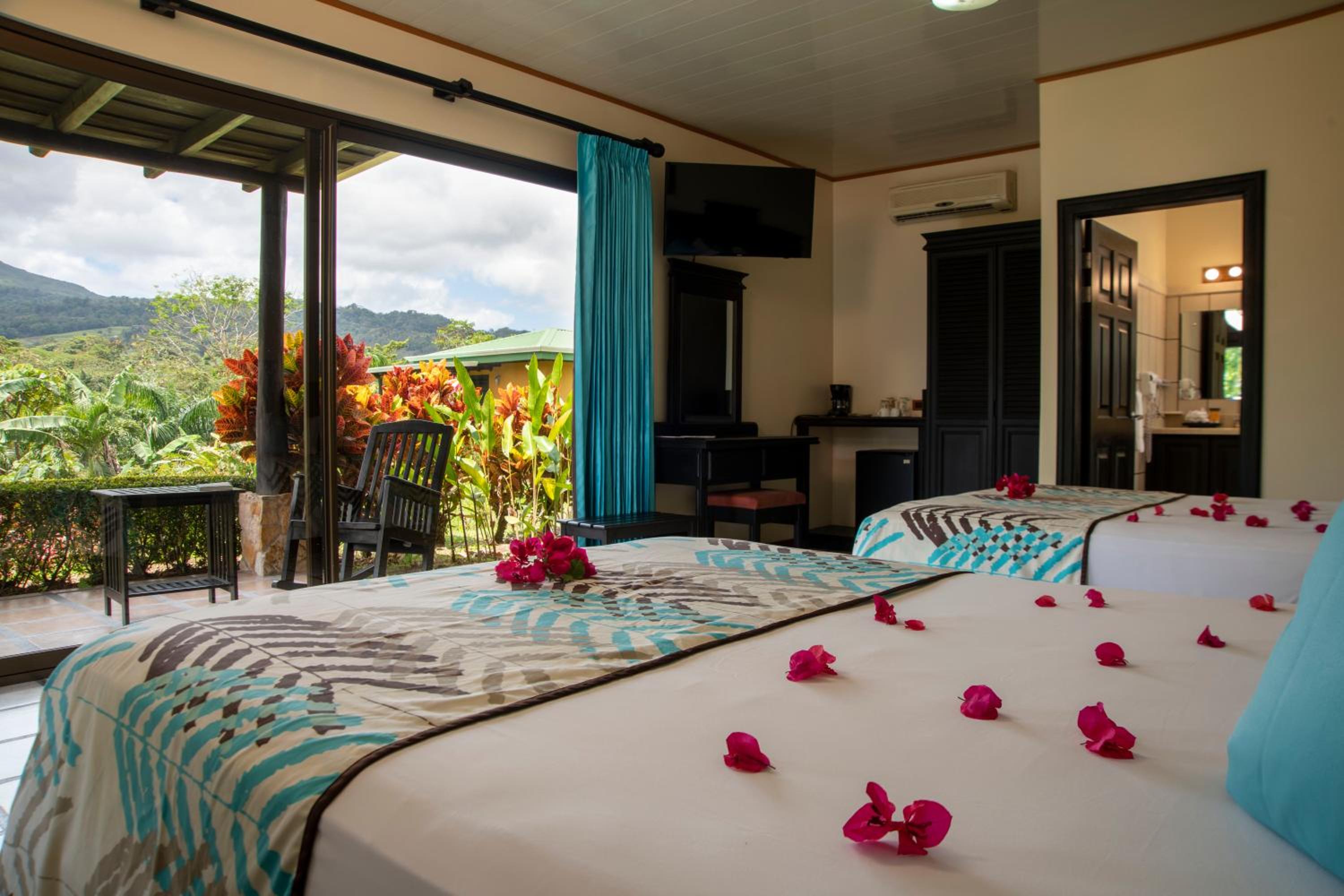
Arenal Manoa Hot Springs Resort
Duplex bungalows in rainforest gardens with mineral springs, swim-up bars and a working dairy-farm tour. Punches well above its 4-star classification.


Hotel Lomas del Volcán
Wooden cabins with kitchenettes and terraces in gardens just outside town toward the volcano, with a heated pool, swim-up bar, hot tub and breakfast included. A few guests mention musty rooms.


La Fortuna Lodge by Treebu Hotels
A small, spotless lodge about 250 m from La Fortuna's central park, walkable to restaurants and tour pickups. Guests rate the staff and breakfast highly; street noise reaches some rooms.
Indicative nightly rate for a 3-night stay, 2 adults. Live pricing at checkout.Room only. Local taxes and fees are added at checkout and can add roughly 20%.
Search all resorts & dates →How We Researched This Guide
The rules on this page come from primary sources first: SINAC's official page for Parque Nacional Volcán Tenorio (rules, hours, capacity and fees, checked October 27, 2026), the June 2025 MINAE and SINAC notice on the partial reopening of the waterfall staircase, the 2025 park closures reported by Costa Rican press, MINAE and SINAC's March 2025 reminder of the single-use plastics ban, and the 2013 PLOS ONE study on why the river is blue. Where SINAC is silent (food, boot rental, the public swimming spot), we used visitor guides updated in 2026 and say so in the text.
For the on-the-ground detail (the swim stops, the staircase queue, kids on the trail, rain and colour) we read about 450 recent guest reviews of three Rio Celeste hike tours. Tour ratings, prices and inclusions come from live listing data checked on October 27, 2026, and every tour shown has a rating of 4.5 or more, at least 50 reviews and reviews from the last six months. Rules change, so confirm anything critical with the park or your tour.
Frequently Asked Questions
Can you swim in Rio Celeste?+
Not inside Tenorio Volcano National Park. SINAC does not allow visitors to enter the river anywhere in the park, including the waterfall pool, the Laguna Azul and the Teñideros. You can swim in the Rio Celeste outside the park: at a free public spot by a bridge about 1 km past the entrance, on private riverside land, or on a tubing trip.
Why can't you swim at the Rio Celeste waterfall?+
SINAC bans entering the river throughout the park. The water is volcanic and acidic in places, the Borbollones vent gas at high temperature, up to 1,200 visitors a day would carry sunscreen into the river, and the park floods and closes in heavy rain. The lower waterfall stairs have also been closed since 2025 storm damage.
How many stairs are there to the Rio Celeste waterfall?+
About 250 steps, according to 2026 visitor guides (some count 253). Since June 13, 2025, only the top half of the staircase has been open after a CNE risk assessment, so you view the waterfall from partway down and climb those steps back up. Queues for the viewing spot are common on busy days.
What are the rules at Tenorio Volcano National Park?+
SINAC lists them as: no entering the river, no drones, no pets, no single-use plastics, no alcohol, no smoking, and stay on the trail at all times. Tickets are sold online only. Visitor guides also report that food is not allowed inside except for young children, and that bags are checked at the entrance.
Why is Rio Celeste not blue sometimes?+
The blue comes from tiny aluminosilicate particles that scatter blue light, formed where two clear streams meet at the Teñideros. Heavy rain washes mud and sediment into the river and turns it grey or brown until it clears. Light rain rarely spoils it, but a storm the night before often does. February to April are the most reliable months.
What should I wear to Rio Celeste?+
Shoes with real grip or rubber boots (visitor guides report rentals near the entrance for about $4 to $5), quick-dry clothes and a rain jacket. There is no dress code. Wear a swimsuit underneath only if your day includes a swim outside the park, and bring a reusable water bottle, since single-use plastic is banned.
Can kids hike to the Rio Celeste waterfall?+
Yes, most active school-age kids manage it. The trail is 6 km round trip with about 250 steps at the waterfall. Families report 5- to 10-year-olds doing it, but guests warn it is hard for reluctant walkers. Children 2 to 12 pay a reduced fee and under 2s are free. Some tours recommend their hikes from age 12.
Can you fly a drone at Rio Celeste?+
No. Drones are on SINAC's list of items not allowed into Tenorio Volcano National Park, which covers the waterfall, the Laguna Azul and the Teñideros. Outside the park, Costa Rica's civil aviation rules apply, and you need the landowner's permission to fly over private riverside land.
Affiliate note: Some links on this page are affiliate links. If you book through them, we may earn a small commission at no additional cost to you.