The Manuel Antonio area gives you two distinct birding zones in one morning: the national park's beach-to-rainforest transition, and the Esquipulas highlands 30 minutes inland, which has recorded more than 300 species. This guide covers the best guided tours, the key species to look for, and when to go.
What You Should Know
- Birdwatching tours near Manuel Antonio split between two zones: the national park (180 species, crowded trails) and the Esquipulas private highland reserve 30 minutes inland at 400m elevation (300+ species, no visitor caps). Most dedicated tours target Esquipulas.
- Pickups start at 5:00 to 5:30 AM; the first two hours after dawn are the highest-production window and species counts drop noticeably on afternoon departures. The national park is closed on Mondays; Esquipulas tours run regardless of park schedule.
- Tours range from $25 for a 2-hour park wildlife walk and $70 for a 1.5-hour Scarlet Macaw specialist session, through $135 to $155 for 4 to 5-hour Esquipulas birding tours with breakfast included, up to $255 for a fully private half-day with all fees covered.
- Guides photograph birds through the spotting scope onto your phone during the tour and send a full species list with image album afterward. Species counts of 40 to 88 in a morning are realistic but depend on conditions; none are guaranteed.
Birdwatching in Manuel Antonio
Birdwatching near Manuel Antonio divides into two very different experiences depending on where your guide takes you. The national park's 683-hectare rainforest and beach-edge habitat holds around 180 recorded species, including Scarlet Macaws in the canopy and kingfishers and herons along the shoreline. The Esquipulas private reserve, 30 minutes inland at 400 metres elevation, is a separate birding zone entirely: over 300 species recorded, with higher-altitude forest birds including Trogons, Manakins, King Vultures, Toucans, and a richer variety of hummingbirds and tanagers than the park supports. Most dedicated birding tours target Esquipulas specifically, and operators who combine it with a national park entry give you the widest species range in one morning, which is what we'd look for when comparing tours. Certified naturalist guides use Swarovski spotting scopes and call recognition to find birds that groups walking independently walk straight past. For the full picture of wildlife experiences based in the park, our Manuel Antonio National Park guided tours guide covers the complete park walk with all operators compared.
Esquipulas Birdwatching Tour (Fabio Araya)
5 hours, max 8 guests, covers the Esquipulas private reserve with breakfast, coffee, telescope viewing, and post-tour bird photographs included. Guests report 40 to 88 species per session. The highest-reviewed dedicated birding tour departing from Manuel Antonio.
Book NowBest Birdwatching Tours in Manuel Antonio: Side-by-Side Comparison
Six tours cover the main birdwatching formats available near Manuel Antonio, from a 1.5-hour Scarlet Macaw specialist session and a $25 park wildlife walk, through 4 to 5-hour Esquipulas small-group tours, to fully private half-day formats with all fees included.
| Tour Operator | Price | Online Rating | Ages | Capacity | Duration | Days Offered | Transportation Included | Food Included | Extras |
|---|---|---|---|---|---|---|---|---|---|
| Top Rated Esquipulas Birdwatching Tour Book Now |
$155/person | ⭐ 5.0 (22 reviews) Read Reviews |
12+ | Max 8 | 5 hours | Daily | Yes (hotel pickup) | Breakfast + coffee | Telescope, post-tour bird photos |
| Deluxe Private Birdwatching Tour Book Now |
$255/person | ⭐ 5.0 (33 reviews) Read Reviews |
All ages | Private | 3 hours | Daily | Yes (hotel + airport) | Breakfast + snacks + water | All park fees + taxes, naturalist guide |
| Birdwatching Exclusive Tour Book Now |
$155/person | ⭐ 4.9 (40 reviews) Read Reviews |
All ages | Not confirmed | 5 hours | Daily | Yes (hotel pickup) | Breakfast | Telescope, entrance fee included |
| Scarlet Macaw Tour with Professional Photos Book Now |
$70/person | ⭐ 5.0 (18 reviews) Read Reviews |
All ages | — | 1.5 hours | Daily | Yes (pickup included) | Coffee | Professional optic gear, photos taken during tour |
| Nature Tour by Jeremias Book Now |
From $25/person | ⭐ 5.0 (38 reviews) Read Reviews |
All ages | Small group | 2 hours | Daily | Not included | Not included | Spotting scope, park beach access |
| Fully Customizable Esquipulas Rainforest Private Tour Book Now |
$135/person | ⭐ 4.4 (33 reviews) Read Reviews |
6+ | Private | 4 hours | Daily | Yes (hotel pickup) | Not included | Local bilingual birding guide, customizable route |
ℹ️ All tours and information were personally reviewed by our team on June 1, 2026. Prices and availability may change — always confirm with the operator before booking. The Nature Tour by Jeremias is a general wildlife walk inside the national park, not a dedicated birding session; park entry fee is additional.
What to Expect on a Manuel Antonio Birdwatching Tour
- 015:00–5:30 AM
Hotel pickup
Pickup from Quepos and Manuel Antonio hotels is standard. The early start is a fixed requirement: the first two hours after dawn are when bird activity, calling, and foraging peak. Tours that depart later consistently record lower species counts.
- 02
Drive to Esquipulas or park entry
Most tours head to the Esquipulas private reserve first, a 30-minute drive to higher-elevation forest. The guide briefs the group on protocol during the drive: slow movement, quiet voices, single-file positioning behind the guide, and no sudden gestures. Binoculars and spotting scopes are distributed where included.
- 03
Field session in the reserve
The guide leads at a scan-and-pause pace, calling stops whenever a bird is located by sight or sound. Productive perches or fruiting trees hold the group for 20 to 40 minutes rather than a few seconds. Most guides use call recognition to draw species within scope range. The Swarovski spotting scope provides clear views of birds at 40 to 60 metres that binoculars cannot resolve.
- 04
Active birding time
Field time runs 3 to 5 hours depending on the tour format. Guests typically confirm 40 to 60 species on a productive morning; the Fabio Araya tour reviews report up to 88 species per session under good conditions. Private tours can focus on target species; group tours move at a consensus pace.
- 05
Breakfast mid-tour
On Esquipulas-format tours, an authentic Costa Rican breakfast is served at a scenic inland location after the main birding block, not before it. Some reviews describe this as a meal at a local home cooked over a wood stove; others describe a set-up in the rainforest. The Scarlet Macaw specialty tour includes coffee at the viewing spot rather than a full breakfast.
- 0610:00–11:00 AM
Return and debrief
Tours close with a species debrief and drop-off at your hotel by 10:00 to 11:00 AM. Guides send a full digital photo album taken through the scope, often with species names and habitat notes attached. This is standard practice across all operators in this area.
- 01
Hotel pickup
Pickup from Quepos and Manuel Antonio hotels is standard. The early start is a fixed requirement: the first two hours after dawn are when bird activity, calling, and foraging peak. Tours that depart later consistently record lower species counts.
5:00–5:30 AM - 02
Drive to Esquipulas or park entry
Most tours head to the Esquipulas private reserve first, a 30-minute drive to higher-elevation forest. The guide briefs the group on protocol during the drive: slow movement, quiet voices, single-file positioning behind the guide, and no sudden gestures. Binoculars and spotting scopes are distributed where included.
- 03
Field session in the reserve
The guide leads at a scan-and-pause pace, calling stops whenever a bird is located by sight or sound. Productive perches or fruiting trees hold the group for 20 to 40 minutes rather than a few seconds. Most guides use call recognition to draw species within scope range. The Swarovski spotting scope provides clear views of birds at 40 to 60 metres that binoculars cannot resolve.
- 04
Active birding time
Field time runs 3 to 5 hours depending on the tour format. Guests typically confirm 40 to 60 species on a productive morning; the Fabio Araya tour reviews report up to 88 species per session under good conditions. Private tours can focus on target species; group tours move at a consensus pace.
- 05
Breakfast mid-tour
On Esquipulas-format tours, an authentic Costa Rican breakfast is served at a scenic inland location after the main birding block, not before it. Some reviews describe this as a meal at a local home cooked over a wood stove; others describe a set-up in the rainforest. The Scarlet Macaw specialty tour includes coffee at the viewing spot rather than a full breakfast.
- 10:00–11:00 AM06
Return and debrief
Tours close with a species debrief and drop-off at your hotel by 10:00 to 11:00 AM. Guides send a full digital photo album taken through the scope, often with species names and habitat notes attached. This is standard practice across all operators in this area.
Our experience (the spotting scope and photo delivery): The Swarovski scopes used by these guides mount directly onto your phone, letting the guide photograph birds through the lens onto your device in real time. Birds at 40 to 60 metres up become identifiable down to individual plumage markings. Guides also share a full post-tour album with species names attached — reviewers consistently cite this as one of the most memorable parts of the day. Have your phone unlocked and screen brightness turned up before the first stop; guides who ask upfront get more shots from guests who are ready.
Our experience (Esquipulas vs. the national park): Reviews from guests who have done both consistently favour Esquipulas for species variety and guide-to-guest time. The national park trail produces Scarlet Macaws reliably, but the trail's general tourist traffic means groups stop frequently regardless of bird activity. Esquipulas, being private land without general visitors, allows the guide to work productive spots without time pressure. Tours that combine both sites cover the most ground in a single morning.
Best Birdwatching Tours in Manuel Antonio
Esquipulas Birdwatching Tour (Fabio Araya)
Rated 5.0 across 22 reviews, this is our first choice for most visitors who want genuine birding over a general wildlife walk. The 5-hour morning session covers the Esquipulas private reserve with a maximum of 8 guests; breakfast and coffee are included, and pickup runs from Quepos and Manuel Antonio hotels at 5:00 to 5:30 AM. Guests report species counts between 40 and 88 per session depending on conditions; Trogons, Fiery-billed Aracaris, Scarlet Macaws, and Charming Hummingbirds are regular sightings. Guides photograph birds through a Swarovski telescope onto your phone and share a full species list and image album afterward. At $155 per person, this is the strongest combination of specialist guide, small group size, and full inclusions on the list.
Birdwatching Exclusive Tour
Rated 4.9 across 40 reviews, the highest review count of any birding tour in this guide. The 5-hour session covers Esquipulas-style highland forest habitat with hotel pickup, breakfast, a spotting telescope, and the park entrance fee all included at $155 per person. All ages are welcome. We like this option for travelers who want everything bundled in one price without any day-of surprises; the entrance fee inclusion removes the most common unexpected cost that catches guests off guard on other tours.
Deluxe Private Birdwatching Tour
Rated 5.0 across 33 reviews. The private format gives your group 3 hours of exclusive guide time in the Esquipulas area, covering Trogons, Manakins, Toucans, and Tanagers. Breakfast, snacks, and water are included, as are all park entry fees and taxes; hotel and airport pickup is available. At $255 per person, this is the premium option. We think the tradeoff is worth it for couples or small groups of three: the per-person cost approaches the small-group rate, and private format means the guide can hold a productive spot for 20 minutes without coordinating with other participants. Group tours have to keep moving.
Fully Customizable Esquipulas Rainforest Private Tour
Rated 4.4 across 33 reviews. A 4-hour private session in the Esquipulas reserve with a local bilingual birding specialist, hotel pickup, and a fully customizable route for guests aged 6 and up. At $135 per person, this is the most affordable private-format option in the guide, and when it runs well, reviewers describe outstanding species variety, personalised routing, and a traditional Costa Rican breakfast as a mid-tour highlight. Food is not included in the listed price on some packages; confirm what is bundled. The main caution: two independent reviewers in December 2025 and February 2026 reported complete no-shows with no communication from the operator, and two others from 2023 to 2024 received a significantly shorter tour than listed. We'd confirm your booking and pickup details directly with the operator the day before and have a backup plan.
Scarlet Macaw Tour with Professional Photos
Rated 5.0 across 18 reviews. A 1.5-hour specialist session targeting Scarlet Macaws at known gathering spots near Manuel Antonio, with professional optical gear and a professional camera used throughout; all photos from the session are shared with guests afterward. Coffee is included; pickup is provided. At $70 per person, this is the most accessible birdwatching experience in the guide. Despite the name, reviewers consistently report 30 to 88 total species per session, with King Vultures, Trogons, Aracaris, and Manakins appearing alongside the macaws. One reviewer who took an afternoon half-day still had a productive session and spotted the King Vulture, suggesting this tour has more scheduling flexibility than the Esquipulas-format tours. We'd book this for travelers with limited time, guests who are not core birders but want the Scarlet Macaw specifically, or as a short activity before a beach day.
Nature Tour by Jeremias
Rated 5.0 across 38 reviews. A 2-hour guided wildlife walk inside Manuel Antonio National Park covering the main trail with a spotting scope, ending at the park beach. Wildlife includes monkeys, sloths, birds, and insects; transport and food are not included, and park entry is payable separately. At $25 per person this is the lowest-cost option, but it is a general wildlife walk rather than a specialist birding session. We'd choose this for casual visitors who want a short guided introduction to the park rather than a dedicated morning of birding, or as an add-on to a beach day when the primary goal is not species count.
Best Time for Birdwatching Near Manuel Antonio
The Manuel Antonio area supports year-round birding, with December through September considered the optimal overall period. The practical split is between the dry season's visibility advantages and the green season's migrant species arrivals.
For most travelers, December through April is the practical first choice for comfort, visibility, and macaw nesting activity. Dedicated listers targeting the broadest species range should consider October or November for the migrant arrival window alongside resident species.
The driest and clearest months. Thinner leaf cover in the forest makes high-canopy species easier to locate. Scarlet Macaw nesting activity in the national park is most visible January through March, and guides report consistently higher first-hour sighting rates during this window.
Still excellent conditions with relatively low rainfall, particularly April through June. The forest stays lush and productive. Endemic species like the Charming Hummingbird and Fiery-billed Aracari are active year-round; this window has fewer visitors and competitive pricing.
Heavier afternoon rain is common from September onward, but morning birding sessions remain productive. Shorebirds and waders along the park coast are more diverse August through October. North American migratory warblers and flycatchers begin arriving in October, adding considerably to the species list through the winter.
Best Birdwatching Spots Near Manuel Antonio
Esquipulas Private Reserve
The Esquipulas forest reserve, 30 minutes from Manuel Antonio at 400 metres elevation, is the main target for dedicated birding tours in the area and has recorded over 300 bird species. The elevation shift from the coast supports montane species not present in the national park: Trogons, Manakins, Turquoise Cotingas, King Vultures, and a more diverse hummingbird and tanager community including two endemics. The reserve is private land and is not accessible without a licensed guide. Most people don't realize the tour regularly produces non-avian wildlife alongside the bird list: eyelash vipers, jaguarundi, sloths, and monkeys have all appeared in recent sessions, making it a broader wildlife experience than the name suggests.
Manuel Antonio National Park
The national park's 683-hectare rainforest and beach habitat is best for coastal and lowland species: Scarlet Macaws in the canopy along the main trail between the entrance and Playa Espadilla Sur, herons and kingfishers along the rocky shoreline, Brown Pelicans and Magnificent Frigatebirds offshore, and parrots, flycatchers, and motmots throughout the forest interior. The Cathedral Trail adds secondary forest habitat beyond the main route. The park closes on Mondays and requires advance SINAC reservations; birding is most productive in the first 90 minutes after the 7:00 AM opening.
Damas Island Mangrove Estuary
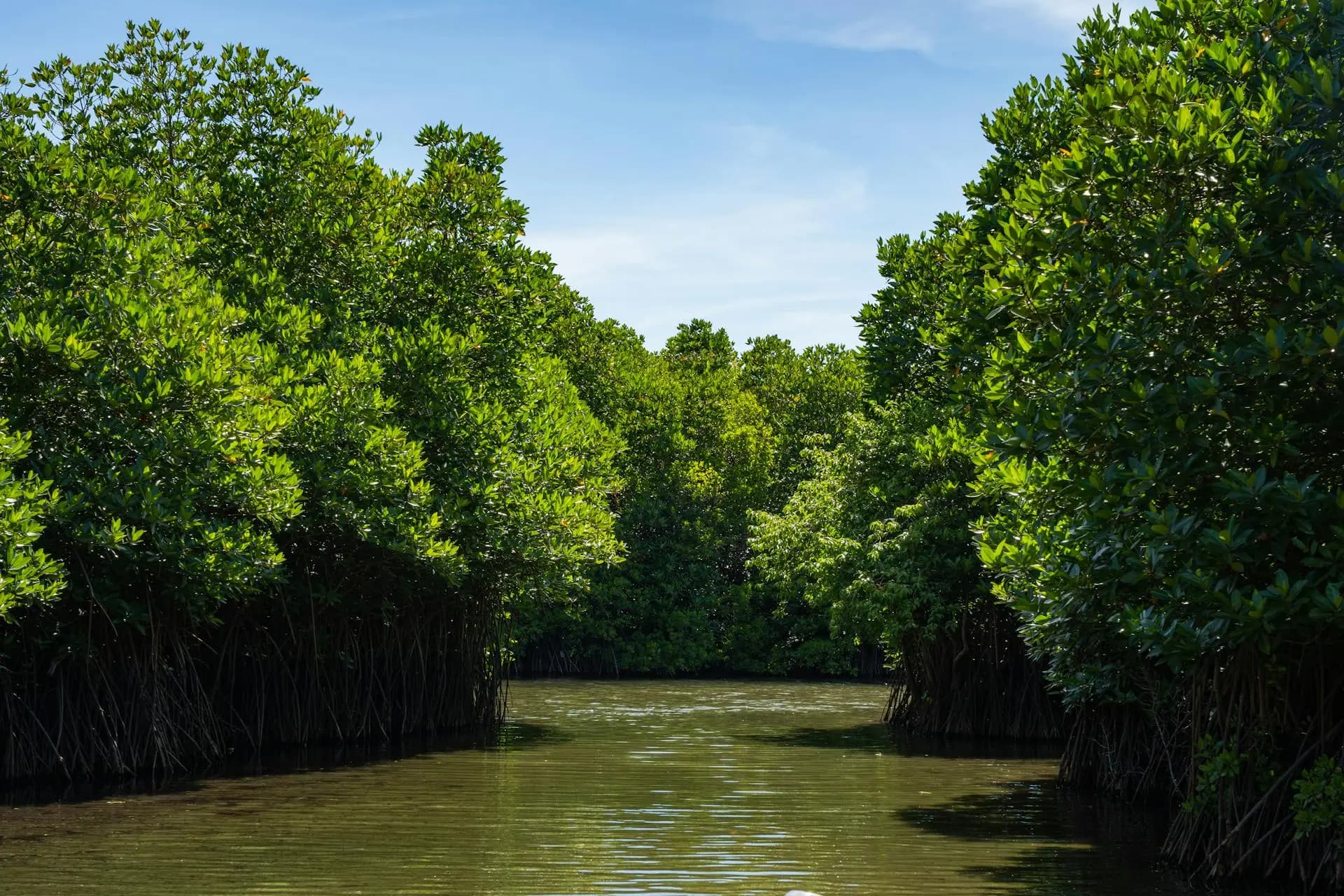
The Damas Island mangrove channels, 10 km north of Quepos, hold a completely different bird community: Boat-billed Herons, Ringed Kingfishers, Anhingas, Yellow-crowned Night Herons, and Ospreys hunting the tidal channels. Boat tours navigate at water level beneath roosting birds in a way no forest trail can replicate. This is a natural afternoon pairing with an early-morning Esquipulas session for a high-count day. See our Damas Island mangrove tours guide for operators and timing. For serious wildlife travelers weighing a remote rainforest against the easy coastal park, our Corcovado vs Manuel Antonio comparison covers the tradeoffs.
Hotel Gardens Between Quepos and the Park
The corridor of gardens and secondary forest along the road from Quepos to the park entrance is consistently productive for endemic species: Cherrie's Tanagers (Ramphocelus costaricensis) and Fiery-billed Aracaris appear in fruiting trees throughout the day, and hummingbirds feed at flowering shrubs in hotel grounds. Properties including Arenas del Mar have private forest reserves on-site. An hour in the garden before your guided tour regularly adds species at no extra cost.
Birds of Manuel Antonio: Species to Look For
The Manuel Antonio area gives you access to two distinct bird communities: the coastal lowland species of the national park and the highland forest birds of the Esquipulas reserve. Here are the eight species that drive most dedicated birding visits to the area.
Scarlet Macaw (Ara macao)
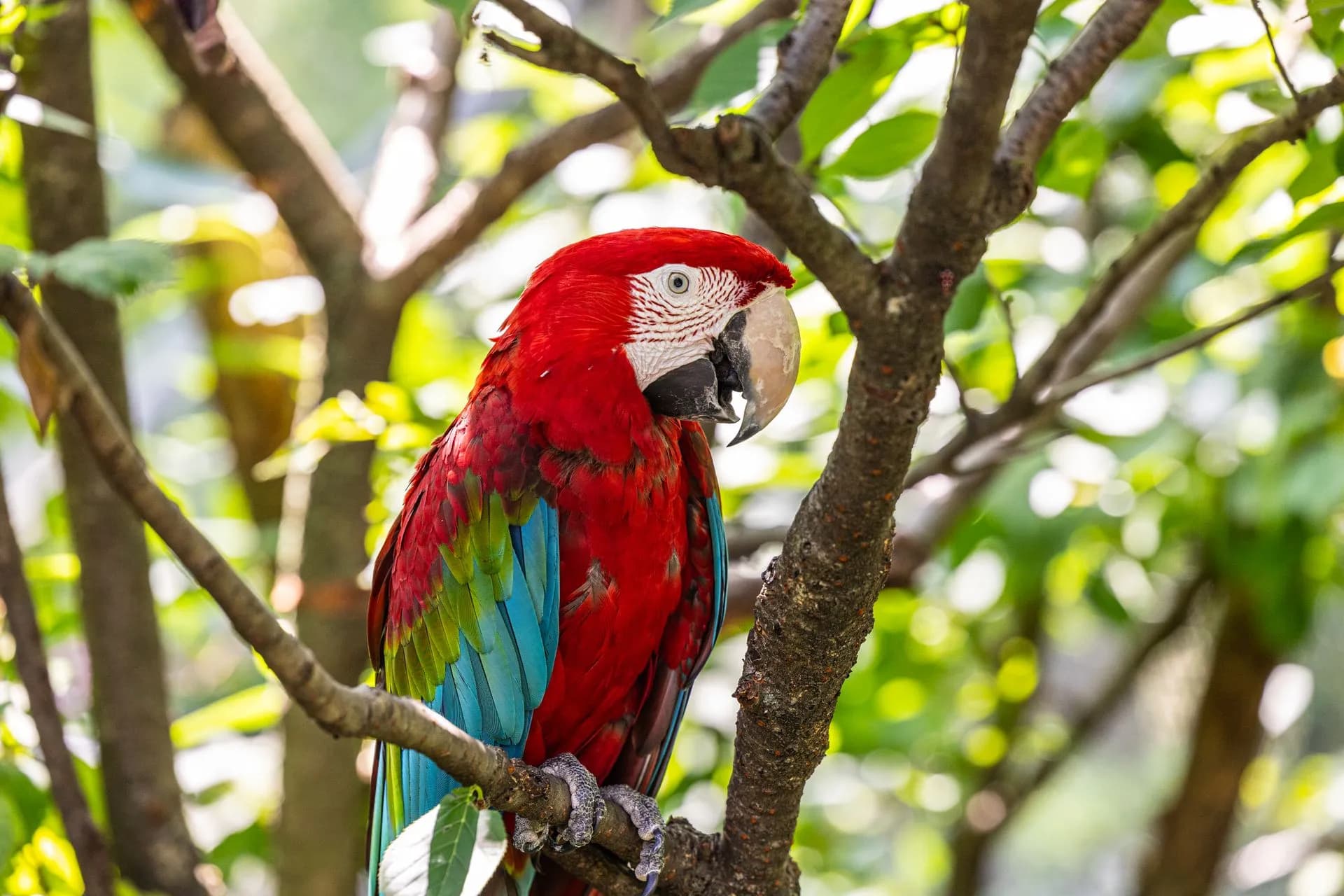
The Scarlet Macaw is the signature bird of Manuel Antonio and one of the most visually striking species in the Americas: vivid red body, yellow and blue wing panels, and a wingspan approaching a metre. Manuel Antonio holds one of the few recovering Pacific lowland populations in Central America. They are most reliably spotted in the tall emergent trees along the main park trail in the first 90 minutes after the 7:00 AM opening. The birds are typically seen in pairs or small groups calling from the canopy before moving deeper into the forest as visitor numbers increase. A dedicated Scarlet Macaw specialty tour targets known roosting and gathering spots with a professional scope, providing photography-quality views that are difficult to achieve from the park trail alone.
Fiery-billed Aracari (Pteroglossus frantzii)
Endemic to Costa Rica and western Panama, the Fiery-billed Aracari is one of two species you cannot see anywhere outside this range. The bill is distinctive: bright orange-red on the upper mandible, with a sharp black cutting edge. It is a forest-edge species, which means it appears as readily in hotel gardens and fruiting trees along the road to the park as inside the reserve itself. Guides familiar with current fruiting tree locations can reliably find it without entering the national park. It travels in small, noisy groups and is often heard before it is seen.
Charming Hummingbird (Amazilia decora)
The second Costa Rica and Panama endemic on the Esquipulas list. The Charming Hummingbird is a medium-sized hummingbird with an iridescent green back, chestnut-orange belly, and a straight red bill. It is primarily a lowland species found in forest edge and secondary growth around Esquipulas and the Quepos corridor, rather than inside the national park. Flowering trees and shrubs in hotel gardens are reliable spots, particularly in the early morning before heat sets in. A guide with a spotting scope makes a significant difference in being able to observe the plumage detail that separates this species from the more common Rufous-tailed Hummingbird.
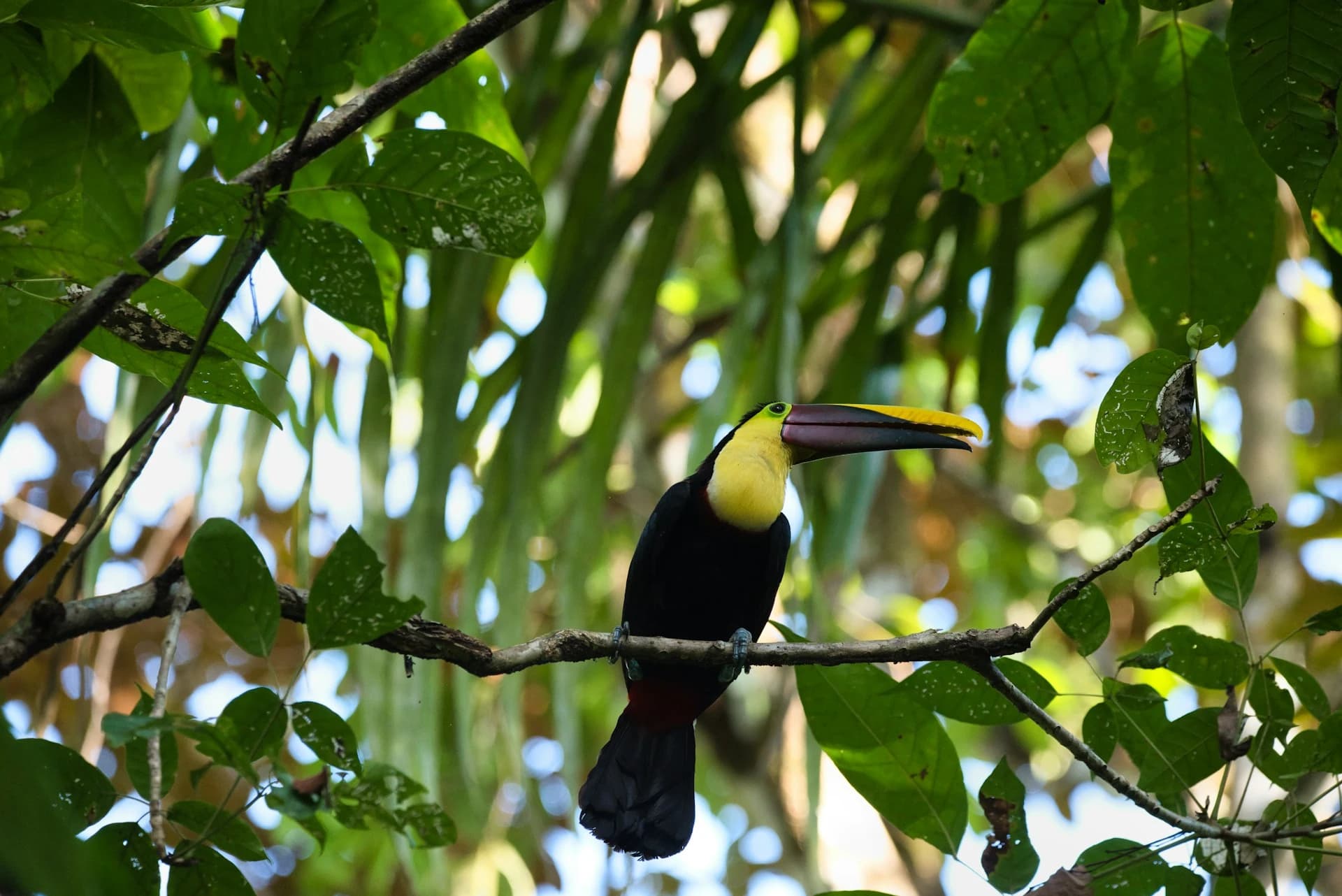
Chestnut-mandibled Toucan (Ramphastos ambiguus swainsonii)
The largest toucan in Central America, with a bill nearly half the length of its body coloured yellow and chestnut. It is loud and conspicuous — the yelping call carries through the forest and guides often locate it by sound before the scope is even raised. Found in both the national park and the Esquipulas highland forest. It travels in pairs or small groups and tends to perch in exposed positions at the canopy top, making it one of the more photographable large forest birds in the area. Reviewers consistently name it among the most memorable sightings.
Turquoise Cotinga (Cotinga ridgwayi)
A Esquipulas specialist. The male Turquoise Cotinga is one of the most visually striking birds in Costa Rica: electric cobalt-blue with a contrasting purple throat patch. The female is brown and heavily spotted, and the two sexes look so different that beginners often assume they are separate species. It sits high and still in the forest canopy for long periods, which makes it easy to miss without a guide scanning the treetops. Found at middle elevations in the Esquipulas area rather than the coast; it does not appear on national park trail lists. A quality spotting scope is essentially required to appreciate the colour at canopy height.
King Vulture (Sarcoramphus papa)
One of the most sought-after soaring birds in the region and a regular subject of guest requests. The King Vulture is large, with a multicoloured bare head ranging from orange to yellow to purple, a white body, and black flight feathers — unmistakable in flight once identified. It typically appears as thermals build in late morning, soaring in wide circles above the forest canopy. Reviewers across multiple tours specifically name it as one of the most memorable encounters of their trip, in some cases describing it as the single bird they came specifically to see. Multiple guides in the area name their regular King Vulture viewing spots as a standard stop on Esquipulas-area tours.
Trogons
Several trogon species are found in the Esquipulas highlands. The Black-headed Trogon and Baird's Trogon are the most commonly reported; the Resplendent Quetzal appears at higher elevations and has been found by guides who adjusted their route in response to a specific guest request. Trogons are characterised by their upright, still perching posture and their tendency to sit motionless for minutes at a time, which makes them hard to spot without a guide but easy to view once located. They perch in the forest midstory rather than the canopy, and their call is distinctive enough for guides using call recognition to locate them before the group reaches the perch.
Red-capped Manakin (Ceratopipra mentalis)
A small forest bird with one of the most unusual courtship behaviours in the bird world: the male performs a "moonwalk" display on a horizontal branch, shuffling backward at high speed while vibrating his wings to produce a snapping sound. The male is jet black with a vivid red head; the female is olive green. Found in the Esquipulas lowland and middle-elevation forest rather than the national park beach trail. Multiple reviewers across Esquipulas-format tours specifically mention the red-capped manakin display as one of the standout moments of their morning. It requires a guide who knows the active display perches, as the behaviour occurs only at specific leks in the forest.
How Much Do Birdwatching Tours Near Manuel Antonio Cost?
Guided birdwatching options near Manuel Antonio span from $25 for a short general wildlife walk to $255 for a fully private half-day with all fees included. The six tours in this guide fall into three clear tiers based on format, duration, and what is bundled.
Two options at this level. The Nature Tour by Jeremias is a 2-hour general wildlife walk inside the national park at $25, with park entry additional; suited to casual visitors who want a brief introduction. The Scarlet Macaw Tour with Professional Photos runs 1.5 hours at $70 with pickup and coffee included; a targeted specialist session rather than a broad birding experience.
Three options here. The Fully Customizable Esquipulas Rainforest Private Tour is $135 for a 4-hour private session with a bilingual birding specialist and hotel pickup; food is not included. The Esquipulas Birdwatching Tour and the Birdwatching Exclusive Tour both run 5 hours at $155 with hotel pickup and breakfast included; the Birdwatching Exclusive also covers the park entrance fee. Guests in this tier consistently report 40 to 70 confirmed species per session.
The Deluxe Private Birdwatching Tour is the only fully all-inclusive private option: 3 hours of exclusive guide time, hotel and airport pickup, breakfast, snacks, water, and all park fees and taxes covered. Best for photographers, dedicated listers, or groups who want to move entirely at their own pace.
We like the $155 small-group format for most visitors: 5 hours of dedicated birding, specialist guide, breakfast included, and species lists with photos delivered afterward. For the widest range on a budget, the Scarlet Macaw Tour at $70 is a strong standalone morning if you have limited time.
From Our Experience
From what we've seen across reviews, telling the guide your target species the evening before makes a bigger difference than most people expect: guides in this area adjust routes, hold the group at productive spots longer, and have found requested birds like King Vulture and Quetzal that other groups on the same morning missed.
Tips for Birdwatching Near Manuel Antonio
- The national park is closed on Mondays: This is a common scheduling mistake. If your birding day falls on a Monday, tours that include national park entry will be affected; Esquipulas-only sessions run regardless of the park schedule. Confirm your operator's plan before booking.
- A 5:00 AM pickup is not flexible: The first two hours after dawn are the highest-production window for every species on the list. Tours that push departure back even an hour lose a meaningful portion of the morning chorus and early foraging activity. Book with full intent to be ready at the stated pickup time.
- Wear neutral colours: Greens, tans, and khakis reduce contrast against the forest background. Guides at Esquipulas note that birds flush at measurably greater distances from brightly dressed groups. This is a practical advantage, not an aesthetic preference.
- Bring your own binoculars and a small towel: Most tours provide a spotting scope, but personal binoculars let you follow individual birds while the guide is working the scope for other participants. Also bring a small towel; humidity in the lowland forest is high year-round and sweating is significant enough that reviewers specifically flag it as a packing consideration.
- Name your target species to the guide before the tour: Guides in this area routinely adjust routes and add detours when guests communicate a wish list in advance. King Vulture, Resplendent Quetzal, and specific manakins all appear in reviews as requested birds that were found because the guide planned the morning around them. A quick message to the operator the evening before is enough.
- Verify the all-in cost before booking: The Esquipulas-format tours consistently include breakfast. However, park entry (around $30 per person) and transport are not always bundled into the quoted price on some listings; at least one reviewer was surprised by these appearing as additional charges on the day. Confirm the full cost with the operator before paying.
- On a rainy morning, ask your operator how the tour adapts before cancelling: Some guides shift to feeder-watching at a rainforest lodge when the forest is wet, which produces excellent close-up scope views with less walking. A morning that starts raining at 5 AM can still be highly productive by 7 AM once conditions clear; operators familiar with the area plan for this rather than cancelling.
- Pair a morning birding tour with an afternoon mangrove session for the widest species range: The Damas Island mangrove estuary holds water birds and coastal species that share almost no overlap with Esquipulas forest birds. Combining an early Esquipulas session with an afternoon boat tour is the highest-count approach for a single day. See our Damas Island mangrove tours guide for operators.
- Corcovado National Park is the next step for serious listers: If Manuel Antonio leaves you wanting more, the Osa Peninsula holds over 400 bird species in primary rainforest with far fewer visitors. It requires an overnight or a very early start from Manuel Antonio. Our Corcovado National Park tours guide covers logistics and operators.
- Visiting in February? Our Manuel Antonio in February guide covers peak dry season, when clear, dry mornings make February one of the best birding months of the year.
- Night tours add species your morning session cannot reach: Owls, nightjars, and the Common Potoo are unavailable during daylight. A night tour in the forest edge or the Damas Island channels adds 10 to 20 birds with no overlap from your morning list. See our Manuel Antonio night tour guide for what to expect.
How We Selected These Tours
The Costa Rica Day Trip Team evaluated birdwatching tours near Manuel Antonio based on naturalist guide certification, species identification credibility in reviews, habitat coverage beyond the national park, and group size. For birding specifically, guide expertise and spotting scope quality matter more than logistics, so we weighted these factors heavily and excluded operators where reviews indicated passive trail walking, misidentifications, or inconsistent pickup. Every tour listed holds a verified booking presence with a minimum 4.4-star rating. The Esquipulas Rainforest Private Tour (d4507-45683P8) is included for its customizable format and bilingual birding specialist; confirm logistics directly with the operator before booking. Tours were selected to cover three types of birder: first-time visitors who want an accessible introduction to Costa Rica's Pacific coast species, enthusiasts targeting endemics and higher species counts, and photographers or dedicated listers who need a private session with undivided guide attention.
Frequently Asked Questions
What birds can you see in Manuel Antonio?+
The national park holds around 180 species including Scarlet Macaws, Blue-crowned Motmots, Chestnut-mandibled Toucans, and a range of herons, kingfishers, and parrots. The Esquipulas highland reserve 30 minutes away has recorded over 300 species and adds Trogons, Manakins, King Vultures, and two endemics: the Fiery-billed Aracari and Charming Hummingbird, both found only in Costa Rica and western Panama.
What is Esquipulas and why do birdwatching tours go there?+
Esquipulas is a private forest reserve about 30 minutes from Manuel Antonio at 400 metres elevation, with over 300 recorded bird species. It is not subject to the national park's daily visitor cap or Monday closure, and the higher elevation supports montane species including Trogons, Manakins, and Turquoise Cotingas that are absent from the park. Most dedicated birding tours use Esquipulas as their primary site.
Do I need a guide for birdwatching near Manuel Antonio?+
Esquipulas is private land and requires a licensed operator. Inside the national park, a guide is not legally required but makes a significant practical difference: specialist guides use Swarovski spotting scopes and call recognition to find birds that independent visitors walk past. For endemic species, guide presence consistently produces sighting counts two to three times higher than independent walks.
When is the best time of year for birdwatching near Manuel Antonio?+
December through April offers the clearest conditions, thinner leaf cover, and peak Scarlet Macaw nesting activity. October and November bring the highest diversity of North American migratory species. The overall optimal window is December through September. Morning departures at 5:00 to 5:30 AM outperform any afternoon session year-round.
How long does a birdwatching tour in Manuel Antonio last?+
Tours in this guide run from 1.5 to 5 hours. The Scarlet Macaw specialist session is 1.5 hours; the general wildlife park walk is 2 hours; the private customizable Esquipulas tour is 4 hours; the Deluxe Private is 3 hours; and both 5-hour Esquipulas format tours include breakfast mid-tour. Choose based on how much time you want in the field, not just duration.
Are birdwatching tours near Manuel Antonio suitable for beginners?+
Yes. Guides calibrate the experience to the group and explain identification features at each sighting. First-time birders who have never used a spotting scope consistently confirm 30 to 50 species on a morning tour. The terrain at Esquipulas involves unpaved forest trails; reasonable mobility is needed but no special fitness is required.
How much do birdwatching tours near Manuel Antonio cost?+
Prices range from $25 for a 2-hour general park wildlife walk (park entry additional) to $255 for a fully private 3-hour session with all fees covered. The Scarlet Macaw specialist tour runs 1.5 hours at $70. The mid-range tier sits at $135 to $155 for 4 to 5-hour Esquipulas birding sessions; both $155 options include hotel pickup and breakfast. The $155 format with breakfast and entrance fee included is the best all-in value for dedicated birders.
Affiliate note: Some links on this page are affiliate links. If you book through them, we may earn a small commission at no additional cost to you.