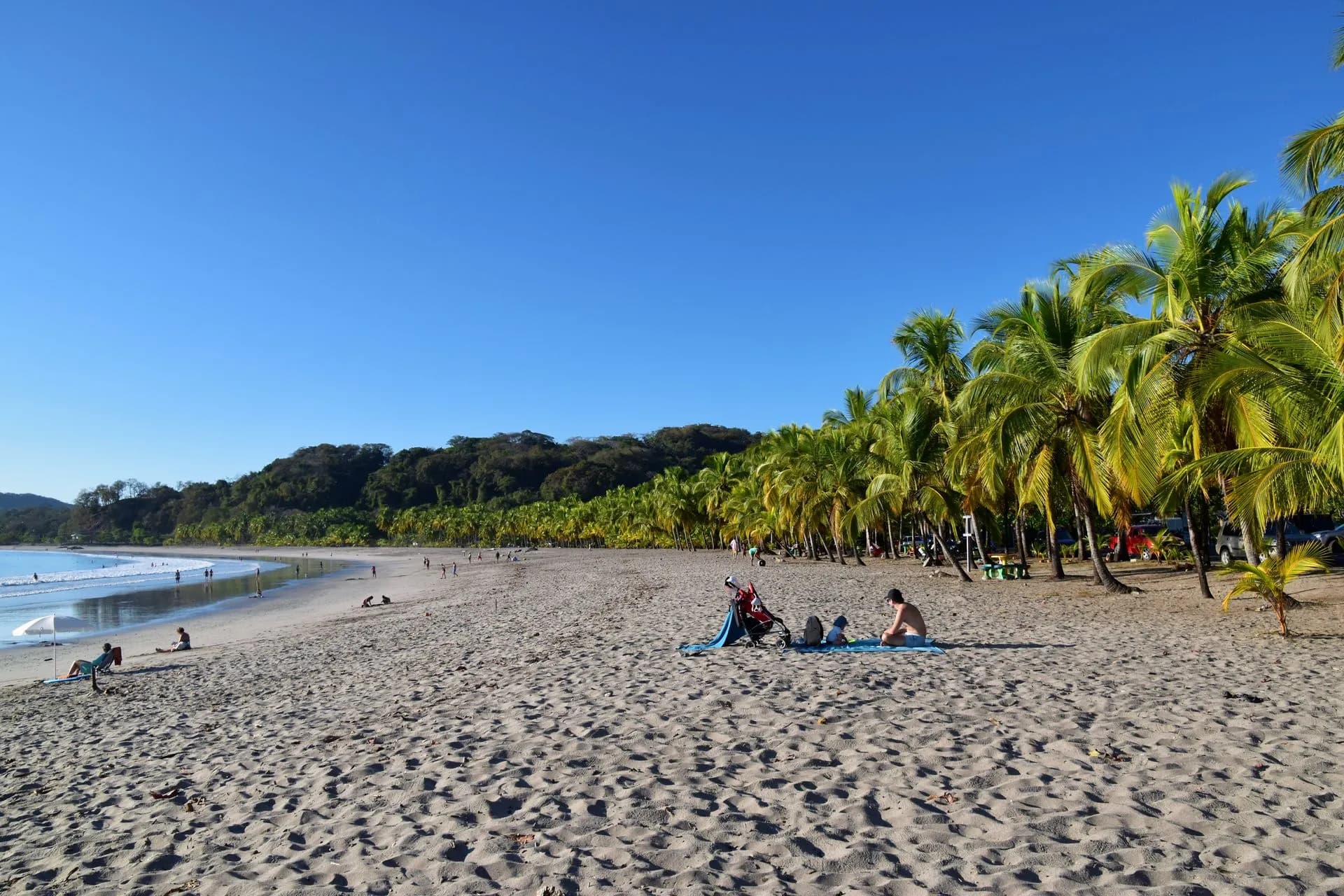
January is peak dry season in Tamarindo: near-zero rain, reliable sun, and offshore winds that groom the surf. Those same winds chop up the sea and can drop the water temperature sharply, which changes what is worth booking. Here is the honest month-by-month picture.
What You Should Know
- January is the driest, most reliable weather month in Tamarindo: highs around 32°C (89°F), almost no rain, and sun nearly every day. It is the easiest month of the year to plan an itinerary around and the hardest one to get a deal in.
- The Papagayo winds run from late December through March and define the month more than the temperature does. They blow offshore, which grooms the surf into its best shape of the year, and they also chop up the outer water and push warm surface water out to sea.
- That upwelling is the tradeoff most visitors do not price in. Water that sat near 29°C (84°F) in the green season can drop into the low 20s°C (low 70s°F) within days, and boat trips to the Catalinas get bumpier. Snorkeling is the activity that suffers most.
- Guanacaste's tropical dry forest is brown and leafless by January, which makes wildlife noticeably harder to find than in the green season. If sloths and birds are the priority, the trips that travel inland to wetter forest are worth the drive.
Tamarindo in January: Overview
⭐ Best value window: January 8 to 31. The Christmas and New Year peak breaks around the 7th, and rates drop noticeably while the weather stays much the same. You get comparable sun, the same offshore winds and the same surf with thinner crowds, which is what makes the second half of the month the best value stretch of the dry season. It is a value call rather than a weather one: the first week is not worse weather, it is busier and more expensive.
| Factor | January conditions |
|---|---|
| Weather | Excellent: the driest, sunniest, most predictable month |
| Crowds | Busy: holiday peak through Jan 7, high but easier after |
| Prices | Highest of the year: the most expensive stretch of the year |
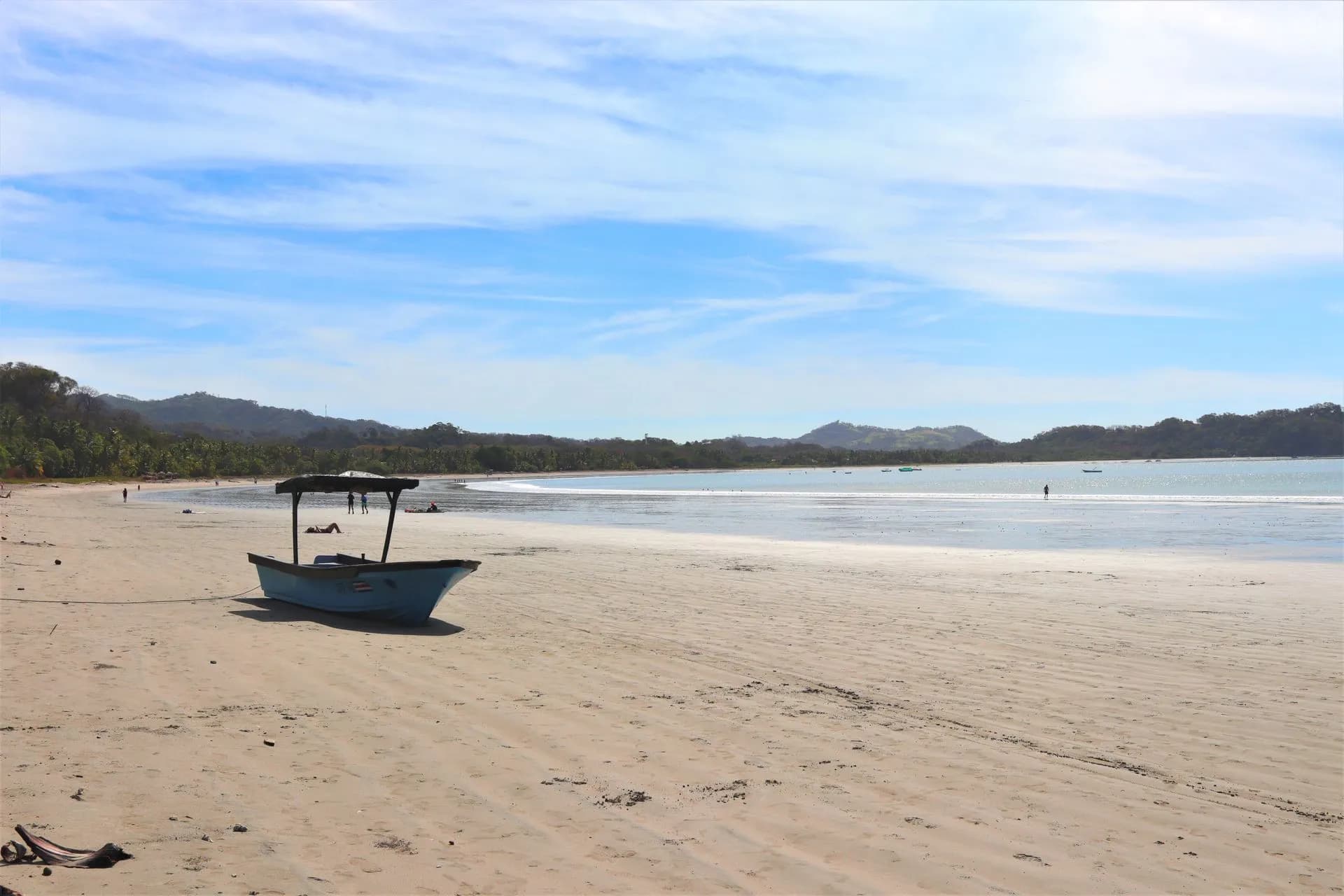
| Beaches | Excellent: reliable sun, though windy in the afternoons |
| Surf | Excellent: offshore winds groom the waves all month |
| Snorkeling | Poor: chop and cold upwelling both work against you |
| Wildlife | Limited: dry forest is leafless, animals harder to spot |
| Turtle nesting | Good: in season, past the October to December peak |
| Families | Very good: easy weather, but the priciest month to travel |
| Couples | Very good: reliable sunsets, busy restaurants |
💰 Average January hotel prices (Tamarindo town, mid-range):
Dec 20 to Jan 7 (holiday peak): ~$280–380/night · Jan 8 to 31: ~$180–250/night
Indicative mid-range estimates gathered in September 2026, not quoted rates. Actual prices vary widely by property, location and booking lead time, and the holiday premium is the pattern worth trusting here rather than the exact figures.
January is the month Tamarindo is selling when it sells the dry season. Rain effectively stops, the sun is dependable enough that you can book an outdoor activity three days out without a contingency plan, and the sunsets that fill the town's restaurant terraces show up every evening. If your priority is weather certainty, no other month competes.
What the brochures leave out is the wind. From late December through March the Papagayo winds blow hard from the northeast, offshore at this stretch of coast. For surfers that is good news: offshore wind holds the wave face up and cleans it, which is the main reason January and February are among the busiest months for Tamarindo's surf schools. For anyone planning a catamaran day or a snorkel trip to the Catalinas, it is the opposite story, and we would plan the water half of the trip around it rather than hope.
Our take: we would book January for surfing, beach time and inland day trips, and we would treat snorkeling as a bonus rather than a centerpiece. Most people don't realize that the single biggest variable in a Tamarindo January is not rain or heat, both of which are settled, but what the wind is doing to the water on the morning you want to get in it.
Tamarindo Weather in January
| Metric | January |
|---|---|
| Avg High | 32°C (89°F) |
| Avg Low | 24°C (75°F) |
| Water Temp | 21–28°C (70–82°F), upwelling dependent |
| Rain Days | ~1–2 |
| Humidity | Moderate, around 70% |
| Wind | High (Papagayo season) |
| Rain Risk | Very low, the driest stretch of the year |
Temperature and Humidity
Published climate datasets put daytime highs around 32°C (89°F), barely moving across the month, with overnight lows near 24°C (75°F). Guanacaste is hot year-round, so January is not cooler than the green season in absolute terms; what changes is the humidity, which eases to around 70% and makes the same temperature feel considerably more comfortable. The wind helps too. Midday in direct sun is genuinely strong, and shade is scarcer in dry-forest country than the photos suggest.
Rain Pattern
There is effectively no rain. January sits in the middle of Guanacaste's dry season, and most datasets put it at one or two wet days for the whole month, with total rainfall in single-digit millimetres. Sources disagree on the exact counts more than you would expect for a month this dry, so treat the numbers as indicative rather than precise. What they all agree on is the shape: January is at or near the driest point of the year. In practice this means you can plan an outdoor day without a rain contingency, which is not true of any month from May through November.
Sea and Wind Conditions
This is where January gets interesting. The Papagayo winds blow from the northeast from late December into March, and because they run offshore here they push warm surface water away from the coast. Colder water rises to replace it. The practical effect, widely described by operators and divers working this coast, is that sea temperature becomes unstable: it can sit near 28°C (82°F) and then drop into the low 20s°C (low 70s°F) when the wind blows hard, before recovering. How far and how fast varies year to year, so treat the range as the honest answer and any single average as misleading.
Wind typically builds through the day, so mornings are generally calmer than afternoons. It is a prevailing pattern rather than a guarantee, but it is consistent enough that it drives most of the scheduling advice on this page: if you want flat water, take the earliest departure available.
Crowds and Prices in Tamarindo in January
January splits cleanly into two different months, and the line falls around the 7th.
January 1 to 7: the tail of the holiday peak
The Christmas and New Year period is the single busiest, most expensive stretch of the Tamarindo calendar. Restaurants need reservations, the popular tours sell out days ahead, and hotel rates commonly run around 50% above what the same room costs three weeks later. If these dates are fixed for you, book accommodation and any tour with limited capacity well in advance; if they are not, this is the easiest week of the year to avoid.
January 8 to 31: the sweet spot
Once the holiday travellers leave, rates drop sharply while the weather does not change at all. The town stays busy, because this is still high season and the snowbird crowd is settled in for months, but the pressure comes off: you can get a table, you can book a tour with two days' notice, and the beach has room on it. We would give this the edge for anyone with flexible dates who wants dry-season conditions without dry-season peak pricing.
Booking lead times that actually matter
Most Tamarindo tours have enough capacity that a few days' notice is fine outside the holiday window. The exceptions are the small-group and private trips, the catamarans on good-weather days, and anything that runs only a few times a week. Surf lessons are the most forgiving: schools run multiple sessions daily and can usually fit you in the same day.
January's Seasonal Draws: Turtle Nesting and Peak Surf
Leatherback nesting at Playa Grande
Sea turtles nest near Tamarindo from roughly October through April, with the nesting beaches sitting inside Las Baulas National Marine Park at Playa Grande, roughly 30 minutes away. January falls inside the season but past its strongest months, so sightings are realistic rather than reliable. Tours run after dark, last around four hours, and are guided-only: you cannot walk these beaches at night on your own.
We would book this if you are comfortable with a genuine chance of not seeing a turtle. Operators are upfront that this is wildlife rather than a show, and that honesty is the right way to read it. Our Tamarindo turtle tour guide covers the operators, the rules and the season month by month.
The surf peak most visitors miss
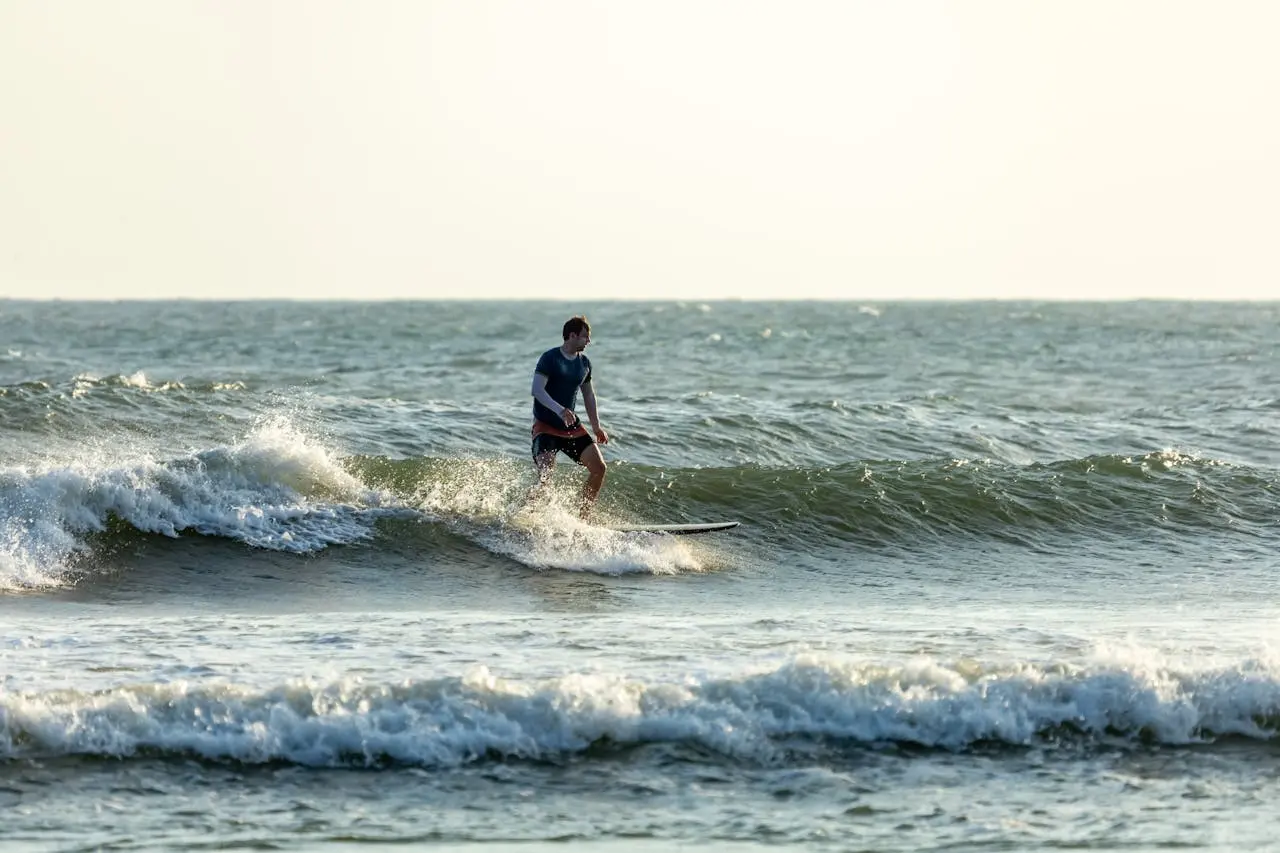
The more dependable January draw is the surf. Offshore Papagayo winds hold the wave face up and clean it, and Tamarindo's beach break is forgiving enough that beginners benefit from the same conditions the experienced surfers came for. What often happens is that visitors book a lesson as a novelty and find they picked one of the better months for it without meaning to.
Morning sessions are calmer; by afternoon the wind is strong enough to be a factor for beginners. Our Tamarindo surf lessons guide compares the schools, prices and formats.
The Papagayo Winds: January's Real Tradeoff
Every month in Tamarindo has a catch, and in January it is wind rather than rain. Understanding it is the difference between a trip that works and one where half the water activities disappoint.
What the winds do
The Papagayo winds run from late December through March, peaking around February. They blow from the northeast, offshore at this coast, and they do three things at once: they groom the surf, they chop up the open water beyond the bays, and they drive upwelling that can pull sea temperature down sharply within days.
Which activities are affected
| Activity | Effect of January winds |
|---|---|
| Surfing | Improved. Offshore wind is what surfers want. |
| Snorkeling | Worst affected. Chop reduces visibility and cold spells make the water genuinely uncomfortable. |
| Catamaran cruises | Bumpier, especially afternoon departures. Most boats use sheltered bays, which helps. |
| Estuary and river trips | Largely unaffected. Inland water stays calm. |
| Land tours | Unaffected, which is why they dominate our January picks. |
| Beach time | Pleasant in the morning, blustery by mid-afternoon. |
How to work around it
Take morning departures. Wind builds through the day almost every day of the month, so an 8am catamaran is a materially different experience from a 2pm one. If a tour offers a sunset slot and a morning slot and you are prone to seasickness, we would take the morning and watch the sunset from the beach.
Bring a rash guard or shorty. If the upwelling is running, water in the low 20s°C is cold enough that a thin layer changes how long you last. Most operators have them; bringing your own is the safer bet in peak season.
Save snorkeling for a different trip. This is the honest version. If clear warm water is what you are after, the green season, particularly August, is when the winds drop and visibility at the Catalinas is at its best. Our Tamarindo snorkeling guide covers that seasonal split in detail.
Best Things to Do in Tamarindo in January
Our January picks skew inland and land-based, and that is deliberate. The winds that make this the best surf month of the year are the same ones that make the open-water trips less reliable, so the activities that hold up best are the ones the wind cannot touch.
| Activity | January conditions | Best time of day | Notes |
|---|---|---|---|
| Surf lessons | Excellent | Morning | Offshore winds put this among the year's best months. Afternoons get blustery for beginners. |
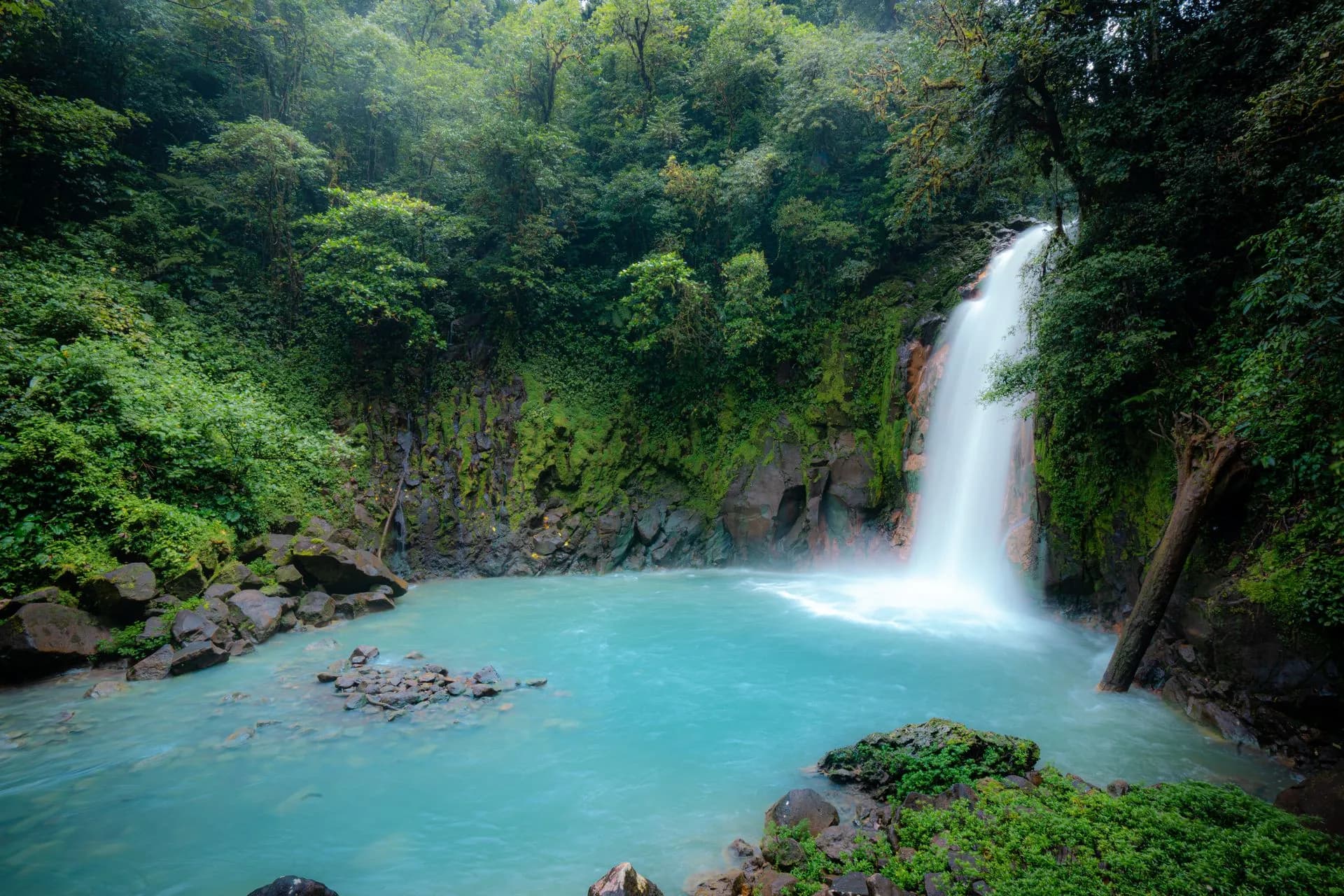
| Rio Celeste day trip | Excellent | Early start | Dry season means less silt upstream, which is when the river runs bluest. |
| Zipline and volcano combos | Excellent | Morning | Dry trails and clear air. Inland and unaffected by coastal wind. |
| ATV tours | Very good | Morning | Firm tracks and no mud, though dust is heavy by late dry season. |
| Sloth and inland wildlife trips | Very good | Morning | Worth the drive inland, where forest stays green while the coast browns off. |
| Sunset catamaran | Good | Any, sea state permitting | Reliable sunsets, but afternoon chop is real. Sheltered bays help. |
| Estuary boat safari | Very good | Early morning | Calm inland water and concentrated wildlife as dry-season water sources shrink. |
| Turtle nesting tour | Good | After dark | In season but past peak. Treat sightings as likely, not guaranteed. |
| Snorkeling | Poor | Earliest possible | The one activity we would not build a January trip around. |
| Beach days | Excellent | Morning to early afternoon | Dependable sun. Wind picks up later in the day. |
Why Rio Celeste is our January pick
The four contenders for a January standout are all strong tours, and the reason this one wins is seasonal rather than general. Rio Celeste's famous blue comes from a mineral reaction that heavy rain disrupts by washing silt downstream, so the river is at its most vivid in the dry months. January delivers that. It is also entirely inland, so the Papagayo winds are irrelevant, and it passes through wetter forest than anything on the coast, which partly offsets January's weak wildlife viewing.
The honest catch is the length. This is roughly a 12-hour day with a long drive at each end, and it is not the right choice if you only have a couple of days. Our Rio Celeste tour guide breaks down the drive, the alternatives and what the day actually involves.
The rest of the shortlist
The Guachipelin volcano zipline and river tubing combo is the best pick for anyone who wants adrenaline over scenery, and dry season keeps the access roads and trails easy. The Playa Flamingo sunset catamaran is the strongest of the boat options in a windy month, because it sails from a sheltered bay. And surf lessons are the one thing we would tell a January visitor not to skip, whether or not they have surfed before.
Other Things to Do in Tamarindo in January
Not everything worth doing in January has a dedicated guide. These are the ones we would add to a January itinerary:
- Playa Grande at sunset. Twenty minutes north and a fraction of the crowd, with the same reliable January sunset. The surf here is stronger than Tamarindo's, so it is a better watch than a swim for most visitors.
- Playa Conchal. The crushed-shell beach roughly 40 minutes north has the clearest water in the area on a calm morning, which in January means going early before the wind arrives.
- Rincon de la Vieja National Park. Dry season is the most reliable window for the volcano trails and the fumarole loop, and the drive is straightforward from the coast.
- Santa Cruz for a Guanacaste lunch. Forty minutes inland, and a better read on regional food than the beachfront strip offers.
- Sunday sunset at the Tamarindo river mouth. The estuary end of the beach is quieter than the main stretch, and in January the sunset shows up every single evening.
- Standup paddleboarding in the estuary. The one paddling option that the Papagayo winds do not ruin, because the estuary is sheltered.
Our Take
The advice that changes a January trip most is unglamorous: do the water in the morning and the land in the afternoon. Wind builds through the day nearly every day this month, so the same catamaran or paddle trip is calm at 8am and uncomfortable at 2pm, and almost nobody books around it.
Tips for Visiting Tamarindo in January
- Travel after January 7 if your dates are flexible: The weather is identical either side of that line, but the holiday premium on hotels is commonly around 50%. This is the single biggest saving available in the month.
- Book water activities for the morning: The Papagayo winds build through the afternoon. An early catamaran, snorkel or paddle trip is a different experience from the same trip after lunch.
- Pack a rash guard or thin wetsuit top: Upwelling can drop the water into the low 20s°C with little warning. It is not a certainty, but it is common enough in January that a thin layer is worth the space.
- Do not build the trip around snorkeling: In our view this is the clearest seasonal mismatch in Tamarindo. If clear warm water matters more than dry weather, the green season serves you better.
- Go inland for wildlife: The coastal dry forest is leafless in January and animals are hard to find. The trips that drive to wetter inland forest are where the sightings are.
- Expect sun that is stronger than it feels: The wind masks how much sun you are taking. Reapply more often than you would at home, particularly on the water where there is no shade.
- Reserve restaurants in the first week: Through January 7 the good places in town are genuinely full. After that, walk-ins are fine on most nights.
- Treat turtle tours as wildlife, not entertainment: January is inside the nesting season but past its peak. Operators are honest about this, and going in with that expectation is the difference between a good night and a disappointing one.
- Visiting at a different time of year? Our Tamarindo in February guide covers the next month, when the Papagayo winds peak, the surf is at its best and the water is at its coldest. Our Tamarindo in December guide covers the month before, when the same dry weather comes with a still-green landscape and, before Christmas, far lower rates.
How We Built This January Guide
We built this guide around the thing that actually varies in a Tamarindo January. Rain and temperature are settled: it is hot and it does not rain. What changes from day to day is the Papagayo wind, and because it improves surfing while degrading snorkeling and boat comfort at the same time, it splits the month's activities cleanly in two. That split drives the ratings and the ordering throughout. Tour selection came from the eight most-reviewed tours across our existing Tamarindo guides, ranked by review volume rather than by our preference, so the shortlist reflects what visitors actually book. We then chose the January standout on seasonal fit rather than raw rating, which is why an inland waterfall trip beats several higher-rated coastal options in a windy month. The conditions ratings use a five-step scale applied consistently across the page: Excellent, Very good, Good, Limited or Variable, and Poor. They describe how well January suits that activity relative to the rest of the year in Tamarindo, not how good the activity is in absolute terms. Snorkeling rated Poor in January is the same snorkeling that rates well in August; what changes is the month. On sourcing: temperature, rainfall and sea-temperature figures come from published climate datasets, and we have used ranges where sources disagree, which for Tamarindo rain-day counts they do noticeably. Sea temperature in particular resists a single number, because the upwelling that drives it varies year to year, so we give the range rather than an average. Prices and review counts come from the operators and platform listings as of September 2026. Hotel figures are indicative mid-range estimates rather than quoted rates, and the holiday premium pattern is more dependable than the specific numbers. Nobody on our team was in Tamarindo this January, and we have not written as though we were.
Frequently Asked Questions
Is Tamarindo good in January?+
Yes, if you want weather certainty. January is the driest, sunniest month of the year, with highs around 32°C (89°F) and typically one or two rain days for the whole month. The tradeoffs are the highest prices of the year and the Papagayo winds, which improve the surf but chop up the sea and can drop water temperatures sharply.
What is the weather like in Tamarindo in January?+
Hot, dry and windy. Daytime highs sit near 32°C (89°F) and overnight lows near 24°C (75°F), with humidity easing to around 70%. Rainfall is minimal, and most datasets put January at one or two wet days. The defining feature is the northeast Papagayo wind, which builds through the afternoon most days.
Can you see turtles in Tamarindo in January?+
Yes, but sightings are not guaranteed. Nesting near Tamarindo runs from roughly October through April at Playa Grande inside Las Baulas National Marine Park, and January falls inside the season but past its strongest months. Tours run after dark, last around four hours, and are guided-only because the beaches are closed to unaccompanied visitors at night.
How windy is Tamarindo in January?+
Windy enough to plan around. The Papagayo winds run from late December through March and peak around February, blowing offshore from the northeast. They typically build through the day, so mornings are noticeably calmer than afternoons. They improve surf conditions and make snorkeling and afternoon boat trips less comfortable.
Is January expensive in Tamarindo?+
It is the most expensive stretch of the year, though the month splits in two. The Christmas and New Year peak runs through about January 7 with mid-range hotels around $280 to $380 per night. From January 8 the same rooms typically fall to roughly $180 to $250 while the weather stays identical.
What is the best week to visit Tamarindo in January?+
The second half of the month, from January 8 onward. The weather is indistinguishable from the first week, but the holiday crowds have gone and hotel rates typically drop by something close to half. Restaurants take walk-ins again and tours can be booked a couple of days out rather than a week ahead.
What activities are best in Tamarindo in January?+
Surfing is at its best of the year because the offshore winds groom the waves. Inland day trips also do well, including Rio Celeste, the Guachipelin volcano zipline and tubing combo, and sloth-watching trips that reach wetter forest. Snorkeling is the weakest activity this month, because wind chop and cold upwelling both work against it.
Is the water cold in Tamarindo in January?+
It can be, without much warning. The Papagayo winds push warm surface water offshore and colder water rises to replace it, so sea temperature can sit near 28°C (82°F) and then fall into the low 20s°C (low 70s°F) within a few days before recovering. A monthly average is misleading here; a rash guard or thin wetsuit top is worth packing.
Affiliate note: Some links on this page are affiliate links. If you book through them, we may earn a small commission at no additional cost to you.