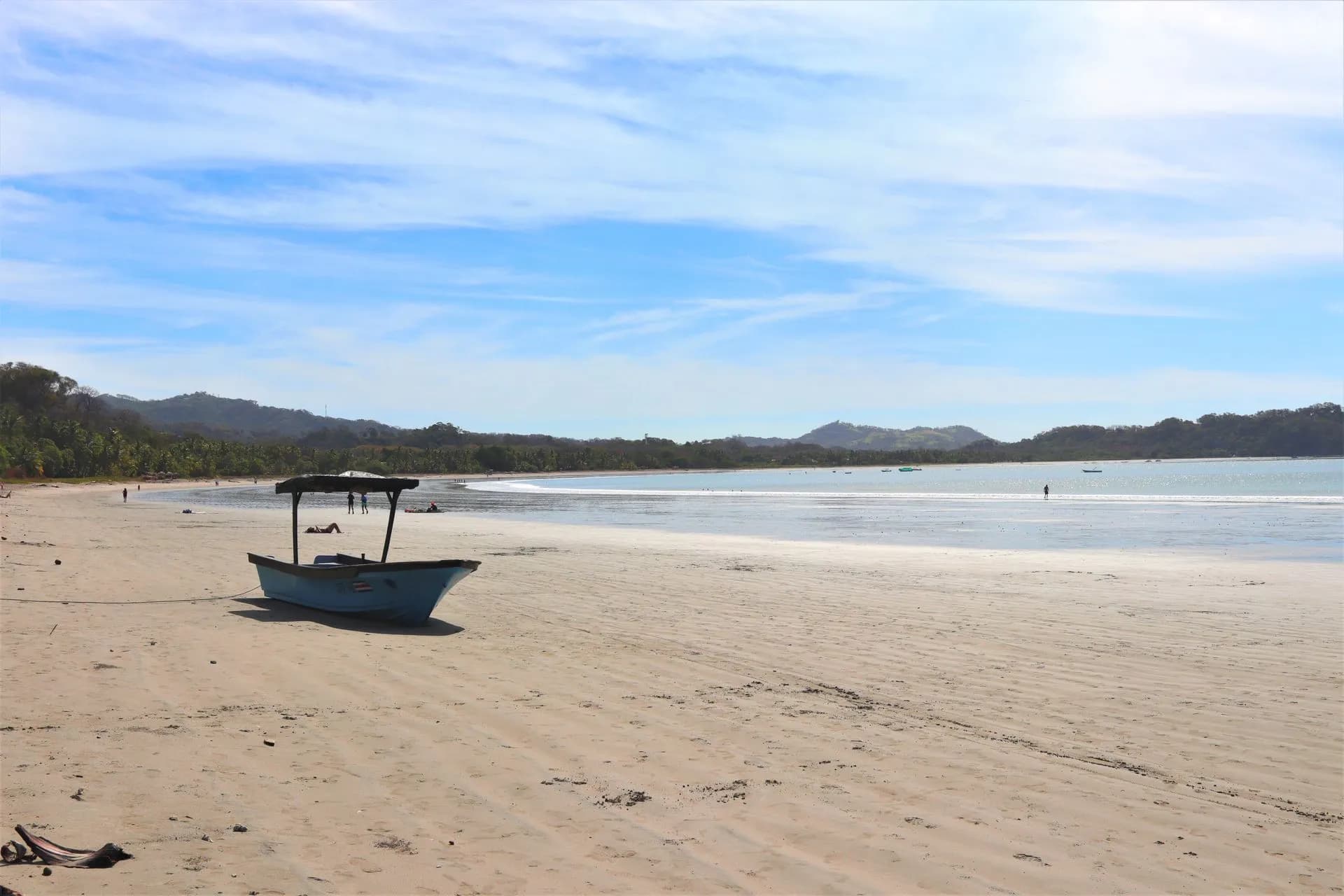
February is January turned up: hotter, drier, and considerably windier. Peak Papagayo winds deliver the cleanest surf of the year and the coldest water of the year at the same time. Here is what that means for what you book.
What You Should Know
- February is the driest and hottest month in Tamarindo, with highs reaching 33 to 34°C (low 90s°F) and rainfall in low single-digit millimetres. Sun is effectively guaranteed for the entire month.
- It is also the windiest. The Papagayo winds peak in February, and during strong events gusts across Guanacaste can exceed 100 kph. That is the defining fact of the month and it cuts both ways.
- Offshore wind makes this the best surf month of the year, with the cleanest wave faces Tamarindo gets. The same wind drives upwelling that puts sea temperatures at their annual low point in early February.
- Crowds stay high but the holiday peak is gone, so February trades January's booking crush for stronger wind. If you want dry-season certainty without New Year pricing, this is the better half of the deal.
Tamarindo in February: Overview
⭐ Best February window: the first two weeks. Conditions are consistent across the month, but US Presidents' Day week in mid-February brings a noticeable bump in demand, and the back half of the month is when the dry-forest landscape looks most parched. Early February also lines up with the strongest surf of the year, which is the main reason to be here at all.
| Factor | February Rating |
|---|---|
| Weather | 10/10: the driest, sunniest month of the calendar |
| Crowds | 4/10: high season, but no holiday crush |
| Prices | 3/10: still peak season, below the January 1 to 7 spike |
| Beaches | 8/10: guaranteed sun, but genuinely windy afternoons |
| Surf | 10/10: the cleanest, most consistent surf of the year |
| Snorkeling | 3/10: the year's worst combination of chop and cold water |
| Wildlife | 3/10: dry forest at its most parched, animals scarce |
| Turtle Nesting | 5/10: late season and tailing off |
| Families | 7/10: easy weather, but wind and cold water limit beach swimming |
| Couples | 8/10: reliable sunsets, easier restaurant bookings than January |
💰 Average February hotel prices (Tamarindo town, mid-range):
Most of the month: ~$180–250/night · Presidents' Day week: ~$220–290/night
Rough mid-range estimates; rates vary widely by property, location and booking lead time.
If January is the month Tamarindo advertises, February is the month it delivers on. Rain stops almost entirely, the sun is relentless, and the weather forecast becomes something you can ignore for a week at a time. For anyone building an itinerary around outdoor activities, no month is more reliable.
The catch is that everything distinctive about February traces back to one variable: wind. The Papagayo winds reach their annual peak this month, and in strong events they blow hard enough across Guanacaste to be a genuine factor in what you can do. They groom the surf into the best shape it takes all year. They also chop up the open water and drive the cold upwelling that puts sea temperature at its lowest point of the calendar in early February.
Our take: February rewards people who came for the land and the waves, and punishes people who came to float in warm water. The biggest difference between a good February trip and a frustrating one is whether your plans depend on calm sea, so we would settle that question before booking anything else.
Tamarindo Weather in February
| Metric | February |
|---|---|
| Avg High | 33°C (91°F) |
| Avg Low | 24°C (75°F) |
| Water Temp | 25–29°C (77–84°F), with sharp upwelling dips |
| Rain Days | ~1 |
| Humidity | Low for the tropics |
| Wind | Very high, the Papagayo peak |
| Rain Risk | Minimal, the driest month of the year |
Temperature and Humidity
February runs hotter than January, with highs commonly in the low 90s°F (33 to 34°C) and overnight lows holding around 24°C (75°F). Humidity is at its annual low, which is why the heat stays tolerable despite the higher numbers. The wind contributes here too, and it is genuinely deceptive: a strong offshore breeze masks how much sun you are absorbing, and sunburn in February tends to arrive without the usual warning signs.
Rain Pattern
Effectively none. February is the driest month of the Tamarindo year, with total rainfall typically in low single-digit millimetres and most datasets showing around one wet day for the whole month. The practical consequence is that no outdoor activity needs a weather contingency, which is not something you can say about any month from May onward. It also means dust: by late February the unpaved back roads are noticeably dustier than they were in January, which matters on ATV routes and open-vehicle transfers.
Sea and Wind Conditions
The Papagayo winds hit their annual maximum this month. They form when cooler dry air pushes down from the north and displaces the warm tropical air mass, and across Guanacaste the strongest events produce gusts that can exceed 100 kph. They blow offshore at this coast, which is what makes them so good for surf and so difficult for everything else on the water.
Sea temperature reaches its yearly minimum in early February, typically sitting in the 25 to 29°C (77 to 84°F) band but dropping considerably lower during strong upwelling events as warm surface water is pushed out and cold deep water rises to replace it. Looking at how these conditions behave across the season, the useful takeaway is that a February sea-temperature average tells you almost nothing about any given day. As in January, wind builds through the afternoon, so mornings are consistently the calmer window.
Crowds and Prices in Tamarindo in February
February is high season without the holiday spike, which makes it the most comfortable month of the dry season to actually be in town.
What the crowd looks like
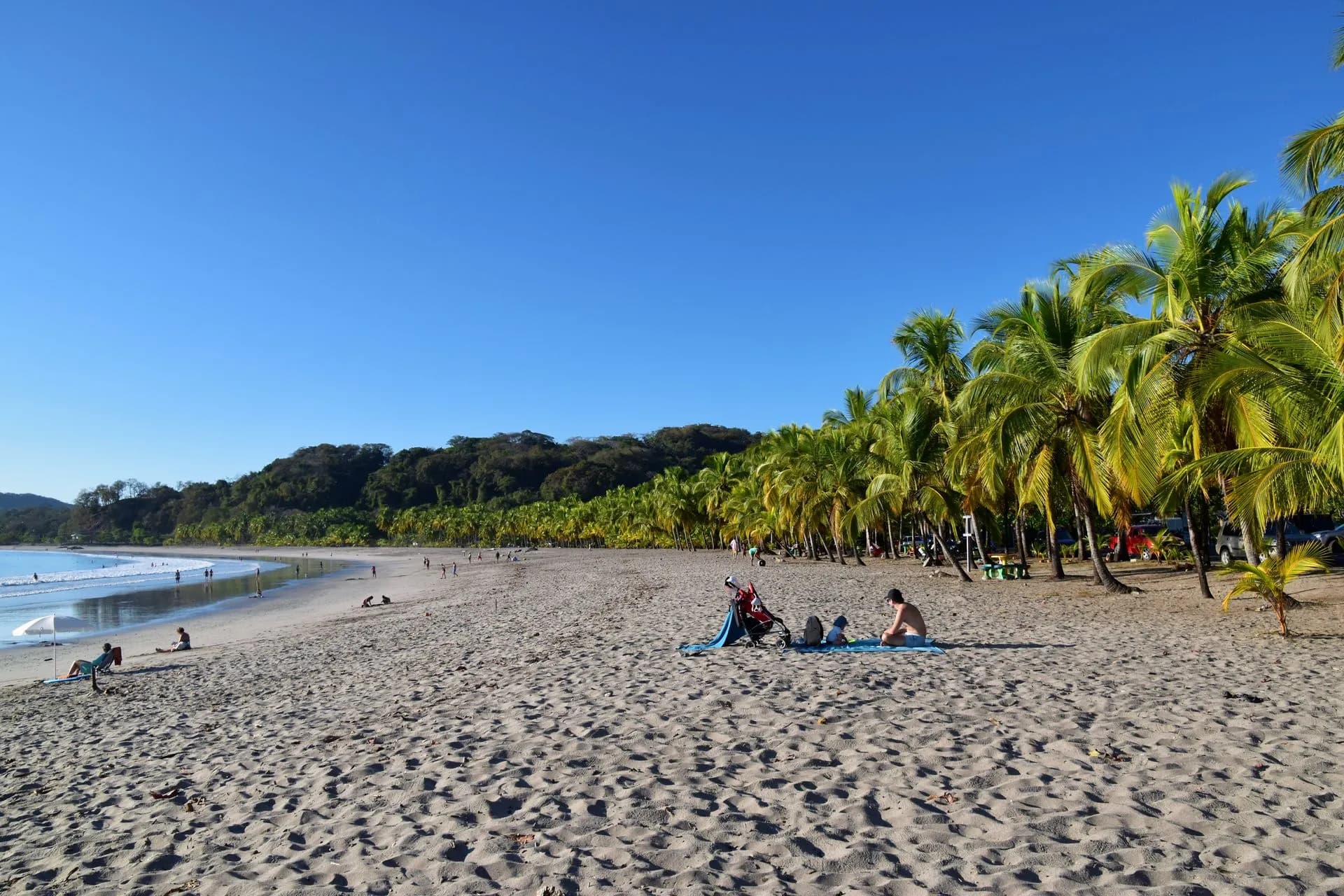
The New Year travellers are long gone and the crowd shifts to longer-stay visitors: North American and European snowbirds settled in for weeks or months, surfers here for the conditions, and couples. Restaurants are busy but take walk-ins on most nights, and tours can generally be booked two or three days out rather than a week ahead. The beach has room on it outside the sunset hour.
The one week to watch
US Presidents' Day week in mid-February brings a short, sharp bump in demand. It is nothing like the Christmas peak, but hotel rates firm up and the more popular small-group tours fill faster. If your dates are flexible and you want the quietest version of February, the first two weeks are the better bet.
Prices against the rest of the calendar
February sits in the same band as the second half of January and well below the holiday peak, but it is still one of the most expensive months of the year. What you are paying for is certainty: guaranteed sun, no rain contingencies, and an itinerary you can lock in weeks ahead. We think the tradeoff is fair if weather reliability is your priority, and poor value if it is not, because the green season offers the same activities at a fraction of the rate with warmer, calmer water.
February's Seasonal Draws: Peak Surf and the Last of the Turtles
The best surf month of the year
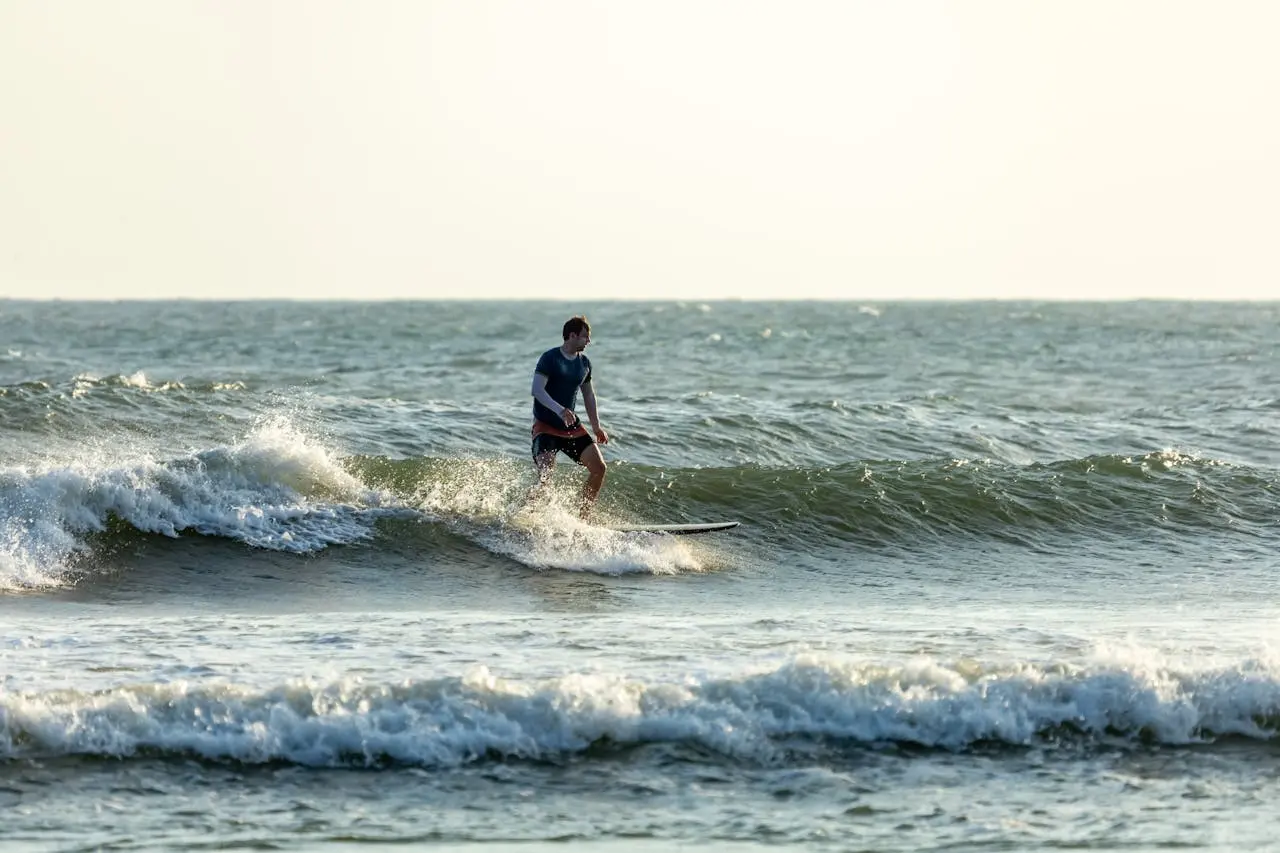
February is when Tamarindo's surf is at its best, and the reason is the wind that makes everything else harder. Offshore Papagayo wind holds the wave face up and smooths it, producing the cleanest conditions the coast gets all year. Swell is consistent through the month, and Tamarindo's forgiving beach break means beginners benefit from the same conditions that draw experienced surfers here.
We would book this if you have ever considered learning: the combination of clean conditions and a sandy-bottomed break is about as good an introduction as Costa Rica offers. The one caveat is timing within the day. By mid-afternoon the wind is strong enough to make paddling out harder work for a first-timer, so morning lessons are worth the earlier alarm. Our Tamarindo surf lessons guide compares the schools, prices and formats.
Turtle nesting in its final stretch
Nesting near Tamarindo runs from roughly October through April at Playa Grande inside Las Baulas National Marine Park, and February sits in the tail of that window. Tours still run, still last around four hours after dark, and are still guided-only, but sightings are less reliable than they were in the October to December core of the season.
From what we've seen in reviews, the people who come away happy are the ones who booked understanding they were paying for a guided search rather than a guaranteed encounter. Operators are consistently upfront about this. Our Tamarindo turtle tour guide covers the operators, the park rules and how the season moves month to month.
Peak Papagayo: What February's Wind Actually Changes
Every month in Tamarindo has a defining variable. In February it is wind, and this is the month it peaks, so it is worth understanding properly before you build an itinerary.
Why February is the maximum
The Papagayo winds run from late December through March and reach their strongest point in February. They are driven by cool dry air descending from the north and displacing warm tropical air, and Guanacaste sits exactly where that effect concentrates. During strong events, gusts across the region can exceed 100 kph. Most February days are not that extreme, but the wind is a daily presence rather than an occasional one.
What it changes, activity by activity
| Activity | Effect of peak February winds |
|---|---|
| Surfing | At its annual best. This is the reason experienced surfers choose February. |
| Snorkeling | The year's weakest month. Chop cuts visibility and the water is at its coldest. |
| Catamaran cruises | Noticeably bumpier than January, particularly afternoon departures. Sheltered northern bays fare better. |
| Beach swimming | Limited on cold-water days. Fine for paddling, less appealing for extended time in. |
| Estuary and inland water | Unaffected. Sheltered from the wind entirely. |
| Land tours | Unaffected, and at their driest and most reliable of the year. |
Working with it rather than against it
Book water activities in the morning, without exception. The afternoon build is more pronounced in February than in any other month. An 8am departure and a 2pm departure on the same boat are genuinely different experiences.
Assume you will want a wetsuit top. On a strong upwelling day the water is cold enough that a rash guard stops being sufficient. Most surf schools and boats carry shorty wetsuits; in peak season, confirming availability when you book is safer than assuming.
Do not build a February trip around snorkeling. This is the clearest seasonal mismatch on the Tamarindo calendar, and it is worth being blunt about. If clear warm water is the point of the trip, the green season, particularly August, is when the winds drop and Catalinas visibility peaks. Our Tamarindo snorkeling guide covers that split in detail.
Best Things to Do in Tamarindo in February
February's activity picks lean inland even harder than January's, for the same reason: the wind that makes the surf exceptional makes the open water difficult. The tours that hold up best this month are the ones the Papagayo cannot reach.
| Activity | February Rating | Best Time of Day | Notes |
|---|---|---|---|
| Surf lessons | 10/10 | Morning | The year's peak. Afternoon wind makes paddling out hard work for beginners. |
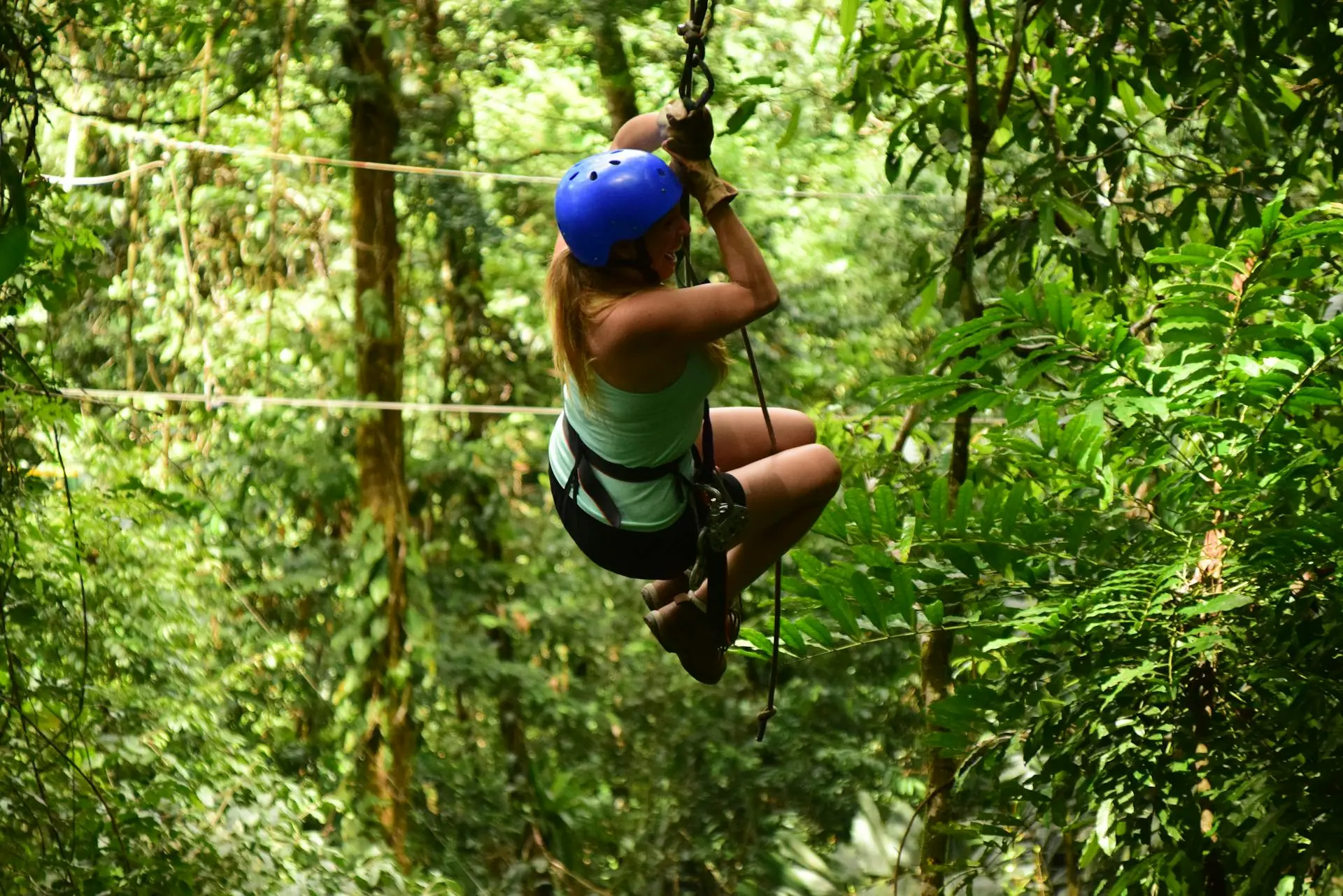
| Zipline and volcano combos | 10/10 | Morning | Driest trails and clearest air of the year, and fully sheltered from coastal wind. |
| Rio Celeste day trip | 9/10 | Early start | Minimal upstream rain means the river runs at its bluest. |
| ATV tours | 7/10 | Morning | Firm tracks, but late dry season dust is at its heaviest. A buff or bandana helps. |
| Sloth and inland wildlife trips | 8/10 | Morning | Worth the inland drive; coastal dry forest is at its most barren this month. |
| Estuary boat safari | 9/10 | Early morning | Sheltered water and wildlife concentrated around the few remaining water sources. |
| Sunset catamaran | 6/10 | Any, sea state permitting | Bumpier than January. Northern sheltered bays are the better bet. |
| Turtle nesting tour | 5/10 | After dark | Late in the season. Sightings possible but well down from the autumn peak. |
| Snorkeling | 3/10 | Earliest possible | The weakest month of the year for this. We would defer it to another trip. |
| Beach days | 8/10 | Morning | Guaranteed sun, but wind and cold water limit how much time you spend in the sea. |
Why Guachipelin is our February pick
We would give this the edge for February specifically because it stacks three activities into a single inland day at the exact point in the calendar when the coast is least cooperative. The volcano flank is sheltered from the Papagayo entirely, the access roads are at their driest and most reliable, and the air is clear enough for the long views that make the canopy section worth doing.
The honest tradeoff is the tubing. Peak dry season means lower river levels, so the float is gentler than the same trip in green season. Most guests find that suits a mixed-ability group better, but if adrenaline is what you are buying, the tubing section will feel tamer than the photos suggest. Our Tamarindo zipline guide compares the volcano combos in detail.
The rest of the shortlist
We would put surf lessons at the top of any February list regardless of experience level, because the conditions this month are the best argument for trying it. Rio Celeste remains excellent and runs at its bluest in the dry months, though it is a 12-hour day. And the estuary boat safari is quietly one of February's strongest options: sheltered from the wind, and dry-season water scarcity concentrates wildlife around the channels in a way the green season does not.
Other Things to Do in Tamarindo in February
Additions worth making to a February itinerary that do not have a dedicated guide:
- Watch the surf at Playa Grande. Twenty minutes north, and in peak Papagayo conditions the waves here are a spectacle in their own right. Stronger than Tamarindo and better watched than attempted unless you surf well.
- Playa Conchal early. The crushed-shell beach 40 minutes north has the clearest water in the region, but in February that window closes by late morning once the wind arrives.
- Rincon de la Vieja National Park. February is the most reliable month of the year for the volcano trails and the fumarole loop, with firm ground and clear air.
- Kitesurfing at Bahia Salinas. A long drive north, but peak Papagayo season is precisely why that bay is one of Central America's better kite spots. Worth it if wind is something you use rather than endure.
- Sunset from the estuary end of the beach. Quieter than the main strip, and February delivers a clear sunset essentially every evening.
- Standup paddleboarding in the estuary. The only paddling worth booking this month, because it is the one stretch of water the wind does not reach.
Our Take
The pattern we keep seeing is that February disappoints exactly one type of visitor: the person who pictured floating in warm calm water. Everyone else gets the most reliable month on the calendar, and the fix is simply deciding early whether your trip depends on the sea being flat.
Tips for Visiting Tamarindo in February
- Book every water activity for the morning: The afternoon wind build is stronger in February than any other month. This single choice changes more about your trip than which operator you pick.
- Pack or confirm a wetsuit top: Sea temperature bottoms out in early February, and on upwelling days a rash guard is not enough. Most operators carry shorties, but peak season is a poor time to assume.
- Avoid Presidents' Day week if you can: Mid-February brings a short demand spike. The first two weeks give you identical weather with more room.
- Expect dust on the back roads: By late February the unpaved routes are at their dustiest. A buff or bandana is genuinely useful on ATV tours and open-vehicle transfers.
- Treat sunburn as a wind problem: The breeze hides how much sun you are taking, and February burns catch people who would have noticed in a calmer month. Reapply on a timer rather than by feel.
- Go inland for wildlife: The coastal dry forest is at its most barren this month. The trips that drive to wetter forest are where sightings actually happen.
- We would not book a dedicated snorkeling day: If clear water matters to you, this is the month to skip it. Chop and cold are both at their annual worst, and no operator can work around that.
- Learn to surf if you have ever thought about it: Conditions this month are the best case Tamarindo offers, and a forgiving beach break plus clean offshore wind is an unusually good combination for a first lesson.
- Visiting at a different time of year? Our Tamarindo in March guide covers the next month, when the winds finally ease and the sea warms back to 27 to 29°C, along with what Semana Santa does to the last week. Our Tamarindo in January guide covers the start of the dry season and its post-holiday value window.
How We Built This February Guide
February is the easiest Tamarindo month to describe and the easiest to get wrong. The weather is settled to the point of being boring: hot, sunny, and dry, with no meaningful variation across the month. Everything that actually differentiates a February trip comes from one variable, the Papagayo wind, which reaches its annual peak this month and improves and degrades different activities at the same time. That split structures the ratings and the ordering throughout this guide. Tour selection came from the eight most-reviewed tours across our existing Tamarindo guides, ranked by review volume rather than preference. We then chose the February standout on seasonal fit: an inland volcano combo beats several coastal options in the windiest month of the year, even though some of those coastal options carry higher ratings overall. On sourcing: temperature, rainfall, wind and sea-temperature figures come from published climate and surf datasets, presented as ranges where sources disagree. Prices and review counts come from the operators and platform listings as of September 2026. Hotel figures are rough mid-range estimates rather than quoted rates. Nobody on our team was in Tamarindo this February, and we have not written as though we were.
Frequently Asked Questions
Is Tamarindo good in February?+
Yes, with one caveat. February is the driest and sunniest month of the year, with highs in the low 90s°F and effectively no rain, which makes it the most reliable month for planning outdoor activities. The caveat is wind: the Papagayo winds peak this month, which is excellent for surfing and poor for snorkeling and calm-water swimming.
What is the weather like in Tamarindo in February?+
Hot, very dry and windy. Daytime highs commonly reach 33 to 34°C (low 90s°F), overnight lows sit near 24°C (75°F), and humidity is at its annual low. Rainfall is typically low single-digit millimetres for the whole month, with around one wet day. Strong northeast winds are a daily feature.
Is February the windiest month in Tamarindo?+
Yes. The Papagayo winds run from late December through March and peak in February. They are caused by cool dry air pushing down from the north and displacing warm tropical air, and during strong events gusts across Guanacaste can exceed 100 kph. Wind typically builds through the afternoon, so mornings are noticeably calmer.
How cold is the water in Tamarindo in February?+
This is the coldest water of the year, with sea temperature reaching its annual minimum in early February. It typically sits in the 25 to 29°C (77 to 84°F) band, but strong Papagayo events drive upwelling that pulls it considerably lower for short periods. A shorty wetsuit or wetsuit top is worth having rather than just a rash guard.
Is February expensive in Tamarindo?+
It is one of the more expensive months, though cheaper than the Christmas and New Year peak. Mid-range hotels in town run roughly $180 to $250 per night for most of February, firming to around $220 to $290 during US Presidents' Day week in mid-month.
What is the best week to visit Tamarindo in February?+
The first two weeks. Weather is effectively identical across the month, but Presidents' Day week in mid-February brings a short spike in demand and rates. Early February also coincides with the strongest surf conditions of the year, which is the main seasonal reason to choose this month.
What activities are best in Tamarindo in February?+
Surfing is at its annual peak because offshore winds produce the cleanest wave faces of the year. Inland trips also do well: the Guachipelin volcano zipline and tubing combo, Rio Celeste, and sloth-watching tours that reach wetter forest. The estuary boat safari is strong because it is sheltered. Snorkeling is the weakest activity of the month.
Is February or January better in Tamarindo?+
February is drier, hotter and windier, with better surf and colder water. January is slightly gentler on both wind and water temperature but carries the holiday booking crush in its first week. If you are coming to surf, February wins clearly. If you want to spend time in the sea rather than on it, late January is the more comfortable choice.
Affiliate note: Some links on this page are affiliate links. If you book through them, we may earn a small commission at no additional cost to you.