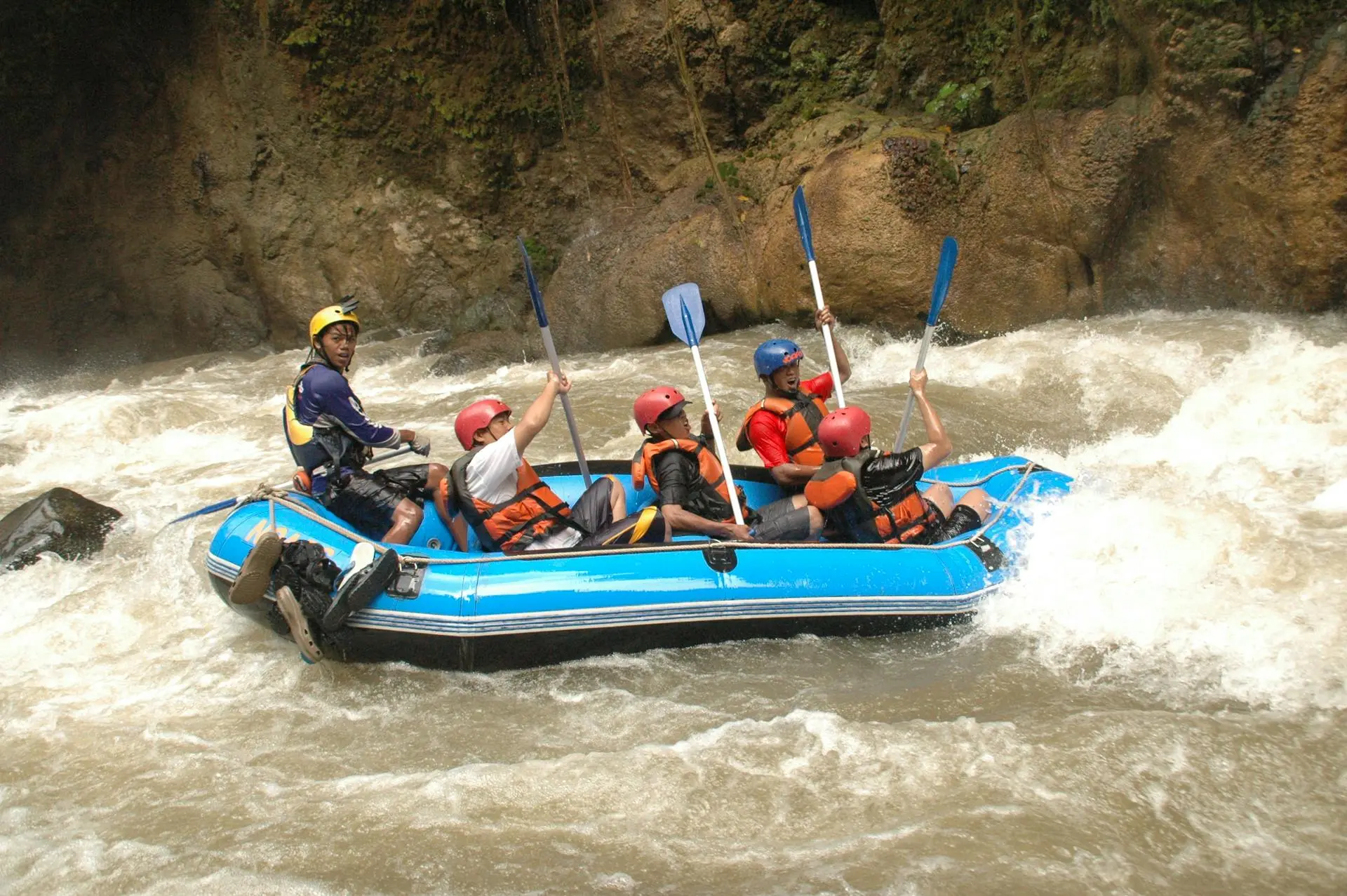
There is no whitewater in Tamarindo. Real rafting means the Tenorio River, 1.5 to 2 hours inland, for 22 Class III and IV rapids and a 12 foot waterfall drop, from $119. Here is how the day works, why the gentler Corobici float is a different product entirely, and why the river is best in the months most people avoid.
What You Should Know
- Tamarindo has no whitewater. Every rafting trip sold here drives 1.5 to 2 hours inland to the Tenorio River, so you are booking a full day out, not a beach-town activity.
- Searching rafting near Tamarindo returns two different products. The Tenorio is Class III and IV whitewater; the Corobici is a Class I and II wildlife float. Both get sold as river trips and only one is rafting.
- The season runs backwards from the rest of Tamarindo. The Tenorio is fullest and fastest from roughly May to November, the green season, and thinner from December to April when the beach weather is at its best.
- The ratio is the thing to weigh: 2 to 2.5 hours on the water inside a 7 to 10 hour day. Driving yourself to the put-in cuts both the cost and a chunk of the hours.
Rafting from Tamarindo, Costa Rica
Rafting in Tamarindo, Costa Rica does not happen in Tamarindo. Guanacaste's coast is dry forest and surf beach, and the nearest runnable whitewater is the Tenorio River, roughly 1.5 to 2 hours inland toward the Tenorio Volcano. That is the trip every operator in town is selling: a hotel pickup between 6:45 and 7:30 AM, a drive across the province, 12 km and about 22 Class III and IV rapids, a Costa Rican lunch, and a drive back.
The other thing sold as white water rafting near Tamarindo is not rafting at all. The Corobici River safari float is a Class I and II drift aimed at wildlife spotting, with howler monkeys, crocodiles and several hundred bird species along the banks. It is a good day out. It is not whitewater, and the single most common mistake made on this page is booking one while expecting the other.
Is it worth it?
Worth it if you want genuine Class III and IV water, you are comfortable giving a whole day to get 2 to 2.5 hours of it, and ideally you are visiting between May and November.
Skip it if you want a short activity near the beach, you are travelling with children under 8, or you are in Tamarindo in March and expecting big water. Consider the Corobici float instead if what you actually want is wildlife.
The two rivers, side by side
Who should book this
Perfect for
Not ideal for
Native's Way: Whitewater Rafting Class III and IV
4.9 across 183 reviews and $119, which makes it both the best-reviewed and the cheapest way to raft the Tenorio from this coast. It is also the most transparent about the shape of the day: 12 km of river, about 22 Class III and IV rapids, 2 to 2.5 hours paddling, ending with the 12 foot drop at Cascabel Falls. Pickups run 6:45 to 7:30 AM, lunch and an air-conditioned minivan are included, and the age band opens at 8, the lowest on this river. It books in three tiers, private transport, shared transport and self drive, which is the lever most people do not realise they have. Two things it is not: short, at a listed 10 hours, or intimate, at up to 15 travelers per booking.
Book NowRafting Tours from Tamarindo: Side-by-Side Comparison
Both bookable trips below run the Tenorio with the same Class III and IV rapids. The gap between them is $51 and a different departure town: the Tamarindo trip is cheaper and carries ten times the review volume, while the Playa Hermosa one is a shorter day. Note also what is not in this table: the Corobici float, which is Class I and II and is the tour people book by accident when they search for rafting near Tamarindo.
| Tour | Price (USD) | Rating | River & Class | Ages | Group | Time on Water | Total Day | Transport | Food |
|---|---|---|---|---|---|---|---|---|---|
| Top Rated Native's Way Whitewater Rafting Class III and IV Book Now |
From $119 | 4.9 ⭐ (183 reviews) Read Reviews |
Tenorio, Class III–IV, 12 km, ~22 rapids | 8 and up | 2–15 per booking | 2–2.5 hrs | 10 hrs | Three tiers: private, shared or self drive | Lunch; air-conditioned minivan |
| Pininos Adventures Rafting Class III and IV in Tenorio River from Playa Hermosa Book Now |
From $170 | 4.9 ⭐ (18 reviews) Read Reviews |
Tenorio, Class III–IV | 6 and up; adults 18–60 | Up to 10 per booking | About 2 hrs | 8 hrs | Hotel pickup and drop-off from Playa Hermosa | Lunch; bilingual guide and all equipment |
| Tenorio rafting booked direct, self-drive No booking link |
From $105 | Direct with the operator | Tenorio, Class III–IV, 12 km | 8 and up | Operator set | 2–2.5 hrs | Shorter; you drive | You drive to the put-in | Casado lunch, water |
| Tenorio rafting booked direct, with transport No booking link |
$135–$137 plus tax | Direct with the operator | Tenorio, Class III–IV, 12 km | 8 and up | Operator set | 2–2.5 hrs | About 9–10 hrs | Round-trip hotel pickup from Tamarindo | Casado lunch, water |
ℹ️ All tours and information were personally reviewed by our team on September 18, 2026. Prices and availability may change, so always confirm with the operator before booking.
What to Expect on a Tenorio River Rafting Day
The shape of the day is set by the drive, not by the river. Most of the hours go on the road, and the rafting itself is a concentrated two to two and a half hours in the middle.
- 016:45–7:30 AM
Hotel pickup
Collection windows start early because the put-in is a long way off. Operators run a loop through Tamarindo and often Flamingo, Playas del Coco and Liberia as well, so your actual departure depends on where you sit in that loop. Eat before you are collected: breakfast is not included on these trips.
- 021.5–2 hours
The drive inland
Across the province toward Tenorio Volcano. The listing specifies an air-conditioned minivan, though that covers the transfer from your hotel rather than every leg: at least one guest describes the 45 minute run to lunch in a converted horse trailer with no air conditioning, and the last stretch to the put-in is on rough road. This is the part that turns rafting into a full day, and it is the single best argument for driving yourself if you already have a car.
- 03
Safety briefing and gear
Helmets, life jackets and paddles, plus the standard briefing on paddle commands, what to do if you go in, and how the guide will call the lines. No previous experience is needed, and guides put first-timers through this properly rather than quickly.
- 042–2.5 hours
12 km of Tenorio
About 22 rapids set in a limestone canyon, with calm stretches in between. The wildlife is better than the billing: white-faced capuchins and howlers come up constantly in guest accounts, along with toucans, iguanas, herons, kingfishers and, on one trip, more butterflies than anyone could count. The Tamarindo trip takes up to 15 travelers per booking and the Playa Hermosa one up to 10, so the boat you share is not the same size on the two.
- 05
Cascabel Falls
The run finishes over a 12 foot waterfall drop, which is the moment most people came for and the one the photographs are of. It arrives at the end rather than the beginning, so the trip builds toward it.
- 06
Lunch and the drive home
A Costa Rican casado at the operator's riverside base, and it earns more unprompted praise than anything else on the day apart from the guides. Several guests rate it the best meal of their whole Costa Rica trip. Then the same 1.5 to 2 hours back to the coast, which puts most groups back in Tamarindo in the late afternoon.
- 01
Hotel pickup
Collection windows start early because the put-in is a long way off. Operators run a loop through Tamarindo and often Flamingo, Playas del Coco and Liberia as well, so your actual departure depends on where you sit in that loop. Eat before you are collected: breakfast is not included on these trips.
6:45–7:30 AM - 1.5–2 hours02
The drive inland
Across the province toward Tenorio Volcano. The listing specifies an air-conditioned minivan, though that covers the transfer from your hotel rather than every leg: at least one guest describes the 45 minute run to lunch in a converted horse trailer with no air conditioning, and the last stretch to the put-in is on rough road. This is the part that turns rafting into a full day, and it is the single best argument for driving yourself if you already have a car.
- 03
Safety briefing and gear
Helmets, life jackets and paddles, plus the standard briefing on paddle commands, what to do if you go in, and how the guide will call the lines. No previous experience is needed, and guides put first-timers through this properly rather than quickly.
- 2–2.5 hours04
12 km of Tenorio
About 22 rapids set in a limestone canyon, with calm stretches in between. The wildlife is better than the billing: white-faced capuchins and howlers come up constantly in guest accounts, along with toucans, iguanas, herons, kingfishers and, on one trip, more butterflies than anyone could count. The Tamarindo trip takes up to 15 travelers per booking and the Playa Hermosa one up to 10, so the boat you share is not the same size on the two.
- 05
Cascabel Falls
The run finishes over a 12 foot waterfall drop, which is the moment most people came for and the one the photographs are of. It arrives at the end rather than the beginning, so the trip builds toward it.
- 06
Lunch and the drive home
A Costa Rican casado at the operator's riverside base, and it earns more unprompted praise than anything else on the day apart from the guides. Several guests rate it the best meal of their whole Costa Rica trip. Then the same 1.5 to 2 hours back to the coast, which puts most groups back in Tamarindo in the late afternoon.
No experience is needed and operators describe the Tenorio as suitable for beginners, but this is a genuine whitewater river rather than a float. You will be paddling on command, you should expect to get thoroughly wet, and going overboard is common enough that guests mention it in passing rather than as a complaint. One raft reported three of its four passengers in the water on a single drop.
The Class III and IV label is generous: The listings and the operator sites all say Class III and IV, and on a full river that holds. Experienced rafters describe something softer: one who prefers Class V put the day at mostly twos and threes with a few good drops, and still enjoyed it and still fell out. If you have rafted before, book this for the canyon, the wildlife and the waterfall drop rather than for the grading. If you have not, that same gap is the reason first-timers and nervous parents consistently come home happy.
The drop is the thing, and it is tamer than it looks: The 12 foot fall at the end is what people write home about, and it is also what makes them hesitate. The reassurance worth having in advance: it lands in a wide pool with no current and ropes waiting at the bottom. Guests who nearly opted out describe it afterwards as the best part of the day. It comes at the end, so the run builds toward it rather than opening with it.
There is more in the day than the listing sells: The inclusions read as transport, guide, equipment and lunch, which makes this sound like a transfer with two hours of paddling in the middle. Guests describe more: stops to swim, rocks to jump from, a side waterfall reached off the river, and on some days a short canyoning section. None of it is promised, all of it depends on level and guide, and it is worth asking for rather than waiting to be offered.
The ratio is the real decision: Two to two and a half hours of paddling inside a seven to ten hour day is the number to sit with before booking. That is not a criticism of the river, which is excellent; it is a statement about where Tamarindo sits on the map. If the ratio bothers you, the honest answer is not a different operator, it is either driving yourself or picking an activity that lives closer to the coast.
Who this is not right for
- Families with children under 8. The lowest published minimum on the Tenorio is 8, and some operators set it at 10. The Corobici float is the option that takes younger children.
- Anyone who wants a half day. There is no short version of this trip. The drive is fixed and it is most of the day.
- Travelers prone to motion sickness. Three to four hours in a van on Guanacaste roads, bracketing a physical activity, is a hard combination for some people.
- Travelers over 60, on the Playa Hermosa trip. Its adult age band runs 18 to 60 and stops there. The Tamarindo departure takes ages 8 to 99, so it is the one to book for older travelers.
- Pregnant travelers, and anyone with spinal injuries or poor cardiovascular health. Both listings name these, and both ask for at least a moderate level of physical fitness.
- Anyone visiting late in the dry season who wants maximum water. February to April is the thinnest stretch of the year on this river.
- Anyone expecting rapids on the Corobici. It is Class I and II, and that is the point of it rather than a shortcoming.
- Experienced rafters chasing big water in dry season. The people most likely to be underwhelmed are the ones who have run genuine Class IV elsewhere and arrive between February and July.
- Anyone who would resent a guide flipping the boat on purpose. Some guides deliberately dunk their raft on the big drops, which most guests treat as the highlight and a minority resent, especially if their group ends up doing most of the paddling.
Best Ways to Go Rafting from Tamarindo
The river is the same on every Tenorio trip, so the decision is really about transport, departure time and whether you want whitewater at all.
Native's Way: Whitewater Rafting Class III and IV
From $119 and rated 4.9 across 183 reviews, which makes it both the cheapest and the best-reviewed way to raft the Tenorio from this coast. It also gives the clearest published account of what the day involves: 12 km of Tenorio, about 22 Class III and IV rapids, 2 to 2.5 hours paddling, finishing over the 12 foot drop at Cascabel Falls. Pickups run 6:45 to 7:30 AM across Tamarindo, Flamingo, Playas del Coco and Liberia, lunch is a casado, and the age minimum is 8. Two travelers minimum to book. It is one of the few operators to publish a self-drive rate alongside the transported one, which is the difference between a nine hour day and something considerably shorter.
Rafting Class III and IV in Tenorio River from Playa Hermosa
Run by Pininos Adventures, from $170 and rated 4.9, though across only 18 reviews. Same river and the same Class III and IV rapids, with about two hours on the water, and the listed day is 8 hours against 10 on the Tamarindo trip. Hotel pickup and drop-off, a bilingual guide, all equipment and lunch are included; alcoholic drinks and gratuities are not. It caps at 10 travelers per booking against 15, which is the one place it clearly beats our pick. Three things to weigh: it departs Playa Hermosa rather than Tamarindo, an hour up the coast; at $51 more it is the expensive way to reach the same water; and the adult age band stops at 60, so it rules out older travelers outright.
Corobici River float and Las Pumas
The gentle alternative, and the one to choose deliberately rather than by accident. About two hours drifting Class I and II water with a naturalist guide, watching for howler monkeys, capuchins, crocodiles, iguanas and a few hundred bird species, followed by lunch and a visit to the Las Pumas rescue centre. It suits families with small children, anyone who does not want to paddle hard, and mixed groups where not everyone wants rapids. What it is not is rafting.
Book direct and drive yourself
Operators publish a self-drive rate around $105 against roughly $135 to $137 with round-trip transport from Tamarindo. With a rental car already parked outside, driving yourself saves about $30 a head and removes the hotel-collection loop from both ends of the day. The catch is a 1.5 to 2 hour drive each way on your own, starting very early, and you will be tired on the way home after a day on the water.
When to Raft the Tenorio: the Season Runs Backwards
Most things in Tamarindo are best in the dry season. Rafting is the exception, and it is worth saying plainly: the Tenorio is at its best between roughly May and November, when rain upstream fills the canyon.
If your trip falls in February or March and big water is the reason you want to go, adjust the expectation now rather than on the riverbank. The rapids are still there, the canyon is still spectacular, and the descent still earns its billing on most days. It is simply a smaller river than the photographs, which are almost all shot in green season.
Our take (low water is not the safe option): The obvious assumption is that a thinner river is a gentler one. Guest accounts suggest the opposite risk profile. With the level down, the channels narrow and the run becomes technical rather than powerful, and the reports of people leaving the boat cluster in exactly those months. One traveller in December came out three times and cracked a rib, ending their holiday. The rapids are smaller in dry season; the rocks are not further away.
The green season. Rain in the mountains above the canyon raises the level and the speed, and this is when the Class III and IV rating is doing its full work. It is also the half of the year most people avoid booking a Guanacaste beach holiday, which is the tension at the heart of this trip.
The dry months, and peak season on the coast. The Tenorio still runs and guests in January, February and April still describe a good day. What changes is character rather than quality: low water turns it into a slower, more technical run through narrower channels. One guest returning in January noticed the level well down on a previous March trip and said it barely affected the experience; another in July found the pace slow enough to call the day not very exciting.
This is not a seasonal closure the way turtle nesting is. Every operator runs the Tenorio all twelve months and the descent is worth doing in both halves of the year. What changes is intensity, not availability, so the question is what you want rather than whether you can go.
Where the Rivers Are, and How Far You Are Driving
This is the part the listings understate, so it is worth being concrete about the geography.
The Tenorio River
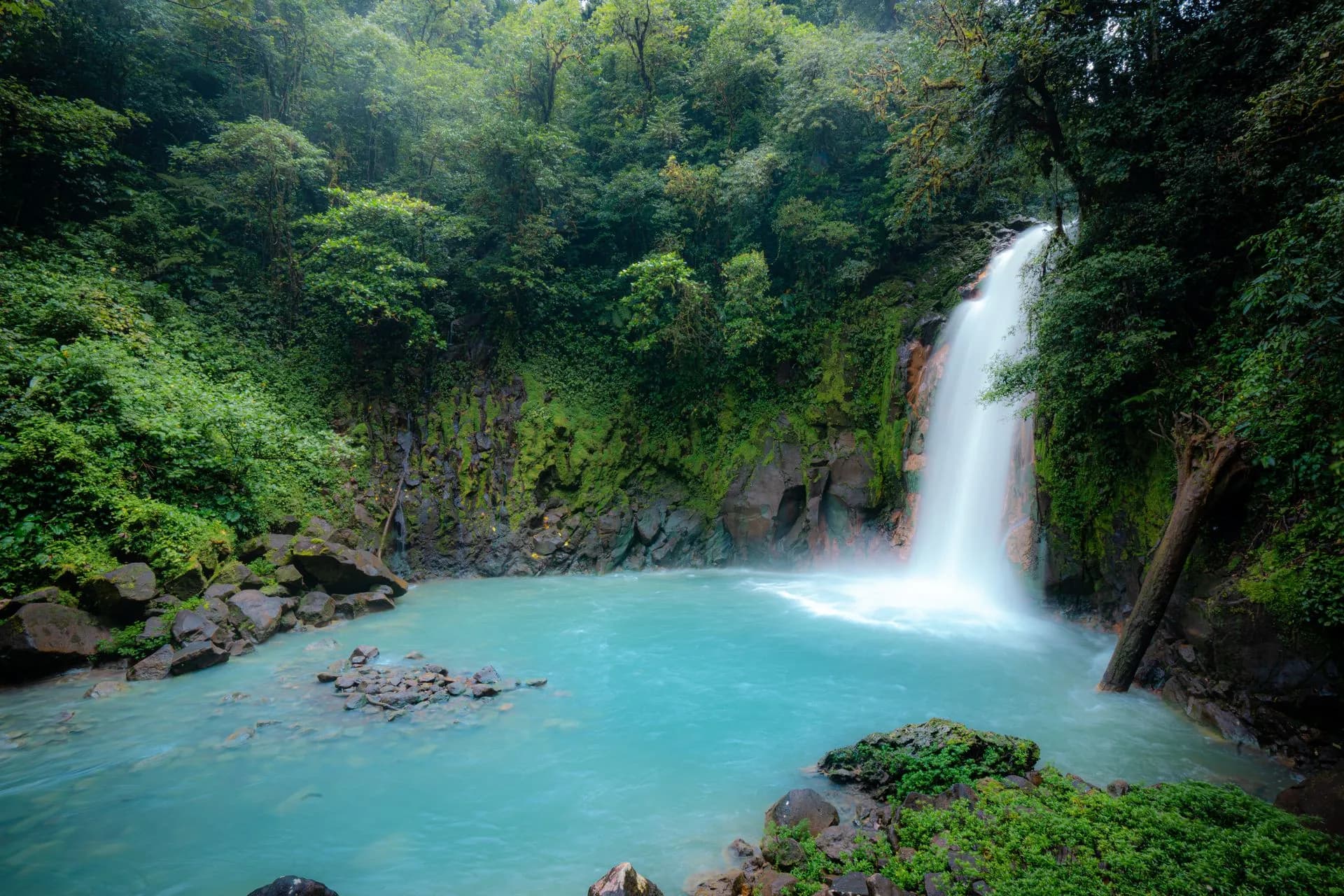
About 1.5 to 2 hours inland from Tamarindo, on the flank of Tenorio Volcano. The run is 12 km through a limestone canyon, with named rapids and roughly 22 of them rated Class III and IV, finishing with a 12 foot drop known as Cascabel Falls. If the name is familiar it should be: the Rio Celeste, the famous blue river, is a tributary of this same Tenorio system inside Tenorio Volcano National Park. You are rafting downstream of one of the best known hikes in Costa Rica.
The Corobici River
Near Canas, also about 1.5 to 2 hours from the coast. Wider, slower, and lined with dry gallery forest. The float is guided for wildlife rather than paddled for rapids, and it finishes at the Las Pumas rescue centre. Class I and II means small waves and no real technical water.
Why nothing is closer
Guanacaste's coastal strip is dry forest with no gradient. The rivers that carry whitewater all drain the volcanic spine inland, which is why every rafting trip sold in Tamarindo is a drive rather than a transfer. It is the same reason our Tamarindo sloth tour guide ends up pointing inland too. If you want an adventure day that stays near the coast, our Tamarindo zipline guide and our La Leona waterfall guide both cover shorter trips.
How Much Does Rafting from Tamarindo Cost?
Rafting the Tenorio from this coast runs $119 to $170 per person on the booking platforms. Booked direct with the river operators it is about $105 self-drive or $135 to $137 plus tax with round-trip transport, with private departures from $195 to $275 a head.
One thing to watch before you compare those numbers: the headline figures are from-prices, and most of these operators sell the same trip at two or three tiers. A self-drive seat, a shared-transport seat and a private vehicle can differ by $100 or more on a single listing, so the tier you select at checkout matters more than the difference between listings.
The Tamarindo departure, and the lowest platform price on the river as well as the best-reviewed at 4.9 across 183. Same 12 km and the same roughly 22 rapids. It books in three tiers, private transport, shared transport and self drive, so check which one the $119 actually covers before you assume the headline price includes a ride.
The floor price on the Tenorio, and it means driving yourself 1.5 to 2 hours inland to the put-in. With transport arranged instead, direct rates run $135 to $137 plus tax. The saving over a platform booking is modest once you account for the drive, which is why self-drive only really pays if you already have a rental car sitting outside.
The Pininos Adventures departure from Playa Hermosa: about two hours paddling inside a listed 8 hour day rather than 10, with hotel pickup, a bilingual guide, all equipment and lunch included. It also caps at 10 travelers per booking instead of 15. You are paying $51 for a shorter day, a smaller boat list and a different starting town, not for a different river.
Per person booked direct, with the range moving on group size. You get your own vehicle, your own raft and a departure time that is not set by a hotel collection loop. It makes sense for a family or a group that wants the day compressed, and very little sense for two people.
The real spread here is $119 to $170 for the same river, and the cheaper end is also the better-reviewed end, which is unusual enough to be worth saying plainly. Decide on departure town and day length rather than on price: Tamarindo for the cheapest and longest, Playa Hermosa for the shortest, self-drive if the car is already paid for.
Pairing Rafting With the Rest of Your Trip
Rafting takes a whole day and starts before dawn, so it does not combine with anything else on the same date. Where it does pay to think about combinations is the drive: you are going inland anyway, and several of the things worth seeing out there are in the same direction.
The obvious one is the river itself. Rio Celeste sits upstream in Tenorio Volcano National Park, feeding the same system you are rafting, and it makes a natural second inland day rather than a same-day add-on. Combo tours pairing rafting with a canopy run also exist from this coast, and our Tamarindo zipline guide covers the full-day volcano combos at Hacienda Guachipelin and Buena Vista in the same part of Guanacaste.
On the beach side, plan something low-effort for the following morning. After a 6:45 AM pickup and four hours of driving, most people are not up for an early start twice in a row, and our estuary boat safari guide covers a two-hour wildlife trip that stays in town.
Our Take
Across roughly a hundred guest accounts, the variable that decides the day is not the operator or the price, it is the water level. The same trip draws one traveller calling it the best excursion of their Costa Rica trip and another, in a low month, calling it not very exciting, and several people have booked it twice in different seasons specifically to feel the difference. If you can move your date, move it toward the green season before you compare anything else.
Tips for Rafting from Tamarindo
- Check which river you are booking: The Tenorio is Class III and IV whitewater. The Corobici is a Class I and II wildlife float. Both are sold as river trips from Tamarindo and the names do not make the difference obvious.
- Check which transport tier you are buying: These operators sell the same trip self-drive, with shared transport and private, and the gap runs to $100 or more on one listing. The headline price is the cheapest tier, which is usually the one where you drive yourself.
- Drive yourself only if the car is already paid for: The direct self-drive rate is around $105 against $135 to $137 with transport, and skipping the hotel loop shortens the day at both ends. Against a $119 platform seat the saving is small, so this is about the hours more than the money.
- Eat before pickup: Collection starts as early as 6:45 AM and breakfast is not included on these trips. Lunch does not arrive until after the river.
- Aim for green season if the rapids are the point: May to November is when the Tenorio carries the most water. December to April still runs, just smaller.
- Check the age band at both ends: The Tamarindo trip runs 8 to 99 and groups spanning a 72 year old grandmother to an 11 year old grandson report it working. The Playa Hermosa trip takes children from 6 but stops its adult band at 60, which quietly excludes a lot of families travelling with grandparents.
- Assume two travelers minimum, and a real cancellation risk: Both trips need at least two people to operate, and the Playa Hermosa listing states outright that it can cancel after confirmation if numbers do not hold, offering an alternative or a full refund. If your dates are fixed, that is worth weighing.
- Flag dietary needs when you book, not on the day: Both operators ask for this at the time of booking, and one offers a vegetarian option only if requested in advance.
- Bring dry clothes and leave them in the vehicle: You finish the river soaked and then sit in a van for two hours. This is the single most useful thing to pack.
- Secure or leave behind anything loose: Sunglasses, hats and phones do not survive a Class IV rapid unattached. Guides generally carry a camera and share photos afterwards.
- Wear shoes that strap on: Flip flops come off in the water. Water shoes or strapped sandals are what the operators expect.
- Pay for the photos in dollars, not colones: Photographers shoot the trip and sell the set afterwards, and one guest found the colon exchange rate applied at the till was roughly double the real one. Worth knowing before you hand over a card.
- Do not talk yourself out of the 12 foot drop: It lands in a wide pool with no current and ropes waiting at the bottom. The guests who nearly skipped it are the ones who describe it afterwards as the best part of the day.
- Ask about the swimming stops: Depending on level and guide, the day can include swim breaks, rocks to jump from and a side waterfall off the river. None of it is in the inclusions and it tends to be offered to groups who ask.
- Expect to go in the water, and plan for it: Falling out is routine here rather than a mishap, and it happens more in low season when the channels narrow. Leave glasses behind, strap anything you cannot lose, and treat a swim as part of the day.
- Ask what the level is doing before you commit: Operators know, and the answer changes the trip more than anything else you can choose. Guests who booked twice in different seasons describe two genuinely different days.
- Do not plan an early start the next morning: A 6:45 AM pickup, four hours of driving and a couple of hours of hard paddling makes for a long day, and the afternoon return puts most groups back in Tamarindo tired.
How We Selected These Tours
The Costa Rica Day Trip team compared rafting from Tamarindo on the things that actually vary, which is not the river. Every whitewater trip sold from this coast runs the same 12 km of the Tenorio with the same rapids, so we ranked on pickup window, total day length, age policy, what is included, and whether the operator publishes a self-drive rate. We took the operational detail straight from the companies running the river rather than from resellers, because the age minimums, the rapid count, the 12 foot drop at Cascabel Falls and the 6:45 AM collection window all come from the people running the boats. Where a platform listing did not publish a price, rating or age policy, we left the gap visible rather than filling it in. We also included the Corobici float in the comparison even though it is not whitewater, because it is the trip most often booked by mistake by people searching for rafting near Tamarindo. Naming the difference is more useful than pretending the category is uniform.
Frequently Asked Questions
Is there white water rafting in Tamarindo, Costa Rica?+
Not in Tamarindo itself. Guanacaste's coast is dry forest with no gradient, so every rafting trip sold in town drives 1.5 to 2 hours inland. The whitewater is on the Tenorio River near Tenorio Volcano, and the gentler Corobici float is near Canas. Both are full-day trips rather than beach-town activities.
How far is the rafting from Tamarindo?+
About 1.5 to 2 hours each way. Hotel pickups run from 6:45 to 7:30 AM and loop through Tamarindo and often Flamingo, Playas del Coco and Liberia, so your own departure depends on where you fall in that circuit. The Tamarindo trip is listed at 10 hours door to door and the Playa Hermosa one at 8, for 2 to 2.5 hours on the water either way.
What class are the rapids on the Tenorio River?+
Class III and IV. The run covers 12 km through a limestone canyon with roughly 22 rated rapids and calm stretches in between, finishing over a 12 foot drop known as Cascabel Falls. No previous experience is needed and operators describe it as suitable for first-timers, but it is genuine whitewater rather than a float.
What is the difference between the Tenorio and Corobici rivers?+
The Tenorio is Class III and IV whitewater that you paddle hard for two to two and a half hours. The Corobici is a Class I and II safari float, about two hours of drifting with a naturalist guide looking for howler monkeys, capuchins, crocodiles, iguanas and birds, usually paired with the Las Pumas rescue centre. Both are sold from Tamarindo, and only the Tenorio is rafting.
When is the best time to go rafting near Tamarindo?+
Roughly May to November, the green season, when rain in the mountains keeps the Tenorio full and fast. That is the opposite of the advice for most things in Tamarindo. The river runs year round and guests still enjoy it in January and April, but the low-water months change the character: the run turns technical and narrow rather than powerful, and reports of people going overboard cluster in exactly those months. Travellers who have done it in both seasons describe two genuinely different days.
How much does rafting from Tamarindo cost?+
From $119 to $170 per person on the booking platforms, with the Tamarindo departure at the cheaper end and Playa Hermosa at the higher one. Booked direct with the river operators it is about $105 self-drive or $135 to $137 plus tax with round-trip transport. Private departures run roughly $195 to $275 per person depending on group size. All of these are from-prices, and most listings sell self-drive and transported seats at different rates.
What is the minimum age for rafting on the Tenorio River?+
Eight on the Tamarindo trip, which takes ages 8 to 99, and six on the Playa Hermosa one, though its adult band stops at 60 and a booking must include an adult. Both ask for at least moderate physical fitness and neither is recommended for pregnant travelers or anyone with spinal injuries or poor cardiovascular health. For younger children, the Corobici float is built around wildlife rather than rapids and is the realistic alternative.
Do you need rafting experience for the Tenorio River?+
No. Operators run the Tenorio for first-timers and the safety briefing covers paddle commands and what to do if you end up in the water. What you do need is at least a moderate level of physical fitness, which both listings ask for explicitly, and to be comfortable getting thoroughly wet. Neither trip is recommended for pregnant travelers or anyone with spinal injuries or poor cardiovascular health.
Affiliate note: Some links on this page are affiliate links. If you book through them, we may earn a small commission at no additional cost to you.