Monteverde is one of the best places on earth to see a resplendent quetzal, and a guide with a spotting scope is the difference between seeing one and walking past it. This guide compares the top bird watching tours, the reserve that outperforms the famous one, and the season that decides your odds.
What You Should Know
- Monteverde is one of the most reliable places in the world to see a resplendent quetzal, the region's headline bird. Guides find it by mimicking calls and checking known nesting trees, then setting up a scope, which is why sightings on guided tours are far more common than going alone.
- Guided bird tours run from $40 to $90 and last 2.5 to 4 hours, almost always starting at dawn when birds are most active. Most use the Curi-Cancha reserve rather than the famous Monteverde reserve, because it is quieter and more open for spotting.
- The quetzal is easiest to see in the dry-season breeding window, roughly February through May, when the males display their long tail feathers. Sightings happen year-round but the odds drop outside that window.
- Check whether the reserve entrance fee is included. Some tours bundle it and hotel transport into the price, while others quote a lower headline figure and leave you to pay the entrance separately on arrival.
Bird Watching in Monteverde: What to Expect
⭐ The short answer: book an early-morning guided tour with a spotting scope, ideally in the Curi-Cancha reserve, and come between February and May if the resplendent quetzal is your target. Tours run from $40 to $90 and last 2.5 to 4 hours. The guide is what matters most, since the birds here are small, still and high in the canopy.
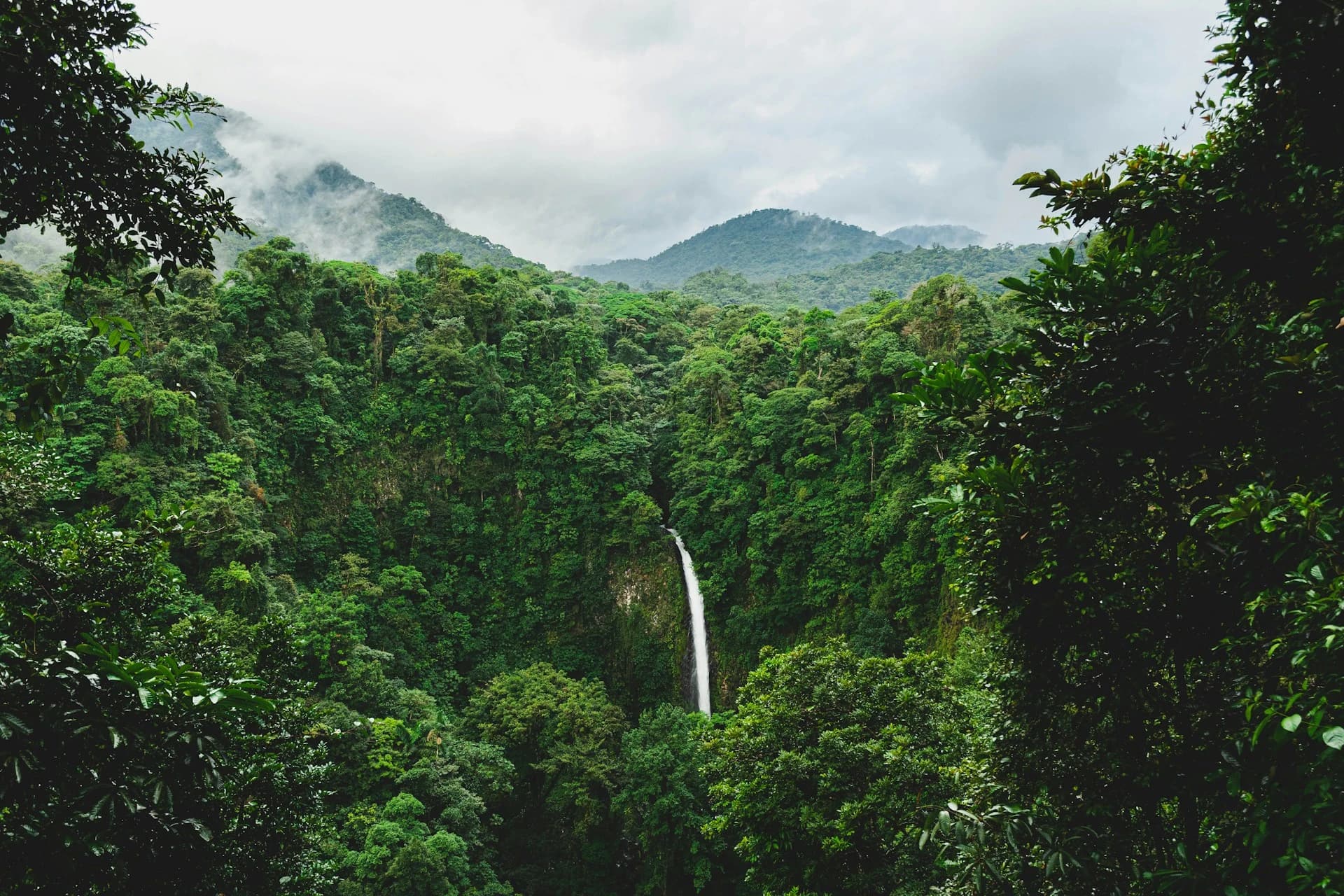
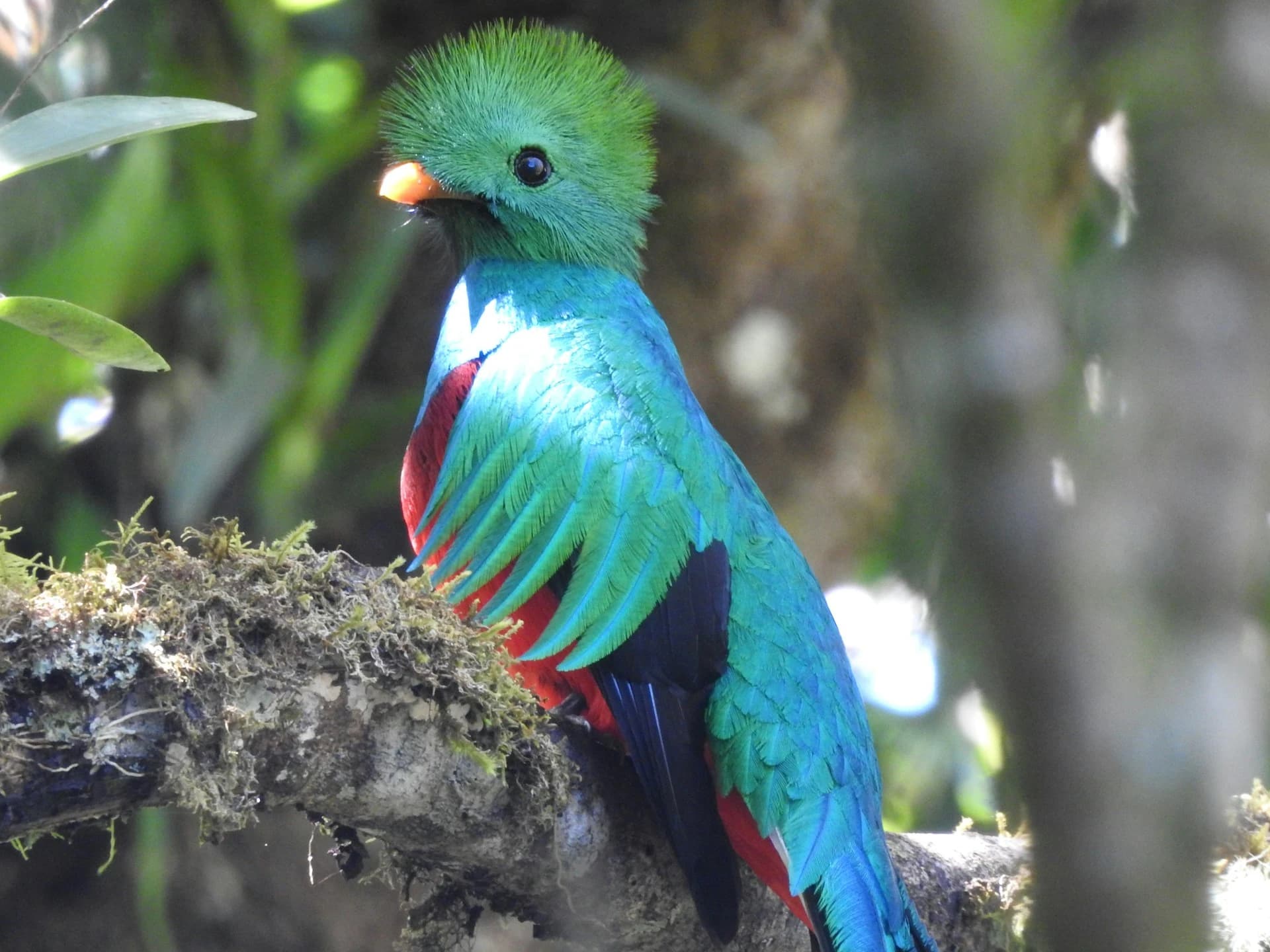
Bird watching in Monteverde is one of the reasons the cloud forest is famous. The area records well over 400 species, and the star is the resplendent quetzal, a pigeon-sized bird with iridescent green plumage and, on breeding males, tail streamers longer than the body. It is on almost every visitor's list, and Monteverde is one of the most dependable places on the planet to see one.
The single most important thing to understand, and the reason we would not skip the guide here, is that this is guide-dependent in a way few activities are. A resplendent quetzal sits motionless in the canopy for long stretches, camouflaged against green leaves, and most people walk directly underneath one without noticing. A naturalist guide knows the fruiting trees the birds favour, recognises and imitates their call, and carries a spotting scope that turns a distant silhouette into a full-colour view. Guests frequently mention guides filming a quetzal through the scope so they leave with a usable video. The difference between a guided and an unguided morning here is not subtle.
Beyond the quetzal, a good morning turns up three-wattled bellbirds, toucans and toucanets, trogons, motmots, and a wall of hummingbirds. Guides commonly identify 40 to 60 species on a single half-day walk, and travellers describe splitting a morning between the pastures just outside Curi-Cancha and the reserve itself to push the count higher. This is a different experience from the Monteverde night tour, which targets nocturnal wildlife, and from the general Monteverde cloud forest tours that cover the reserves more broadly.
Curi-Cancha Birdwatching Tour, Small Group & HD Spotting Scope
The best-rounded option and our pick for most visitors. It runs in Curi-Cancha, the reserve most guides prefer for birding, caps the group at six, and includes the reserve entrance fee, hotel transport and an HD spotting scope in the price. At 106 reviews it also has the deepest track record of any tour here.
Book NowBest Bird Watching Tours in Monteverde
| Tour | From | Viator Rating | Best for | Duration |
|---|---|---|---|---|
| Curi-Cancha Birdwatching Tour (Small Group & HD Scope) Book Now |
From $41 pp | ⭐ 4.7 (106 reviews) Read Reviews |
Best all-round, fees included | 3 to 4 hrs |
| Birdwatching Tour in Monteverde (Certified Guide) Book Now |
From $85 pp | ⭐ 4.9 (157 reviews) Read Reviews |
Most reviews, deepest track record | 3 to 4 hrs |
| The Quetzal Tour in Monteverde Book Now |
From $45 pp | ⭐ 4.9 (55 reviews) Read Reviews |
Quetzal focus with a named guide | 2.5 hrs |
| Curicancha Family Wildlife Tour Book Now |
From $40 pp | ⭐ 5.0 (67 reviews) Read Reviews |
Families, free kids gear | 3 hrs |
| Monteverde Birdwatching Experience Book Now |
From $90 pp | ⭐ 4.9 (74 reviews) Read Reviews |
Longest, earliest start | 4 hrs |
All five run early in the morning, use a naturalist guide with a spotting scope, and focus on the Curi-Cancha reserve. The differences that matter are what the price includes, the group size, and how long you are out.
Curi-Cancha Birdwatching Tour is our top pick. At $41 it bundles the reserve entrance and hotel transport that some others leave out, caps the group at six, and has the largest review count here at 106. It is the most complete package for the money.
Birdwatching Tour in Monteverde has the deepest review record on this page, at 4.9 stars across 157 reviews, and runs in Curi-Cancha with a certified guide, a telescope and an early-morning bakery start. At $85 it sits at the pricier end, and the group runs a little larger at up to ten, but the review volume speaks to a consistent, well-run tour.
The Quetzal Tour is led by a named, well-known local guide and is built specifically around finding the resplendent quetzal, at 4.9 stars across 55 reviews. Note that the reserve entrance and transport are paid separately, so the real cost is higher than the $45 headline.
Curicancha Family Wildlife Tour is the one we would choose for families, with a perfect 5.0 across 67 reviews and free binoculars and microscopes for kids. At three hours and a max of six, it keeps younger children engaged with more than just birds.
Monteverde Birdwatching Experience is the longest at four hours with the earliest start, from $90. It suits serious birders who want more time in the field and a higher species count, and are willing to pay for it.
What a Bird Watching Morning Looks Like
- 015:45 am
Hotel pickup
Most tours collect you from your Monteverde hotel before dawn. The early start is the whole point, since the birds quiet down as the morning warms up.
- 026:15 am
Reserve entry
Arriving at the gate as it opens means the trails are empty and the birds are at their most active. On the tours that include it, the entrance fee is already handled.
- 036:30 am
Pastures, then fruiting trees
Many guides start in the open edges just outside the reserve, where species come fast, then move to the trees quetzals feed on. This is where the scope earns its place, turning a green blur into a clear bird.
- 048:00 am
Peak activity
The busiest stretch for sightings: bellbirds calling, hummingbirds at flowers, toucans moving through. Guides count off species and line the scope up with your phone for photos.
- 059:30 am
Deeper trails
As the canopy quiets, the walk moves to trogons, motmots and understorey species. This is where a patient guide separates a 40-species morning from a 60-species one.
- 0610:00 am
Wrap up
Most half-day tours finish mid-morning, back to your hotel by late morning with the rest of the day free for other Monteverde activities.
- 01
Hotel pickup
Most tours collect you from your Monteverde hotel before dawn. The early start is the whole point, since the birds quiet down as the morning warms up.
5:45 am - 6:15 am02
Reserve entry
Arriving at the gate as it opens means the trails are empty and the birds are at their most active. On the tours that include it, the entrance fee is already handled.
- 03
Pastures, then fruiting trees
Many guides start in the open edges just outside the reserve, where species come fast, then move to the trees quetzals feed on. This is where the scope earns its place, turning a green blur into a clear bird.
6:30 am - 8:00 am04
Peak activity
The busiest stretch for sightings: bellbirds calling, hummingbirds at flowers, toucans moving through. Guides count off species and line the scope up with your phone for photos.
- 05
Deeper trails
As the canopy quiets, the walk moves to trogons, motmots and understorey species. This is where a patient guide separates a 40-species morning from a 60-species one.
9:30 am - 10:00 am06
Wrap up
Most half-day tours finish mid-morning, back to your hotel by late morning with the rest of the day free for other Monteverde activities.
A Monteverde bird tour is an early, slow, quiet affair, and that is exactly what makes it work. Here is how a typical morning unfolds.
Pace is the thing to understand going in. This is not a hike with a view at the end; it is a series of stops where the guide listens, scans, and sets up the scope. Covering little ground is a feature, not a problem.
Quetzal Season and Month-by-Month Birding in Monteverde
The quetzal is present in Monteverde all year, but your odds of a good sighting swing hard with the season.
If seeing a resplendent quetzal is the point of your trip, the February to May breeding window is worth planning around. Outside it, a sighting is still likely with a good guide, just less guaranteed. For a full picture of Monteverde's weather and crowds through the year, our Monteverde cloud forest tours guide covers the seasons in more detail, and our Curi-Cancha reserve guide goes deeper on the reserve these tours use. For a rain-proof afternoon, our Monteverde coffee tour guide covers the best coffee, chocolate and sugar cane tours.
| Month | Birding overall | Quetzal odds |
|---|---|---|
| January | Excellent | Good |
| February | Excellent | Excellent |
| March | Excellent | Peak |
| April | Excellent | Peak |
| May | Excellent | Peak |
| June | Good | Fair |
| July | Good | Fair |
| August | Good | Fair |
| September | Fair | Fair |
| October | Fair | Fair |
| November | Good | Fair |
| December | Good | Good |
The pattern is clear: March through May is the sweet spot, when excellent all-round birding overlaps with peak quetzal display. December and January are strong shoulder months, and the September to October green-season low still delivers good birding, just with quieter quetzal activity and wetter trails.
Best: February to May
The dry-season breeding window, when males grow their full tail streamers and display near nesting sites. This is peak season for a sighting and the reason many birders time their whole trip around these months.
Good: December and January
The start of the dry season. Quetzals are present and the weather is improving, with fewer crowds than the February to May peak. A strong compromise if your dates are fixed.
Harder: June to November
The green season. Quetzals are still resident and skilled guides still find them, but they are less active and display less, so sightings take more patience and a bit more luck.
Any month: go at dawn
Time of day matters as much as time of year. Birds are most active in the first hours after sunrise, which is why every serious tour starts around 6am, and travellers often report seeing a quetzal within minutes of entering the reserve at that hour. A late start hurts your odds more than the wrong month.
Curi-Cancha vs the Monteverde Reserve for Birding
Most first-time visitors assume the famous Monteverde Cloud Forest Reserve is the place to bird. For serious bird watching, most guides quietly prefer Curi-Cancha, and we would give it the edge too, for the reasons below. It is where all four tours above operate.
| Factor | Curi-Cancha | Monteverde Reserve |
|---|---|---|
| Bird species recorded | Over 200 | Over 400 across the wider area |
| Habitat for spotting | Open, with pasture edges and forest | Dense primary cloud forest |
| Crowds | Lower, with a visitor cap | Higher, the headline reserve |
| Quetzal reliability | Very good in season | Good, but harder to spot in dense canopy |
| Terrain | Gentler, more open trails | Steeper and more enclosed |
The reason comes down to sightlines. The Monteverde reserve is dense primary forest, which is magnificent to walk through but hard to spot a still bird in. Curi-Cancha mixes forest with more open edges, so birds are easier to see and photograph, and it is less crowded. The higher species total for the Monteverde area reflects the whole region, not what you will actually pick out on a single dense-forest walk.
None of this makes the Monteverde reserve a poor choice, and its hanging bridges and trails are worth doing in their own right. But if the goal is birds in the scope rather than forest around you, Curi-Cancha is the better tool for the job.
Birds You May See in Monteverde
Monteverde's cloud forest records well over 400 bird species, and a single guided morning commonly produces 40 to 60. The quetzal gets the headlines, but the supporting cast is what makes the walk. Here are the ones you are most likely to see, and to want photos of.
This is not an exhaustive list, and a skilled guide will name far more by call than you will ever lay eyes on. Bring binoculars to follow the fast movers like hummingbirds and tanagers, and let the guide's scope handle the still, distant birds like the quetzal.
Resplendent Quetzal
The headline bird and the reason most people book. Iridescent green with a crimson breast, and on breeding males, tail streamers longer than the body. Most active February to May.
Three-wattled Bellbird
Heard long before it is seen. The male's metallic bonk call carries across valleys, and guides track it by ear. Present mainly in the breeding months from March.
Keel-billed Toucan
The classic rainbow-billed toucan, often in small noisy groups at fruiting trees. Emerald Toucanets, smaller and all-green, share the same canopy and are just as common here.
Hummingbirds
Monteverde is a hummingbird stronghold. The Violet Sabrewing, one of the largest in Central America, is a highlight, alongside coppery-headed emeralds and green-crowned brilliants at feeders and flowers.
Motmots and Trogons
The Blue-crowned Motmot with its racket-tipped tail, and several trogon species including the Orange-bellied Trogon, are among the most photographed birds after the quetzal.
Tanagers and more
Bright mixed-species tanager flocks move through the mid-canopy, and the elusive Silvery-fronted Tapaculo skulks in the understorey. A good morning turns up 40 to 60 species in total.
What Bird Watching in Monteverde Costs
| Item | Typical cost | Notes |
|---|---|---|
| Guided group tour | $40 to $90 pp | 2.5 to 4 hours, naturalist guide and scope |
| Curi-Cancha entrance | Around $18 pp | Included on some tours, separate on others |
| Hotel transport | Included or small extra | Bundled on the Curi-Cancha tour, separate on the Quetzal tour |
| Private guide | Higher | Available if you want a scope to yourself and a custom pace |
The headline price can be misleading, so read what it includes. A $41 tour with the entrance fee and transport built in can work out cheaper than a $45 tour where you pay roughly $18 for the reserve and arrange your own ride on top. What matters more than the sticker price is the total once the reserve fee and transport are added, and whether the guide comes with a track record.
What you are really paying for is the guide and the scope, not the walking. In our view a cheaper tour with an outstanding guide beats a pricier one with an average guide every time, which is why we weight review depth more heavily than the exact price when picking here. If birds are one part of a wider Monteverde trip, our Monteverde zipline guide and hanging bridges guide cover the daytime canopy options, and the Monteverde night tour guide covers what the same forest reveals after dark.
From Our Experience
The detail that stays with us: plenty of first-time visitors walk directly beneath a resplendent quetzal without realising it, until the guide stops, sets up the scope, and there it is, glowing green in the canopy the whole time. The guide matters more than the reserve, the tour, or the season, because the same morning that produces a quetzal and sixty species with an expert produces a fraction of that without one.
Tips for Bird Watching in Monteverde
- Book the earliest departure. Around 6am is standard and worth it. Bird activity falls off sharply once the morning warms, so a dawn start does more for your odds than almost anything else.
- Confirm what the price includes. Check whether the reserve entrance and hotel transport are bundled, since that is where the real cost difference between tours hides.
- Come in the February to May window if the quetzal is the goal. Sightings happen year-round, but the breeding season is when the males are most visible and most spectacular.
- Dress in layers and expect damp. This is cloud forest: cool, humid and often misty at dawn. A light waterproof and quick-dry clothing beat a heavy jacket.
- Bring binoculars even if the guide has a scope. The scope is shared, so your own binoculars let you follow fast-moving birds like hummingbirds and tanagers in real time.
- Keep your voice down and your phone on silent. Birds spook easily, and a quiet group sees more. Let the guide set the pace.
- Some tours run longer than the listing suggests. Guests report half-day tours stretching to five or six hours when the birding is good, so leave the rest of the morning open rather than booking a tight follow-on activity.
- Manage expectations on the quetzal. Even in peak season no guide can promise it, but a good one in Curi-Cancha in March gives you strong odds.
- Visiting in January? Our Monteverde in January guide covers why the dry season delivers good quetzal odds and the clearest trails of the year for spotting.
- Visiting in February? Our Monteverde in February guide covers the driest month of the year and the start of the resplendent quetzal breeding peak, the best wildlife window of the calendar.
- Visiting in March? Our Monteverde in March guide covers the sunniest month of the year with quetzals in full breeding display, the single best month for a sighting.
How We Selected These Tours
The four tours above are the highest-rated guided bird watching tours in Monteverde with a solid public review record. Prices, ratings and review counts are the current figures on each listing at the time of writing, and durations, group sizes and inclusions were checked against operator and reserve information rather than assumed from the tour titles.
Where a detail was not confirmed by a source we trust, such as the exact group cap or inclusions on the longest tour, we noted it rather than filling the gap with a guess. Season and reserve guidance reflects what Monteverde guides and reserves report about quetzal activity and birding conditions, not a formal count.
Frequently Asked Questions
What is the best bird watching tour in Monteverde?+
For most visitors, the small-group Curi-Cancha Birdwatching Tour is the best all-round choice at $41. It runs in the reserve most guides prefer for birding, caps the group at six, and includes the entrance fee, hotel transport and an HD spotting scope. At 106 reviews and 4.7 stars it has the deepest track record of the top tours.
Can you see a resplendent quetzal in Monteverde?+
Yes, Monteverde is one of the most reliable places in the world to see a resplendent quetzal. Your best odds are on a guided tour during the dry-season breeding window from February to May, when males display their long tail feathers. Sightings happen year-round, but a guide with a spotting scope and knowledge of the fruiting trees makes the biggest difference.
When is the best time for bird watching in Monteverde?+
Early morning, roughly 6am to 9am, is the best time of day in any month, since birds are most active just after sunrise. For the resplendent quetzal specifically, February through May is the peak, coinciding with its breeding season and the dry-season weather.
How much does a Monteverde bird watching tour cost?+
Guided group tours run from $40 to $90 per person and last 2.5 to 4 hours. The lower-priced tours are not always cheaper overall, since some exclude the roughly $18 Curi-Cancha entrance fee and hotel transport that others include. A private guide costs more but gives you a dedicated scope and pace.
Which reserve is best for bird watching in Monteverde?+
Curi-Cancha is the reserve most guides prefer for birding, and it is where the top tours operate. Its mix of open edges and forest makes birds easier to spot than in the dense primary forest of the main Monteverde reserve, and it is quieter thanks to a visitor cap. The Monteverde reserve is spectacular to walk but harder for spotting still birds.
Do I need a guide for bird watching in Monteverde?+
You can bird independently, but a guide dramatically increases what you see. Species like the resplendent quetzal sit motionless and camouflaged high in the canopy, and most visitors walk past them. A naturalist guide knows the calls and feeding trees and carries a spotting scope, which is why guided mornings routinely turn up 40 to 60 species.
What is the best month for bird watching in Monteverde?+
March through May is the best window, when excellent all-round birding overlaps with peak resplendent quetzal display during the breeding season. December through February are strong too, with good to excellent quetzal odds. The September to October green season still delivers good birding, just with quieter quetzal activity and wetter trails.
What birds can you see in Monteverde?+
A guided morning commonly turns up 40 to 60 species out of the region's 400-plus. Highlights include the resplendent quetzal, three-wattled bellbird, keel-billed toucan, emerald toucanet, violet sabrewing and other hummingbirds, blue-crowned motmot, several trogons, and mixed tanager flocks. A guide will identify many more by call than you will see.
How long is a Monteverde bird watching tour?+
Most guided bird tours run 2.5 to 4 hours, starting around dawn and finishing mid-morning. The quetzal-focused tours tend to be shorter at about 2.5 hours, while the dedicated birding experiences run to 4 hours for a higher species count. Either way you are back with most of the day free.
Are Monteverde bird watching tours good for children?+
Some are well suited to families. The Curicancha Family Wildlife Tour is built for it, with free binoculars and microscopes for kids, a three-hour length and a small group. Very early starts and long, quiet stops can test younger children, so a shorter family-focused tour usually works better than a serious birding one.
Affiliate note: Some links on this page are affiliate links. If you book through them, we may earn a small commission at no additional cost to you.